
An interview with Alfred L. Castle and Amber Strong Makaiau
Over the years, I have had the ultimate pleasure of getting to know Dr. Alfred L. Castle. Al is a historian, author, and the Executive Director of the Samuel N. and Mary Castle Foundation. The mission of the Foundation is to provide resources that improve the lives of Hawaii’s children and families, especially the quality and quantity of early education. The Samuel N. and Mary Castle Foundation concentrates its efforts on creating greater social equality and opportunity through increasing access to high quality pre-K education, and since its inception has been deeply invested in growing the American progressive education movement in Hawai‘i and beyond.
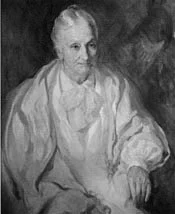
Established by Mary Tenney Castle in 1894, the Samuel N. & Mary Castle Foundation originally helped to support the progressive education kindergartens and social welfare projects that “Mother Castle” (as the community knew her) had helped to create in the Hawaiian Republic. As described on the Samuel N. & Mary Castle Foundation website:
She provided funds to establish kindergartens along the lines set forth by John Dewey and her son-in-law George Herbert Mead. Indeed, one of the first grants made from her various charitable trusts was a grant to the University of Chicago’s Lab School to enable John Dewey to train kindergarten teachers for the Castle Kindergarten, which was founded in 1899…As a Christian progressive she believed in the importance of educating children to be productive participants in democratic culture and to actively engage in critical citizenship…Like John Dewey, she saw ideal class instructions as open-ended, ongoing and dialogical. For her..[schools should] be a potentially transgressive space where teachers and students explore knowledge, test conclusions, value innovation and novelty while being mutually engaged in learning.
Eventually, Mother Castle trained her children to serve as Trustees of her charitable trusts. Among them was her daughter Harriet Castle Coleman, who was also associated with the founding of Hanahau‘oli School.
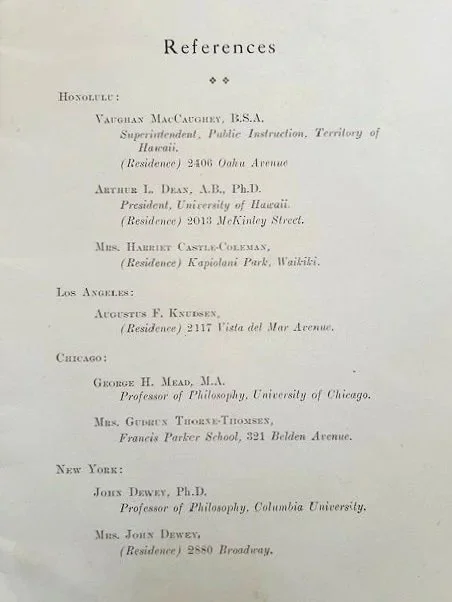
Listed on the “References'' page of the Hanahau‘oli School 1919 brochure, Harriet Castle Coleman and her brother-in-law George Herbert Mead were foundational in the school’s launch. Elaborated on in another blog, “the Castle family, especially Helen Castle Mead and Harriet Castle Coleman, were undoubtedly instrumental in facilitating [John Dewey’s] visits [to Hawai‘i] through their connections with the University of Chicago, and especially in attracting Dewey to give his extension lectures” (McEwan, 2015, p.5), which contributed to the founding of the University of Hawai‘i. Harriet Castle Coleman is best known for the “extensive research [she conducted] throughout America on the kindergarten movement..[she] went to visit her sister in Chicago and had the opportunity to visit the Hull House and become acquainted with Dewey’s philosophical and pedagogical ideas. Harriet brought her conviction for free kindergarten home to Hawai‘i and waged a grassroots fundraising campaign” (Silva, 2015, p. 32) to start similar programs in the islands. Along with her mother, in the 1890’s Harriet was an early supporter of “reforming kindergartens [so that they were multicultural and not] organized by race...More importantly, as they saw it, traditional formalist instruction, which stressed repetition, memorization, and rigid discipline, was no longer adequate preparation for a rapidly changing world” (Castle, 1989, p. 121). It is both remarkable and humbling that the Samuel N. & Mary Castle Foundation continues to carry on this incredible legacy with the generous contributions it makes to the Hanahau‘oli School PDC today (e.g. Natural Scientists and Big Ideas in Math ECE programming, and generous scholarship funds).
Inspired by a recent email exchange with Al, in the remainder of this blog we share a few questions posed to Al about his family history and the future of progressive education. We are so appreciative of his wisdom and commitment to this work. Mahalo Al!
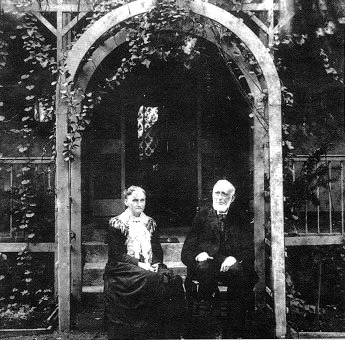
Based on the historical record and your own life story, what do you think shaped your family’s ongoing commitment to the progressive education movement in Hawai‘i and elsewhere?
Mary Castle, our founder and women’s rights advocate and abolitionist, adopted kindergarten education as her project. She sought a complementary, universal kindergarten program for the Republic, the Monarchy, and then the Territory. She saw progressive education as a foundation for democracy. Like Dewey, her dear friend, she saw the essence of a democratic society as freedom for all members of the community to balance their desires with those of others. Progressive education helped to create a laboratory for democracy, universal dignity, and equity of opportunity. Samuel and Mary Castle supported numerous causes before the late-19th-century kindergarten/ECE projects. They were always known for sponsoring democratic and institutional advances. To that end, Samuel served in the Hawaiian House of Lords for 40 years.
In what ways did women in particular, who lived during the late 19th and early 20th centuries (including your great-great-grandmother Mary Tenney Castle), influence the establishment and longevity of progressive institutions and projects in Hawai‘i?
A neglected study in Hawaiian historiography is the inter-ethnic collaboration of women, many of whom were missionary descendants and ali‘i Hawaiian women. They met often to discuss their approaches to building educational, artistic, and human services. Samuel and N and Mary Castle, close friends of Queen Emma, helped provide large sums to build the hospital in concert with the main donor, especially Queen Emma herself, who contributed invaluable land.
George Herbert Mead was your great-uncle and, with Dewey, a founder of pragmatism and social psychology. Give us your thoughts on why you believe this entire network of close friends represents one of the brilliant moments in American intellectual thought.
The progressive era broke with many 19th-century conventions regarding epistemology, social psychology, social and political thought, and early education. The progressives were major supporters of civil rights organizations, women’s rights, suffrage, human service organizations such as Hull House in Chicago, and democracy. The Castles were instrumental in funding and helping to start the famous University of Chicago Lab School and a Dewey-created Castle Lab School in Honolulu. The progressives provided much of the intellectual and moral basis for racial and ethnic equality in an open society. Community service was vital to them. Hawaii’s progressives, led by women, strongly advocated for a public kindergarten added to the DOE in 1943. The Castle Foundation invested millions over 25 years in the University of Hawai'i to educate Hawai‘i public kindergarten teachers in progressive teaching methods.
What do you see as the future of progressive education?
I see vital connections to the Native Hawaiian culture-based programs that have been federally funded for decades. The Castle Foundation sees the emphasis on equality, multi-racial, and multi-ethnic teaching as vital to social advancement and equity. We continue to support groups like INPEACE and Partners in Development, among others. With federal support in danger, we join educational and Congressional leaders to resume funding on solid ground starting 2027-2028. Progressive teacher education and professional development are still a significant part of the Castle Foundation’s investment portfolio. The values of Progressivism around the construction of improved opportunities for those historically denied opportunities is part of the passion. Progressives were strong advocates for racial equality, viewing it as a fundamental belief that made full democracy possible. We believe that Native Hawaiian culture-based early education is a remarkable addition to the progressive legacy of aina-based learning, constructivism, student-centered learning, and the open nature of solutions to life’s challenges. Similar methodologies, such as Montessori and Reggio Emilia, are also alive and well. All have been influenced by the progressive pedagogical tradition.
ABOUT THE CONTRIBUTORS:
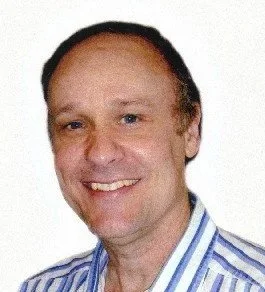
Alfred L. Castle, like his great-uncle, Henry Northrup Castle, is a graduate of Punahou School in Honolulu and Colorado State University (BA and MA) and the author of numerous journal articles, book reviews, and feature articles, as well as the author of a book on the history of philanthropy. Castle has taught at universities in New Mexico, Hawaii, and California. He is the grandnephew of George Herbert Mead and Helen Castle Mead and currently serves as executive director of the Samuel N. and Mary Castle Foundation, one of America’s oldest family foundations. His most recent book is entitled Diplomatic Realism: W. R. Castle, Jr., and American Foreign Policy, 1919–1953.

Dr. Amber Strong Makaiau is a Specialist at the University of Hawai‘i at Mānoa, Director of Curriculum and Research at the Uehiro Academy for Philosophy and Ethics in Education, Director of the Hanahau‘oli School Professional Development Center, and Co-Director of the Progressive Philosophy and Pedagogy MEd Interdisciplinary Education, Curriculum Studies program. A former Hawai‘i State Department of Education high school social studies teacher, her work in education is focused around promoting a more just and equitable democracy for today’s children. Dr. Makaiau lives in Honolulu where she enjoys spending time in the ocean with her husband and two children.

