An online thinkspace, where progressive philosophers and practitioners from across the globe can connect through community and inquiry to carry out the movement’s important commitment to the intersection of democracy and education.
Read our most recent postS
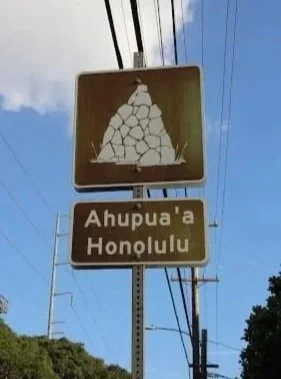
In 2023, visiting scholar Dr. Christoph Kühberger immersed himself in a variety of educational settings across O‘ahu, including Hanahau‘oli School. The blog to follow provides a window into the insights he had about how educators in Hawai‘i teach critical historical concepts like “change, continuity and context,” “perspective,” and the use of “historical sources and evidence” in Hawaiian history.
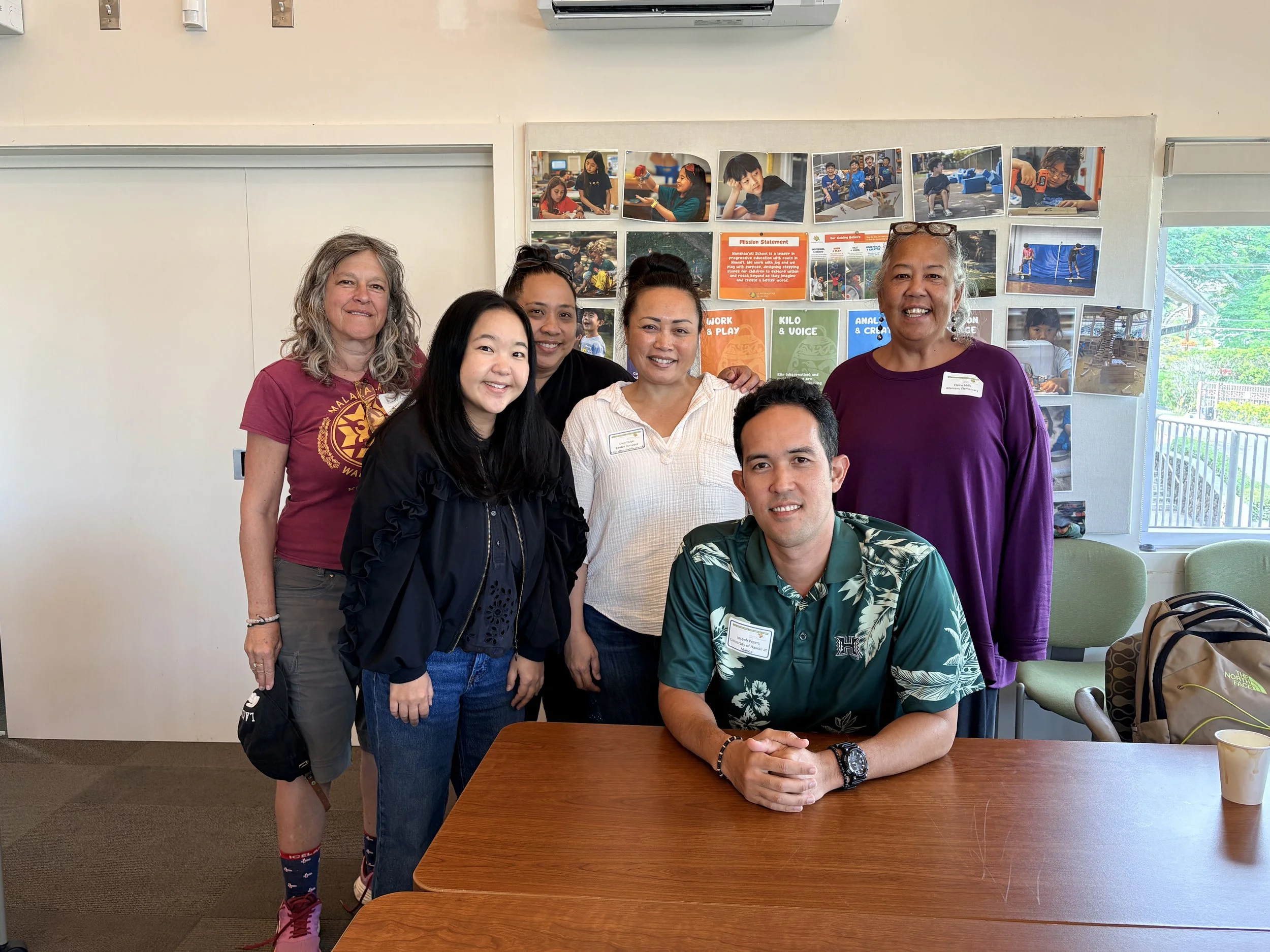
The Navigating AI in Education Think Tank took place over three days during the summer of 2026. On the last day, something magical happened. All the moments leading up to that day—identifying our own values, perspectives, and experiences with AI; understanding the tensions surrounding its use; hearing different perspectives; engaging in healthy push and pull; and collectively making sense of what AI is and is not—came together. As a recipient of a Hanahau‘oli School Professional Development Center Scholarship, Kate Werner thoughtfully engaged in the workshop and then shared her takeaways and reflections with us to extend to others who may be seeking to grow in their own thinking about AI and education. She beautifully describes her experience below.
Browse previous posts
by topics in progressive education
Progressive education Philosophy

In February 2026, I (Junya Kubo), together with my colleague Ryo Kumagai (Associate Professor, Miyagi University of Education), had the opportunity to visit Hanahauʻoli School to observe children engaging in self-directed learning based on their own interests, within an environment that ensured both safety and security.
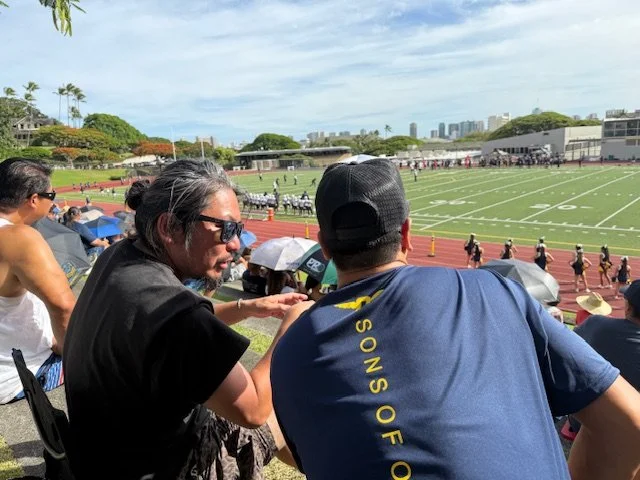
Dr. Tanaka is an Associate Professor in the Graduate School of Human Development and Environment at Kobe University, where he specializes in citizenship education and democratic society studies. His research focuses on education for democratic citizenship, with his lab exploring civic engagement and educational philosophy.

Every two years I am invited to Hanahau’oli’s Kulā'iwi (multiage grades 2-3) classroom to support the students in learning more about the school’s history, progressive education philosophy, and the reasons why having a philosophy is critical to the school’s mission. This is a part of their “School Unit,” which is designed to teach the following key concepts, essential questions and instructional learner outcomes.

Located in Fukui Prefecture, “The Happiest Prefecture in Japan” (Japan Research Institute, 2024) and noted as providing high quality of education (MEXT, 2021, Sony Life, 2022), the University of Fukui is one of four flagship teacher training universities designated by the Ministry of Education, Culture, Sports, Science and Technology (MEXT, 2022). We believe part of that result is from a strong focus on community and education throughout Fukui.

The first ever He Aliʻi Ka ʻĀina Educator Conference was held last month, on October 10 and 11. Designed to serve as a transformative professional development opportunity for the greater community to learn more about Hawaiian Culture-Based Education (HCBE) – the initiative aimed to engage participants in learning how to integrate the principles of aloha ʻāina (love of the land) and ea (sovereignty, life) into educational practices.

At the end of each school year, I always look back and reflect. I think about what was learned, how our community formed, and the unforgettable moments I want to celebrate. While there were many things I remember about this particular year (2023-24), it was a moment during the last three weeks of school that sparked the inspiration for this blog. As a teacher and philosopher, I’ll share what I learned about the powerful ways in which “care ethics and epistemology” can be integrated into the work we do in schools. I’ll also make some suggestions for how we can promote the development of care ethics and epistemology in our students and lay the foundation for a thriving and meaningful classroom community like the one that I was able to cultivate and nurture with my students during this school year.

Since the early 19th century, the progressive education movement has held significant space in the culture of Hawaiʻiʻs schools. This is not by coincidence or happenstance; the many intersections of progressive education principles and Native Hawaiian pedagogy and epistemology provided 19th century educators with a meaningful foundation with which to carry the burgeoning movement forward in the islands. By capitalizing on the intersections between Native Hawaiian (Kanaka Maoli) pedagogy, philosophy and epistemology, and the early (and current) principles of progressive education, educators in the Hawaiian islands were not only able to address the educational needs of their students in a culturally responsive and holistic way, but were also able to make meaningful contributions to the movement. Today, Hawai‘i is uniquely positioned to carry the progressive education movement forward, and can serve as an example of how we as educators can develop relationships with non-western pedagogies in order to better serve our students.

Japan is an aging society with a low birthrate. In March 2022, Shiroishi City, located in the south of Miyagi prefecture Japan, established a committee to consider the future of public schools in light of the declining school aged population. I was elected to chair the working group. Our committee began our work by looking at the city's student demographics. The total number of students in elementary school from 1st grade to 6th grade was 1,332 in 2022, but it is predicted that this will decrease to 600 in about 10 years (about 100 students per grade). Also, today, the standard number of children per class in Japan is 40. In the future, if there are 100 students in each grade, even if we collect students from the entire city, there will only be three classes per graded. In 10 years, one school in a city will be enough, compared to the 10 elementary schools and 5 junior high schools in Shiroshi City in 2022. All of this shows why school consolidation is inevitable in Japan's future.
While on sabbatical, I have been thinking a lot about creativity and how it is valued within the Reggio Emilia schools. This concentrated focus has increased my awareness of the power of creativity as it intersects with learning, and now I see it everywhere. For example, my five-year-old son, Enzo, has a range of sticks that are personal artifacts of his day spent in the forest. Each stick has a name and purpose, along with rocks he has been bringing home to hammer and chisel, no doubt inspired by all the sculptures he regularly sees around in public. He reminds me that as Malaguzzi suggests, children have incredibly creative ways of thinking about and using materials. This creativity extends to how they wonder about the world, and there is a special freedom in the ideas of children. We must stop and pause to notice how this creative thinking lends itself to childrens’ hypotheses about how things work and connections throughout our world.
The concept of “the 100 languages of children” is one of the most integral aspects of the Reggio Emilia approach. It is based on Loris Malaguzzi’s poem “No Way. The Hundred Is There,” which is a powerful and emotional poem about how children have the right to express themselves in 100 ways. For the full effect, I urge you to pause and read this aloud to your colleagues, partner, friend, or children.

As sunlight filters through tall glass doors, it illuminates multiple shades of blue paint in glass jars, translucent sheets of color that dance and invite curiosity. Greenery, such as plants, trees, and flowers spread throughout the space inviting the outside in. Different shades of clay are placed in mounds on tables with natural materials beside them, ready for interpretation. The aroma of homemade bread and fresh cut fruit wafts in from the kitchen, and the art, words, photos, and other documentation of the daily lives of children who inhabit this space smile proudly on the walls. These are some of the beautiful and inviting materials, senses, and spaces I’ve observed in Reggio Emilia classrooms, artfully designed for young children.

This winter, the north swells kicked up to historic levels, bringing waves beyond anything in living memory. They ran The Eddie on an epic day after calling it off a week earlier. The Eddie is a big wave surf competition that only goes in the rarest of conditions, massive swells with good winds. But really, The Eddie is more than a surf competition. It is a celebration of Waimea Bayʻs first lifeguard, Eddie Aikau, more than anything else.

In the opening sentence of William Haye’s (2007) book, The Progressive Education Movement, he states, “For some time now, I have accepted the idea that a major theme in the history of education in the United States during the past century has been the ongoing debate between those who consider themselves traditionalists and those who espouse the principles of progressive education (p. xi). “ This debate and need to distinguish between what constitutes a progressive philosophy and pedagogy, compared to more “traditional” approaches to education is well-documented and has no doubt played an important role in the evolution of the American progressive education movement. It has helped progressive educators clarify and define what they mean by a “progressive education” for both the movement’s critics and followers. It has also helped to create charts like Haye’s (2007, p. ?) below, which didactically delineates the difference between traditional and progressive approaches to education.

At the end of their journey in the University of Hawaiʻi at Mānoa (UHM), College of Education (COE), Progressive Philosophy and Pedagogy, MEd Curriculum Studies program, master's candidates applied the process of philosophical reflection to explore the meaning of their experiences in the program. In collaboration with peers and professors they engaged in a creative process to “untangle” and illuminate lessons learned about progressive education during the five semesters of the program. They were asked to communicate their reflections to a wider audience via a thought provoking and artful film that could be shared with a wider audience. The overarching question guiding the reflective process and ultimately the film was: Why progressive philosophy and pedagogy?

In 2023, it is almost impossible to escape some form of the “culture wars” being waged in the “battle grounds” of classrooms and libraries. There are book challenges and bans, vocal opposition to school curricula, and the ever looming threats of misinformation and disinformation. Solutions to these problems are evasive; they cannot be addressed with a single-pronged approach. It will take the support and mobilization of an entire network–our network of progressive educators around the world “harnessing the dynamic power of progressive practice for the next generation of students, schools, and democracy” (PEN, 2023). An essential element of this network are our school librarians and the best practices of 21st-century librarianship, which are deeply rooted in a progressive philosophy and pedagogy.

Ever since I was a young child, I have wondered about the inherent source of a thriving person. Described by Yos (2012), the person who lives a flourishing life is: whole, integrated, compassionate, grateful, joyful, and living purposely in the present moment. A thriving human responds freely and is flexible to new experiences without fear, but instead with a deep sense of inner wisdom. That said, the current state with which we find our society, inundated by fear, over-competition, materialism, racism, and bias, has made it incredibly difficult for humans to thrive or engage meaningfully and purposefully in their lives. The reality of our current world is that it is an upstream swim to a place where thriving can occur. In this blog, I explore the relationship between “spirituality” and progressive education, and wonder whether the intersection of the two might be a resource for finding meaning, flourishing, and becoming a thriving person in our modern world.
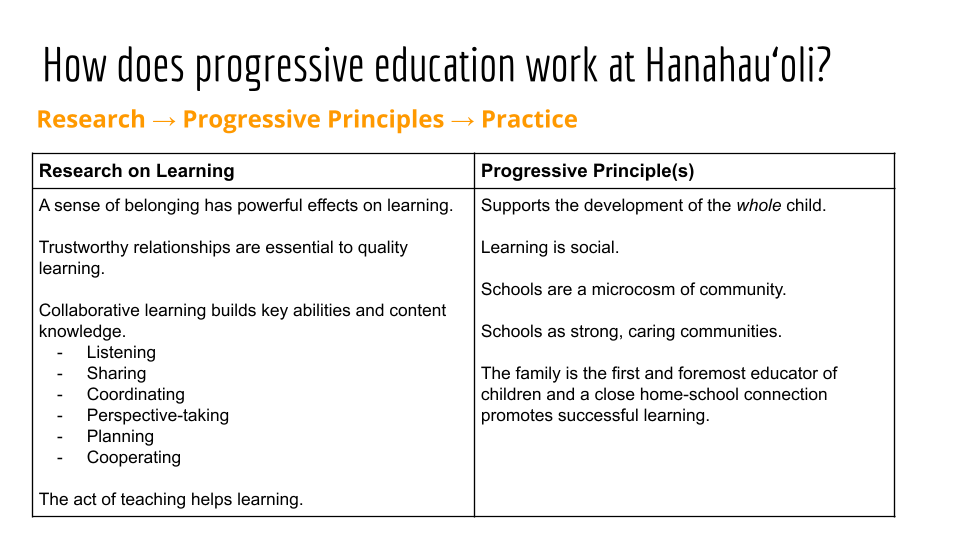
An often underemphasized and misunderstood essential element of the progressive education movement is its relationship with scientific research. The idea that teaching, learning, and schooling must be systematically studied through observation and experiment has been a defining feature of progressive education philosophy and pedagogy from the very beginning. “As much as they wore their hearts on their sleeves,” early progressive educators like Francis W. Parker, John Dewey, and Ella Flagg Young “prided themselves on their allegiance to science, culling ideas from research from all over the world and exhaustively testing their hypothesis and methods” (Little & Ellison, 2015, p.41).
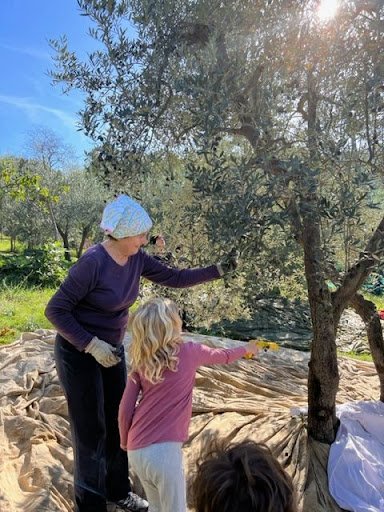
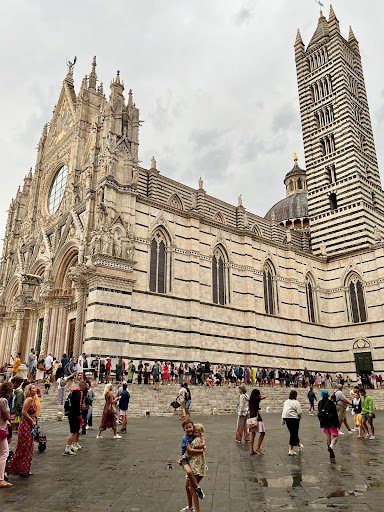
“Amooooore,” (“Looooove,”) an Italian mother crooned over her child, looking at her with adoring eyes (note: this is a scene you might witness in any city, piazza, cafe, park in Italy). Every time I hear someone call their child “amore,” I can’t help but smile at the adoration Italians have for children. My husband and I have witnessed this first hand since our daughter was a baby and when we traveled through Italy with her. We felt like the red carpet was rolled out for us because we had a child. “This is NOT the experience we have had in the U.S.!” we thought, especially in airports, grocery stores, or anywhere with a line, whereas in Italy, families with young children have priority and precedence. For years I’ve wondered about the reasoning behind this wonderful cultural perspective, which I have learned can be attributed to many factors: a low birth rate (making children in Italy more rare and precious), a culture strongly tied to family and community, and one that celebrates the beauty in everything (and that takes the time to savor such things). Among them are family, food, art, architecture, and other cultural phenomena born out of the beautiful interaction between humans and the natural world.

As a part of their program of study in the University of Hawaiʻi at Mānoa (UHM) Progressive Philosophy and Pedagogy MEd Interdisciplinary Education, Curriculum Studies Program–students participate in a summer seminar with UHM philosophy professor, Thomas Jackson. The course is titled, PHIL 725: Philosophical Topics- Philosophy, Childhood, and Education. It examines issues, theories, perspectives and problems that philosophers, from a variety of cultural backgrounds and historical contexts, have tackled over the past 2500 years. The goal of the course is to provide educators with a philosophical “grounding” that promotes awareness, encourages knowledgeable reflection, and develops skills necessary for becoming a teacher-philosopher. Following is a reflection shared by UHM Progressive Philosophy and Pedagogy graduate student, Michael Mendoza.
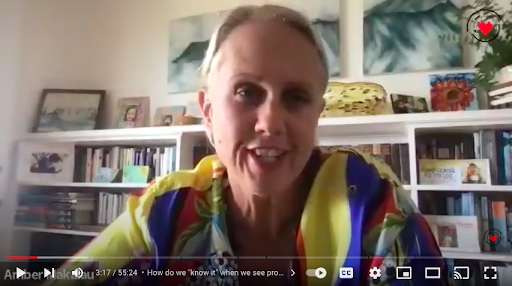
On July 25, 2022 I had the opportunity to participate in a Modern Progressive Education Panel Discussion, a component of Human Restoration Project’s first ever Conference to Restore Humanity! The conference was an international invitation for K-12 and college educators to center the needs of students and educators toward a praxis of social justice. It featured Dr. Henry Giroux, Dr. Denisha Jones, and tracks on disrupting discriminatory linguistics, ending carceral pedagogy, building for neurodiversity, and promoting childism. The purpose of the conference was to help change systems and reimagine education.

I was born and raised on the island of Kauaʻi, in the Puna district, in Kapaʻa. I grew up working on a farm in the narrow green valley at the foot of Makaleha, with Kapaʻa stream running through it. This is where I spent hours working, and avoiding working, catching opu and trapping prawns, digging fence post holes and dehorning goats, tending chickens before, during, and after the slaughter. I learned to surf at Kealia, and I fished each weekend at a place we called Bluffs. My entire childhood was surrounded by cane fields and the ever present sounds and smells of the sugar industry, ash falling on my arms regularly.

In 2019, Hanahau‘oli faculty and staff visited more than 20 progressive schools across the country. This was the ambitious Hele A‘o (Learning Journey) initiative, and the purpose was to spark new ideas, inspire innovation, and plant seeds for future growth at our beloved school. Among the key takeaways from Hele Aʻo was a desire to learn more about social justice as it pertains to progressive education. At a number of schools, Hanahau‘oli faculty and staff saw teachers referring to students as “changemakers.” They also observed language related to diversity, equity, and inclusion as a fully integrated part of progressive school curricula. Above all, the students were able to articulate ways in which they were promoting social justice, and were taking action in their communities.

This past summer, UHM Children’s Center preschool teacher, Royce Bowman learned more about p4cHI as a part of his coursework in the UHM Progressive Philosophy and Pedagogy Masters program. Excited to put the progressive pedagogy into practice, Royce experimented with p4cHI in his early childhood classroom. His reflections on the experience are captured in this poem:

On July 9, 2021 a diverse panel of thought leaders came together to explore the relevance of progressive philosophy in present times. They were: Theresa Squires Collins of the Progressive Education Network and The Francis W. Parker School in Chicago, Dr. Masato Ishida of the University of Hawaii at Manoa Department of Philosophy, Chris McNutt of the Human Restoration Project, and Dr. Manulani Aluli Meyer of the University of Hawaii - West Oahu.
Progressive Education Curriculum

“Art has the role in education of helping children become like themselves instead of more like everyone else.” – Sydney Gurewitz Clemens
This quote from the influential American educator Sydney Gurewitz Clemens speaks to what I see as the power of the use of the arts in educating children and adolescents. Whether it’s through the drawing out of their ideas, the enactment of characters in a student-created play to demonstrate learning, or the creation of poetry around their observations of the natural world, the arts allow each student to communicate their thinking through creative products that are unique to that individual. Additionally, when an individual student’s creative products are viewed and witnessed by others, it not only helps to deepen connections to learning content, but also between the individual artist-creator and their peers and teacher.

As we continually explore the question of what it means to be a progressive educator, one of the answers we consistently return to is the idea that progressive education instills within the child a lifelong love of learning. John Dewey made this clear (and a central part of his text Experience and Education) when he wrote, “The most important attitude that can be formed is that of the desire to go on learning” (p. 20). In progressive spaces, we ensure this in many ways - by facilitating hands-on, student guided learning; by following children' s lead in the classroom, and, as Julie Stern writes in her text Conceptual Understanding: Harnessing Natural Curiosity for Learning that Transfers, by “respect[ing] the developmental stages of childhood with intellectual rigor” (p. 4).
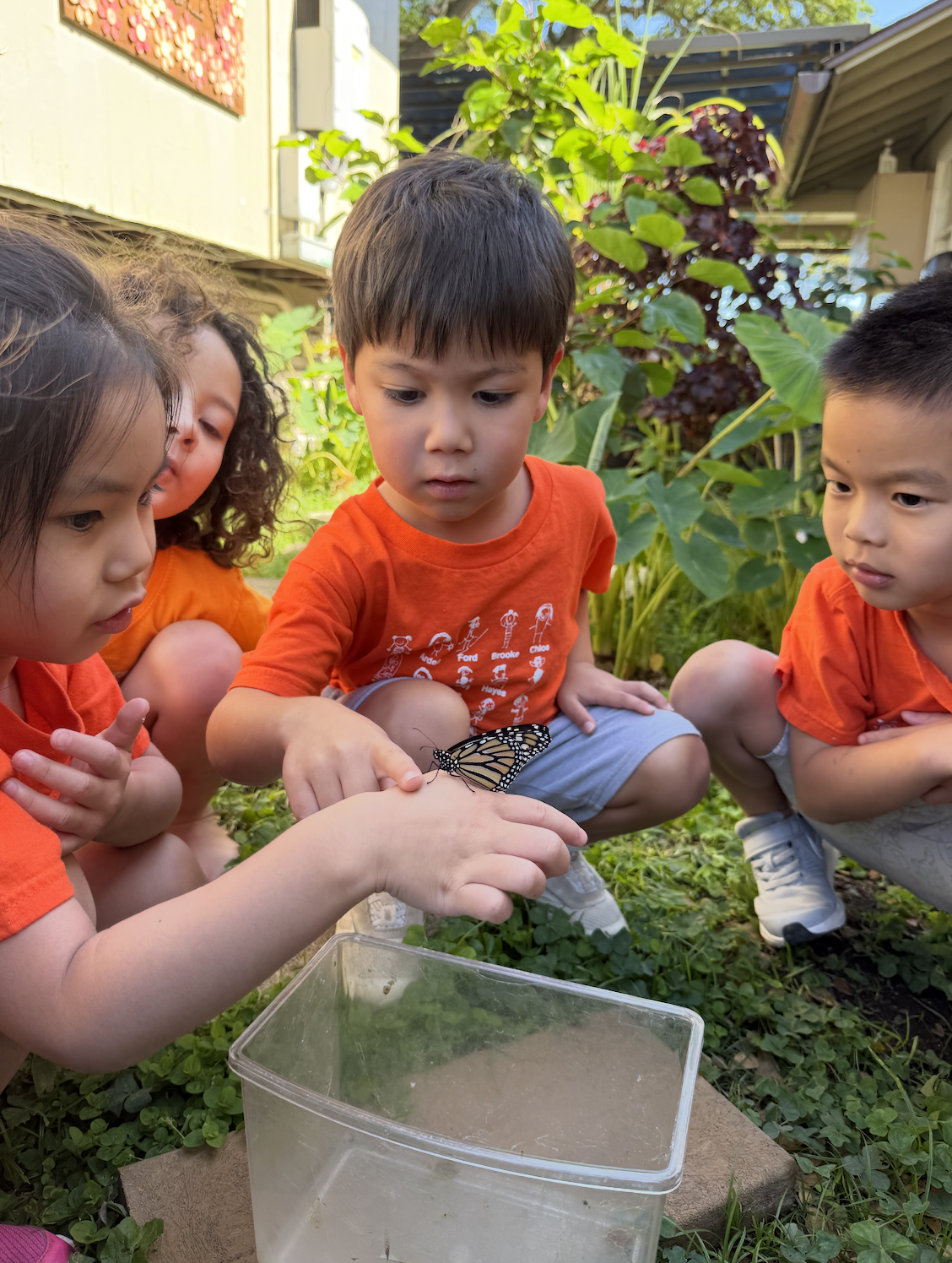
It was restaurant day, a culmination of our eateries unit, which explored how an eatery works, the importance of eateries, roles and responsibilities in eateries, and how eateries help the community. Children collaborated in small groups, demonstrating their learning about how an eatery functions and how to work as a team. Amongst the groups was the “Mexican Burrito Restaurant” team. They were working in our outside garden space, and while they were highly engaged in the task at hand, they also kept getting “distracted,” as most children their age do. The head chef in this group was crafting beautiful tacos using leaves as a shell and flowers as her filling. Another child was taking pride in the restaurant’s money box he had created in our Idea Box Center, where recycled materials are used for inventions. The pressure to film a final video to document their presentation of learning in this unit loomed over my head, but not theirs. As they continued to define roles and negotiate who would do each job in their restaurant, one of the students observed a small caterpillar munching on a leaf above their heads.

In this edition of Progressive Philosophy and Pedagogy: A Blog for Progressive Educators the editors feature a team of Punahou School high school students who are spearheading Kids Voting Hawai‘i. In preparation for the USA’s 2024 General Election, we were interested in learning more about this youth-driven civic education initiative as it exemplifies the power and potential of a 21st Century progressive education.

The following blog post provides a brief summary of Parker Tuttle's final research project for the University of Hawaiʻi at Mānoa (UHM) College of Education (COE) Master of Education in Teaching (MEdT) program. This two-year, field-based program is designed for those pursuing a career in teaching who have earned prior baccalaureate degrees in fields other than education. His project is titled, “Tracing the Loss of Native America: Integrating Geography and Culturally Responsive Teaching into Secondary Social Studies in Hawaiʻi.”

As we approach summer, libraries and schools are publishing reading lists of suggestions for children’s summer reading. All reading lists have their own personalities, curated by the librarians and teachers who create them. What many of them have in common, however, is that many books from the children’s literature “canon” tend to appear over and over again. While the canon exists for a reason–many of these texts are influential, memorable, or enjoyable–I want to take the opportunity to empower teachers, librarians and families to think beyond the canon.

Progressive education is a living work in progress, a continually changing “mode of associated living” (Dewey, 1916, p. 87) that must be reflected on, evaluated, and sometimes modified to keep up with–and more importantly stay ahead of–the times to achieve its mission of creating “a better future society” (p. 20). Curriculum, within the context of a progressive education, is no different. The subjects, concepts, tasks, planned activities, desired learning outcomes and experiences, and the general agenda to reform society–all of which Schubert (1987) describes as defining characteristics of a progressive education curriculum–must be studied and improved upon over time. Katherine Camp Mayhew and Anna Camp Edwards (1965) said it best when explaining how the pioneering progressive education curriculum was created at John Dewey’s Laboratory School at the University of Chicago: “ideas [in education, schooling, and curriculum], even as ideas, are incomplete and tentative until they are employed in application to objects in action and are thus developed, corrected, and tested” (p. 3). Created using a design and implementation process hinted at in my opening quote from John Dewey–curriculum is somewhat meaningless, until it is experienced by students, reflected on, and made better by members of a school community.

‘Imi ‘Ike in Hawaiian means “to explore, discover,” or “to seek knowledge.” In February 2023, Hanahau‘oli School piloted a week-long initiative that wove enrichment or “‘imi ‘ike” time throughout the students’ schedules. Teachers and staff offered a variety of activities, based on student choices, allowing children of all different ages to learn or explore something together. When asked to reflect on ‘Imi ‘Ike, students shared: “Can we do ‘Imi ‘Ike every week?” “This was the best day ever this school year!” “We got to choose what we wanted most.” “We got to work with other grades and it didn’t have to be our same classmates.”

The Hanahau‘oli Teacher Collaborative is a two-week institute for educators that focuses on interdisciplinary curriculum design for the purpose of engaging youth in meaningful learning. It is led by progressive educator and former Hanahau‘oli Head of School, Dr. Robert Peters. Held on campus, participants have the opportunity to engage in foundational seminars, learn from practicing teachers, observe interdisciplinary lessons and units in action, experience interdisciplinary strategies and resources, collaborate with other educators, design interdisciplinary units of their own, and receive individual coaching as they implement curriculum and reflect on their practice.
In 2019, the Hanahau‘oli School Professional Development Center (PDC) was awarded a grant from the Samuel N. & Mary Castle Foundation to grow progressive approaches to early childhood place-based Science Technology Engineering Mathematics (STEM) education in the State of Hawaiʻi. Titled, Natural Scientists: Children in Charge, a portion of the funds for this project were dedicated to documenting and filming early childhood STEM education at Hanahau‘oli School. The films produced will be used to support professional teaching and learning at a Spring 2022 PDC workshop series, which will include 24 early childhood educators from across the state. Permanently housed on the PDC website, the films are also available as an open access resource illustrating examples of place-based approaches to progressive early childhood STEM education. View the films and accompanying curricular resources by clicking HERE.
Progressive education Teacher professional development
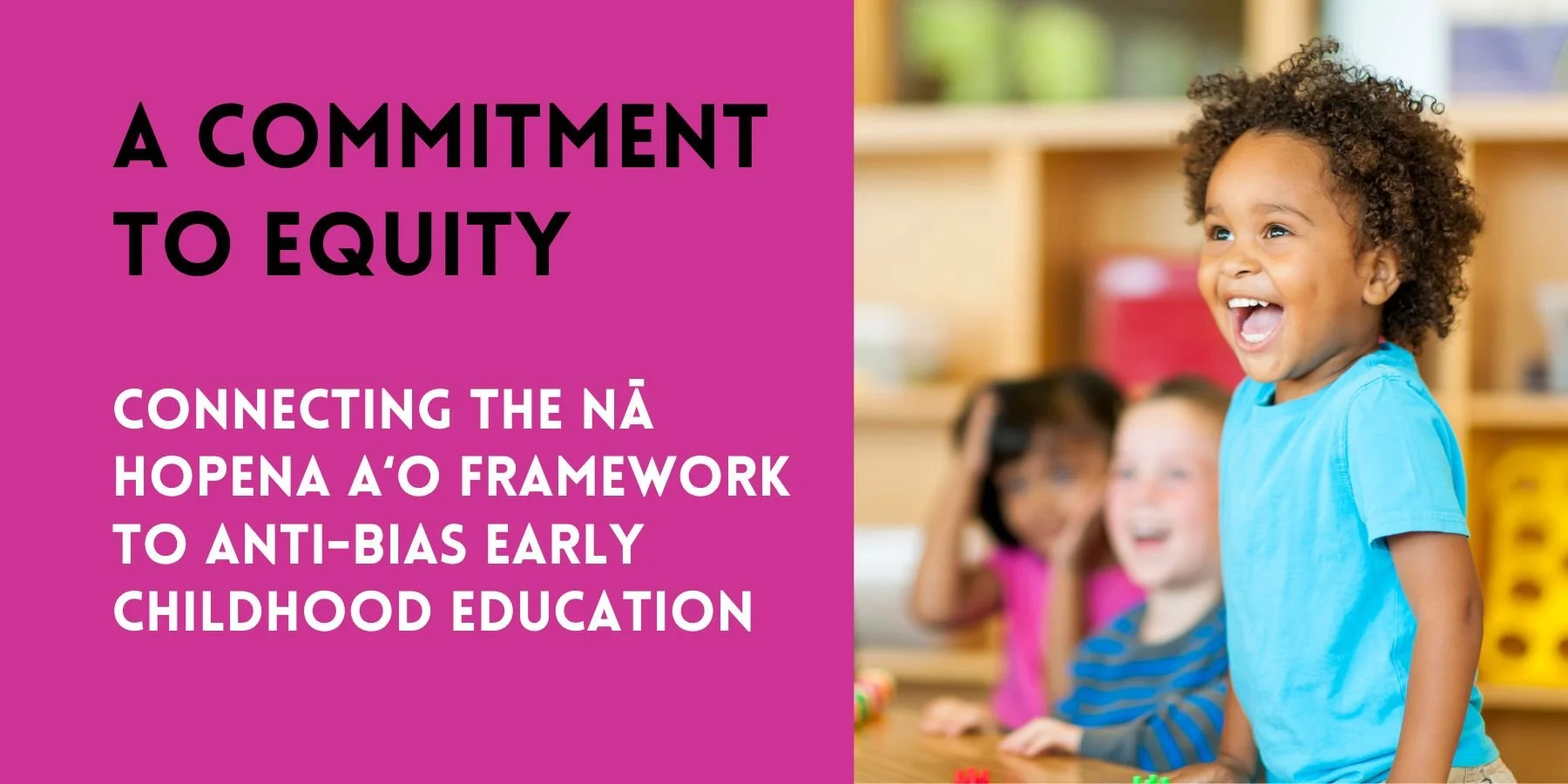
On Thursday, September 11 and Friday, September 12, 2025 the Hanahau’oli School Professional Development Center hosted a two day workshop titled, A Commitment to Equity: Connecting the Nā Hopena A‘o Framework to Anti-Bias Early Childhood Education. In past years, this workshop has sold out within weeks of registration opening, but this time around educators were slow to sign up and the number of attendees was comparatively smaller to previous offerings of this program.

“It’s equal!” squealed the Kindergarten student who poured pebbles from a tall, narrow container into a short, wide container. As many progressive educators know, young mathematicians find joy when they have the freedom to explore and observe their world. They also appreciate that teachers have opportunities to leverage such moments to introduce or confirm math concepts and terms. For example, children often recognize ”same” or “different”, but they may not know how to articulate what exactly they see as the same or different. In the illustration above, the two containers might be different in height, shape, or even color. Yet when they discover that the same quantity of pebbles that filled one container also fills the other, this opens into a teachable moment about equality and proof, albeit within a context that young mathematicians can grapple with.

At the University of Hawai‘i at Mānoa (UHM) School of Teacher Education, our mission is to prepare future K-12 educators through field-based experiences that bridge theory and practice. One of the most critical aspects of our teacher preparation program is ensuring that teacher candidates have authentic teaching opportunities before they enter the profession. As a part of the process, we also want to ensure that we are serving the students, teachers, and communities that we partner with to provide real life hands-on teaching experiences. This is the simultaneous renewal of schools and the education of educators promoted by progressive educator, John Goodlad expanded on this previous blog.

In 2024, I completed my doctoral research publishing a dissertation titled, “Predicting Professional Development Learning Transfer with the Theory of Planned Behavior: A Non-Exploratory Correlational Study.” This study was inspired by years working with anti-bias educators around the world. In this blog I share how my recent research revealed that the successful transfer of professional development learning to classroom practice depends heavily on school culture, particularly individual and shared beliefs about teaching and learning. I also learned, that when a school's pedagogical approach aligns with the training content, teachers are more likely to implement new strategies, but culture alone isn't enough.

To kick off the start of the new year and semester, I had the opportunity to participate on a speaker panel at the Hawaii Education Association’s annual summit held on Wednesday, January 8, 2025, 9:30 am – 130 pm at the downtown YWCA. The Hawaii Education Association (HEA) chose to focus this year’s educator summit on topics critical to the current moment: teacher recruitment and retention.

Hanahau‘oli School continues to strengthen its role as a leader in the progressive education movement by increasing its capacity as a “living laboratory,” which facilitates the “scientific” study of teaching and educational excellence. In partnership with the University of Hawaiʻi at Mānoa, College of Education, the living laboratory at Hanahau‘oli builds on the school’s already established Professional Development School (PDS) model (Goodlad, 1984) to promote the “simultaneous renewal of schools” and the “education of educators.” This partnership creates a school culture characterized by inquiry, systemic exploration, creativity, and data-driven discovery for the purpose of learning more about ourselves, one another, our place (environment), and the art of teaching (design, instruction and assessment). The living laboratory at Hanahau‘oli helps to increase the school and university’s prominence as sought after destinations for educators, researchers, scholars, and innovators who want to collaborate on educational improvement and the creation of a better future society.

Hawaiʻi is a truly unique and special place. Those fortunate enough to live here have a kuleana (responsibility) to care for the ʻāina (land), to support their kaiāulu (community), and to respect the host culture and Native Hawaiian people. But how does one truly learn about this special place, its culture, and its people? While signs, flyers, and public service announcements offer some insight, these touchpoints often remain superficial. To cultivate a deeper understanding and appreciation, it is essential to implement culture-based and place-based education in our schools.

This September, the Hanahau‘oli community was introduced to the school’s 2023-2024 Artist-in-Residence, Howard Wolff. The Artist-in-Residence initiative benefits the school community from the daily interactions between the artist, students, teachers, and staff, as well as from the body of work produced by the artist at the residency’s conclusion. Howard Wolff is a longtime friend of the school and parent of Ari (’03). He brings his background in architecture and his talents as a photographer to Hanahau‘oli to accomplish two of his goals: Capture joyous work in action and help all members of the school community learn how to see … with or without a camera.

On May 13, 2023 Baylee Lorenne graduated from the University of Hawaiʻi at Mānoa, College of Education, Bachelor of Education in Secondary Education (BEd-Secondary) Kahalewaihoʻonaʻauao Program. This was one of the final steps in her journey to become a certified secondary social studies teacher in the State of Hawai‘i. As a part of her culminating experiences in the program, Baylee was asked to share lessons learned from her first year of teaching with both her peers and the new group of teacher candidates who had just entered the program. The following is an excerpt from her public presentation. As a new report from the state Department of Education (2023) highlights the ongoing difficulties of addressing Hawaii's teacher shortage, this blog provides insight into the experiences of young people as they step into one of the most challenging and rewarding professions.

Administrators are always seeking the perfect faculty meeting – one in which the time needed for professional development balances with the knowledge gained by faculty members. Founded over 100 years ago, Hanahauʻoli School is continually working on new ways to strengthen our professional community of learning and stimulate faculty’s thinking about progressive teaching and learning. This past school year was no different, and it resulted in a new initiative, E Kilo Kākou. Designed to provide faculty with the opportunity to visit and thoughtfully observe every classroom and specialist space in the school, it helped us achieve our goal of having increased time to observe and learn more about each other and our programs.
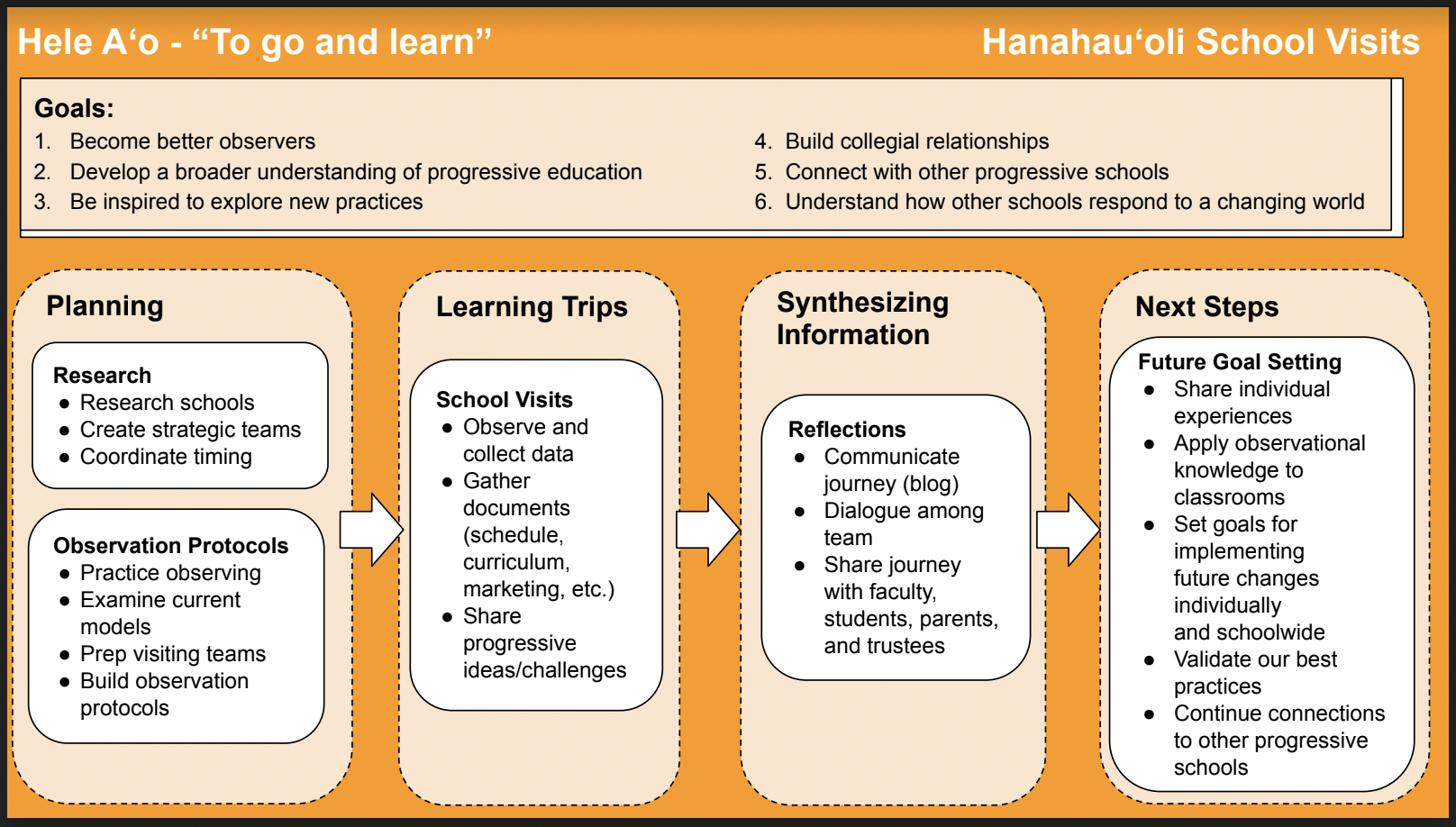
Traveling more than 150,000 miles and visiting more than 20 different progressive schools, the faculty and staff at Hanahauʻoli used the 2019-2020 school year to bring back new ideas. Inspired by the school’s 100th year anniversary in 2018, Lia Woo (‘88), the new Head of School, was hoping the visits would inspire change and growth for the future. “After studying our school’s history, mission and beliefs, I wanted the faculty to look outward and learn from other progressive schools. By engaging in collaborative, experiential learning, faculty not only practiced their teacher-researcher skills but also helped inform future strategic priorities.”

In the previous blog I shared how I honed in on the following problem of practice while teaching handwriting (or letter formation) within my early elementary classroom: The handwriting program I was providing was not very effective for teaching letter formation to the children who needed it most. I noticed this problem most when children were engaged in independent practice, using worksheets and workbooks that were intended to reinforce skills and habits that I had taught through a variety of other letter formation activities in my classroom (see Part 1 of this blog series). This was a problem I had seen before, within my first grade classroom at a different independent progressive school. However, during my semester teaching in a K-1 classroom at Hanahau‘oli School, I honed in on these specific observations:

Teaching is an incredibly complex and dynamic endeavor. Teachers must navigate a complicated web of critical relationships on a daily basis and work together to guide learners through a changing landscape that includes aspects of multiple fields of knowledge. A teacher’s work is influenced by small and large–personal and societal–shifts in the outside world that inevitably make their way into the classroom, sometimes explicitly, other times on the soles of their students’ shoes. Teaching is both an art and a messy science, one that cannot be realistically limited to a single variable.
The Hanahau‘oli Teacher Collaborative is a two-week institute for educators that focuses on interdisciplinary curriculum design for the purpose of engaging youth in meaningful learning. It is led by progressive educator and former Hanahau‘oli Head of School, Dr. Robert Peters. Held on campus, participants have the opportunity to engage in foundational seminars, learn from practicing teachers, observe interdisciplinary lessons and units in action, experience interdisciplinary strategies and resources, collaborate with other educators, design interdisciplinary units of their own, and receive individual coaching as they implement curriculum and reflect on their practice.

John Goodlad is a giant in the history of the progressive education movement. He lived with strong moral convictions and had the incredible ability to turn his ideas into action. A devotee of John Dewey, Goodlad envisioned schools “where accomplished teachers could lead their peers, where students are not grouped by age, and where the ability to discuss and assess ideas matter more than test scores” (Woo, 2014). Author of the highly influential book, A Place Called School (1984), Goodlad documented the now classic eight-year study of 38 schools in 13 communities,
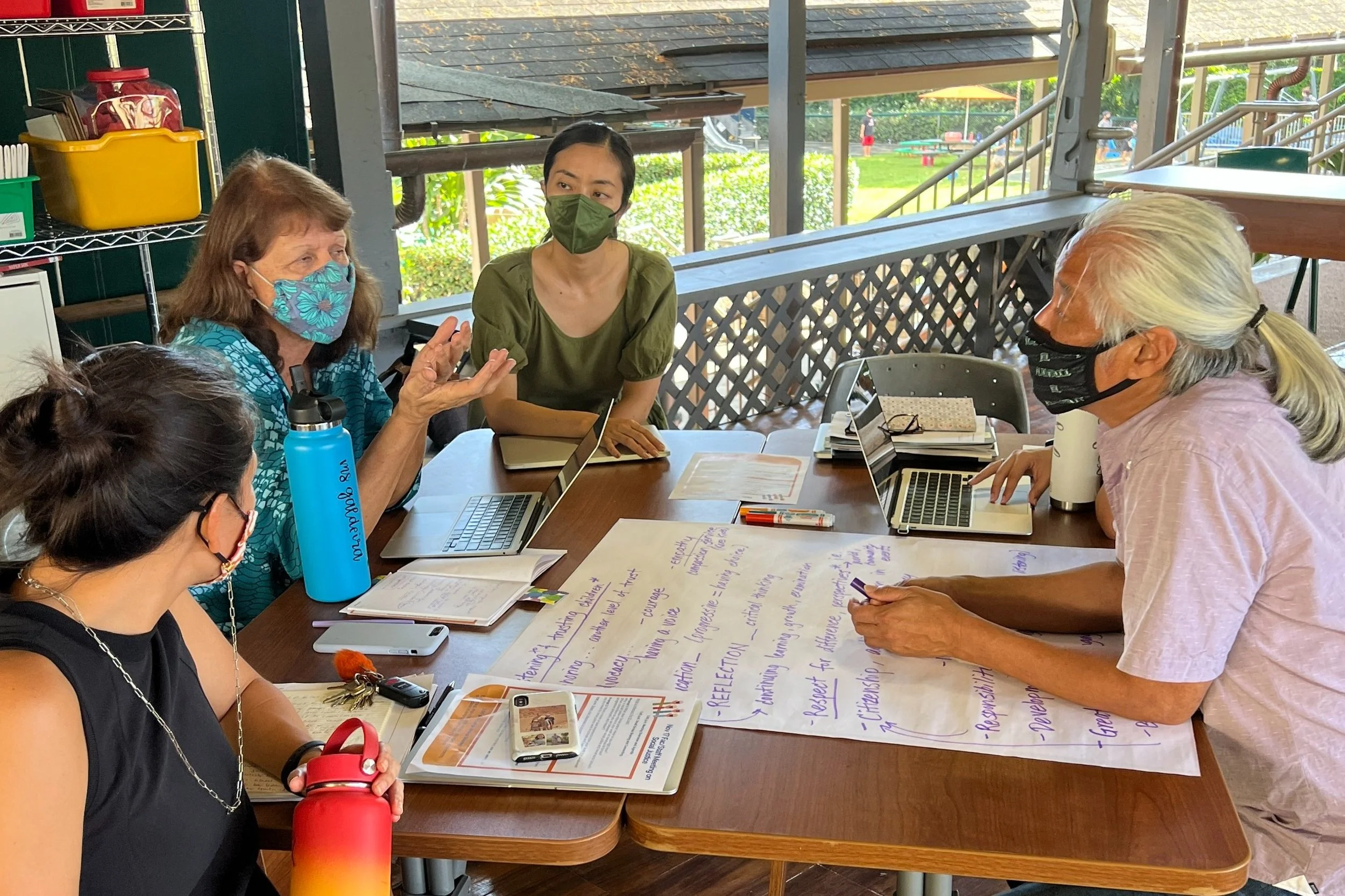
In Remaking Gathering: Entering the Mess, Crossing the Thresholds, author Priya Parker shares about the “art of gathering.” She explains, “gathering matters because it is through each other that we figure out what we believe.” Given the number of ways human gatherings have changed over the course of the pandemic, she contends that the current moment has the potential to transform the ways we spend our time together – at work, at home, in our communities, and beyond. She elaborates, “this time of regathering”--as many transition from online large-group community meetings to in person events-- “offers a threshold we can decide to cross with imagination, purpose, and joy.” This message resonated with me as I recently joined Hanahau‘oli School faculty in our first in-person faculty meeting since March 2020.
Founded in 1918, Hanahau‘oli School is a one-hundred-year-old testament to the American progressive education movement. Originally conceptualized by Sophie Judd Cooke and Gudrun Thorne Thompson from the Francis Parker School in Chicago, Hanahau‘oli—which means joyful work school…
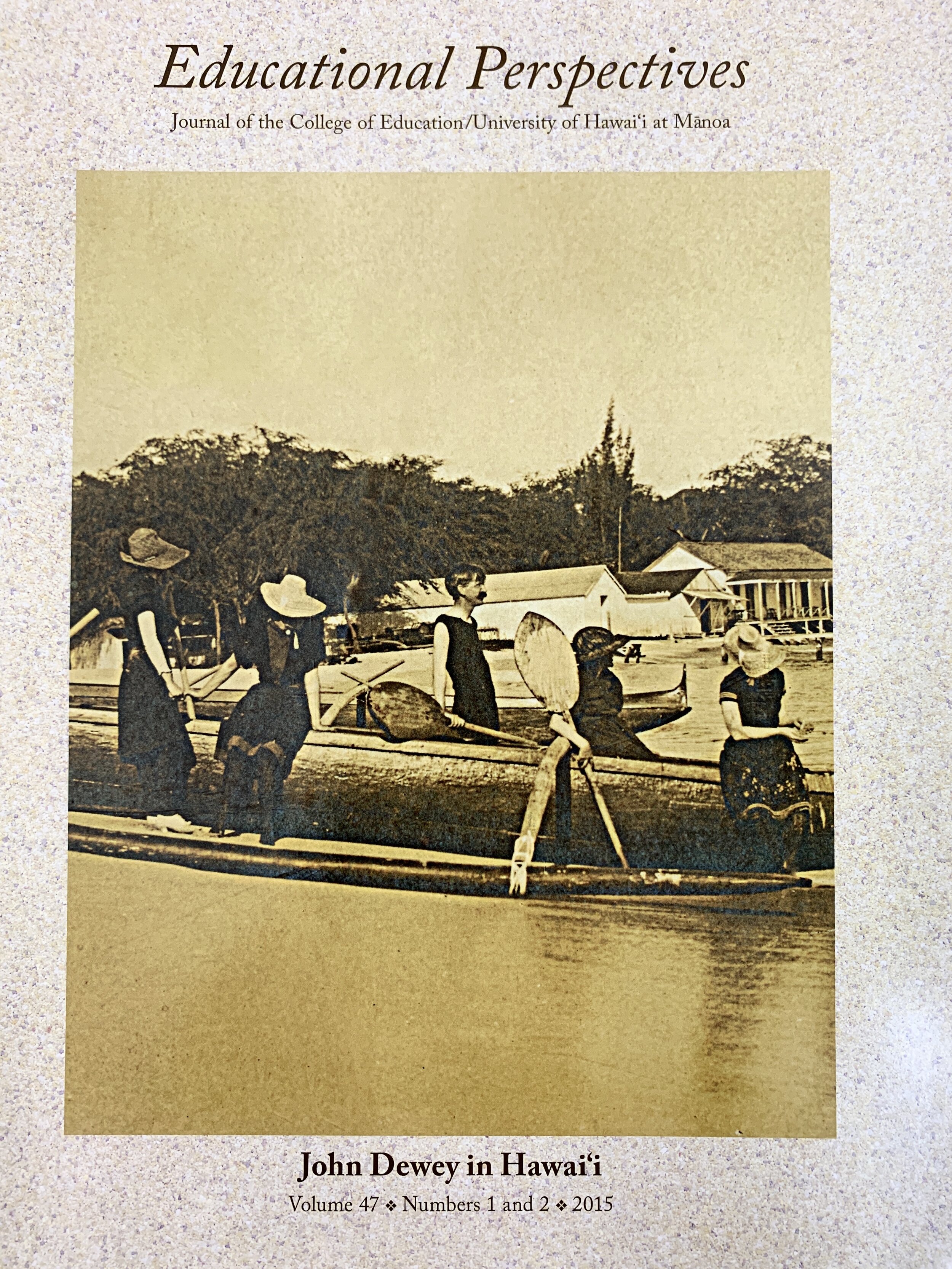
Education in the post COVID-19 pandemic period has the potential to dramatically shift societies globally and create lasting positive change: increased climate consciousness, a more ethical integration of technology within the human experience, increased care for the social emotional well-being of individuals and communities, and more socially just forms of democratic governance. In the words of progressive era philosopher John Dewey (1916), “as societ[ies] become more enlightened, [they] realize that [they are] responsible not to transmit and conserve the whole of [their] existing achievements, but only such as make for a better future society. The school is its chief agency for the accomplishment of this end” (p. 20). Now is the time for educators and society at-large to reflect on what we want to take with us from pre COVID-19 life, what pandemic era innovations we want to carry forward, and what aspects of collective living no longer serve us.
Connecting progressive education history to today
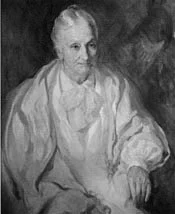
The Samuel N. and Mary Castle Foundation concentrates its efforts on creating greater social equality and opportunity through increasing access to high quality pre-K education, and since its inception has been deeply invested in growing the American progressive education movement in Hawai‘i and beyond.
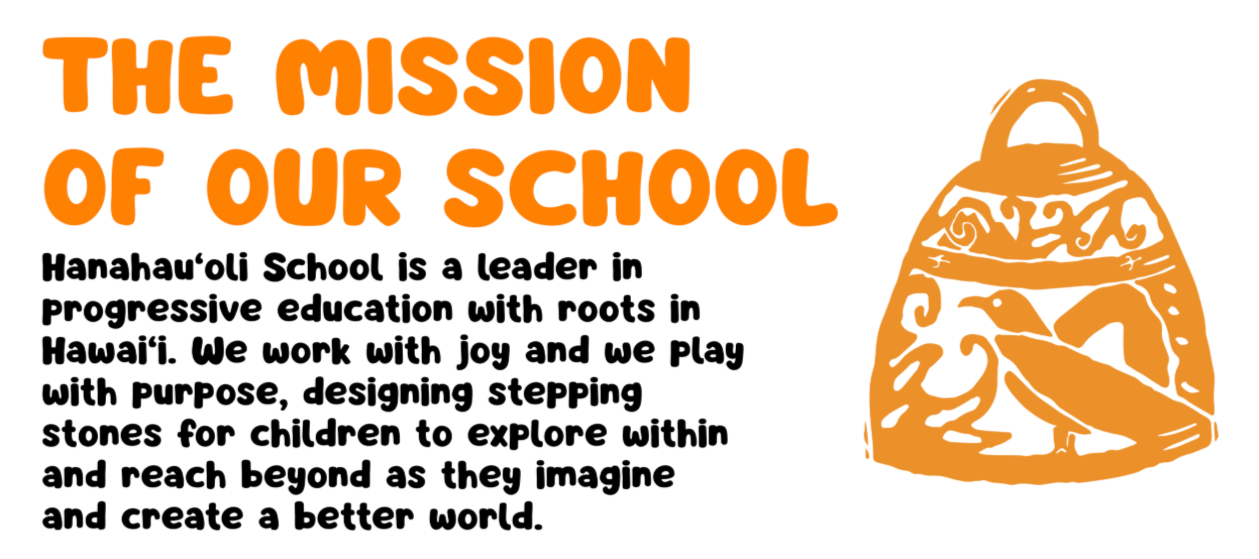
In August 2025, Hanahau‘oli School shared a refreshed Mission Statement and a thoughtfully articulated framework of Guiding Beliefs—the result of a reflective and collaborative process involving voices from across the school community. While grounded in the values, philosophy, and traditions that have guided Hanahau‘oli since 1918, this renewed mission looks ahead with hope and intention.

We have taken on a new venture at the Hanahau‘oli School Professional Development Center–printing apparel with hallmark progressive education quotes meant to inspire and spread the message of the ongoing progressive education movement. Characterized by a distinct philosophy and practice that emphasizes experiential, child-centered, and hands-on learning, progressive education at its core is also dedicated to ensuring the future of our democracy. It is for this reason that we selected this quote from John Dewey (1916) to print on our inaugural line of t-shirts: Democracy has to be born anew every generation, and education is its midwife” (p. 138 - 139).
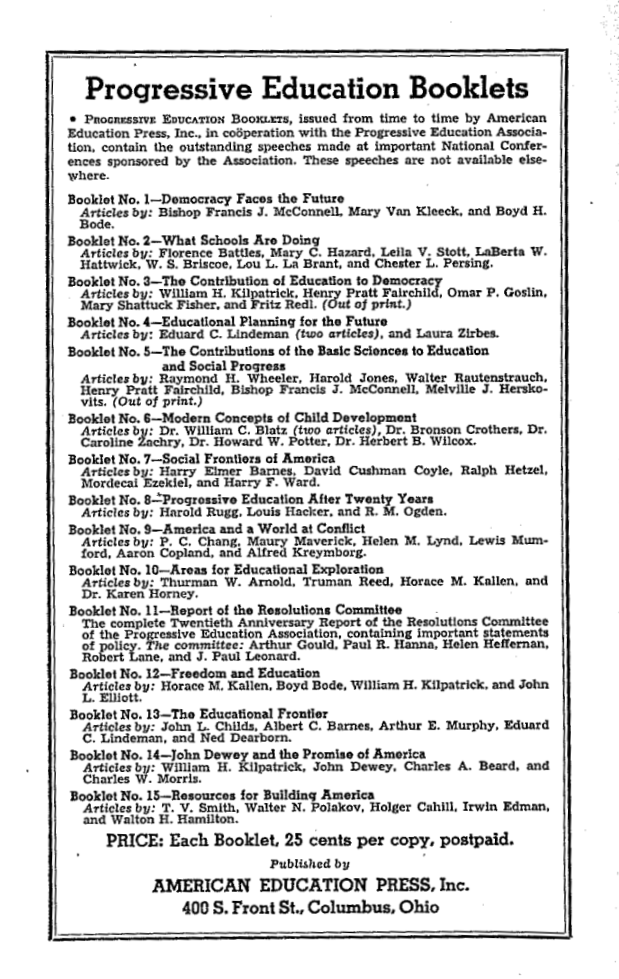
To wrap up my Summer 2025 blog series featuring a number of speeches given at Progressive Education Association (PEA) annual meetings held in the late 1930s, I present complete electronic scans of the booklets to all who find mutual excitement and curiosity about learning from the progressive education movement’s history. For those of you who missed my first blog in this series, I stumbled upon the PEA booklets during a trip to the University of Hawaiʻi at Mānoa Hamilton Library. Nestled on the same shelf as another book I was looking for lay a stack of eight delicate publications titled, “PROGRESSIVE EDUCATION BOOKLET: PROGRESSIVE EDUCATION ASSOCIATION”.

This blog is the third in a series to disseminate a number of speeches given at the Progressive Education Association (PEA) annual meetings in the late 1930s. The Progressive Education Association 1937 – On Teacher Happiness , Excerpts On Progressive Education from “The Contribution of Education to the Improvement of Human Relations” By Mary Shattuck Fisher 1937, and Will Machines Replace Humans? Why This Question (and Others) Are Not New For Progressive Educators. The PEA was a networked group of individuals who were dedicated to the spread of progressive education in American schools from 1919 to 1955. I recently discovered a stack of booklets at the University of Hawaiʻi at Mānoa Hamilton Library containing the published lectures and I’ve been eagerly reading them throughout the summer as they prove to be rich in ideas and essential to the organization’s guiding objectives:

In two previous blogs, The Progressive Education Association 1937 – On Teacher Happiness and Excerpts On Progressive Education from “The Contribution of Education to the Improvement of Human Relations” By Mary Shattuck Fisher 1937, I recounted my story of discovering a number of “Progressive Education Booklets” published by the Progressive Education Association (PEA) in the late 1930s. Established in 1919, the PEA was a networked group of individuals who were dedicated to the spread of progressive education in American public schools up until 1955. This included expanding the reach of progressive education philosophy and pedagogy and engaging members in critical discussions about the social and political issues of the day. In my November 5, 2024 blog I shared how each booklet contained the transcripts of speeches given at national PEA conferences, and how they each had this similar inscription (with small differences depending on the date and location of the meeting the booklet was documenting) explaining:

In a previous blog, I recounted my story of discovering a number of “Progressive Education Booklets” published by the Progressive Education Association (PEA) in the late 1930s. Established in 1919, the PEA was a networked group of individuals who were dedicated to the spread of progressive education in American public schools up until 1955. This included expanding the reach of progressive education philosophy and pedagogy and engaging members in critical discussions about the social and political issues of the day. In my November 5, 2024 blog I shared how each booklet contained the transcripts of speeches given at national PEA conferences, and how they each had this similar inscription (with small differences depending on the date and location of the meeting the booklet was documenting) explaining:

“[Progressive schools demonstrate] tendencies towards greater freedom and an identification of the child’s school life with his environment and outlook; and, even more important, the recognition of the role education must play in a democracy” –Preface, Schools of Tomorrow. The quote above is taken from the preface of the book Schools of Tomorrow. Written by John Dewey and his daughter Evelyn Dewey, it was first published in 1915. At its issuance, the book aimed to advocate for a progressive philosophy of education by “show[ing] what actually happens when schools start out to put into practice, each in its own way, some of the theories that have been pointed to as the soundest and best ever since Plato (Dewey, 2023/1915, preface). The Deweys accomplished this by writing a book that integrated John’s philosophical essays with narratives from Evelyn’s on-site observations at progressive schools across the United States. Ultimately, the book had a profound influence on the growth of the progressive education movement, giving credibility to the small number of already existing progressive schools and inspiring the founding of new schools that emphasized hands-on learning and student-centered approaches over traditional, rote memorization.

In a recent breakout session at the Progressive Education Network (PEN) conference held at Wickliffe Progressive in Columbus, Ohio, one of the participants asked the group for a resource to help them learn more about progressive education’s defining characteristics and essential features. While no one in the room wanted to offer “a single fixed definition”–which, as Alfie Kohn (2015) explains, is “fitting in light of [the movement’s] reputation for resisting conformity and standardization” (p.2)–everyone did agree that a collection of progressive education definitions would be helpful for the work ahead. This blog is a small attempt to get started on such a resource, but is by no means finished or complete. It is a definite work in progress!

Established in 1919, the Progressive Education Association was a networked group of individuals who were dedicated to the spread of progressive education in American public schools up until 1955. This included expanding the reach of progressive education philosophy and pedagogy and engaging members in critical discussions about the social and political issues of the day. Eugene Randolph Smith was the first PEA president, and he helped to put into writing the overall objectives of the Association.

In 1937, Louisa Palmer wrote to the Hanahau’oli School community:
Progressive education..is a moving, dynamic, changing education – not a theory or a system proved and therefore static, but a living thing, growing, continuously having to change because of the three great changing elements with which we deal – children, environment and civilization or culture. This should not indicate instability or following fads, nor change of fundamental principles. But it does indicate a readiness to accept a new viewpoint when the need for it arises; it does indicate watching life and children alertly – not passively as so much former education has done (Palmer, 1937).

In a previous blog post, I introduced readers to H.S. Townsend, Hawai‘i’s Inspector General of Schools from 1896 - 1900, and the tremendous contributions he made to the progressive education movement in Hawai‘i and beyond. This included sharing about Townsend’s The Progressive Educator newspaper, which was distributed monthly from 1893-1899, “one for every teacher of printed record in the Hawaiian Islands” (p.30). At the time, the newspaper provided cutting edge progressive education articles and resources. It also served as a foundation for the “Teachers’ Reading Clubs,” which were established “in nearly [every] school district” (p.31) across the nation. Townsend’s strategy was to provide educators with stimulating content that was both philosophically and practically relevant to their work in schools, and then the teachers could apply what they read to the development of their own progressive philosophy and pedagogy as they implemented new practices in their schools and classrooms and engaged in meaningful professional discussion and reflection with their colleagues. There is no doubt that Townsend’s little but mighty newspaper transformed public education in Hawai‘i at the time it was in circulation.

In this blog, I aim to share more about Henry Schuller (H.S.) Townsend. He was one of Hawai‘i’s leading American progressive educators who was “expected to be appointed the first superintendent of public instruction as soon as the territorial government was established” (Hunt, 1969, p. 297), but who was ousted from the position in 1900 because of the “aggressive Americanization campaign…[implemented in the] territory’s public schools” (Americanization through the school system, 2023). I was first introduced to Townsend while researching the chronology of public education leadership in Hawai‘i during the Kingdom, Republic, and Territorial time periods (see the chart below).

There are many important voices who have shaped and continue to shape the ongoing progressive education movement. For example, the quotes from John Dewey and George Herbert Mead–written into a Hanahau'oli School brochure published in 1919–are as relevant today as they were when the pamphlet was first printed. Listed under a section of the brochure titled, “Aim and General Methods,” the words of Dewey and Mead frame the overall philosophy and pedagogy of the school at its founding. They serve as a foundation, or starting point from which the architects of the school’s original design could lean on and build off of as they “tried new methods and broke with the stilted formal type of instruction which was common at that time” (Cooke, 1964, p. 79).

An important part of the Hanahau‘oli School Entering Teacher Collaborative (previously featured in this blog) is the opportunity for new teachers to visit the school archives to learn more about the school’s history and progressive education philosophy. To prepare for our time together in this special place, new teachers read about the history of Hanahau‘oli on the school’s website, select and read an additional piece of writing from a former head of school (e.g. Palmer, Mills, Hurley, Peters, Pohl), and they generate questions about what they want to know more about related to the school's history and culture. On the day that we gather in this special place, the teachers' have time to journal, learn about key documents and artifacts, and most importantly use the objects in the room to reflect on their own progressive education practice and explore questions about the school’s history together.

In this final musing on the many thought-provoking questions posed at the Modern Progressive Education Panel Discussion for Human Restoration Project’s first ever Conference to Restore Humanity! (view a complete recording of our discussion online here), let us examine the ways the progressive education movement has grown between the early 1900s and today. Human Restoration Project’s Chris McNutt posed the following questions to Josh Reppun, ambassador for WhatSchoolCouldBe.org, Brendan McCarthy, a scholar-in-residence in the University of Hawaiʻi at Mānoa Progressive Philosophy and Pedagogy graduate program, and myself. What are the driving factors behind the growth of the modern progressive education movement? What is different in a modern progressive education versus that of the past? How is it expanding today?

In my October 2, 2022 post on the Progressive Philosophy and Pedagogy Blog, I shared one of many engaging questions posed to me at the recent Modern Progressive Education Panel Discussion for Human Restoration Project’s first ever Conference to Restore Humanity! (View a complete recording of our discussion online here.) Organized by Human Restoration Project’s Chris McNutt and including the perspectives of Josh Reppun, ambassador for WhatSchoolCouldBe.org, and Brendan McCarthy, a scholar-in-residence in the University of Hawaiʻi at Mānoa Progressive Philosophy and Pedagogy graduate program, this conversation continues to stimulate wonderings for me today.

In 1949, a group of progressive educators asked, “What is best for children?” and a group of parents pondered, “What education do our children deserve?” Their questions gave birth to Westland School over 70 years ago. They were risk takers, passionate in their hopes for a better world, and certain that this world could begin by educating their children in a humanistic, democratic way. They understood that youngsters displayed an innate joy of freedom in learning and were certain that a mode of education existed that could retain and heighten the pleasure of mastery while simultaneously instilling values and a feeling of responsibility to the class, the school, the community, and the world. During the time of Joseph McCarthy, Westland became a safe haven for children and spouses whose fathers and husbands were sent to jail for refusing to speak before the House Un-American Activities Committee. Today, Westland is a modern safe haven, an institution where democracy is practiced, where communicating across differences is encouraged, and where community is integral.

Visionary founder of Hull-House, a Chicago-based settlement house established in 1889, Jane Addams was critical to the development of the American progressive education movement. Vehemently "against a restricted view of education” (Addams, 1910, p. 51), Addams built Hull-House to meet the needs of the community it served and expand traditional notions of schooling by including innovative social, educational, and artistic programs. Philosophically aligned to other pragmatists of the time, she believed that education should not be "disconnected from the ultimate test of the conduct it inspired" (Addams, 1910, p.46).
Progressive Education Pedagogy & Practice
In 2023, visiting scholar Dr. Christoph Kühberger immersed himself in a variety of educational settings across O‘ahu, including Hanahau‘oli School. The blog to follow provides a window into the insights he had about how educators in Hawai‘i teach critical historical concepts like “change, continuity and context,” “perspective,” and the use of “historical sources and evidence” in Hawaiian history.
The Navigating AI in Education Think Tank took place over three days during the summer of 2026. On the last day, something magical happened. All the moments leading up to that day—identifying our own values, perspectives, and experiences with AI; understanding the tensions surrounding its use; hearing different perspectives; engaging in healthy push and pull; and collectively making sense of what AI is and is not—came together. As a recipient of a Hanahau‘oli School Professional Development Center Scholarship, Kate Werner thoughtfully engaged in the workshop and then shared her takeaways and reflections with us to extend to others who may be seeking to grow in their own thinking about AI and education. She beautifully describes her experience below.
In her research on the successful transfer of professional development learning to classroom practice, Dr. Sara L. Wicht (2024; 2025) outlines six facilitating conditions that support professional development (PD) implementation after the workshop or PD experience.
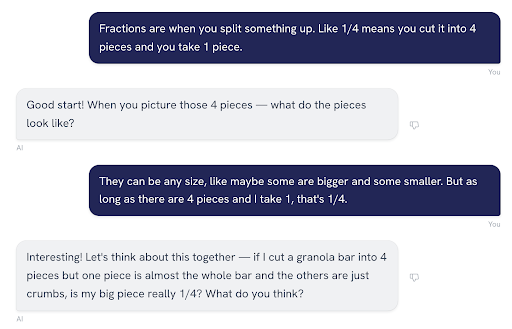
Progressive educators should care about the design of their software as much as they care about the design of their classrooms. And for the first time, we can finally do something about it.

At the heart of every child is a natural scientist – a curious explorer ready to ask "why" and "how" about the world around them. But as educators, how do we shift from being the source of all answers to being the facilitators of their discovery?
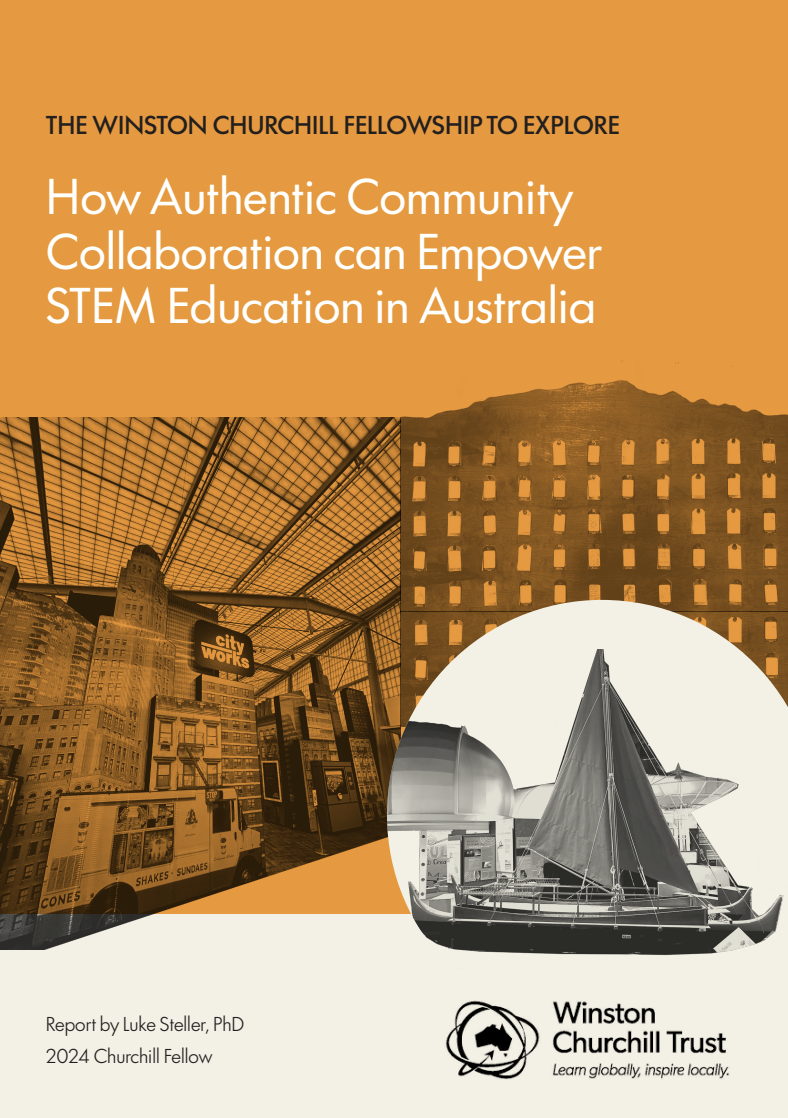
In our previous post, Dr. Luke Steller explored how mission-aligned partnerships—like Hanahau‘oli School’s collaboration with the Mānoa Heritage Center—can transform STEM learning. But how does a school cultivate a staff and student body that is ready for such deep applied work?
The PDC had the pleasure of hosting researcher Dr. Luke Steller for an immersive school-day visit in September 2025. A science communicator and community engagement leader from Australia’s Northern Territory, Dr. Steller was exploring how STEM education can be strengthened through authentic collaboration with local communities as a Winston Churchill Fellow.
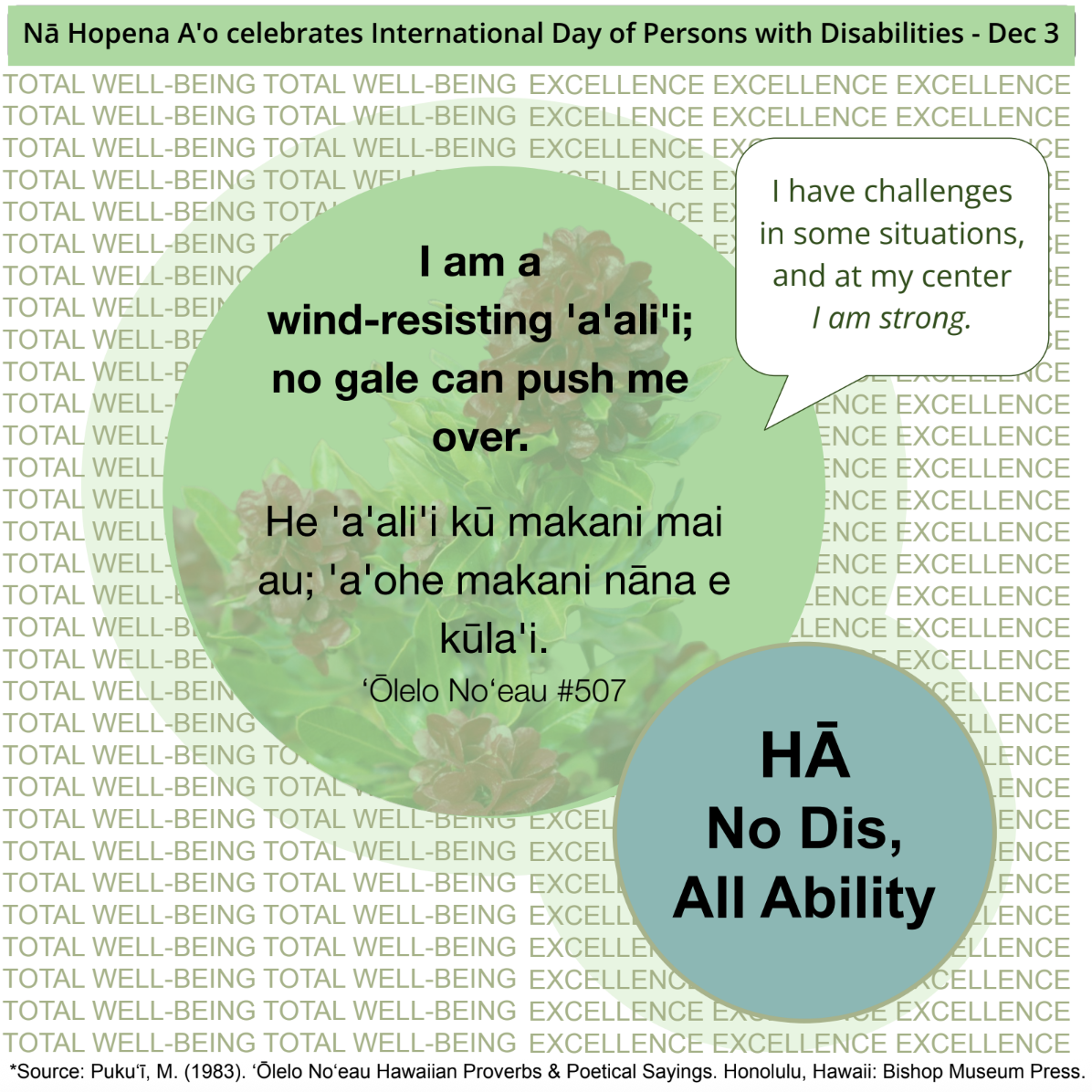
One of the greatest honors of my life has been learning, growing, and teaching at the only public high school on the rural and very Hawaiian Island of Molokai. Located in Hoolehua, Molokai High School has a predominantly Native Hawaiian student body, with approximately 76.5% identifying as Native Hawaiian or Pacific Islander.
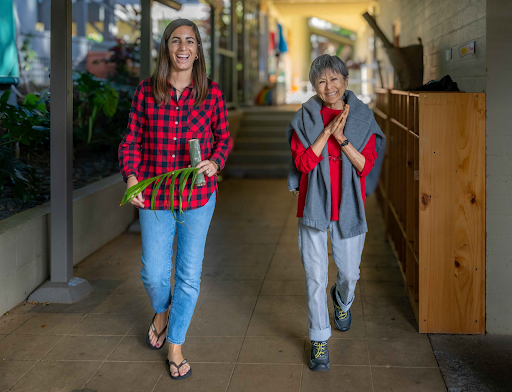
Each school day, I experienced the joy, creativity, and the possibility this model of education can bring to life. Over time, I came to believe that this is how learning should feel for everyone: both teacher and student alike.
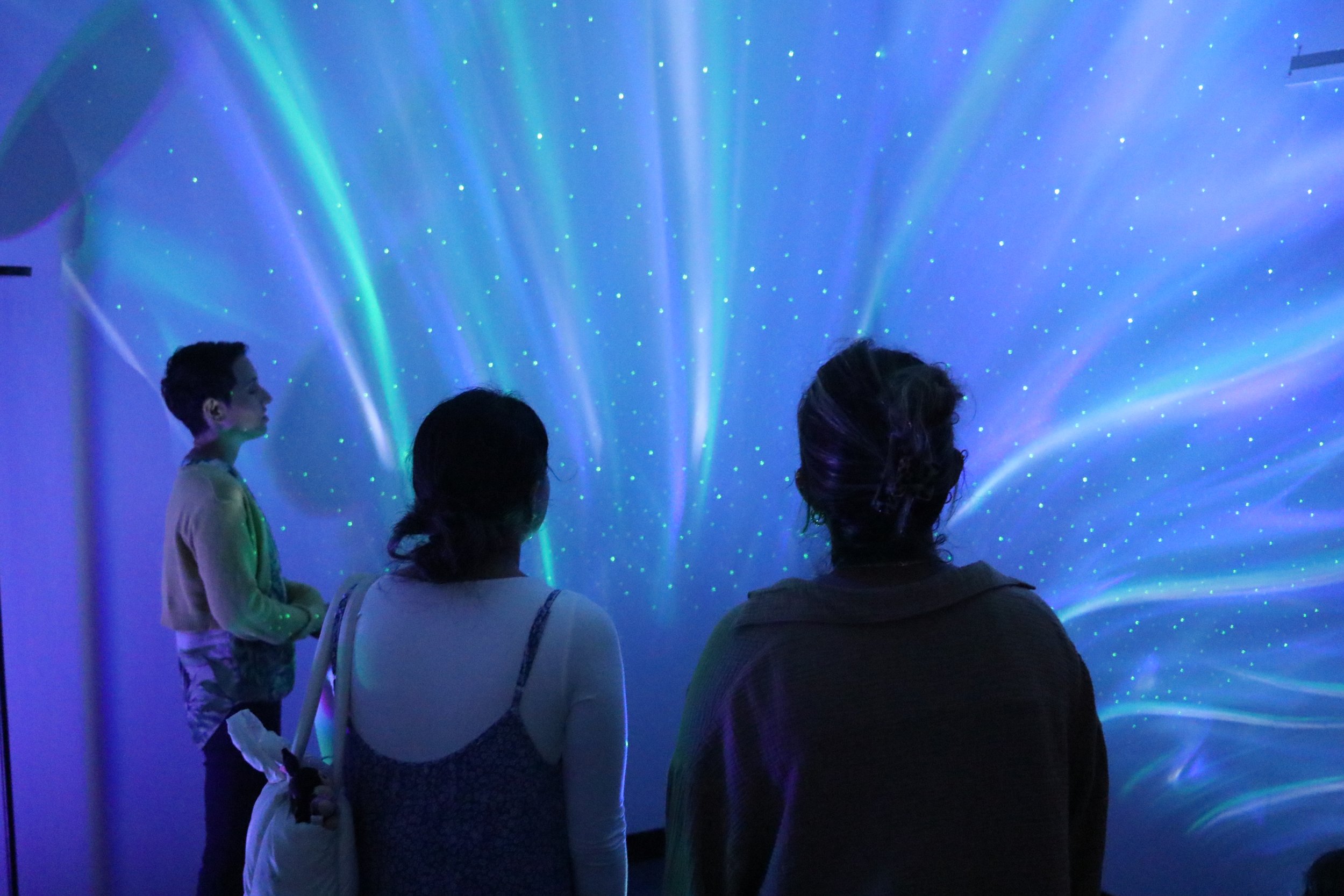
Environments shape how we think, feel, and engage more than we may realize. Have you ever walked into a space that instantly made you feel overwhelmed? Sensory regulation, or the brain’s ability to process, organize, and respond to sensory input, is essential to learning, attention, and emotional well-being.
We are Federica Gallone and Federica Lentini – two educators who feel most alive when we are learning with children. Our professional lives have unfolded in early childhood settings, where relationships, curiosity, and wonder shape our days. We have worked closely with children as teachers, atelierista, and pedagogista, accompanying students’ thinking through materials, dialogue, light, and documentation.
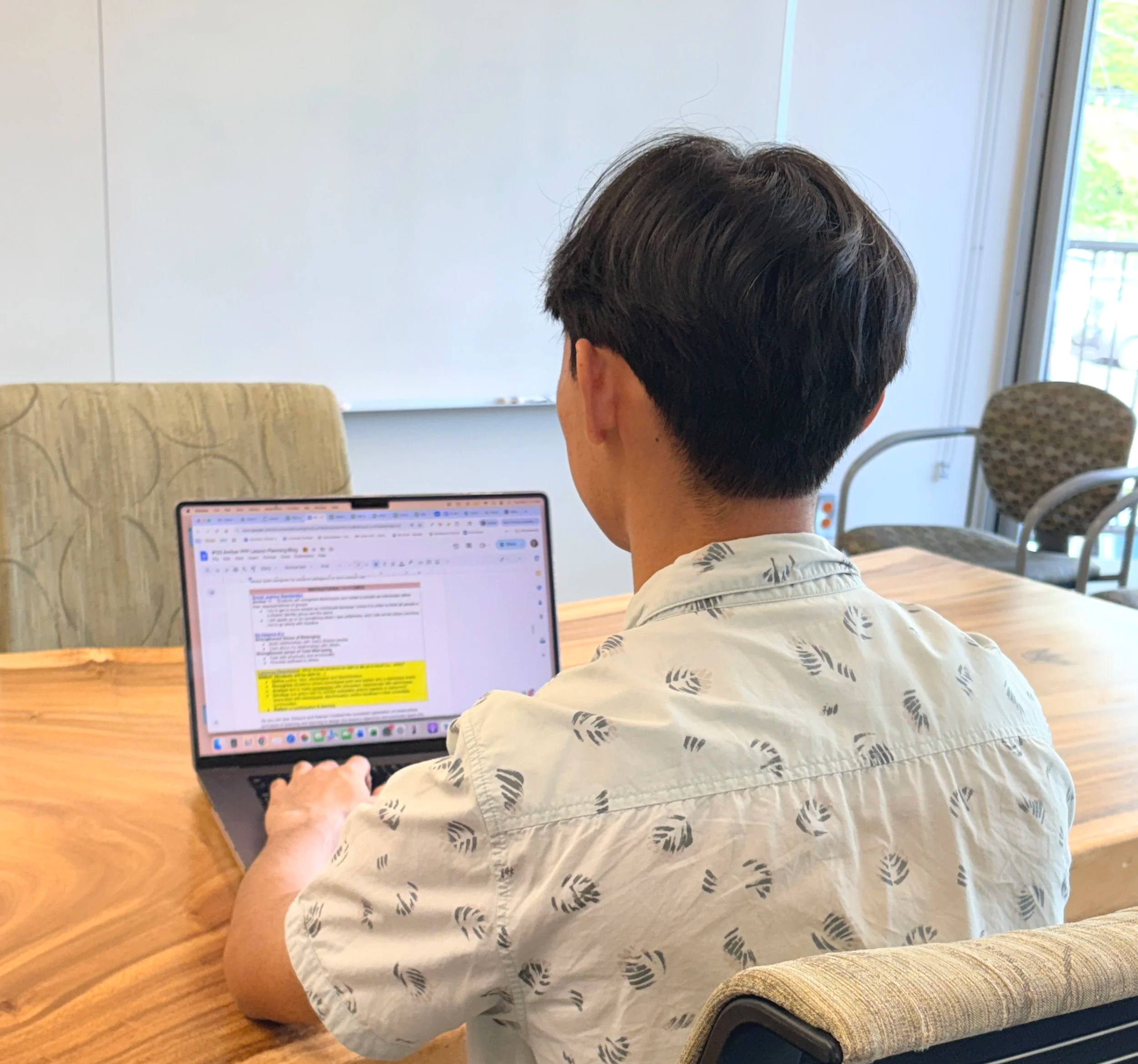
It is clear that the progressive education tradition favors longer-term units of study or projects as the foundation for curriculum design, rather than shorter lessons or discrete lesson planning.
As we continually explore the question of what it means to be a progressive educator, one of the answers we consistently return to is the idea that progressive education instills within the child a lifelong love of learning. John Dewey made this clear (and a central part of his text Experience and Education) when he wrote, “The most important attitude that can be formed is that of the desire to go on learning” (p. 20). In progressive spaces, we ensure this in many ways - by facilitating hands-on, student guided learning; by following children' s lead in the classroom, and, as Julie Stern writes in her text Conceptual Understanding: Harnessing Natural Curiosity for Learning that Transfers, by “respect[ing] the developmental stages of childhood with intellectual rigor” (p. 4).
It's back to school season. At this time of the year, educators and leaders are thinking about many things: materials to buy, curriculum to plan, classrooms to prepare. But what about our inner preparation as educators? I have found over the years, in my own work and in working with teachers around the world, that it's not what we've planned, but how we've prepared ourselves that will determine our success in the classroom.
“It’s equal!” squealed the Kindergarten student who poured pebbles from a tall, narrow container into a short, wide container. As many progressive educators know, young mathematicians find joy when they have the freedom to explore and observe their world. They also appreciate that teachers have opportunities to leverage such moments to introduce or confirm math concepts and terms. For example, children often recognize ”same” or “different”, but they may not know how to articulate what exactly they see as the same or different. In the illustration above, the two containers might be different in height, shape, or even color. Yet when they discover that the same quantity of pebbles that filled one container also fills the other, this opens into a teachable moment about equality and proof, albeit within a context that young mathematicians can grapple with.

The excerpts above are taken from Diana Hess and Paula McAvoy’s (2015) The Political Classroom: Evidence and Ethics in Democratic Education. I first learned about the book and the study described in the publication while attending the American Educational Research Association (AERA) annual conference as a junior faculty member at the University of Hawai‘i. I was and continue to be deeply impressed with the book’s in-depth research, encompassing both qualitative and quantitative data, and its exploration of the ethical dilemmas teachers encounter when teaching about political issues.

For the past decade, I’ve dedicated myself to teaching and developing an Aloha ʻĀina curriculum at Waiʻanae Intermediate. It is my mother, Natalie Oana, who taught science through a Hawaiian lens at Hālau kū mana who inspired me to become a teacher. In my first year of teaching, when I found myself at Waiʻanae Intermediate with no curriculum, I thought back on what she taught me. I took a lot of professional development classes and began to include moʻolelo in my lessons, and began to see a considerable difference in student engagement.

Ever scroll through LinkedIn and feel like it’s the movie, Groundhog Day? Same creator, same viral posts. 1,000 comments every time.
What’s his secret? AI-generated content, including his video avatar explaining the daily showcased app.
Picture an AI-assistant chef in your content kitchen, perfectly chopping thoughts, accurately seasoning sentences, and plating paragraphs in just the way your diners like it.
But how much creativity is there in the work if you’re only adjusting settings and hitting “generate” until credits run out? Did the creator infuse any of his personality to craft something unique?
In 2024, I completed my doctoral research publishing a dissertation titled, “Predicting Professional Development Learning Transfer with the Theory of Planned Behavior: A Non-Exploratory Correlational Study.” This study was inspired by years working with anti-bias educators around the world. In this blog I share how my recent research revealed that the successful transfer of professional development learning to classroom practice depends heavily on school culture, particularly individual and shared beliefs about teaching and learning. I also learned, that when a school's pedagogical approach aligns with the training content, teachers are more likely to implement new strategies, but culture alone isn't enough.

At the end of the Fall 2024 semester, I was reminded of the wonderful impact that Howard Gardner’s theory of multiple intelligences (introduced to me close to 25 years ago) continues to have on my teaching practice. It was the last day of class for the second cohort of our University of Hawaiʻi at Mānoa College of Education Progressive Philosophy and Pedagogy masters students. In addition to the incredible amount of reading, writing, and dialogue they had engaged in over the course of the semester, the group was invited by my co-teacher (Dr. Chad Miller) and I to give a presentation of learning using a modality that would best communicate and illustrate their growth. In the presentation criteria we encouraged them to use a medium that would, “capture the spirit of who you are becoming as a progressive educator and philosopher.” It was a small parameter embedded into this end of semester assessment activity, a piece of criteria that ultimately yielded a very moving set of deliverables.

At a Friday assembly in December, Hanahau‘oli School children were enthusiastically introduced to a brand new Joy of Art experience that would take place in January 2025. The children’s excitement was felt throughout the day as they talked with one another at recess and at lunch, sharing their reactions to the new learning opportunities presented and articulating their preferences of which Joy of Art experience they were most interested in with their friends. That night, children went home and continued to talk with their parents and caregivers about the two days of choice-driven learning they would get to participate in at the start of the new year.

Resilience is a topic we hear a lot about these days, and we all have a general understanding of what it is - but how do we teach it to young people? We intuitively know how significant resilience is when it comes to overall well-being and success in life – but the skills that make up resilience aren’t always obvious. The good news is that resilience can be learned and can be influenced by both internal and external factors that, as teachers, we do have some control over.
At the end of each school year, I always look back and reflect. I think about what was learned, how our community formed, and the unforgettable moments I want to celebrate. While there were many things I remember about this particular year (2023-24), it was a moment during the last three weeks of school that sparked the inspiration for this blog. As a teacher and philosopher, I’ll share what I learned about the powerful ways in which “care ethics and epistemology” can be integrated into the work we do in schools. I’ll also make some suggestions for how we can promote the development of care ethics and epistemology in our students and lay the foundation for a thriving and meaningful classroom community like the one that I was able to cultivate and nurture with my students during this school year.

In this post we share a glimpse into the impact studying philosophy can have on mental health and well-being. Dr. Sophia Stone provides candid and emotional insights into the hardships she faced as a young woman and how philosophy, and incorporating philosophy in people's lives, came to be her calling. In reading about the work she conducts through Wisdom's Edge, it is our hope you will find empathy, curiosity, inspiration, and your own healing. Content warning: this blog discusses mental health issues, eating disorders, and drugs, which may be difficult for some readers.

Recently, I spent some time in the Po‘e Ka‘ahele (fourth and fifth-grade) classroom at Hanahau‘oli School. The teacher shared with her students: “Today, we are learning more about a volunteer project we are working on to clean up the Ala Wai Canal.” She further described how the project involved making mud balls called, “Genki Balls,” out of dirt and “good” bacteria. When the Genki Balls are dried and thrown into the canal, they sink into the sludge at the bottom and release the bacteria, which will “eat” the sludge and make the Ala Wai cleaner for fish and humans. (It is fascinating to see how groups of people can work together to make the world a better place. If you want to learn more, click here.)

Hawai‘i has the most endangered species in the United States, where many plants are unique to our islands. Many take for granted the beautiful natural environment our ancestors cultivated and lived harmoniously with. This diminished plant relationship is not unique to Hawaiʻi, it is actually an aspect of modern life that is prevalent in the industrial world. The phenomenon is called “plant blindness” (an inability to see or notice the plants in one’s own environment), and it affects approximately 91.9% of the population in Hawa‘i, especially those of us who reside in urban areas and who rely on urban services rather than foraging in the environment.

My journey at Hanahauʻoli School started over 30 years ago. I was hired as the school’s Science and Computer Teacher. Five years into my time at Hanahauʻoli, I took a year’s sabbatical and completed my Master’s of Education with a focus in Educational Technology. I returned to teach in the multiage second and third grade class for two years. Then I became the Technology Coordinator. Several years later I moved to being the school’s Technology Integration Specialist where I worked more with teachers, guiding them with integrating technology (projects) into their curriculum. Eventually, I decided to step back into the classroom and taught in the fourth and fifth grade multiage class until our Head of School asked me to facilitate a new endeavor for our 106 year old progressive school – The Collaborative Studio. In this blog I share a brief history and introduction to this new makerspace and the ways it helps Hanahau‘oli students explore, experiment, create, collaborate, and learn by doing.

The River School in Washington, DC and, subsequently, the Potomac River Clinic and National Center for Hearing Innovation, were born out of the shared vision to ensure all children with hearing loss have the best start imaginable. The first and only progressive, independent school of its kind, The River School provides children with hearing loss and their hearing peers an inclusive learning environment with a heightened focus on language, literacy and social development delivered by highly educated teachers and speech therapists. Working in conjunction with clinical services that lead the field of pediatric auditory, speech and language development, The River School serves a higher purpose and attracts families and professionals who embrace the mission.

On October 12, 2023 I had the opportunity to join a guided visit for educators at Hanahau‘oli School. As a part of this program, I got to observe a daily school-wide community-sharing experience, listen to a brief introduction to Hanahau‘oli School’s history of progressive teaching and learning, participate in a tour of the school’s 146,000 sq ft campus, spend time observing multi-age classrooms and the team teaching approach, and engage in dialogue with administrators over a hosted lunch. While I learned and observed many things that day, one thing that stood out was how the classroom spaces documented the students’ learning journey.
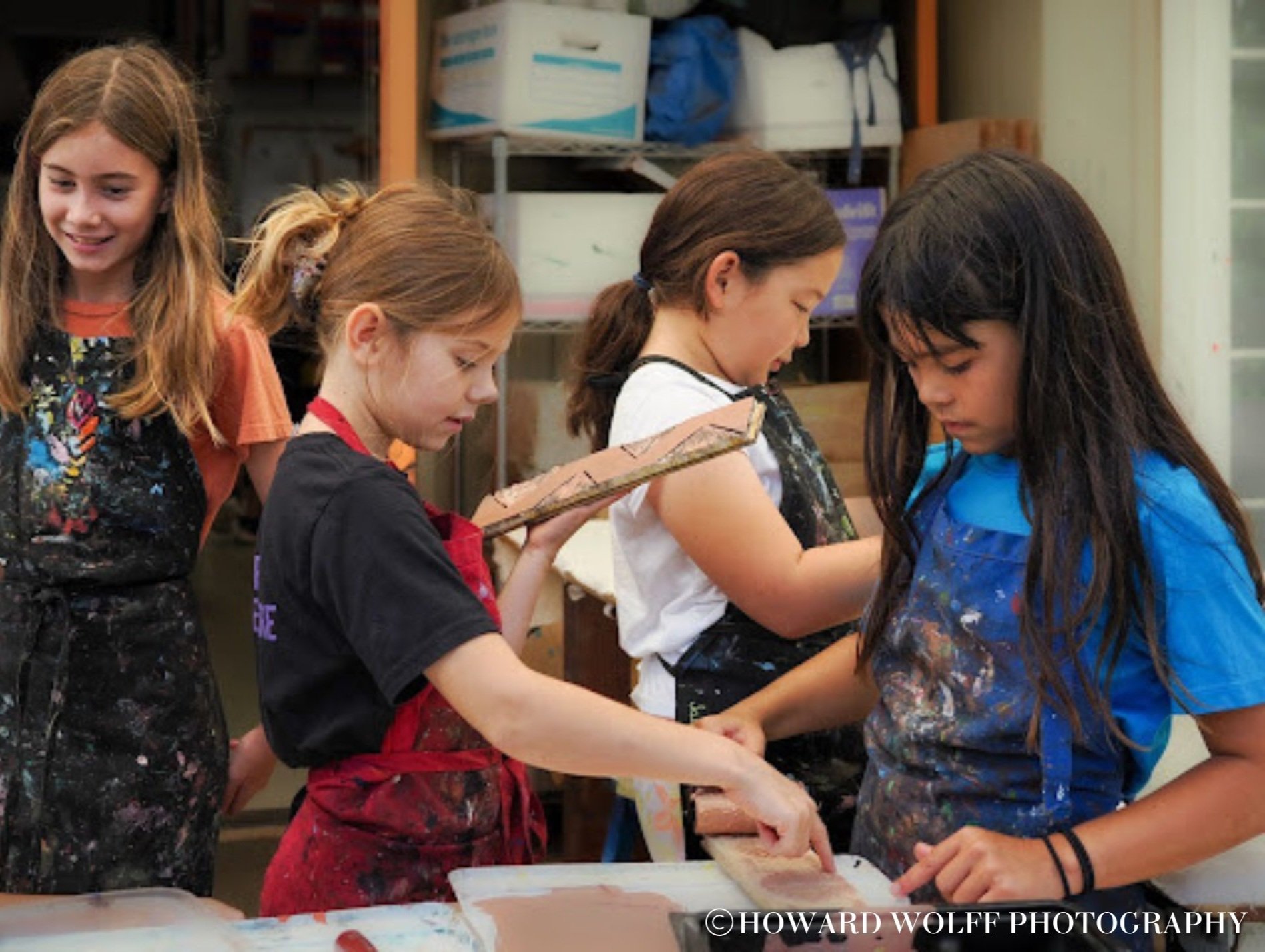
It had been a rough day at school emotionally for my son and I was hearing all about it in the car ride home after school. After an argument with a friend at recess, he was explaining to me that he trudged up to the courtyard to meet Mrs Okano, Hanahau‘oli School’s beloved art teacher. She noticed he was upset, gave him a hug, and checked in with him while the class was getting ready to go. Then with one more hug she reassured him, "It's going to be okay....remember how you feel when you do art? You're going to feel much better in a little bit."
Progressive Education Assessment
It was restaurant day, a culmination of our eateries unit, which explored how an eatery works, the importance of eateries, roles and responsibilities in eateries, and how eateries help the community. Children collaborated in small groups, demonstrating their learning about how an eatery functions and how to work as a team. Amongst the groups was the “Mexican Burrito Restaurant” team. They were working in our outside garden space, and while they were highly engaged in the task at hand, they also kept getting “distracted,” as most children their age do. The head chef in this group was crafting beautiful tacos using leaves as a shell and flowers as her filling. Another child was taking pride in the restaurant’s money box he had created in our Idea Box Center, where recycled materials are used for inventions. The pressure to film a final video to document their presentation of learning in this unit loomed over my head, but not theirs. As they continued to define roles and negotiate who would do each job in their restaurant, one of the students observed a small caterpillar munching on a leaf above their heads.
At the end of the Fall 2024 semester, I was reminded of the wonderful impact that Howard Gardner’s theory of multiple intelligences (introduced to me close to 25 years ago) continues to have on my teaching practice. It was the last day of class for the second cohort of our University of Hawaiʻi at Mānoa College of Education Progressive Philosophy and Pedagogy masters students. In addition to the incredible amount of reading, writing, and dialogue they had engaged in over the course of the semester, the group was invited by my co-teacher (Dr. Chad Miller) and I to give a presentation of learning using a modality that would best communicate and illustrate their growth. In the presentation criteria we encouraged them to use a medium that would, “capture the spirit of who you are becoming as a progressive educator and philosopher.” It was a small parameter embedded into this end of semester assessment activity, a piece of criteria that ultimately yielded a very moving set of deliverables.

What role should tests play in progressive pedagogy? It depends on what one means by “test.” Let’s say a “test” is a qualitative assessment, a judgment that teachers, students, and sometimes parents construct together. Then, assessments should be commonplace and central in progressive education. For example, a blog post here this April described the Hanahau‘oli “three-way conference,” where each student shares and discusses their portfolio with their teacher and caregiver (Makaiau & Galdeira, 2022). Such an assessment is entirely consistent with progressive aims, by helping to develop student initiative, positioning the three parties in a cooperative triangle, and orienting all parties toward development from existing assets (Peters, 2019).

There are a number of characteristics that help to define a progressive educator’s approach to assessment. This includes an overall philosophy of education that values intellectual curiosity, initiative, independence, collaboration, and evidence of growth over time, and a pedagogy for measuring student learning in accordance with these values. Assessment is differentiated, allowing children many ways to demonstrate what has been learned. Individual learners are responsible for learning and are taught how to set goals, define evidence of goal achievement and reflect about progress. Students’ skill development (e.g. in math, language arts, inquiry, etc.) is reported on a continuum with descriptors to show what children are able to do at various points in time.
Progressive Educator Reflections
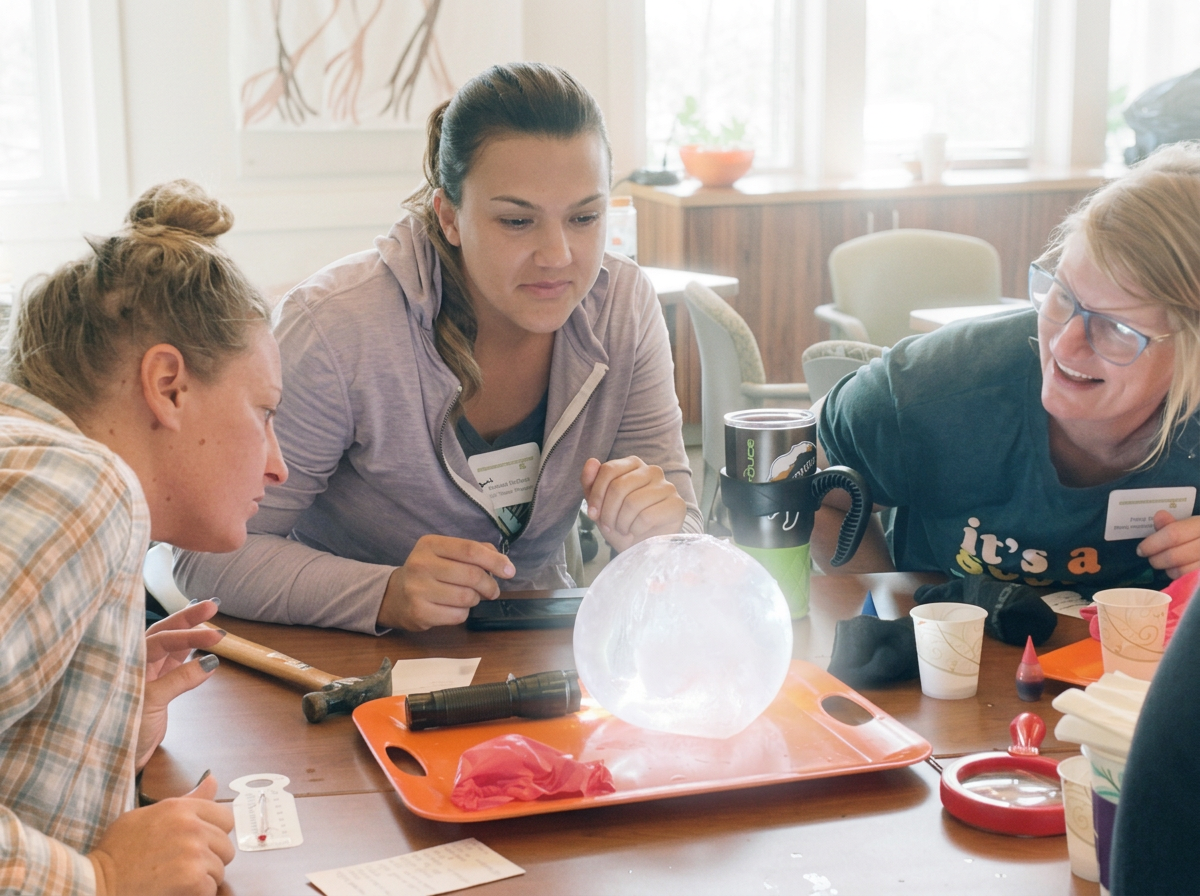
The Hanahau‘oli Teacher Collaborative is a seven-day institute for educators that focuses on interdisciplinary curriculum design for the purpose of engaging youth in meaningful learning. It is led by progressive educator and former Hanahau‘oli Head of School, Dr. Robert Peters. This year, educator and writer Katherine Taylor attended the institute. Her reflections, including a poem inspired by a hands-on activity, are shared in this blog.
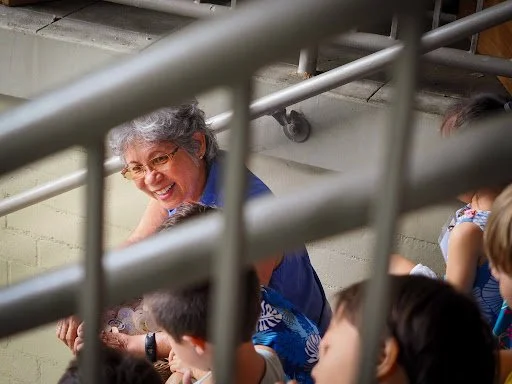
The Hanahau’oli Entering Teacher Cooperative is a year-long, structured induction and mentoring program designed to onboard new faculty and staff into the school's progressive education philosophy, multiage teaming approach, and, more broadly, its culture.

The constant onslaught of new innovations within Artificial Intelligence (AI) - specifically Generative AI (GenAI) - and the expansive impact AI has had on the workforce and economy, can feel overwhelming. Naturally, education has followed this influx with individuals and institutions racing to be on the front end of the innovation adoption curve (“Rogers’ Innovation Adoption Curve,” n.d.), either for the benefit of human development, building capital, or both. From my perspective, this is not a fad.

I write this blog to you from my current home in Shanghai, China. In 2022, I made the leap from the safety of my tenured teaching position at a public charter school in Honolulu to the unpredictable world of international education. One two-year contract at a time–in order to see more of the world and grow as a person and educator–I am still teaching abroad. Over the past three years, I’ve taught in international schools in South Korea and China, and I hope to continue this journey in Europe someday.
In June 2021, the same year that the University of Hawai‘i at Mānoa College of Education’s Progressive Philosophy & Pedagogy masters degree program was started, the Hanahau‘oli School Professional Development Center launched this blog to create a collective thinkspace for progressive educators, in hopes of furthering the worldwide progressive education movement. In just a few short years, our readership has grown to over 3,600 educators, philosophers, scholars and community members. In celebration of our 99th post, we share a few of our favorite reflections by Hanahau‘oli School’s faculty and staff below.

In 2018, Hanahau‘oli School launched The Entering Teacher Cooperative (ETC). Documented in a previous blog, this program was designed to on-board and orient new faculty and staff to the Hanahau‘oli School community. Deeply grounded in the school’s progressive philosophy and pedagogy, the year-long ETC experience aims to provide newcomers with a physical, intellectual, and emotionally safe space to make sense of and reflect on their first year at the school. To accomplish this goal, ETC participants are not only introduced to foundational knowledge that is needed for teaching and working at a progressive school, they also create a professional community of inquiry where regular opportunities for collaborative and purposeful dialogue support the development of relationships and deep understanding.

If education systems were designed from the ground up to develop self-awareness and reflection; wisdom and discernment; kindness, empathy and compassion; ecological and ecosystems awareness, mastery and responsibility; gratitude, social integration and harmony; co-creative agency, joyful participation and commitment; and our very best selves, what might those systems look like?
We might imagine our very best self to be “the full flowering of our human potential” or, perhaps we might imagine offering our unique gifts to the world and accomplishing “all that we’re capable of as human beings.” Empirically, we’re fully capable of living peacefully among one another. We’re capable of living intimately and reverently with our non-human kin and integrating harmoniously with the vast tapestry of the cosmos. We’re capable of co-creative adaptation, imagination and transformation. Throughout our 300,000 year (or so) lineage as homo sapiens, we’ve already accomplished these things, evidenced by our existence here today. We could say that a dynamic, evidence-based and practical ecosocial literacy has been handed down to us through the myriad languages and human cultures around the planet, developed and tested through thousands of human generations. This is self-evident since we are the sole remaining species in the hominin lineage. None of the others who shared our hominin line survived the crucible of extinction.[1] Despite the shortcomings of our more recent history, the much longer fossil record indicates we have everything we need to make the profound transformation now required of us in the 21st century.

My name is Martin Hamilton. I was born and raised on the island of Maui. This is my third year of teaching at Makawao Elementary School. The devastating Lahaina and Kula wildfires have had an emotional impact on me and all members of my island’s community, and with a new school year beginning for my 4th graders just days after the fires, I found myself uncertain about how to start the school year. News was slowly coming in about the catastrophic impacts, and I hadn’t yet met my students. I was unsure about who, how, or to what extent my students and their families had been affected by the fires and to what degree. In this moment of uncertainty, I was strengthened by the support of my former professors at the University of Hawai‘i at Mānoa, including Dr. Toby Yos, whose feedback helped me orient myself during a difficult time. As teachers, I feel like most of us want so badly to help our students as much as we can. But sometimes it is difficult to know what will help them the most. I wanted to be able to become a counselor for every student in my class after the sad events on Maui. However, Toby’s message helped me remember that the best way I, as a classroom teacher, could help would be by laying the foundation for an intellectually and emotionally safe community. I remembered that healing will take time so I set out to re-plan the beginning weeks of school with this safe community as the goal.
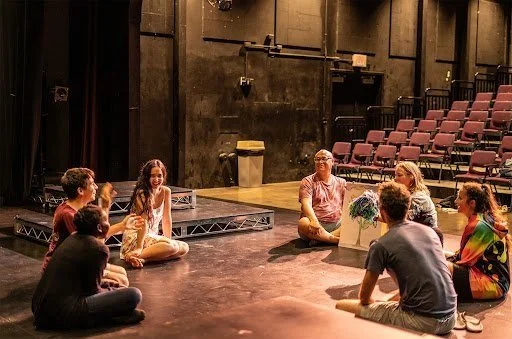
In Spring 2023, Nate Drackett graduated with a MFA in Theatre from University of Hawaiʻi at Mānoa. His MFA thesis production was titled, unspecified: a theatrical exploration of identity. He explored what happens at the point where communal inquiry, democratized collaboration, and student-centered pedagogies intersect. He reached across the disciplines of philosophy, social work, and theatre to explore aspects of identity (race, gender, sexuality, mental health, and others) that many have a hard time specifying for themselves. This multi-disciplinary exploration served as a very practical example of how creating space for diverse and multitudinous ideas not only affords deeper inquiry, but also provides opportunity for shared power and facilitates the creation of a community of co-creators. Through the process, he found that creativity and curiosity are very closely linked, and that many different fields including education, theatre, and philosophy, are using a variety of tools, sometimes overlapping, to tap into their innate power. In this blog he shares the story of his own educational journey and the tools he’s discovered for fostering community, inquiry, creativity and a love of learning along the way.

Slow down everyone you’re moving too fast - Jack Johnson’s soothing voice brings me back to Oahu and a relaxing day at the beach. I love this song because it puts me in a calming space and reminds me to slow down. Life seems to move quicker and quicker. I know so many of us can relate to getting caught up in the grind and are seeking a balance where time slows down a bit and we can appreciate the small moments. Growing up and now raising my family in Honolulu has been an interesting mix of “slowed down” and relaxed experiences at times. For example, when your friends say the BBQ starts at 6:00, and you know it’s totally acceptable to come at 7:00 or 8:00. Yet, in recent years I find myself getting caught up in a faster pace, rushing from school to pick up my kids with anxiety creeping in while moving from one appointment to another, meeting deadlines, or feeling like things just keep getting added to the plate.

The simple act of having hope for a better future breaks the doom-loop and builds a platform for action.
The future is not bright. At least, not if you’re reading the most popular interpretations of the future: AI uprisings, ecological crises, mass surveillance states, and wartime apocalypses dominate speculative fiction across novels and Netflix. It seems inevitable that in the upcoming decades, our world will become an increasingly worse and uninhabitable place. Fueled by the real dangers of climate inaction, militaristic tension, and a crumbling public sphere, there’s genuine reason to worry. People find themselves glued to the apocalypse: escaping to social media to endlessly scroll and consume news of the impending collapse. Some embrace doomerism, an extremely pessimistic and nihilistic worldview that has entirely given up hope for a better future.

When I was little, I loved kaleidoscopes. I would look through the lens in amazement at the myriad of color fragments that all seemed to be moving at once; sometimes toward one another, sometimes away from one another, yet all in concert to make a beautiful whole. As I left Hanahau’oli School this week, I felt like I had just discovered life in a kaleidoscope. I came for a two day visit to look specifically through the lens of thematic learning and yet I experienced so much more. This colorful kaleidoscope of students, teachers, administrators, staff, and support teams were constantly on the move with pieces shifting moment by moment through the day with students at the center. Each move was never random or haphazard, but carefully crafted to bring out the best in one another to allow each individual to shine as part of a cohesive whole.
Ever since I was a young child, I have wondered about the inherent source of a thriving person. Described by Yos (2012), the person who lives a flourishing life is: whole, integrated, compassionate, grateful, joyful, and living purposely in the present moment. A thriving human responds freely and is flexible to new experiences without fear, but instead with a deep sense of inner wisdom. That said, the current state with which we find our society, inundated by fear, over-competition, materialism, racism, and bias, has made it incredibly difficult for humans to thrive or engage meaningfully and purposefully in their lives. The reality of our current world is that it is an upstream swim to a place where thriving can occur. In this blog, I explore the relationship between “spirituality” and progressive education, and wonder whether the intersection of the two might be a resource for finding meaning, flourishing, and becoming a thriving person in our modern world.

Niente Senza Gioia (Nothing Without Joy!) - Loris Malaguzzi
This is one of my favorite quotes from Loris Malaguzzi, principal founder of the Reggio Emilia schools in Reggio Emilia, Italy. The quote resonates with me at the progressive school where I am lucky enough to have been teaching and learning for the past 14 years. The school is Hanahauʻoli School, which translates to “joyous work.” “Aha!” I cried when I found this quote - it’s meant to be!

On October 21, 2021 I had the opportunity to participate in the Game Changer Series: Navigating The Pandemic - A Courageous Conversation about COVID hosted by What School Could Be. In the midst of our global challenge, finding support, seeking solutions, and sharing our truths can be quite powerful. At this event we shared our thoughts, wonderings and strategies for making sense of the current moment in education. For me, it was a homecoming of sorts as both the Executive Director of What School Could Be, Dr. Kapono Ciotti and one of the panelists, Dr. Andrew Ho of the Harvard Graduate School of Education are both Hanahau’oli School classmates of mine! We were joined by Mari Jones from the High Tech High Graduate School of Education.
Hanahau‘oli School is a one hundred year old progressive school located in Honolulu, Hawaii. Founded in 1918, Hanahau‘oli is regarded as a preeminent independent elementary school because of its adherence to a progressive mission that validates childhood as the time of learning, the years when the foundation is laid for life-long commitment to the values that sustain our families, our neighborhoods and the global community.

Last week was a time of firsts. It was the first week of classes for the first cohort of the new Masters program, Progressive Philosophy and Pedagogy. Unique to the University of Hawaiʻi at Mānoa’s College of Education, students will work to create a better society through their work with children, schools, and communities. Although we intended for the summer session to occur face-to-face, we will be meeting and getting to know each other through Zoom because of Covid restrictions.
Social Justice Education
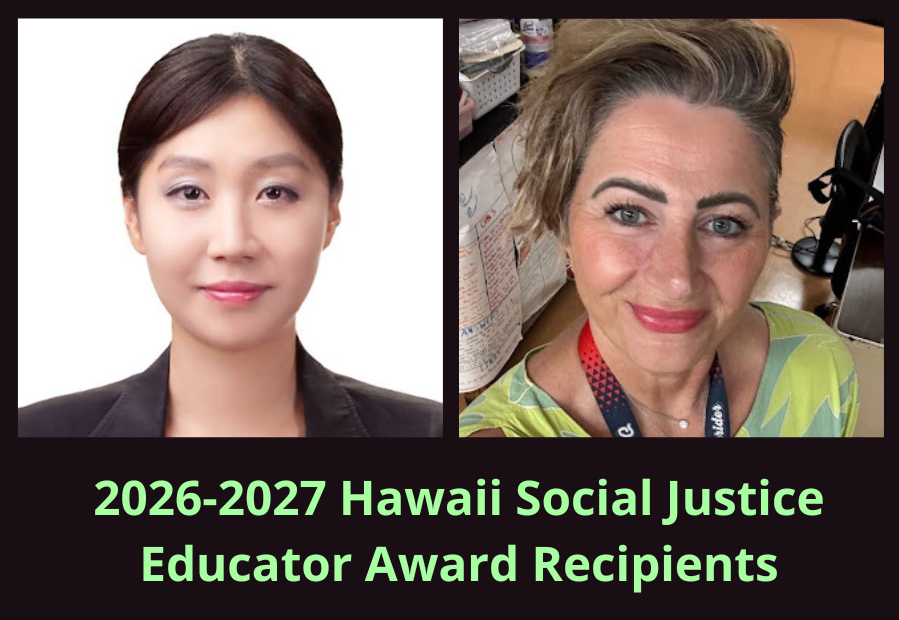
The Social Justice Education in Hawai‘i Project is a Hanahau‘oli School PDC initiative led in partnership with the University of Hawai‘i at Mānoa College of Education. Since 2018, the project has been growing and supporting local educators who see schools as levers of change for creating a better future world.
For the past decade, I’ve dedicated myself to teaching and developing an Aloha ʻĀina curriculum at Waiʻanae Intermediate. It is my mother, Natalie Oana, who taught science through a Hawaiian lens at Hālau kū mana who inspired me to become a teacher. In my first year of teaching, when I found myself at Waiʻanae Intermediate with no curriculum, I thought back on what she taught me. I took a lot of professional development classes and began to include moʻolelo in my lessons, and began to see a considerable difference in student engagement.

Since its inception in 2018, the Social Justice Education in Hawai‘i Project has been empowering teachers to affirm and uplift the diverse student populations of Hawai‘i. Established through the generosity of Jana and Howard Wolff, and led by a partnership between the Hanahauʻoli School Professional Development Center and the University of Hawai‘i at Mānoa College of Education, the multiyear project has included numerous professional development workshops on topics such as antibias education, civic education, engaging in challenging and controversial conversations with students, place-based and culturally relevant learning, and much more. The program likewise offers opportunities for teacher networking and collaboration, university-level coursework for credit, and an award to recognize and uplift educators who are advancing social justice in their schools and communities.

Early in 2020, I enrolled in Leaders of Social Justice in Education: Theory to Practice, a course taught by Dr. Amber Makaiau, Dr. Patricia Halagao, and Dr. Ger Thao. This course was offered through the University of Hawaiʻi (UH) at Mānoa College of Education (COE) in collaboration with the Hanahauʻoli School Professional Development Center as part of an initiative to advance social justice education in Hawaiʻi. This initiative, the Social Justice in Education Project, aims to grow local educators’ capacity for educating children and youth to be active participants in a diverse democracy, and is made possible by the generosity and support of Jana and Howard Wolff.

Talofa lava, ‘o Kiara-Jeané Kamāli‘i Alcaide ko‘u inoa. Ako ay isang guro sa DreamHouse ‘Ewa Beach Public Charter High School. Hi, my name is Kiara-Jeané Kamāli‘i Alcaide. I teach at DreamHouse ‘Ewa Beach Public Charter High School. I write this blog to share that despite the number of current efforts that are being made in the United States to restrict what students learn about the diverse history of this country – I am proud to be the first public charter school teacher in the state and country at-large to teach a Filipino history course to my students next fall. Part of a larger project aimed at integrating Filipino history and culture into the K-12 American school system, I am part of an inaugural cohort of teachers who are now being prepared to be instructors for this course. In this blog, I reflect on what this experience means to me both professionally and personally.

In her Presidential inaugural poem of “The Hill We Climb,” Amanda Gorman (2021) eloquently recites:
When day comes we step out of the shade,
aflame and unafraid
The new dawn blooms as we free it
For there is always light,
if only we’re brave enough to see it
If only we’re brave enough to be it
Four years have passed since we elected Joe Biden President and Kamala Harris as the first woman of color Vice President. Yet, our nation remains deeply divided, as evidenced by the fracture along political lines. In this pivotal moment, it is imperative that we bridge our differences and champion an education rooted in social justice, one that upholds the principles of equality, fairness, and democracy. We must equip our educational and student leaders with the moral compass, tools, resources and networks to be able to “climb the hill” and enact meaningful change in the lives of our keiki, ‘ohana, and lāhui.

What does it mean to be a teacher? More elemental, What does it mean to even contemplate being a teacher? And what does it mean to come back to one’s home community to teach, and learn? When does that moment happen when being a teacher first crosses one’s mind? I suspect that for some young people that moment happens and the questions arise when they first experience student-driven learning with a great teacher, guide or coach. A single class that engages a young learner could very well be the spark that ignites the fire and the passion to teach. I also suspect that for many young folk it is their “less than engaging” experiences “in class” that quickly turn them away from what many call the most noble profession. So what happens then? What forces come into play that, later, might tempt young folks into teaching? Surely it is not the pay, or the working conditions, or the way teachers are often in the crosshairs of our current cultural conflicts.

In The Courage to Teach, Parker Palmer (2017) writes, “If we want to grow as teachers -- we must do something alien to academic culture: we must talk to each other about our inner lives -- risky stuff in a profession that fears the personal and seeks safety in the technical, the distant, the abstract” (p. 48). For many years, social justice educators have taken this to heart in the work that we do in classrooms, schools, and in the wide array of professional development we lead. We have come to know deeply how the personal and professional collide when it comes to social justice in education, and to grow the courage for this work in our students, we have come to depend on the creation of intellectually safe (Jackson, 2001) classrooms and professional communities of inquiry. But what happens when we ask teacher leaders to disclose their inner lives, take personal and professional risks, and become vulnerable in what is often a hostile, volatile, and mostly unsafe public space? As we reflect on our praxis, this is the work that is required of leaders of social justice in education, and it is why ongoing support and initiatives, such as The Social Justice Education in Hawai‘i Project, is needed to confront obstacles that have oftentimes kept us separate and silent.

Aloha Mai Kākou,
O Jessica Ruth Sobocinski koʻu inoa. O Portage, Indiana mai au. Noho au ma Paʻauilo Mauka, Moku o Keawe. ʻO Robert Sobocinski ke kāne. ʻO Shawn Cunningham ka wahine. Noho pū lāua a hānau maila ʻo Jessica Sobocinski he wahine.
My name is Jessica Ruth Sobocinski and I am from Portage, IN, currently living in Paʻauilo on Hawaiʻi Island. I was born in 1991 to Robert Jerome Sobocinski and Shawn Lynn Cunningham, two young college students from White, working class families.

I was in 7th grade when I first bled through my pants at school; I was mortified. My Science teacher (bless Mrs. Marchani) kept a bunch of sweaters on the back of her classroom door, and as I discovered, they weren’t just for the unpredictable weather. As it turned out, she kept this pile of outerwear stocked for middle school menstruators like me. She helped me tie one of her sweaters around my waist, so that I could go about my day of learning. I will never forget that kindness. Suddenly, whenever I saw those sweaters on the hips of other girls, I tried to give knowing eye-contact solidarity. Twenty-some years later, I’m the one in charge of the 7th grade classroom.
“In times of profound change, the learners inherit the earth, while the learned find themselves beautifully equipped to deal with a world that no longer exists.” --Eric Hoffer, 1982, p. 146
I hope everyone can agree with me that we are indeed in a time of profound change: extreme and visible examples of a divided society, growing climate consciousness, massive income inequality, increased integration of technology into our daily life, resistance to evidence and science-based policy making, new questions about how to organize time and carry out work, protest and progress against racial injustice, voter suppression and increased activism, renewed interest in the arts, the diversification of leadership, and the growing call for more socially just forms of democratic governance.
Progressive Philosophy and Pedagogy: A Blog for Progressive Educators is edited by Amber Strong Makaiau and Veronica Kimi. To support the ongoing professional development of educators seeking to share their ideas and success stories via the blog, Makaiau and Kimi provide 1:1 conferencing and writing support during the publication process. Click here to learn more about contributing to the blog.
Let your voice be heard
Momoe aku I mua – move ahead with determination

The Hanahau‘oli Teacher Collaborative is a seven-day institute for educators that focuses on interdisciplinary curriculum design for the purpose of engaging youth in meaningful learning. It is led by progressive educator and former Hanahau‘oli Head of School, Dr. Robert Peters. This year, educator and writer Katherine Taylor attended the institute. Her reflections, including a poem inspired by a hands-on activity, are shared in this blog.