By Veronica Kimi

At the heart of every child is a natural scientist – a curious explorer ready to ask "why" and "how" about the world around them. But as educators, how do we shift from being the source of all answers to being the facilitators of their discovery?
Supported by the continued generosity of the Samuel N. and Mary Castle Foundation, the Hanahau‘oli School Professional Development Center (PDC) offers an annual place-based STEM workshop titled Natural Scientists: Children in Charge to help early childhood educators address this very question. At its core, the program champions a progressive pedagogical shift, moving away from rote instruction toward a model where children lead through their own questions and environmental observations. By centering the curriculum on a framework for scientific observation developed by former Hanahau‘oli teachers specifically for young learners in our diverse community, the workshop provides participants with detailed examples of early childhood unit and lesson plans, culturally responsive strategies, and hands-on practice implementing this approach to teaching.
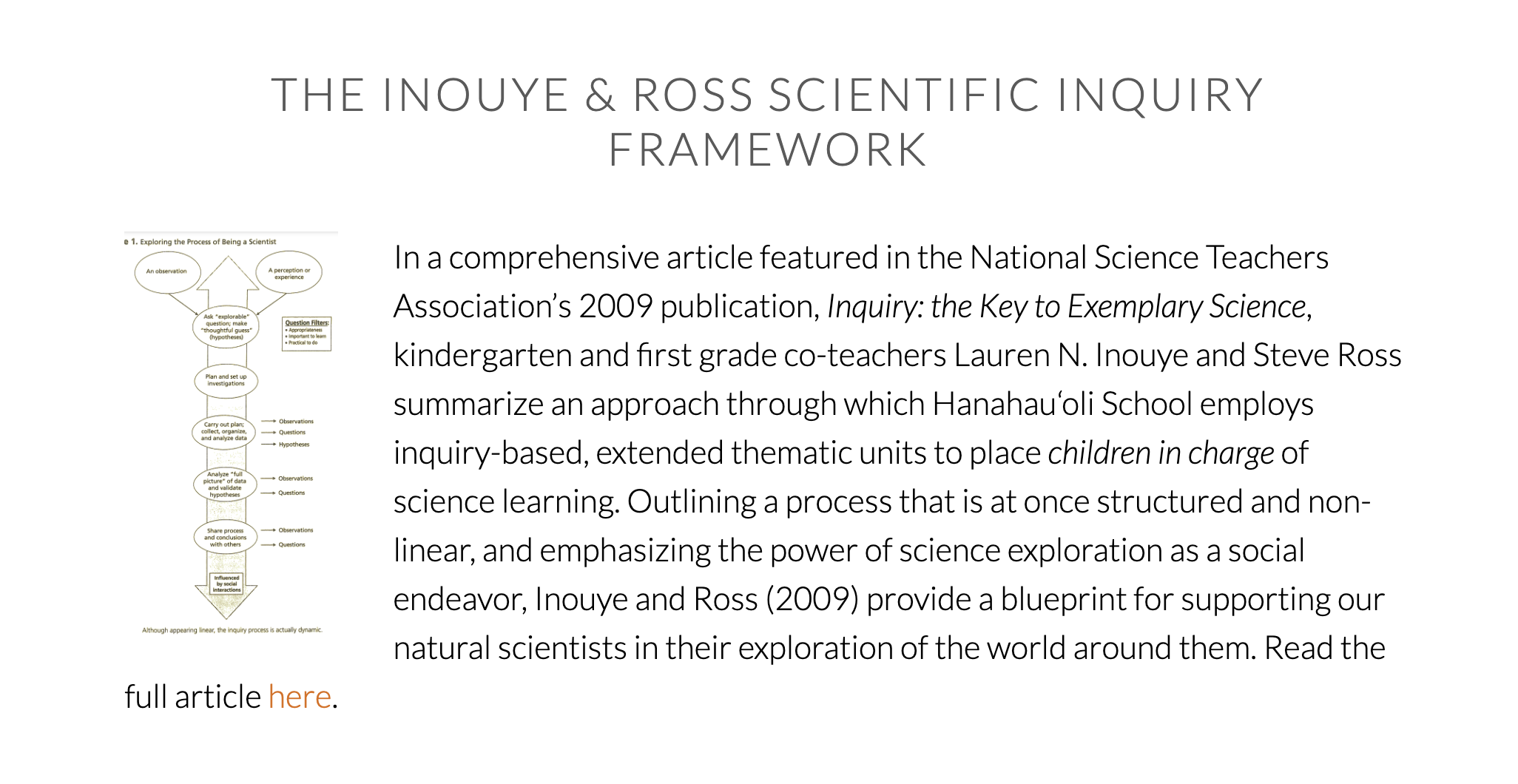
For the last five years, a new cohort’s learning has begun each January with an invitation to independently explore the open-access Natural Scientists Resources pages of the Hanahau‘oli School website. There, Hanahau‘oli School’s approach to STEM teaching and learning is presented in detail – from theoretical foundations to actual unit plans with sample student work. These resources include the article “Natural Scientists: Children in Charge”, which was published in 2009 in Inquiry: the Key to Exemplary Science by the National Science Teachers Association. Authored by former Hanahau‘oli co-teachers Lauren N. Inouye and Steven Ross, the article summarizes the inquiry framework they developed for young children, which offers a structured but non-linear path for science exploration as a curiosity-driven social endeavor. Also featured on the site are a series of educational films that explore the six key steps of their Scientific Inquiry process, including:
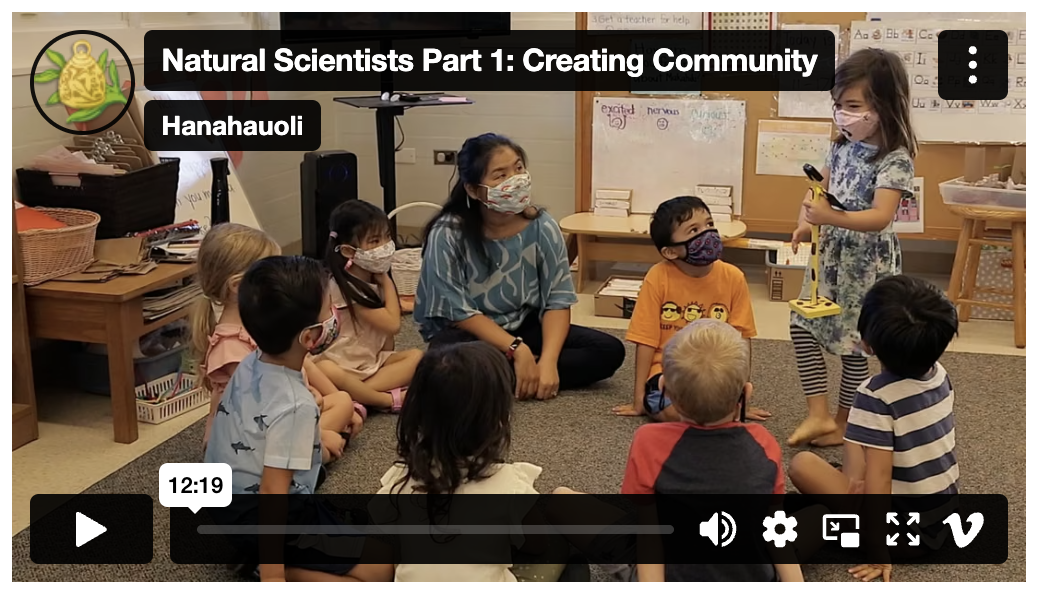
Creating Community: Essential to all teaching and learning, students and teachers must first work together to build a safe community of learners. In this segment, current Head of School Ms. Lia Woo introduces viewers to Hanahau‘oli School, the Inouye and Ross Scientific Inquiry Framework, and the two thematic units of study that are the focus of the film series. See JK classes engaged in social-emotional and community-building activities, and observe as K/1 classes establish classroom agreements to support collaborative learning and the social construction of knowledge.
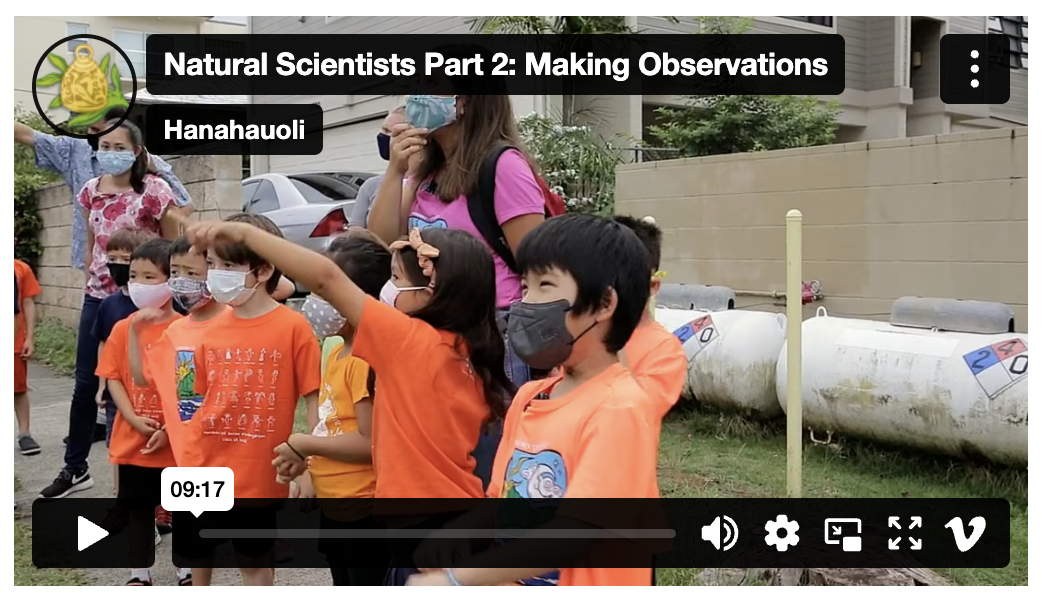
Making Observations: Students and teachers explore the natural world and human environment by using all of their senses to make observations, which builds curiosity about the world around them. In this segment, see students using their five senses to make real-world observations, follow K/1 students as they take a learning walk through Hanahau‘oli’s Makiki neighborhood to observe shelters and record their observations, and hear how JK teachers simplify the process of observation for our youngest learners to empower them with this essential tool for science exploration.
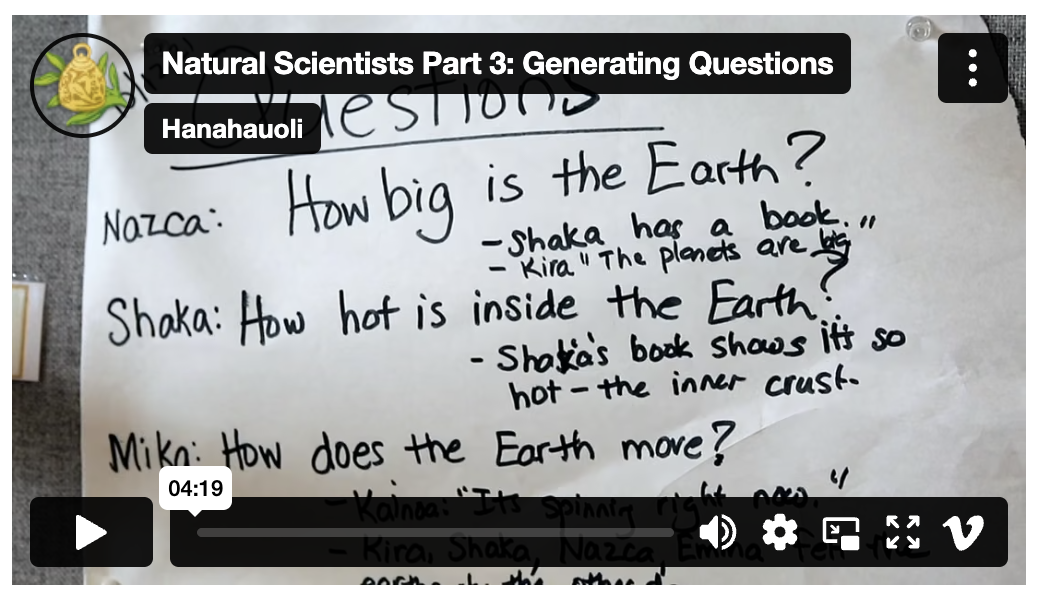
Generating Questions: Based on what they observe, students and teachers generate and record explorable questions. At this stage in the scientific inquiry process they might also make thoughtful guesses or hypotheses. In this segment, observe a K/1 teacher asking open-ended questions to stimulate curiosity, and see how students’ wonderings evolve from their observations and discussions with one another and their teachers. Also see a JK teacher help students understand how to pose questions using why, how, and what prompts to lay the foundation needed for helping young learners articulate their questions.
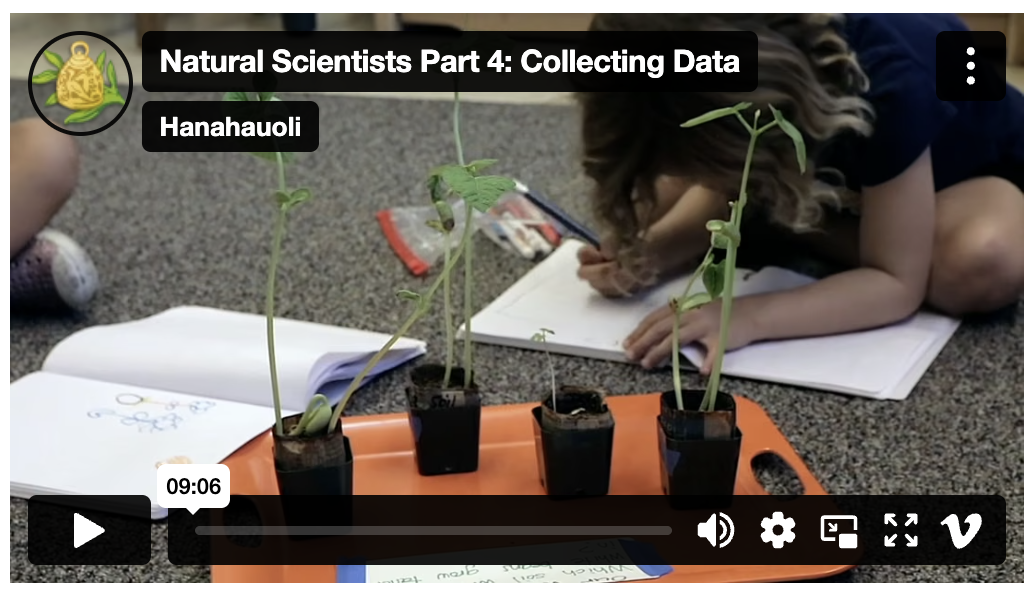
Collecting Data: Students and teachers identify questions they would like to explore. They design and carry out plans for collecting, organizing, and analyzing data related to these questions. In this segment, see examples of data collection such as drawings, graphs, and lists. Watch as a K/1 teacher helps students understand the significance of collecting data for scientific inquiry. Also see JK students experiment with approaches to measurement for more accurate data collection.
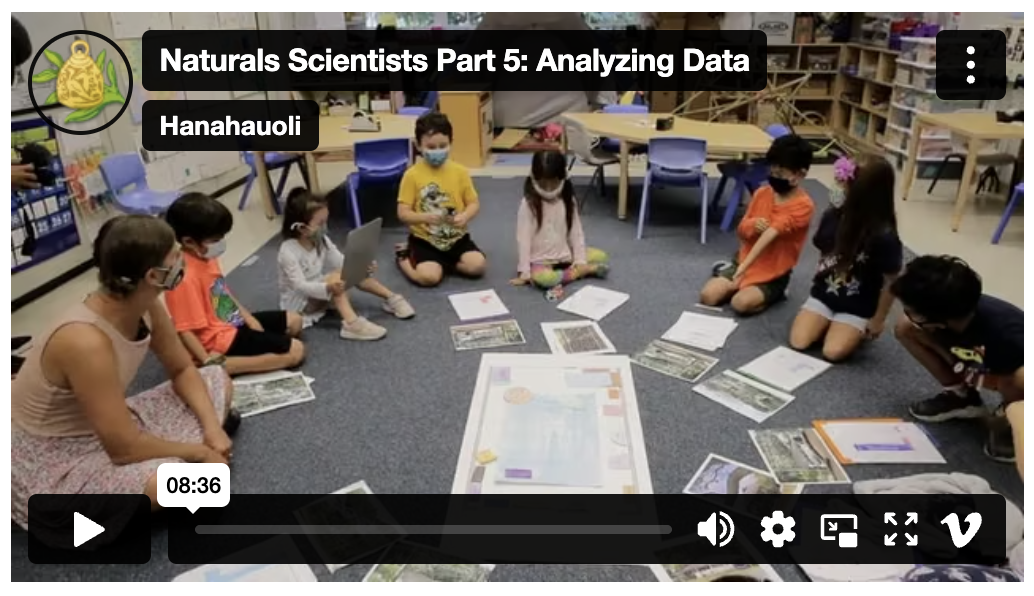
Analyzing Data: Once they have data related to their question, they analyze the data to help answer questions and validate their hypotheses. In this segment, see both a JK and K/1 teacher lead students in whole group meetings to review their collected data and think critically about how that data addresses their questions. Also see how guiding questions support deeper understanding and connections and witness the non-linear nature of the scientific inquiry process.
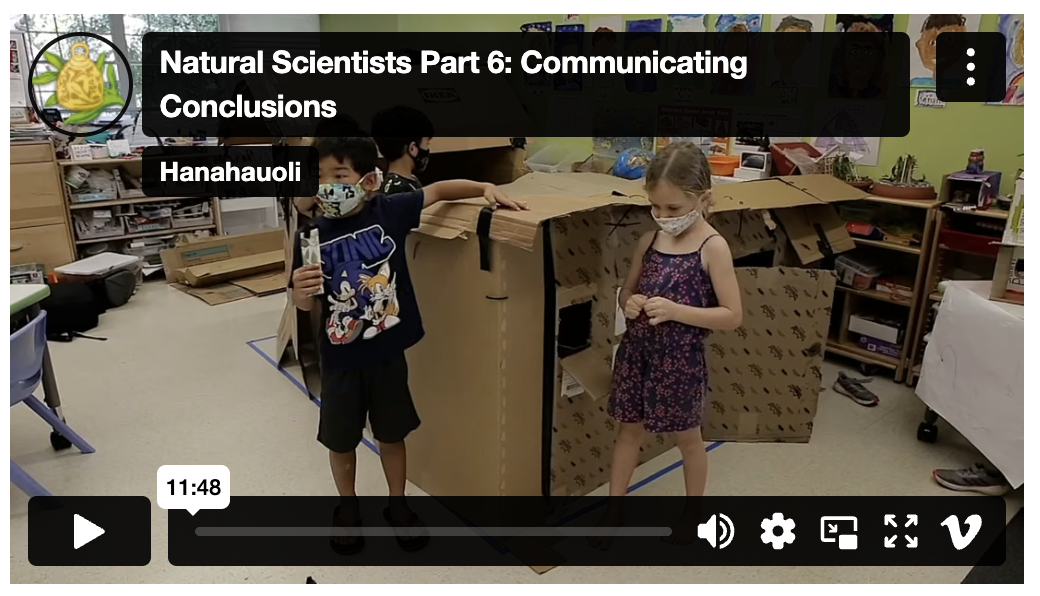
Communicating Conclusions: At the culmination of the unit or inquiry, students and teachers share their learning and reflect on the process with others. In this final segment, enjoy a collaborative story and dramatization created by JK students to summarize their outcomes from a seed experiment. A K/1 class reflects on their big takeaways from building cardboard resting and reading shelters. Whether through books, dramatizations, models, or songs, sharing provides an opportunity for students to discuss ideas, learn from one another, and celebrate accomplishments, while teachers simultaneously assess learning. Finally, hear how social justice standards are integrated into the Shelters unit to apply the Scientific Inquiry process to social studies topics like houselessness.
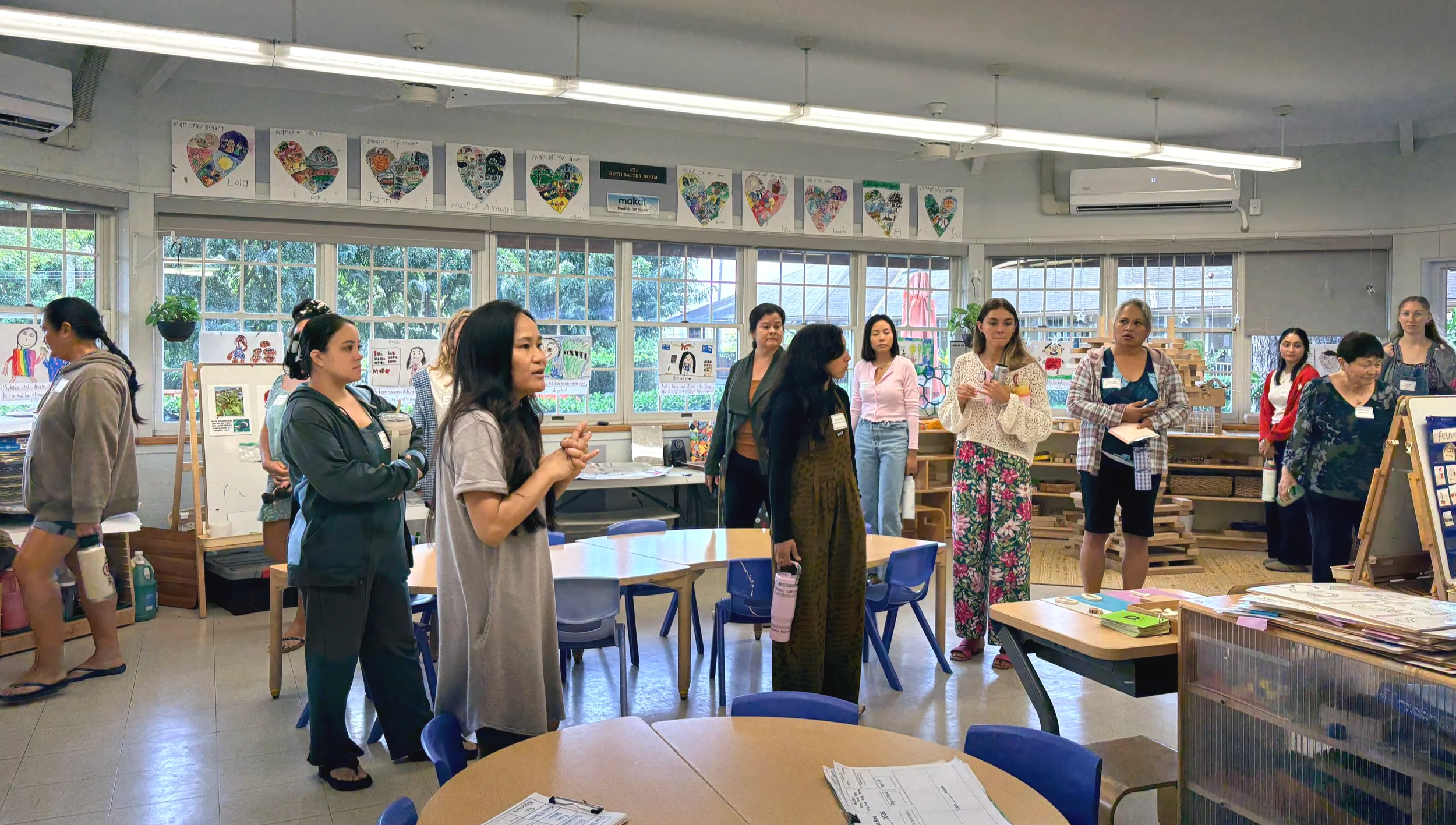
With these foundational insights into Hanahau‘oli School’s approach to STEM teaching and learning, workshop participants then gather for two full-day workshop sessions at Hanahau‘oli School. Retired Head of School Dr. Robert G. Peters and veteran Kindergarten and First Grade Teacher Mrs. Lauren Inouye lead a number of presentations that focus on: 1) the intrinsic ways children are natural explorers, 2) a deep dive into the scientific inquiry framework Mrs. Inouye co-developed over twenty years ago and Hanahau‘oli teachers continue to use today, and 3) what progressive education tells us about how and what is most important for children to learn. Dr. Summer Maunakea, Assistant Professor of Curriculum Studies at the University of Hawai‘i at Mānoa College of Education, then shares her expertise in ʻāina-based and sustainability education with the introduction of this database of resources to support science integration in Hawai‘i’s unique context. Current Hanahau‘oli teachers Ms. Carla Matsui and Ms. Mollie Taylor round the experience out by sharing their detailed Junior Kindergarten, Kindergarten, and First Grade STEM-rich integrated unit plans, touring participants through their classroom spaces, and sharing samples of technology integration, student work, and practical tips for implementing all of the philosophies and pedagogies introduced in the workshop. Participants leave the two-day session with an abundance of ideas for ways to integrate science, technology, engineering, and mathematics into their teaching contexts, as well as physical vermicompost kits to employ this fun and educational sustainability practice with young children.
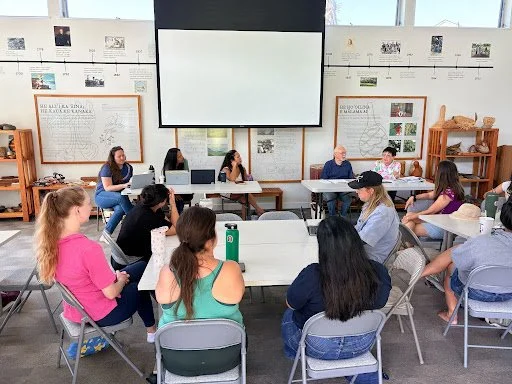
Participants spend the next three months developing their own lesson plans, exploring place-based learning sites to visit with their students, and implementing their thoughtful plans. Workshop facilitators provide feedback on their written lessons and reflections, and the group comes together again for a final full-day workshop session at an exemplary site for place-based learning in our school’s own neighborhood, Mānoa Heritage Center (MHC). There, participants engage first-hand in what children could experience on a learning trip, hear from the Hanahau‘oli teachers about comprehensive projects their students have experienced at MHC, and imagine possibilities for similar hands-on learning experiences for their own students. Finally, participants share their own work and reflections, brainstorm and troubleshoot together, and establish plans for continuing their work ahead.
THE 2026 WORKSHOP EXPERIENCE
Our most recent offering of the workshop included 25 educators from across the Hawaiian Islands with in-person sessions on February 14-15 and May 2, 2026. Here is some of the feedback we received from this year's cohort:
“This has been such an AMAZING workshop. Iʻve been INSPIRED! Participating in this workshop has given me a sense of purpose. I enjoyed the interaction with fellow colleagues. Unlike other workshops, this experience felt genuine and for the children. Meeting the instructors/organizers was such a pleasure. I was filled with goodness, ideas, hope, and drive that aligns with my values of education and trying to make it work in a system that Iʻm learning to navigate through. Mahalo Nui Loa for such an incredible experience.” -- Anonymous participant
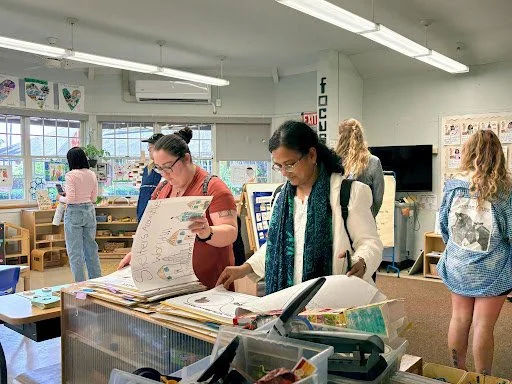
“Heartfelt mahalo to each and every one of the dedicated Hanahauʻoli staff (and former staff) for such a fantastic workshop experience! The pacing of the workshop, both on the individual workshop days as well as the duration of the workshop felt perfect. Although not surprising from such fantastic progressive educators, I thought you folks did such a great job of recognizing when participants needed more/less time on something than initially planned and adapting. The flexibility was much appreciated! The wealth of information you guys have to share is incredible, and with such a varied pool of workshop participants it's amazing that everyone was able to take something valuable back to their own teaching contexts. This workshop has undoubtedly challenged me to rethink how children learn & reminded me that children are always more capable than we think (or allow them to be)! Ke aloha a me ka mahalo nui iā ʻoukou pākahi.” -- Participant from Manoa Heritage Center
“Everyone was so very thoughtful, genuine, and extremely helpful. They were available for questions and took the time to make sure everyone had a good understanding of what was covered. This workshop really made me feel like I belonged and that my voice was heard. This is perhaps one of the few workshops that I attended that made me feel safe and not intimidated. Thank you so much for doing such amazing work.”
-- Participant from Waiokeola Church Preschool on O‘ahu
“Attending the “Natural Scientist: Children In Charge” training helped me understand the importance of letting children lead their own learning. I improved in giving them more choices, being patient, and encouraging their curiosity instead of always giving answers. It helped me support children to explore and think like little scientists.” -- Participant from Na Kamali'i Hoaloha Preschool on Moloka‘i
Participants developed their own lesson plans focused on broad topics that ranged from recycling to survival. View the exemplary work of two of this year's participants, as well as past participants, on the Natural Scientists Resources Page.
JOIN US FOR THE 2027 WORKSHOP
We look forward to bringing the Natural Scientists workshop series back in Spring 2027. We know that an educator's time and resources are precious, so we offer this program with no registration fee. Rather, the Samuel N. and Mary Castle Foundation helps us invest in your continued professional development by awarding all participants with the following stipends upon successful completion of the program:
$300 Participation Stipend: Educators receive a $300 stipend for attending the three in-person workshop sessions and completing all assignments.
Neighbor Island Support: We are committed to including educators from across all islands. Up to ten Neighbor island participants receive $750 travel stipends upon completion of the workshop as a reimbursement for travel expenses.
Applications will open on October 1 for the spring 2027 workshop series. Subscribe to our mailing list to be informed when applications are available, and click here to see our other upcoming workshops for educators. All are also welcome to explore the Natural Scientists pages of the Hanahau‘oli School website (www.hanahauoli.org/pdc-naturalscientists), which are openly accessible year-round. We hope you’ll join us in empowering the next generation of Hawaiʻi’s critical thinkers and deep learners. We can't wait to see you at our next workshop!
ABOUT THE CONTRIBUTOR:

Veronica Kimi serves Hanahau‘oli School as the Professional Development Center Coordinator. Veronica holds a bachelor’s degree in Communication Studies from UCLA, a master’s degree in Elementary Education from Chaminade University, and professional experience in marketing, communications, and human resources. She enjoys supporting Hanahau‘oli School’s educators and the greater education community as they pursue the invaluable work of inspiring the next generation of dreamers, thinkers, and doers. Together with her husband Phil, Veronica has three vibrant daughters who make life a true joy.

