
By Kristi Choi, Shelby Hom, Keenan Lau, and Amber Strong Makaiau
Photos courtesy of © Howard Wolff Photography
In a previous blog, I shared about the Hanahau‘oli School Entering Teacher Cooperative. Unlike traditional new teacher orientation programs–which rely on stand-and-deliver presentations of overwhelming amounts of information and rapid fire introductions to key people on campus–the Hanahau’oli ETC is a year-long, structured induction and mentoring program designed to onboard new faculty and staff into the school's progressive education philosophy, multiage teaming approach, and, more broadly, its culture. And just as the cooperative and collaborative Hanahau‘oli School classroom is made up of “entering” and “continuing” students, the ten month ETC experience creates opportunities for entering and continuing faculty and staff to learn from one another. Together—the enterings and continuings—work side-by-side asking questions, reading scholarship and research, making careful observations, reflecting, and ultimately improving upon their own professional practice and the school’s overall collective progressive education mission and tradition. The aims of the ETC are as follows:
Welcome new faculty and staff to the Hanahau‘oli community.
Help new faculty and staff understand our school’s culture, philosophy, educational program, traditions and practices.
Offer new faculty and staff a forum for reflection and inquiry.
Provide new faculty and staff with the opportunity to build relationships and connections with colleagues.
Create opportunities for continuing faculty to grow as teacher leaders.
Cultivate and nurture an overall culture of ongoing personal and professional growth at Hanahau‘oli School.
Each year, a core experience in the program is the Hanahau‘oli ETC Observation Assignment. ETC members are asked to engage in one structured observation of the school’s culture and classroom practice. They do this by observing a group of students for a period of time (maybe 30 to 60 minutes). Classroom teachers are asked to observe their current students in another class. For everyone else (e.g. staff and administration), they choose a class level they would like to observe. As they prepare for this observation, the ETC members are asked to:
Coordinate with their grade level team and find a good time to engage in the observation, if needed.
Coordinate with each of the teachers they are observing to make sure it is a good time to observe.
Bring a tool to help record observations (laptop or notepaper). Record observations, insights, and wonderings in a way that best fits their learning style (sketching, writing, recording time, photos, etc.).
During the observations, participate in classroom activities and/or find a quiet place to observe. While recording observations, they should attend to:
the physical characteristics of the classroom;
classroom materials and resources (think about the Third Educator);
pace and timing of the classroom activities;
grade level curriculum;
pedagogy;
teacher talk and actions;
student talk and actions;
large group and small group activity , and
individual student behavior.
Following the observations, write and/or visually depict a reflection about their experience. Use the prompts below to guide reflection. Include specific examples from observations in their responses and insights gained upon reflecting. They will share this reflection in a Presentation of Learning (POL).
Prepare a 5-10 minute POL to share at an upcoming ETC meeting, which includes observations and reflections. Use the following to structure the presentation: (1) What did I observe? (2) What insights did I have about my own professional practice? (3) What insights do I have for our school community? (4) What further questions do I have? (5) Share the written or visual reflection with the attending panel (other ETC members, ETC Faculty, and other invited faculty/staff)
To help guide their reflections in preparation for their POL, they are also given the following list of questions to think about after their observations:
What did you learn about the students as a whole? Individual students?
What did you observe about the role of specialists (or a teacher) at Hanahauʻoli School?
(For teachers) How might you collaborate with specialists (or teachers) to support teaching and learning in your classroom? What are your ideas about integrating your particular classroom curriculum with the specialists’ curriculum?
What is one takeaway from the observation that will impact your professional practice?
What is one example you observed that illustrates progressive education translating from theory to practice? You might make observations around one of the following areas: learning by doing, socially constructed teaching and learning, community, collaborative problem solving and cooperation, subtle and obvious power relations between educators and children, social justice, commitment to diversity and improving the lives of others, learner-centered, intrinsic motivation, using student interests to drive learning, deep thinking, active learning, taking children seriously, embracing childhood, interdisciplinary and integration, and learning organized around problems, projects, and questions.
What questions do you have?
These questions are also used to facilitate discussion amongst ETC members, following each POL.
This year, all three ETC members who made up our cohort of new teachers on campus–on their own and without talking with each other–chose the same teacher to observe! The teacher is Jewel Toyama. As I listened to each of the ETC members' POL (Shelby's Presentation, Kristi's Presentation, and Keenan's Presentation), documenting insights gained while watching Mrs. Toyama teach, I was struck by their collective takeaways. In the remainder of this blog, the new ETC teachers share the expert lessons they learned about progressive education teaching and learning while observing Jewel Toyama.
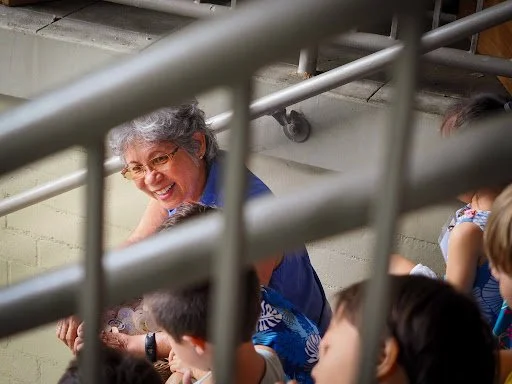
Observing Jewel Toyama: Expert Lesson on Progressive Education Teaching and Learning
This school year was Jewel Toyama’s 46th year of teaching Physical Education at Hanahau‘oli School. Throughout her years on campus, she has inspired thousands of children and adults, supporting us all in finding the joy in movement and the courage to pursue our goals––from number of skips in a minute of jumprope and pogs collected for laps run around the playground, to the development of teamwork and a feeling of belonging among faculty and staff. In working and playing with Mrs. Toyama, she lets you know that she believes in you and that with determination, practice, and a positive attitude, you can accomplish anything you set your mind and body to, while acknowledging each person has their own timeline, or readiness. A master progressive educator, this year’s ETC cohort was drawn to observing Mrs. Toyama’s seemingly effortless expression of how one can achieve a healthy, vibrant, and meaningful life through teaching. More specifically, they identified six key areas in which Mrs.Toyama expertly translates progressive education philosophy into practice.
1. Creating a caring community.
Jewel sets high expectations and clear boundaries that are strengthened by consistent follow-through. She has cultivated strong relationships with the children, founded on mutual respect. I plan to hold the line with children from the beginning consistently to create a shared understanding of how we can live our classroom kuleana. - Shelby Hom
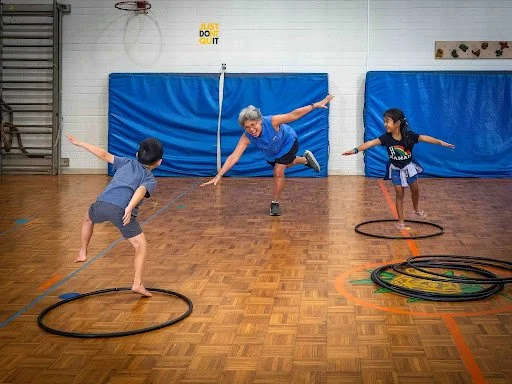
In class, Jewel holds each child accountable for their actions through clear, concise communication. Her feedback is immediate and uses a transparent "cause-and-effect" structure that children can easily navigate and understand. By establishing consistent expectations and predictable routines, Jewel cultivates a safe, supportive environment where accountability is rooted in mutual respect. As a result, children naturally grow into the role of collective ownership within their class community. In my own practice, I can apply what I learned to uplift all children to be empathetic, collaborative members of our learning community. - Kristi Choi
2. Emphasizing collaborative problem solving and the social construction of knowledge.
Jewel intentionally fosters self-advocacy by encouraging children to resolve conflicts independently. By providing children with the necessary time and space to navigate challenges, she strengthens their ability to communicate effectively and receive peer feedback. While intervening can often feel like the easier path, I now recognize that taking a step back and granting children the autonomy to problem-solve deeply supports their self-agency and social-emotional development. - Kristi Choi
3. Providing structure and support for authentic exploration and freedom of expression.
I observed that Jewel really creates a space that requires students to make sense of the skills and experiences she sets up for them. During her instructional schpiels she gives clear and specific instructions that support students in understanding what they are aiming to do. At the same time, she intentionally gives students room to try new solutions and processes, and rationalize their independent choices. This truly supports students in creating meaning through these experiences by putting them in a position to make sense of things for themselves as opposed to having each detail explicitly laid out. When students ask questions, Mrs. T often responds by asking what they think, scaffolding their learning based on their own thinking, and responding differently based on who each student is. I plan on applying this in my own delivery of instructions by trying to strike a better balance of offering enough clarity and details to make objectives clear, while offering students freedom to try things for themselves. I will also try to respond to students' questions by asking what they think and trying to go from there. - Keenan Lau
4. Empowering learners through intrinsic motivation and self-direction, being learner-centered.
When children attend class with Jewel, they see and hear messages that encourage them to persevere, such as “The Power of Yet” and “No-Fault Zone.” This learning environment provides children with a safe space to make a first attempt at a new skill and continue trying until they succeed. In my own practice, I will continue to prioritize meeting children’s social-emotional needs so that they feel safe enough to step into their brave space. - Shelby Hom
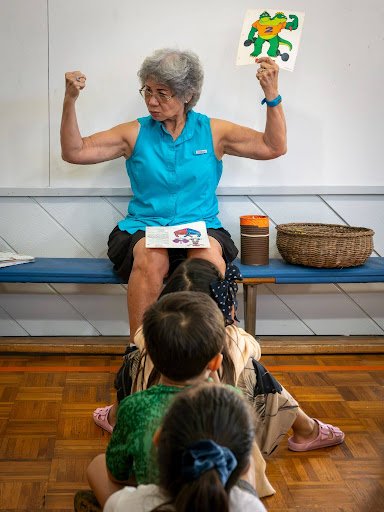
Jewel instills confidence in children and encourages them to celebrate their growth. Through high expectations, she fosters a classroom culture where children feel pushed to do their best and never quit. This was illustrated when I observed Jewel prompt a child to "Say it like you mean it!" after the student quietly shared their jump rope score. I imagine Jewel’s intention was to show children that they should take pride in their skills, putting aside the shadow of peer comparison. This moment served as a reminder of how vital it is to highlight student growth with enthusiasm. Mirroring Jewel’s approach, I hope to be more intentional about taking the time to celebrate each child, aiming to strengthen their self-worth and belonging within the classroom. Learning to celebrate progress gives children the motivation to be persistent even when they struggle. - Kristi Choi
5. Taking kids seriously and meeting them where they are at.
Recognizing that all children develop skills differently, Jewel has a deep understanding of the progression continuum of each skill. She can immediately differentiate by scaffolding when children need more support and adding another layer of challenge when they are ready, in response to where the children are. The importance of designing learning experiences that are accessible (low floor) and have the potential for a high level of challenge (high ceiling) is evident in my classroom as well, especially in math instruction. - Shelby Hom
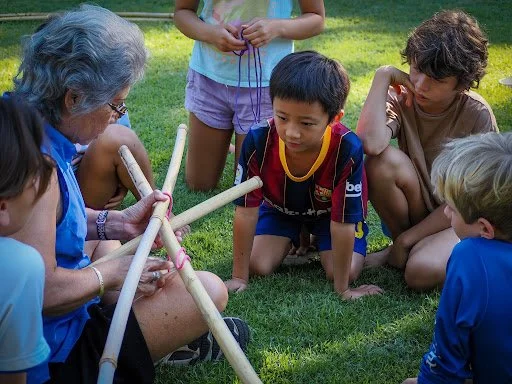
Through my observation of Mrs. T’s camping class, I saw that she offers them rich opportunities to engage in every component of what they might do in camping, from tying knots to building fires to cooking food. This structure gives students the full experience in a way that takes them seriously and challenges them to take on real responsibilities such as creating their own shelter using tarps, rope, and bamboo poles during the culminating campout and keeping themselves safe around fire. By taking students seriously and trusting them to engage in these real-life challenges, they get a much richer experience than the typical “kid friendly” activities children often encounter these days. Iʻd love to try to push the boundaries of what students can do to offer them fuller experiences. - Keenan Lau
6. Fostering attitudes and dispositions needed for continuous growth, lifelong learning.
What drives Jewel’s instruction is her philosophy of movement education, which involves discovering how you love to play and move for your lifetime. From a social justice perspective, Jewel supports community wellness by instilling healthy habits that children will carry into adulthood. As I plan, I will center my teaching around the “why,” a larger purpose that will continue to serve children even after they leave Hanahauʻoli, and create a better world for all. - Shelby Hom
ABOUT THE CONTRIBUTORS:

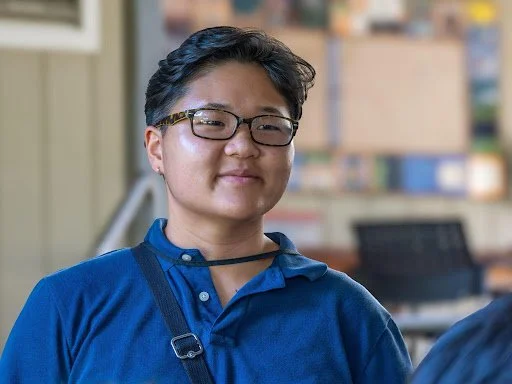


Kristi Choi teaches fourth and fifth grade at Hanahauʻoli School. Guided by the progressive educational philosophy, she is passionate about meeting the diverse learning needs of every child. She strives to foster a lifelong love of learning and help children develop the skills needed to thrive in an ever-changing world. Kristi holds a bachelor’s degree in Elementary and Special Education from University of Hawaiʻi at Mānoa and is licensed in both fields.
Shelby Hom teaches 2nd and 3rd grade at Hanahauʻoli School. Guided by progressive principles, she believes that all children are capable of continuous growth, learning is a social endeavor, and education is a lever of change that can create a better world. She holds a bachelor’s degree and dual licenses in elementary and special education from the University of Hawaiʻi at Mānoa.
Keenan Lau taught Kindergarten and first grade at Hanahau’oli during the 25’-26’ school year, and he is now developing a progressive tutoring program focused on developing students’ critical thinking and meaning making alongside academic skills. He has a deep love for teaching early childhood students and supporting them in developing agency through critical thinking. Keenan holds a bachelor’s degree in early childhood and elementary education and a curriculum studies masters degree in Education focused on progressive philosophy and pedagogy from the University of Hawaiʻi at Mānoa.
Dr. Amber Strong Makaiau is a Specialist at the University of Hawai‘i at Mānoa, Director of Curriculum and Research at the Uehiro Academy for Philosophy and Ethics in Education, Director of the Hanahau‘oli School Professional Development Center, and Co-Director of the Progressive Philosophy and Pedagogy MEd Interdisciplinary Education, Curriculum Studies program. A former Hawai‘i State Department of Education high school social studies teacher, her work in education is focused around promoting a more just and equitable democracy for today’s children. Dr. Makaiau lives in Honolulu where she enjoys spending time in the ocean with her husband and two children.

