
By Dr. Amber Strong Makaiau and Dr. Noboru Tanaka
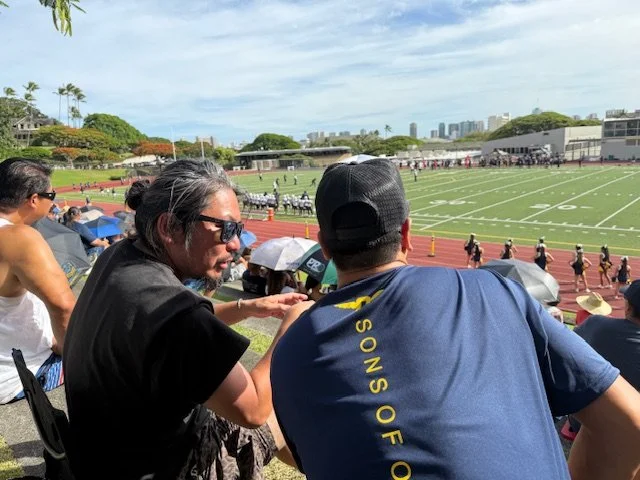
I first met Dr. Noboru Tanaka in 2015, while traveling across Japan giving a series of lectures related to democracy and education. Since then, we’ve become friends and colleagues, collaborating on a number of scholarly endeavors that aim to bridge the work of progressive educators in Hawai‘i and Japan. Not only has this included co-authoring academic journals and book chapters, but also cheering side-by-side at my children’s high school football games and learning more about Tanaka’s love of motorcycle riding and stint in a punk rock band. Today, I continue to work with Dr. Tanaka in his role as an Associate Professor in the Graduate School of Human Development and Environment at Kobe University, where he specializes in citizenship education and democratic society studies. His research, similar to mine, focuses on education for democratic citizenship, with his lab exploring civic engagement and educational philosophy.
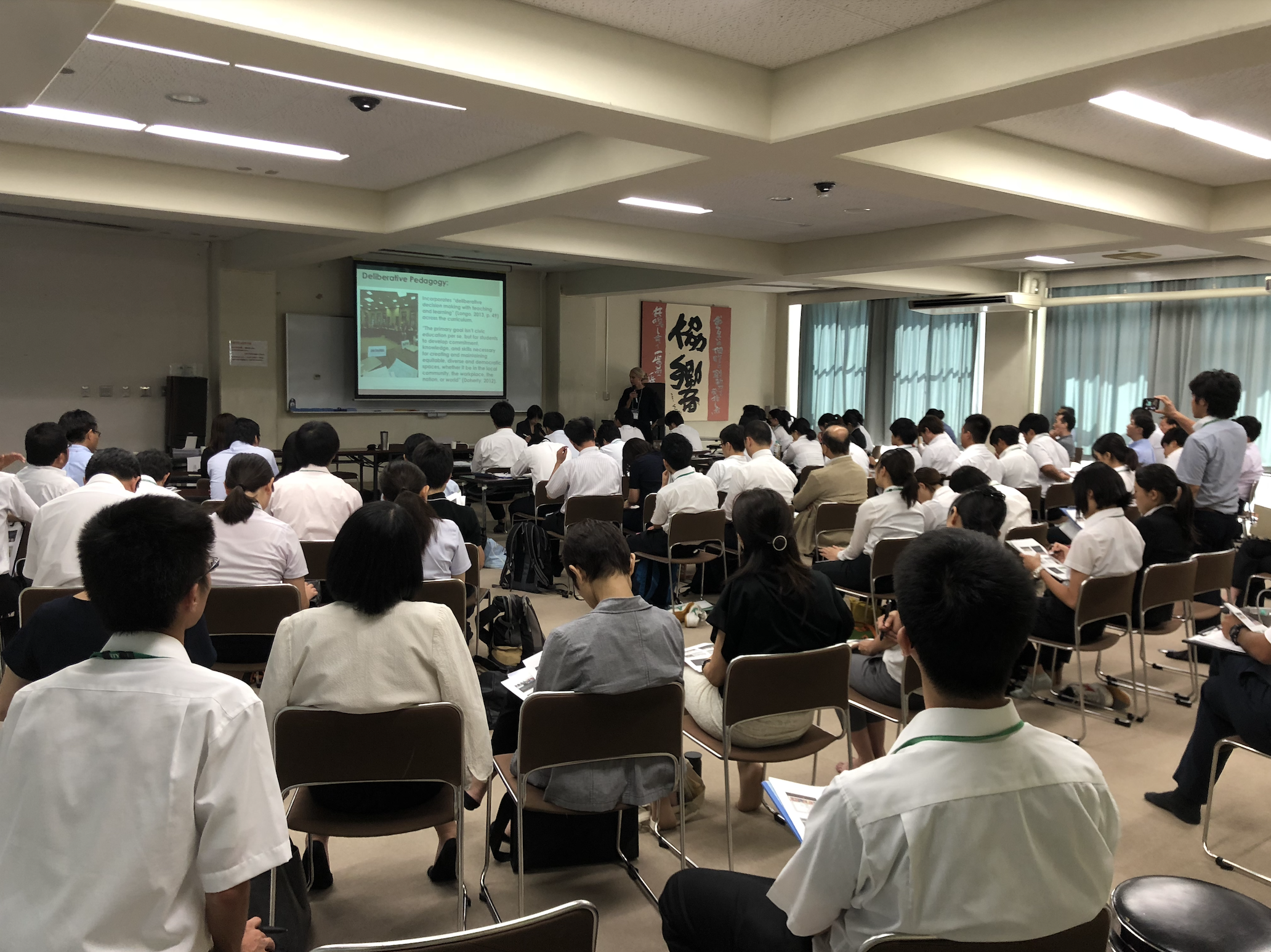
Back in 2015, during our first encounter together, Dr. Tanaka graciously included me on a visit to the Japanese Ministry of Education, Culture, Sports, Science and Technology (MEXT) so that I could learn about the work they were doing to create a “more progressive” national curriculum. At the time, MEXT was making efforts to move away from some of the country’s traditional frameworks in the national curriculum by strongly emphasizing inquiry-oriented approaches under the slogan of “active, interactive, and deep learning.” For readers who are new to Japan’s education system, the national curriculum in Japan, known as the Course of Study (Gakushu Shido Yoryo), is a centralized, mandatory framework established by MEXT to ensure uniform, high-quality education nationwide. It defines core educational standards, objectives, and content for all schools, from kindergarten through upper secondary school, and is typically revised every 10 years to adapt to societal changes. For the most part, Japanese school teachers across the country follow the national curriculum (the MEXT-authorized "Course of Study") with high fidelity. At this 2015 meeting I got to share about the progressive education approaches we are using in Hawai‘i, like Philosophy for Children while also learning about the efforts Tanaka and his colleagues were making to establish a new national framework for social studies.
Today, Tanaka continues to support and study Japanese educators as they move towards creating more “active, interactive, and deep learning” in classrooms across the country. However, as Tanaka writes in a recent book chapter, “although this policy aimed to shift classroom learning from passive reception toward autonomous inquiry, it has been inconsistently implemented. In many cases, inquiry has been reduced to superficial forms of activity such as discussion and group work, while the disciplinary structure of social studies, divided into geography, history, and civics, reinforces fragmentation across grades. Students often appear to learn new topics each year… [and] the overarching goal of citizenship development remains disjointed” (p. 14). Additionally he states, while the “institutional changes and policies are intended to move away from a narrow, knowledge-centred, and standardised conception of academic achievement… ‘preparation for the Center Test’ or ‘securing the academic achievement necessary to pass entrance examinations’ (MEXT, 2020b) [are priorities that] remain deeply entrenched [in Japanese perspectives on education] and are, therefore, often… not necessarily translated into substantive changes in classroom practices” (p. 3). Tanaka and I discussed these challenges at a recent symposium held at the University of Hawai‘i Uehiro Academy for Philosophy and Ethics. As a part of our conversation, I shared with him the uptick the PDC is experiencing with Japanese school teachers and scholars wanting to come to Hanahau‘oli to observe progressive education in action (including this upcoming workshop we are holding in Summer 2026). Ultimately, our exchange led to this blog.
In an effort to better understand the current state of progressive education in Japan, to follow is a set of questions I posed to Dr. Tanaka to learn more. His responses are presented in both Japanese and English. My hope is that continued conversations like this–across geography, languages, culture, and country–will shed new light on the collective work we are doing to not only support the development of more progressive schools in our local settings, but also grow the movement globally.
Dr. Noboru Tanaka, will you tell our readers a little more about your personal history as a progressive educator? When did you first become interested in progressive philosophy and pedagogy, and why are you drawn to this approach?
My initial doubts about education in Japan probably began in my junior high school social studies classes. I recall feeling a sense of discomfort when historical issues—such as interpretations of the Asia-Pacific War or the history of relations among Japan, China, and Korea—were presented as if there were a single correct answer. The fact that the same historical event can be interpreted differently depending on one’s experiences and social position suggested to me that society itself is inherently complex and plural. Although I was a young student, I knew that there could be a different type of schooling that encouraged more critical thinking, perspective taking, and learning through dialogue and discussion.
Ultimately, these reflections on my own schooling led me to question how the experiences and interpretive frameworks that individuals rely upon in making judgments can be understood and shared with others, and whether education can create spaces in which such processes are possible. It was at this stage that I began to explore the potential of education—and social studies in particular—as a field through which society itself might be examined.
My engagement with progressive education came somewhat later. For a long period in my academic development—until around a fifteen years ago—I was strongly drawn to social theory and was particularly interested in theoretical frameworks that seek to explain society in a comprehensive and coherent manner. The elegance and systematic nature of such theoretical work were intellectually appealing. However, as I encountered progressive educational thought–while continuing to grapple with the questions that had emerged from my earlier educational experiences–my interest gradually shifted. Rather than focusing primarily on explaining society through abstract theoretical principles, I became more interested in educational philosophy that takes seriously the lived experiences, tensions, and conflicts that individuals encounter within society, and explores how education might engage with these realities.
Currently, I view children’s experiences, perceptions, and even emotions as important sites in which “the social” itself is constituted. Rather than understanding society as an external object to be transmitted through schooling, I am interested in how society can be understood as something that emerges through experience and interaction, and how educational practices might create conditions in which such processes become possible. In this sense, for me, progressive education is not simply a learner-centred method, but a theoretical and practical framework for rethinking society through experience.
私が日本の教育に疑問を抱くようになったのは、おそらく中学校の社会科の授業がきっかけだったと思います。とくに、太平洋戦争の解釈や日中・日韓関係の歴史認識といった問題が、学校教育の中であたかも唯一の「正しい答え」があるかのように示されていたことに違和感を覚えたことをよく覚えています。同じ出来事であっても、人の経験や立場によって理解の仕方が異なるという事実は、社会そのものが本質的に複雑で多様なものであることを示しています。当時はまだ中学生でしたが、もっと批判的に考えたり、異なる見方を尊重したり、対話や議論を通して学んだりするような教育のあり方があるのではないかと感じていました。
こうした学校での経験を振り返る中で、人が判断を行う際に拠りどころとしている経験やものの見方を、どのように理解し、他者と共有していくことができるのか、また、そのようなプロセスを教育の中で実現することは可能なのか、という問いを持つようになりました。そして、教育、とりわけ社会科という領域が、社会そのものを考える場になり得るのではないかという関心を抱くようになりました。
もっとも、進歩主義教育の考え方に本格的に関心を持つようになったのは、もう少し後のことです。振り返ると、15年ほど前までは、社会を包括的かつ整合的に説明しようとする社会理論に強い関心を持っていました。社会を理論的に説明する枠組みの体系性や洗練された構造には、特段の知的な魅力がありました。しかし、それまで抱いてきた問いを考え続ける中で進歩主義教育の思想に触れたとき、抽象的な理論によって社会を説明すること以上に、社会の中で人々が実際に経験する葛藤や緊張関係に注目し、それらに教育がどのように関わりうるのかを探究する教育哲学に強く惹かれるようになりました。
現在では、子どもたちの経験やものの見方、さらには感情そのものも、社会が形づくられる重要な場であると考えています。社会を、外側から教えられる固定的な対象として捉えるのではなく、人々の経験や相互作用の中で立ち現れるものとして理解したいと考えています。そして、そのようなプロセスが可能になる条件を教育の中でどのように生み出せるのかに関心を持っています。私にとって進歩主義教育とは、単に学習者中心の方法を意味するのではなく、経験を通して社会を捉え直していくための理論的かつ実践的な枠組みであると考えています。
Describe the changes that have been made by the Japanese Ministry of Education, Culture, Sports, Science and Technology (MEXT) to create a “more progressive” national curriculum in recent years. Why have these changes been made?
In recent years, the Ministry of Education, Culture, Sports, Science and Technology (MEXT) has revised the national curriculum guidelines (Course of Study) with the aim of fostering what are often described as competencies necessary for living in an increasingly complex and uncertain society. While these reforms are sometimes interpreted as reflecting elements of “progressive education,” it may be more accurate to understand them as competence-based curriculum reforms rather than a direct adoption of Deweyan progressivism. One of the key concepts articulated in the revised Course of Study, implemented from 2020 to 2022, is the idea of “competency-based learning,” often summarised in the phrase “active, dialogic, and deep learning”. This framework emphasises students’ capacity to inquire, interpret, and engage with knowledge, rather than merely acquiring factual information. The curriculum also stresses the development of three integrated dimensions of learning: knowledge and skills, thinking and judgement, and the disposition to engage in learning and society.
These changes were motivated by several factors. First, Japanese policymakers have expressed concern that traditional forms of instruction, often characterised as teacher-centred and content-heavy, may not sufficiently prepare students for rapidly changing social, economic, and technological conditions. Second, there has been growing recognition of the importance of fostering democratic citizenship, critical thinking, and the ability to participate in diverse and pluralistic societies. Third, international policy discourse, including Organisation for Economic Co-operation and Development (OECD) frameworks such as “key competencies” and “Education 2030,” has influenced curriculum reform discussions.
It is important to note that these reforms do not represent a simple shift toward progressive education in the classical sense. The national curriculum in Japan still maintains a strong emphasis on shared content and national standards. As a result, current reforms can be understood as an attempt to balance the transmission of common knowledge with the cultivation of students’ capacity to think, inquire, and participate in society.
近年、文部科学省は、より複雑で不確実な社会の中で生きていくために必要な資質・能力の育成を重視する方向で、学習指導要領の改訂を行ってきました。これらの改革はしばしば「進歩主義教育」の要素を含むものとして理解されることがありますが、思想史的にデューイ的な進歩主義教育を直接導入したというよりは、「資質・能力ベースのカリキュラム改革」と捉える方が実態に即していると言えるでしょう。
2020年から2022年以降に実施された改訂版学習指導要領において中心的に示された概念の一つが、「主体的・対話的で深い学び」です。この考え方は、知識を単に習得するだけでなく、問いを立て、知識を解釈し、他者との関わりの中で理解を深めていく力を重視しています。また、学びは「知識・技能」「思考力・判断力・表現力」「学びに向かう力・人間性」という三つの側面が相互に関連しながら育成されるものとして位置づけられています。
こうした変更が行われた背景には、いくつかの要因があります。第一に、従来の授業は教師中心で知識の伝達に重点が置かれる傾向があり、それだけでは急速に変化する社会・経済・技術環境に十分に対応できないのではないかという問題意識があります。第二に、多様化する社会において、民主的な市民や批判的思考力、他者と協働する力などの重要性がこれまで以上に認識されるようになってきました。第三に、OECDが提示している「キー・コンピテンシー」や「Education 2030」といった国際的な教育政策の議論も、カリキュラム改革に影響を与えています。
もっとも、これらの改革は、古典的な意味での進歩主義教育へ単純に移行したことを意味するわけではありません。日本の学習指導要領は、依然として共通に学ぶべき内容や全国的な教育水準を重視しています。したがって、現在の改革は、共通の知識を重視する側面と、探究的・対話的な学びを重視する側面とのバランスを図ろうとする試みとして理解することができます。すなわち、知識の習得と、思考・探究・社会参加の力の育成とを両立させようとする方向性が示されていると言えるでしょう。
What have been the biggest challenges for Japanese educators who want to practice progressive education in Japanese schools? How are they currently being supported in this time of transition?
These questions have many possible answers! While not everyone may agree with me, I’ll share some of my thoughts based on my current observations and research. Above all, it is important to state that teachers in Japan are, in principle, able to practice progressive forms of education in diverse ways. This is because recent institutional and social changes have expanded the space for teachers to design learning environments that respond to the needs of the students in front of them. In this sense, the conditions for supporting such practices are gradually being established.
With that said, there are also a number of potential constraints that make practicing progressive education in Japan more difficult. This includes the national curriculum, high-stakes entrance examinations, or parental expectations that schooling should primarily prepare students for admission to selective high schools and universities. There is also this idea of credentialism within Japanese society. Credentialism in Japan, or gakureki shakai (degreeocracy), is a deeply ingrained system where social status and employment prospects are predominantly determined by educational background, specifically the prestige of one's university. Given all of this, I still do not consider these factors to be insurmountable barriers to practicing a progressive philosophy and pedagogy for at least two reasons.
First, institutional changes have created greater flexibility within the curriculum. The recent revision of the Course of Study introduced the concept of “curriculum management,” which encourages schools and teachers to interpret and adapt national standards in relation to the particular characteristics of their students and local contexts. This shift signals a stronger recognition that education must be responsive to the learners actually present in classrooms, rather than being understood solely as the uniform implementation of centrally prescribed content.
Second, broader social transformations have made the aims of progressive education increasingly relevant. In what is often described as a post-truth era, shaped by the rapid expansion of social media and artificial intelligence, the relationship between evidence, knowledge, and belief has become more complex. The availability of abundant information does not necessarily lead to shared understanding; rather, individuals are increasingly required to interpret competing claims, evaluate reasons, and engage with diverse perspectives. Under such conditions, the ability to participate in dialogue, to examine one’s own assumptions, and to collaboratively explore possible responses to social problems becomes especially important.
From this perspective, the central challenge for educators is not simply institutional constraint, but how to create educational spaces in which students can engage with social complexity through dialogue and inquiry. Progressive education, in this sense, is not merely a pedagogical technique, but an orientation toward learning that recognises difference, takes experience seriously, and encourages students to participate in the ongoing process of interpreting and shaping the social world.
In sum, it is my hope that educational practices which acknowledge plurality, engage with difference, and foster collaborative reflection will continue to expand.
この問いにはさまざまな答え方があると思います。必ずしもすべての方が同じ考えではないと思いますので、ここでは私自身の視点と研究に基づく考えを述べたいと思います。
まず強調しておきたいのは、日本の教師は原理的には多様な形で進歩主義教育を実践することが可能である、という点です。近年の制度的・社会的変化により、教師が目の前の子どもたちの状況や実態に応じて学習環境を設計できる余地は広がってきています。その意味で、進歩主義教育的な実践を支える条件は徐々に整いつつあると言えるでしょう。
もっとも、日本において進歩主義教育を実践することを難しくしている要因が存在することも事実です。例えば、ナショナルカリキュラムの存在や入学試験制度、あるいは学校教育が主としてより良い高校や大学への進学準備であるべきだとする保護者の期待などが挙げられます。また、日本社会において根強い「学歴社会」の影響も無視できません。日本の学歴社会では、どの大学を卒業したかという点が社会的評価や就職機会に大きく影響すると考えられており、この構造が学校教育のあり方にも影響を与えています。
しかし、少なくとも二つの理由から、これらの要因は進歩主義教育を実践するうえで乗り越えられない障壁ではないと考えています。
第一に、制度的な変化によって、カリキュラムの柔軟性が高まっている点です。近年の学習指導要領改訂では、「カリキュラム・マネジメント」という概念が示され、全国的な基準を前提としつつも、各学校や教師が子どもや地域の実態に応じて教育内容を解釈し、具体化することが重視されるようになりました。これは、教育を単に全国一律の内容を実施するものとしてではなく、教室に実際に存在する学習者に応答する営みとして捉える視点が強まっていることを示しています。
第二に、社会の変化によって、進歩主義教育が重視してきた能力の重要性がますます高まっている点です。いわゆるポスト・トゥルースと呼ばれる状況の中で、SNSや人工知能の急速な発展により、情報・知識・信念の関係はこれまで以上に複雑になっています。情報が増えれば自動的に共通理解が生まれるわけではなく、人々は多様な主張を解釈し、根拠を吟味し、異なる立場に向き合うことを求められるようになっています。このような状況では、対話に参加し、自らの前提を問い直しながら、社会的な課題に対して協働的に考えていく力がこれまで以上に重要になります。
このように考えると、教育者にとっての本質的な課題は制度的制約そのものというよりも、むしろ社会の複雑さに向き合うための対話的・探究的な学習空間をどのように創り出すかにあると言えるでしょう。この意味で、進歩主義教育とは単なる教授法ではなく、差異を前提とし、経験を重視しながら、学習者が社会の意味を解釈し、そのあり方をともに形づくっていく営みに参加することを促す教育の方向性だと考えています。
多様性を認め、違いに向き合いながら協働的に考える教育実践が、今後さらに広がっていくことを期待しています。
You have visited Hanahau’oli School and seen progressive education in action at a number of other schools in Hawai‘i. What have you learned as being a part of these immersive school-based experiences? How might other educators in Japan benefit from visiting?
Yes, I have visited Hanahau’oli School several times! Each time I visit Hanahauʻoli and other schools in Hawaiʻi that engage in progressive education practices, I am struck by how much there is to learn. While many aspects are noteworthy, three points in particular have remained especially significant for me.
First, the relationship between teachers and children. Although teachers and children are situated within asymmetrical relations in terms of age and experience, many of the schools I observed treat children’s experiences as meaningful expressions of the social world in their own right. Teachers do not simply exercise authority unilaterally; rather, they appear to suspend the immediate use of their institutional authority in order to listen carefully to children’s ideas and interpretations. They make sustained efforts to understand how children perceive and make sense of the world. This orientation may be described as a form of trust in children—not as passive recipients of instruction, but as participants capable of contributing to the shared task of interpreting social reality.
Second, the design of the curriculum. At first glance, the curriculum in progressive schools can appear unstructured or lacking a clear sequence of disciplinary knowledge. However, what underlies the curriculum is a careful attention to children’s experiences and to the social worlds they inhabit. Teachers closely attend to how children interpret the world, including the tendencies and limitations of those interpretations, and design learning experiences that enable students to expand, deepen, and creatively reconstruct their understanding. Learning, in this sense, is not simply something delivered from the outside, but something that develops through the cultivation and extension of curiosity. While the possibilities of schooling are necessarily limited, these curricula demonstrate how educational practice can nonetheless broaden those possibilities.
Third, these practices offer important implications for current educational challenges in Japan. Issues such as school refusal (e.g. students who literally refuse to go to school), bullying, and student disengagement have become increasingly visible, and there is growing discussion about how curriculum design might better respond to the needs of individual learners. Progressive schools provide valuable ideas not only for teachers, but also for school leaders, researchers, parents, and students themselves.
For Japanese educators, visiting such schools may be beneficial not primarily as an opportunity to replicate particular instructional techniques, but rather as an opportunity to reconsider fundamental assumptions about what education should prioritise and how children should be understood as participants in learning and society.
はい、私はハナハウオリ・スクールをこれまでに数回訪問しました。ハナハウオリをはじめ、ハワイで進歩主義教育を実践している学校を訪れるたびに、多くのことを学ばせていただき、その度に新たな発見があります。印象に残った点はいくつもありますが、特に重要だと感じている点が三つあります。
第一に、教師と子どもの関係性です。教師と子どもは、年齢や経験の面で非対称な関係にありますが、私が訪問した多くの学校では、子どもの経験そのものが社会の一つの現れとして尊重されていました。教師は一方的に権威を行使するのではなく、自らの立場や権限をいったん脇に置きながら、子どもの考えや解釈に丁寧に耳を傾けようとしています。そして、子どもがどのように世界を理解し、意味づけているのかを粘り強く理解しようとしています。そこには、子どもを単に教えられる存在としてではなく、社会について共に考えることができる主体として信頼している姿勢が感じられました。
第二に、カリキュラムの設計です。進歩主義教育を実践している学校のカリキュラムは、一見すると体系的な知識の配列がはっきりせず、やや自由でまとまりがないように見えることもあります。しかし、その根底には、子どもたちの経験や、子どもたちが生きている社会の現実への丁寧なまなざしがあります。教師は、子どもがどのように世界を捉えているのか、その理解の特徴や限界にも注意を払いながら、理解をより広げ、深め、創造的に捉え直すことができるような学習経験を意図的に設計しています。ここでは、学びは外から一方的に与えられるものではなく、子どもの好奇心を育み、それを広げていく中で発展していくものとして考えられています。学校教育にできることには限界がありますが、これらのカリキュラムは、その限界を踏まえつつも、学校教育の可能性を広げようとしている点に大きな特徴があります。
第三に、こうした実践は、日本の教育が現在直面している課題に対しても重要な示唆を与えてくれるという点です。日本では、不登校やいじめ、学習意欲の低下といった問題が広く指摘されています。また、一人ひとりの子どもの状況に応じたカリキュラムのあり方についても関心が高まっています。進歩主義教育を実践する学校は、教師だけでなく、学校管理職、研究者、保護者、さらには子ども自身にとっても、多くの示唆や具体的なヒントを与えてくれると感じています。
日本の教育者にとって、こうした学校を訪問することの意義は、特定の授業方法をそのまま取り入れることにあるというよりも、教育において何を大切にするのか、子どもをどのような存在として捉えるのかといった前提そのものを改めて問い直す機会になる点にあると思います。
What are your current progressive education projects? How do you see your work in Japan contributing to the larger world-wide progressive education movement?
I am currently involved in several projects related to progressive education. Among them, I would like to highlight three that are particularly central to my work.
The first is a research project on dialogical education. This project brings together scholars from multiple disciplines, including educational theory, philosophy of education, subject didactics, and political theory, all of whom share an interest in exploring the educational significance of dialogue. We have published major volumes in Japanese in 2020 and 2023 through the University of Tokyo Press, and an English volume is currently in preparation for publication with Routledge, scheduled for around 2027. A central concern of this project is to critically examine the power relations and forms of exclusion that can emerge within schooling, and to consider how educational spaces might be made more open to plurality and participation. By rethinking the role of dialogue in education, we seek to explore how classrooms can become spaces in which differences are not suppressed but engaged productively. Such work aims to expand the professional agency of teachers and to contribute to the development of educational environments characterised by greater openness and intellectual tolerance.
The second project focuses on fostering students’ engagement with political and social issues. The project, titled Discuss Our Society, encourages students to examine contemporary social problems and political processes in concrete and situated ways. For example, students analyse electoral manifestos, discuss policy issues with politicians and public officials, and collaboratively examine social questions that affect their own communities. Rather than approaching society as an abstract ideal, this project emphasises the importance of analysing social realities critically and dialogically. Through these activities, both school students and university students are encouraged to consider how democratic participation can be understood as an ongoing practice grounded in everyday social experience.
The third project explores the relationship between subculture and education. As Dr. Makaiau has mentioned, I have a long-standing interest in punk music. Music often reflects social tensions and political sensibilities in distinctive ways. In my citizenship education classes, I experiment with using music as a medium through which students analyse social issues and cultural values. This project also reflects my personal interest, but it is grounded in the idea that cultural practices can provide important entry points for examining how individuals interpret and respond to society.
Taken together, these projects aim to contribute to the broader international conversation on progressive education by emphasising the importance of dialogue, experience, and plurality in educational practice. Rather than proposing a single model of progressive education, my work seeks to explore how educational practices can create spaces in which learners critically engage with social complexity and participate in the ongoing interpretation and transformation of society.
現在、進歩主義教育に関連するいくつかのプロジェクトに取り組んでいますが、その中でも特に中心となっている三つをご紹介したいと思います。
第一は、対話的教育に関する研究プロジェクトです。このプロジェクトには、教育学、教育哲学、教科教育学、政治理論など、さまざまな分野の研究者が参加しており、「対話」という概念の教育的意義を多角的に検討しています。これまでに2020年と2023年に東京大学出版会から日本語の書籍を刊行しており、2027年頃には英国のRoutledgeから英語の書籍の出版も予定しています。本プロジェクトでは、学校教育の中に生じうる権力関係や排除の問題を批判的に検討しながら、学びの場をより多様で開かれたものにしていく可能性を探究しています。教育における対話の役割を改めて問い直すことで、違いを抑え込むのではなく、それに向き合いながら学びを深めていく教室のあり方を模索しています。このような研究は、教師の専門的な裁量や創造性を広げるとともに、より開かれ、寛容で知的に自由な教育環境の形成に寄与することを目指しています。
第二は、子どもたちが政治や社会の問題に主体的に関わることを促すプロジェクトです。「Discuss Our Society」という名称で、現代社会の課題や政治的なプロセスについて、具体的な文脈の中で考える機会を提供しています。例えば、選挙の際には候補者のマニフェストを分析したり、政治家や行政関係者と政策について議論したり、地域社会に関わる問題について協働的に検討したりしています。このプロジェクトでは、社会を抽象的な理念として学ぶのではなく、現実の社会のあり方を批判的かつ対話的に考えることを重視しています。こうした活動を通じて、小中学生や大学生が、民主主義への参加を日常的な社会経験に根ざした実践として捉えることを目指しています。
第三は、サブカルチャーと教育の関係を検討するプロジェクトです。Makaiau博士も言及している通り、私はパンク音楽に関心を持っています。音楽には社会の緊張関係や価値観が独特の形で表現されることが多くあります。シティズンシップ教育の授業では、音楽を手がかりとして社会問題や文化的価値を分析する試みを行っています。このプロジェクトは個人的な関心から始まった側面もありますが、人々が社会をどのように理解し、どのように応答しているのかを考えるうえで、文化的実践が重要な手がかりになるという考えに基づいています。
これらのプロジェクトは、対話、経験、多様性といった観点の重要性を示すことで、進歩主義教育に関する国際的な議論に貢献することを目指しています。特定の教育モデルを提示するというよりも、学習者が社会の複雑さに主体的に向き合い、その意味を解釈し、社会のあり方を形づくっていく過程に参加できるような教育実践の可能性を探究しています。
ABOUT THE CONTRIBUTORS:
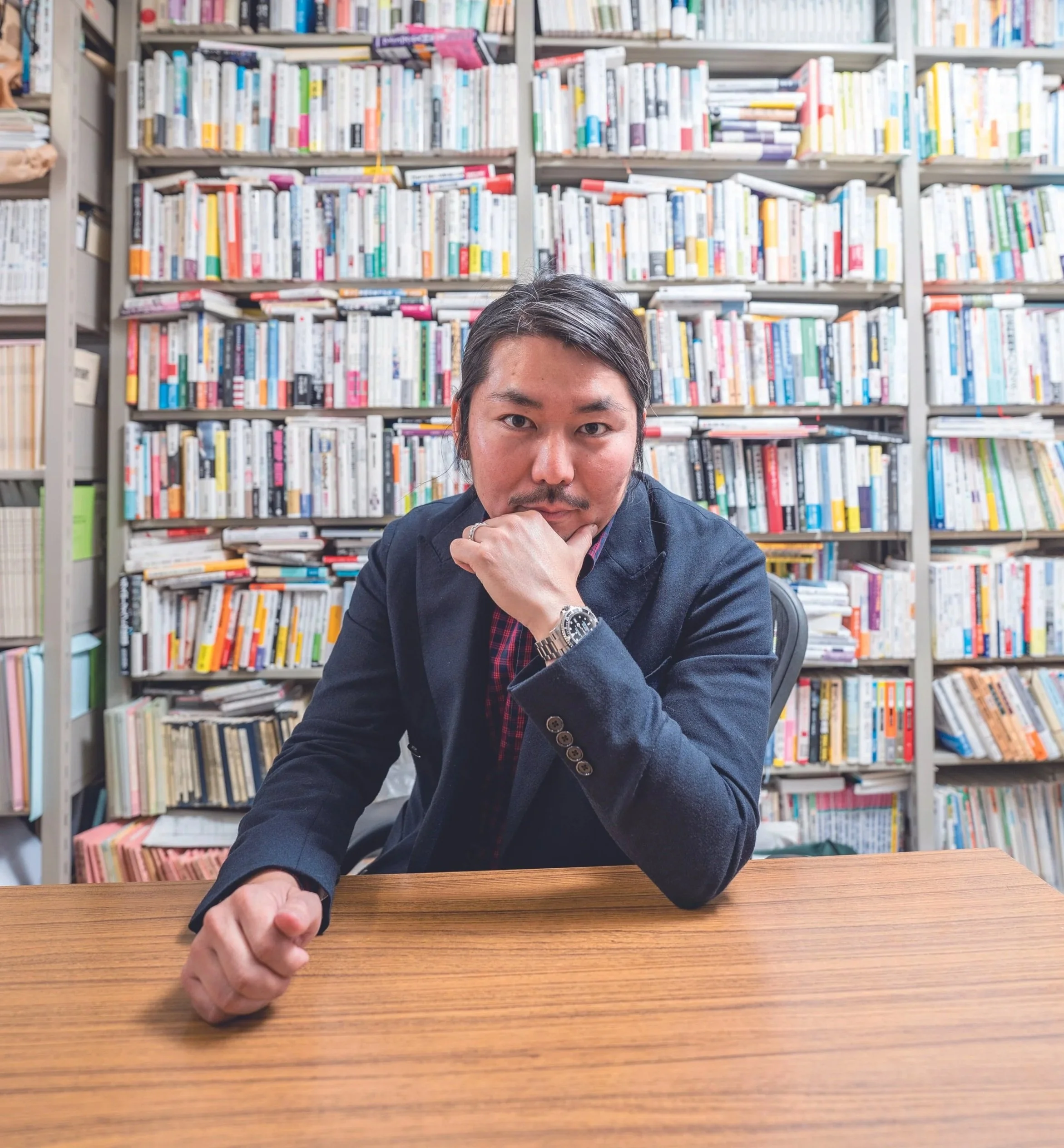

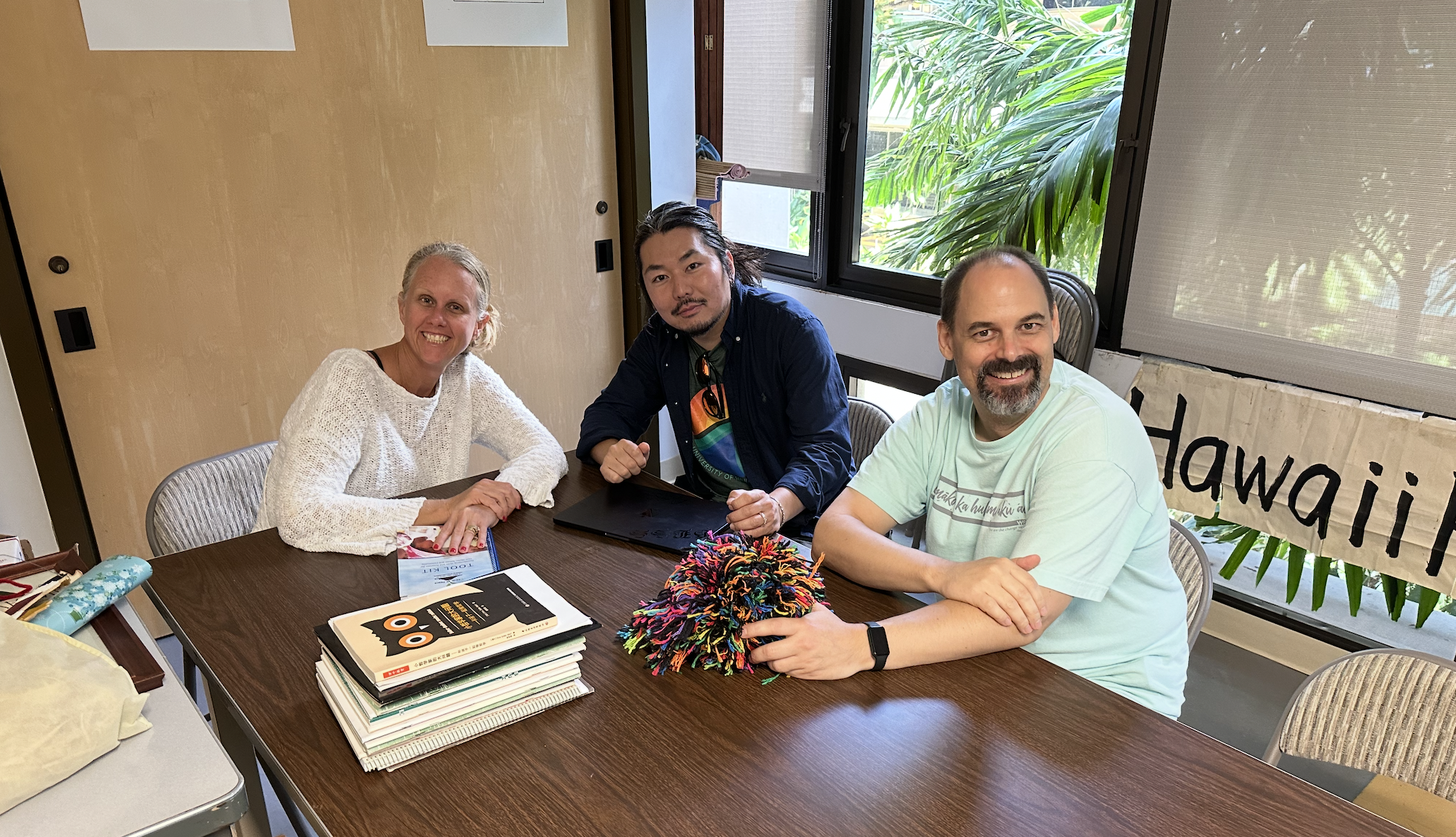
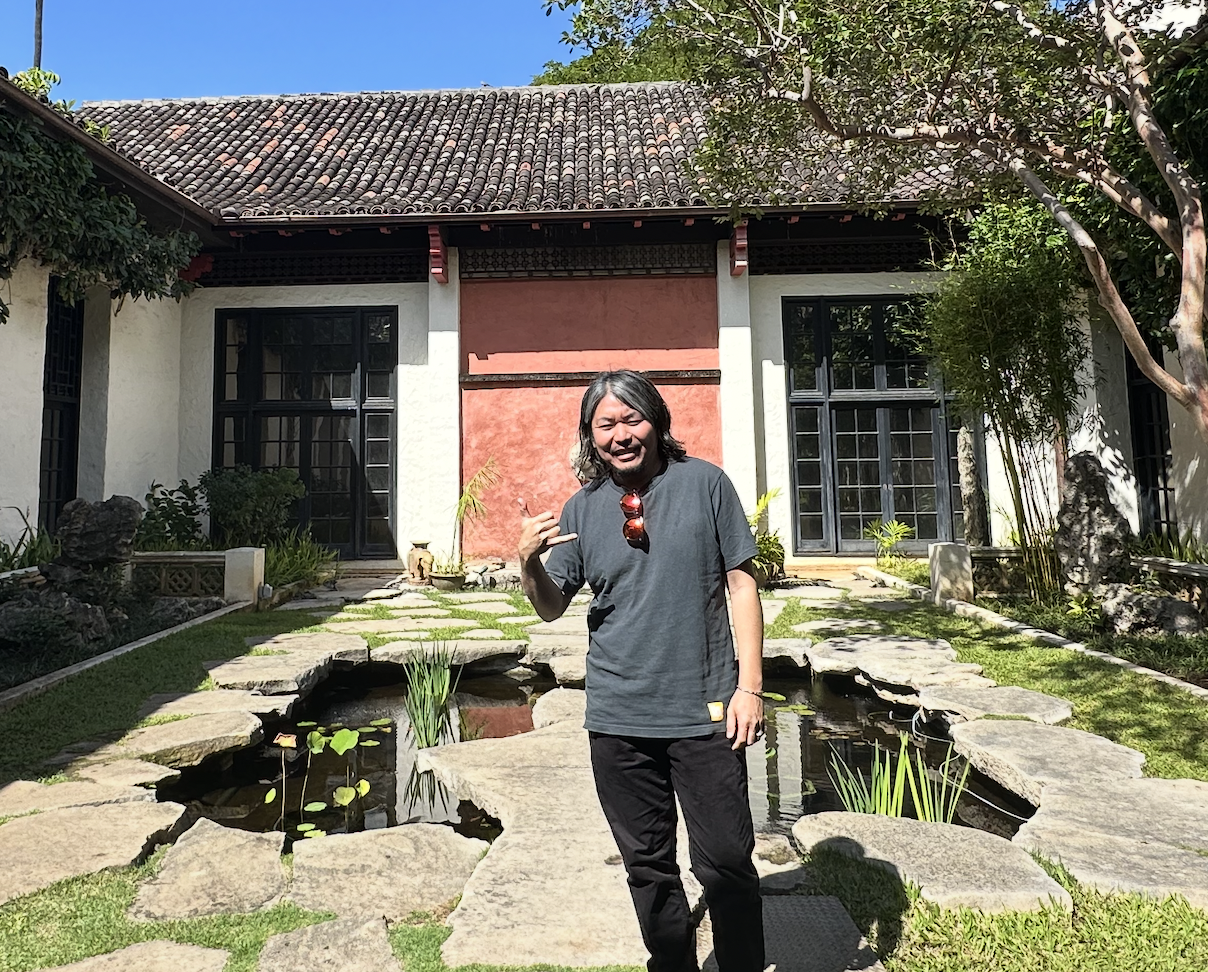
Dr. Noboru Tanaka is an Associate Professor in the Graduate School of Human Development and Environment at Kobe University, Japan. His research explores the possibilities of education and schooling in democratic societies, with particular attention to how theoretical insights can be translated into curriculum design and classroom practice. Focusing especially on social studies education, he critically examines questions of power, exclusion, and participation in education, and investigates how dialogical approaches can contribute to more open and reflective forms of learning. Dr. Tanaka enjoys music and motorcycling, and can often be found riding his Harley-Davidson through the streets of Kobe.
Dr. Amber Strong Makaiau is a Specialist at the University of Hawai‘i at Mānoa, Director of Curriculum and Research at the Uehiro Academy for Philosophy and Ethics in Education, Director of the Hanahau‘oli School Professional Development Center, and Co-Director of the Progressive Philosophy and Pedagogy MEd Interdisciplinary Education, Curriculum Studies program. A former Hawai‘i State Department of Education high school social studies teacher, her work in education is focused around promoting a more just and equitable democracy for today’s children. Dr. Makaiau lives in Honolulu where she enjoys spending time in the ocean with her husband and two children.

