By Dr. Jingwoan Chang
In her research on the successful transfer of professional development learning to classroom practice, Dr. Sara L. Wicht (2024; 2025) outlines six facilitating conditions that support professional development (PD) implementation after the workshop or PD experience:
1. Administrative Support: Leaders who provide time, resources, and encouragement
2. Adequate Knowledge: Deep understanding of the content and its application
3. Necessary Materials: Ready access to required resources
4. Support Staff and Collaborative Structures: Collaborative assistance from colleagues
5. Caregiver Involvement: Family & community engagement and support
6. Manageable Class Size: Appropriate student-teacher ratios
In this blog post I provide background information about two unique Hanahau‘oli School Professional Development Center programs centering on social justice education: the Leaders of Social Justice in Education (LSJE) course and the Hui Holomua workgroup. I outline my involvement in both of these experiences, then share how three educators–Martin Hamilton (LSJE, 2025), Karin (Kalena) Hansen Del Ray (LSJE, 2025), and Natalie Lalagos (LSJE 2020)–described the facilitating conditions that supported the ongoing implementation of the social justice action projects they began in the LSJE course. Their experiences reinforce Wicht’s findings (2024, 2025) and provide additional details that can deepen our thinking about how to better support teachers in ongoing implementation of their learning beyond a time-bound PD experience.
The Original Leaders of Social Justice Education Professional Development Course
The LSJE course started in 2020 as a collaboration between the University of Hawaiʻi at Mānoa College of Education, the Hanahauʻoli School Professional Development Center (PDC), and the Hawaiʻi State Department of Education. This course was designed and taught by Dr. Patricia Halagao, Dr. Amber Makaiau, and Dr. Ger Thao. In this hybrid course, educators explored a series of asynchronous digital materials on various themes including the four domains of the Social Justice Standards: identity, diversity, justice, and action. In addition to writing reflections and creating a teaching plan using social justice materials, course participants also shared a social justice action plan as a culminating experience.
As a participant of this course in 2020, I was inspired by my peers and wanted to learn more about their experiences. This curiosity led to my dissertation project, K-12 Educator Experiences and Definitions of Social Justice Education in Hawaiʻi (Chang, 2023), where I interviewed self-identified K-12 social justice educators in Hawaiʻi about how they defined social justice education and the experiences that developed their social justice consciousness. Later, the PDC invited me to co-teach subsequent iterations of the LSJE course. In 2024, Dr. David Ball of Punahou School (LSJE, 2020) and I served as co-instructors of the course. We updated the course to include more readings about our Hawaiian context and redesigned it to fit a semester format. I continued to teach the course in 2025 and 2026 while modifying it every year based on feedback and ongoing reflective practices.
Hui Holomua
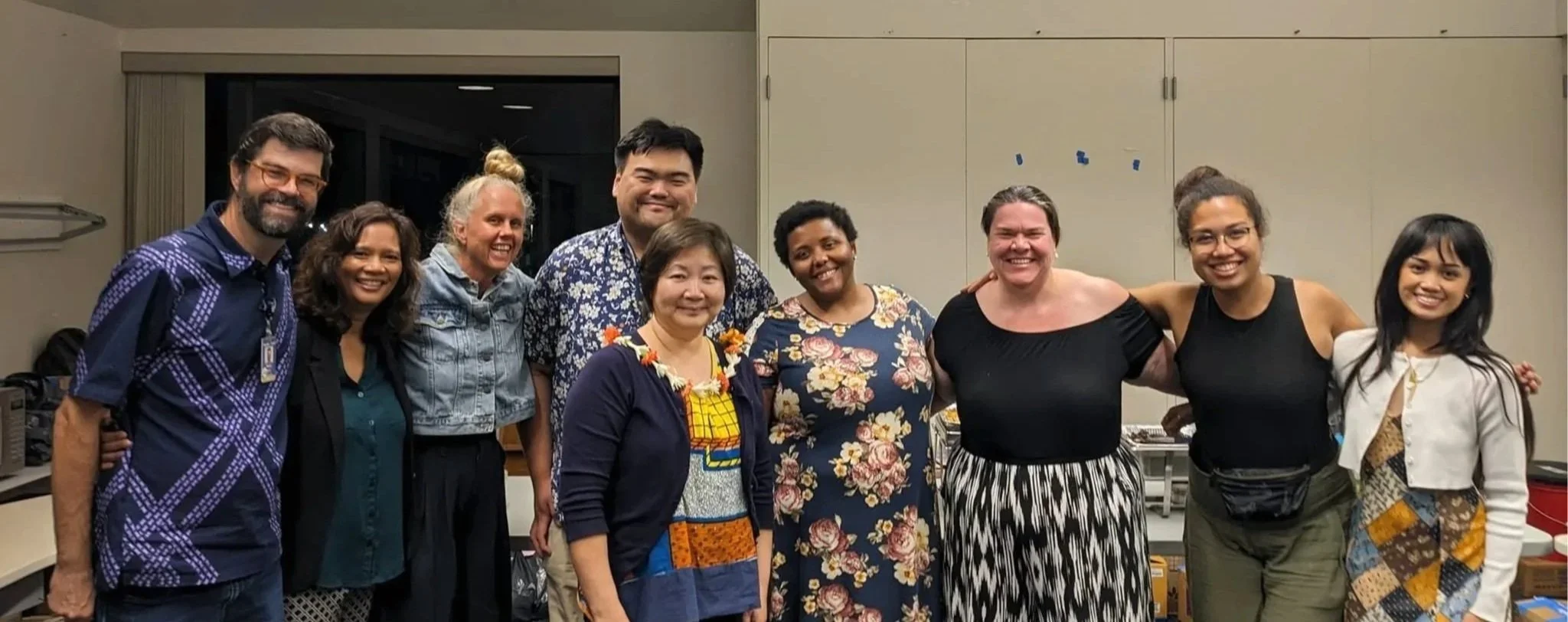
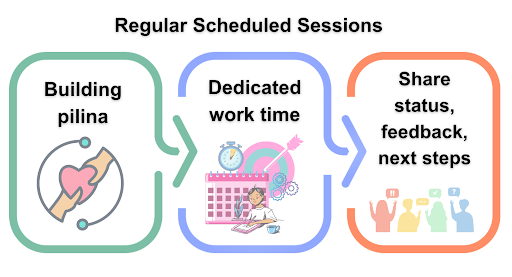
In the 2025-2026 school year, I proposed the Hui Holomua workgroup as a way to continue supporting educators who had completed the LSJE course or the PDC’s Anti-Bias Education Workshop, both of which had been offered multiple times over the past few years. Hui Holomua was designed as a facilitated work group to provide structure, accountability, and mutual support for educators working on their individual social justice projects “beyond the workshop,” as Wicht (2024; 2025) would say. In this first iteration of Hui Holomua, educators met virtually six times over the 2025-2026 school year, shared their goals, and worked on their individual social justice projects during dedicated work time.
Before the end of each session, we came back together to share updates and next steps. Participants often provided support and suggestions to each other. As part of the Social Justice Education in Hawai‘i Project funded by Jana and Howard Wolff, a $200 stipend was awarded to participants who attended five out of the six scheduled meetings and conducted a public sharing component of their work. The following section provides an overview of the ongoing work undertaken by three educators who completed Hui Holomua this past school year.
Martin Hamilton
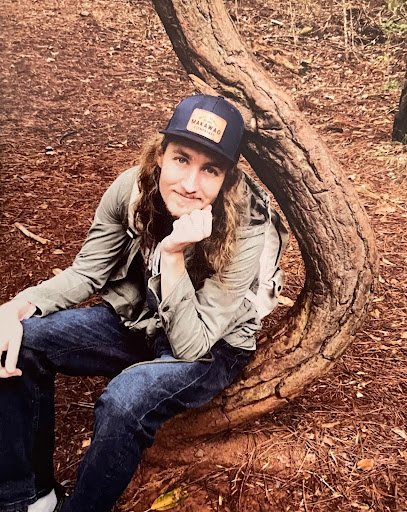
Martin Hamilton (LSJE, 2025), a fourth-grade teacher at Makawao Elementary, was motivated to sign up for the original LSJE course as he wanted to “try and do something” in response to a number of social, political, and economic issues that were impacting his students in 2024. During the LSJE course, he was inspired by Gabby Holt from Hanahauʻoli School, a guest speaker who joined us to talk about media literacy in the context of social justice education. Prior to this class meeting, he had been undecided about a focus for his social justice action project. Gabby shared about helping students develop the skills to discern misinformation, disinformation, and propaganda they encounter online. She also shared research-based sources and real-world examples on how social media can amplify and financially reward content that reinforces misogyny, racism, and conspiratorial thinking while targeting young children. This learning helped Martin see media literacy not only as a social justice issue but one of social emotional learning.
The conversation resonated with Martin’s personal experiences with social media algorithms and a recognition that explicit teaching around media literacy is essential not only for students but also for adults. While his LSJE action plan focused on developing media literacy with his students, he continued to learn about the topic by continuing to seek out knowledge, and developed a presentation which he shared with about 500 educators during the Hawaiʻi State Teachers Association Institute Day in 2026. His school administration was also supportive by providing an opportunity for him to share this presentation with colleagues as part of embedded professional development Martin credits Hui Holomua for providing structured, focused work time for this ongoing work in teacher professional development in media literacy. He also pointed to the importance of the Hui Holomua community; he found it inspiring to hear about each of the other participants and their respective projects while being supportive and generous with their feedback for each other.
Karin (Kalena) Hansen Del Ray
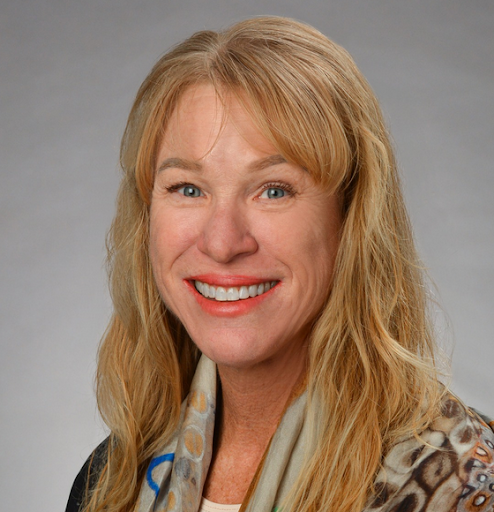
Karin (Kalena) Hansen Del Rey (LSJE, 2025) is an 8th-grade teacher and literacy coach at Kahuku High and Intermediate School. Karin found that the LSJE course shifted her thoughts and beliefs so that she now actively seeks out professional development that centers social and emotional learning for students and educators. In particular, she is building her ongoing professional learning and social justice implementation around the idea of being part of a beloved community, inspired by the work of Aunty Puanani Burgess in Building a Beloved Community.
This focus led to her implementation of the first From The Heart Festival at her school, a community engagement project in which various stakeholders were invited to give and take from the heart. During this festival, booths were set up around the cafeteria, each highlighting skills that would benefit the community, such as CPR, literacy, and kilo (observation). Karin also invited a community partner to give a short workshop about the importance of Hakalama, using your breath and spatial awareness to help settle one’s brain and reset under stressful conditions.
Kalena credits Hui Holomua with having a huge positive impact on her work in social justice education. The structured work time in Hui Holomua made it possible for her to apply for grant funding and organize the community festival. She says “I feel a real sense of beloved community when I am working with other people.” In the LSJE course, she benefited from being among like-minded educators who shared their hopes, inspirations, and challenges. The course cohort helped her see the world from many perspectives. In addition, she appreciated the sincere, encouraging, and helpful feedback she received from the Hui Holomua group. “This cohort gives me the courage to carry on and strive to do even more,” she said.
Natalie Lalagos
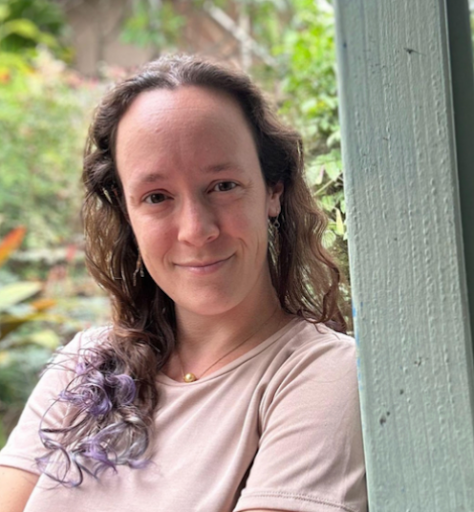
Natalie Lalagos (LSJE 2020) is a Spanish teacher at Kealakehe High School. The social justice action project required for the LSJE course provided the structure and motivation for her to implement an idea she had already been thinking about for a few years prior, a program to provide greater access to advanced learning opportunities for her multilingual students while recognizing their language skills as assets and creating a more linguistically welcoming school environment. The LSJE course taught her that while the process of becoming a leader could be messy, tiring, or filled with uncertainty, she had to learn how to do it by actually jumping in and taking concrete steps towards her goal.
In the years since she completed the LSJE course, she has built this idea into a non-profit organization, Transformative Translations, which supports students taking dual high school and college credit courses to learn the skills of translation. Students then have the option of paid internship opportunities to translate materials for their communities, with mentoring from speakers of their own languages, or creating podcasts in their home languages. Natalie credits Hui Holomua with providing structure and community for her to focus on important tasks to support Transformative Translations as part of a group of educators with similar philosophies and passion projects rooted in social justice.
Facilitating Conditions and the Hui Holomua Model
The reflections shared by participants both reinforce and add nuance to our understanding of Wicht’s (2024; 2025) facilitating conditions for successful transfer of professional learning experiences. All three teachers mentioned the value of having structure and dedicated work time where they can focus on their social justice action projects. While Hui Holomua was facilitated by a peer educator rather than school administration, we can see where the gift of time and structure has value for educators in ways that resonate with Wicht’s #1 - Administrative Support. Wicht also describes the value of professional learning communities as part of #4 - Support Staff and Collaborative Structures and #2 - Adequate Knowledge Building. Both conditions support teachers in “revisit[ing] concepts, ask[ing] questions that emerge from implementation attempts, and solv[ing] problems collaboratively” (Wicht, 2025). While Wicht describes professional learning communities within schools, the experiences of the selected Hui Holomua participants suggest that ongoing support for professional learning and the provision of structures for continued “practice, reflection, and refinement” can occur outside of schools as well through peer facilitation.
Concluding Thoughts
In examining the teachers’ experiences above, I have gained further insight into the nature of supportive communities in perpetuating social justice action among educators. All three educators spoke about being inspired by other educators, and all mentioned the value of being part of a supportive community with a similar purpose. This reinforces my belief that the Hui Holomua model below–of periodic facilitated meetings with pilina activities, dedicated work time for individual endeavors, and community sharing of updates, feedback, and next steps–can be adopted by any professional learning community to support teachers in extending their professional learning beyond a PD experience. The success of this pilot, experimenting with what teacher professional development support can look like “beyond the workshop” in the context of social justice education, appears to also be a promising approach for ensuring the lasting impact of teacher professional development more broadly. Hopefully others will be inspired to apply Wicht’s (2024; 2025) research on the successful transfer of professional development learning to other professional learning topics, contexts and school settings.
Works Cited:
Wicht, S. (2024). Predicting Professional Development Learning Transfer With the Theory of Planned Behavior: A Non-exploratory Correlational Study (31327476) [Doctoral dissertation, National University]. ProQuest Dissertations & Theses. https://www.proquest.com/docview/3083402358
Wicht, S. (2025, February 22). From the PD to Practice: The Hidden Factors in Professional Development Success. Progressive Pedagogy and Philosophy: A Blog for Progressive Educators. https://www.hanahauoli.org/pdc-blogposts/2025/wicht
ABOUT THE CONTRIBUTOR:
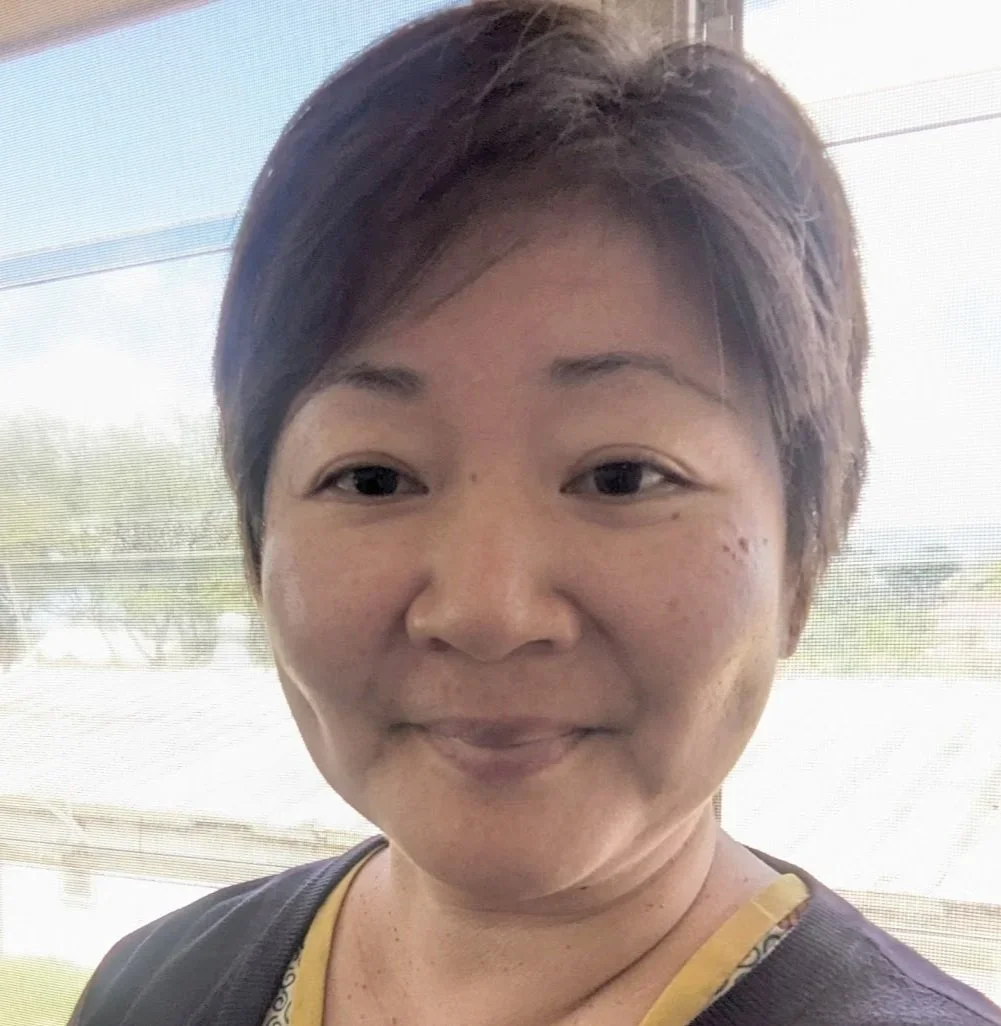
Dr. Jingwoan Chang was born in Taiwan and raised in Singapore. Jingwoan conducted her doctoral dissertation research on social justice education in Hawaiʻi in the Curriculum Studies Department in the College of Education, University of Hawaiʻi at Manoa. She taught Mandarin Chinese for over 16 years, mostly in K-12 classrooms in Chicago and Honolulu, and has Master's degrees in history and East Asian Languages and Civilizations. Jingwoan currently supports the World Languages program in the Office of Curriculum and Instructional Design for the Hawaiʻi State Department of Education.

