
By Holly Manaseri, Ph.D., Manca Sustarsic, Ph.D., and Renz Louis T. Montano, MS
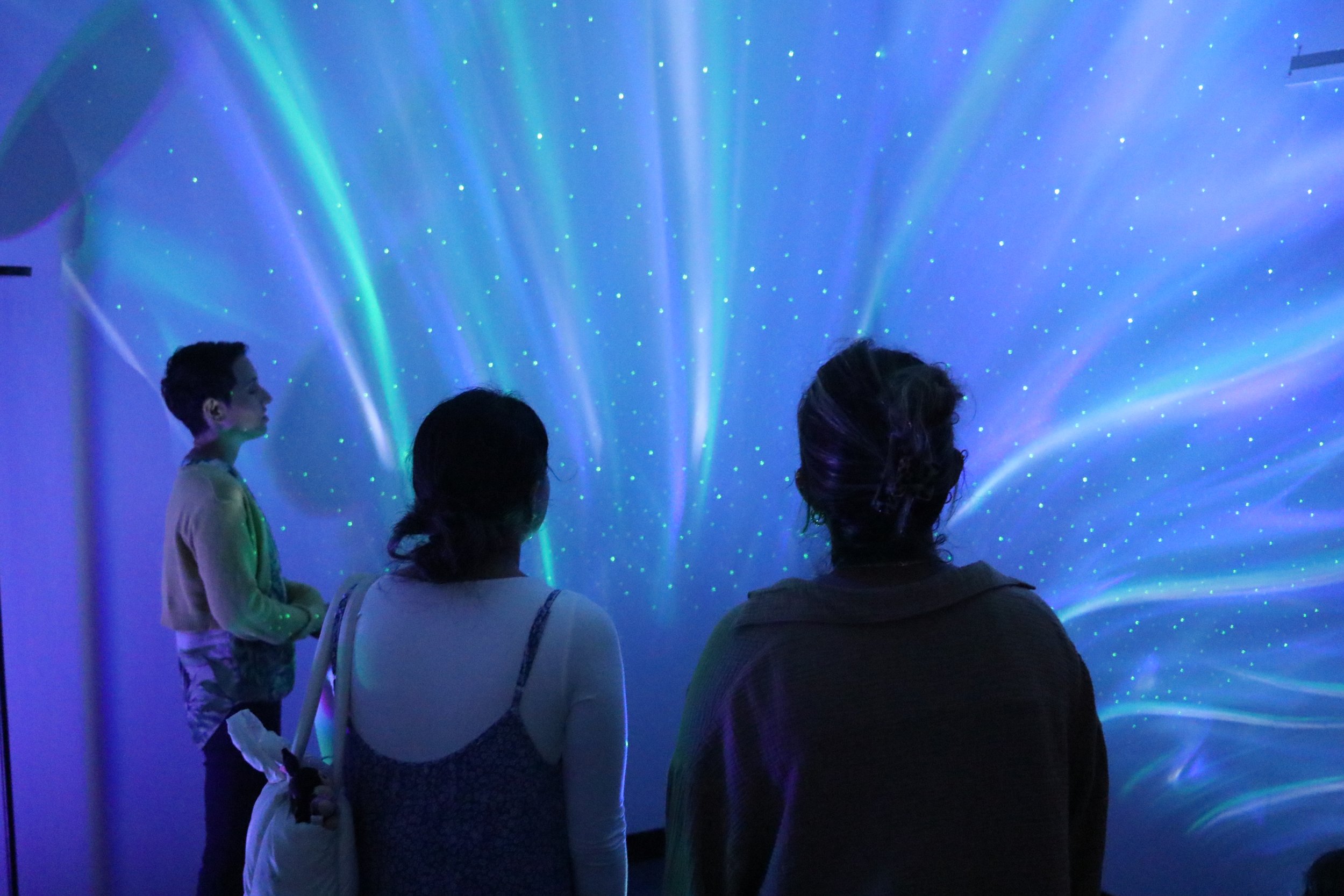
Progressive educators understand that learning is deeply relational. Emotions, trust, and a sense of belonging are not peripheral to academics, they are essential conditions for students to thrive. At the Center on Disability Studies (CDS), College of Education, University of Hawai‘i at Mānoa (UHM), we are on a mission to promote all abilities across the lifespan through interdisciplinary training, research, service, and dissemination. Our recent Sensory Room initiative has involved designing, installing, implementing and researching sensory experiences in postsecondary settings. Through a university partnership, this initiative serves as a model for promoting inclusion and well-being. We are excited to share why sensory spaces are important, highlighting college students’ experiences and perceptions of the sensory space, as well as those of faculty.
Why Have a Sensory Space and Who is it For?
Environments shape how we think, feel, and engage more than we may realize. Have you ever walked into a space that instantly made you feel overwhelmed? Sensory regulation, or the brain’s ability to process, organize, and respond to sensory input, is essential to learning, attention, and emotional well-being. When our sensory needs are unmet, we may struggle to focus, manage stress, or feel comfortable in educational and social spaces. When those needs are supported, we are better positioned to thrive.
In recent years, institutions around the world have begun recognizing sensory needs as an essential component of mental health and well-being (Baktash, 2023; O’Connor et al., 2024). As a result, many social institutions—including schools, universities, libraries, airports, hospitals and even athletic stadiums—are now rethinking how spaces are designed, whether through renovations or the intentional inclusion of sensory-friendly features (Chaves & Taylor, 2021).
In educational settings, sensory spaces can function as safe havens, or places where students can pause, reset, and recharge (Krajewski & Khoury, 2021; Sarrett, 2018). When embedded within broader student support services, these spaces help normalize sensory regulation as part of everyday well-being (Dodd et al., 2021). Thoughtfully designed environments can reduce stigma, increase engagement, and contribute to a more inclusive and supportive campus culture (Dwyer et al., 2023).
Sensory Needs in the Classroom and Beyond
In the classroom, students with sensory processing differences may appear distracted or disengaged, when in reality they may be experiencing sensory overload. Noise, fluorescent lighting, crowded seating, or constant movement can make it difficult to concentrate or participate. To address this, educators and scholars have called for designated sensory-friendly spaces within schools and universities that support emotional regulation, reduce stress, and promote academic success (Kim & Crowley, 2021; Madriaga, 2010).
Research also points to the value of sensory-based pedagogy within teaching and learning itself. Approaches such as multisensory feedback, nature-based elements, embodied learning, and the use of sensory tools have been shown to effectively support diverse student needs across disciplines (Crews & Wilkinson, 2012; Gutiérrez-Ujaque & Degen, 2024; Matson et al., 2024). These strategies recognize that learning is not only cognitive but it is also an embodied, relational experience that is influenced by the sensory environment itself.
Multisensory integration emphasizes the intentional design of classrooms, campus spaces, and non-traditional learning environments to support a wide range of learners. Across campuses, traditionally neurotypical learning spaces are being reimagined through the inclusion of quiet zones, adaptable lighting, and natural elements. In addition, makerspaces, outdoor classrooms, and art-based learning environments are emerging as important sites for sensory engagement, stress regulation, and experiential learning.
What is a Sensory Space?
A sensory space is a carefully curated, controlled environment designed to support self-regulation and stress management. These spaces may offer calming lighting, comfortable seating options, tactile objects, and gentle sensory input that allows individuals to either calm down or re-energize, depending on their sensory needs. Although initially intended for, sensory spaces are not just for individuals with disabilities. A well-designed sensory space can benefit everyone. Whether someone is managing stress, anxiety, sensory overload, or simply needs a quiet and safe place to reset, they can benefit from having access to a sensory space.
As schools and universities become more invested in supporting student well-being, it is no surprise that sensory spaces are becoming more common on our campuses. For example, among UHM’s peer institutions, 55% offer some form of sensory-friendly space, and 22% already have dedicated sensory rooms available. This growing trend reflects a broader commitment to inclusion, wellness, and designing campuses that support the whole student and faculty experience.
Partnering to Meet the Need
The Center on Disability Studies, as part of their grant funded CAMP+U project to improve postsecondary outcomes for students through the Oak Foundation Award: OFIL-22-075, partnered with the Office of Faculty Development and Academic Success (OFDAS) Center for Teaching Excellence (CTE) to establish a Sensory Room at the UHM, located in Kuykendall Hall 106. Since opening in the 2024-2025 academic year, the room has continued to operate weekly for faculty drop-ins and class visits.
The UHM Sensory Room is a relatively low-cost mobile sensory kit featuring intentional design with 13 different sensory items that appeal to a variety of sensory needs (visual, auditory, tactile, and olfactory elements). Designed as a controlled environment for self-regulation and stress management, the room offers a place to pause in the middle of a busy academic day. As part of the CAMP+U project, the sensory room aims to create a climate of inclusivity, benefiting not only individuals with disabilities but also the broader campus community, promoting a supportive environment and sense of belonging for students, faculty, and staff.
Grounded in evidence-based research on how individuals experience different sensory stimuli, and informed by pilot testing at the 2024 Pacific Rim Conference on Disability, we developed four sensory stations. Each station is intentionally designed to support specific sensory needs:
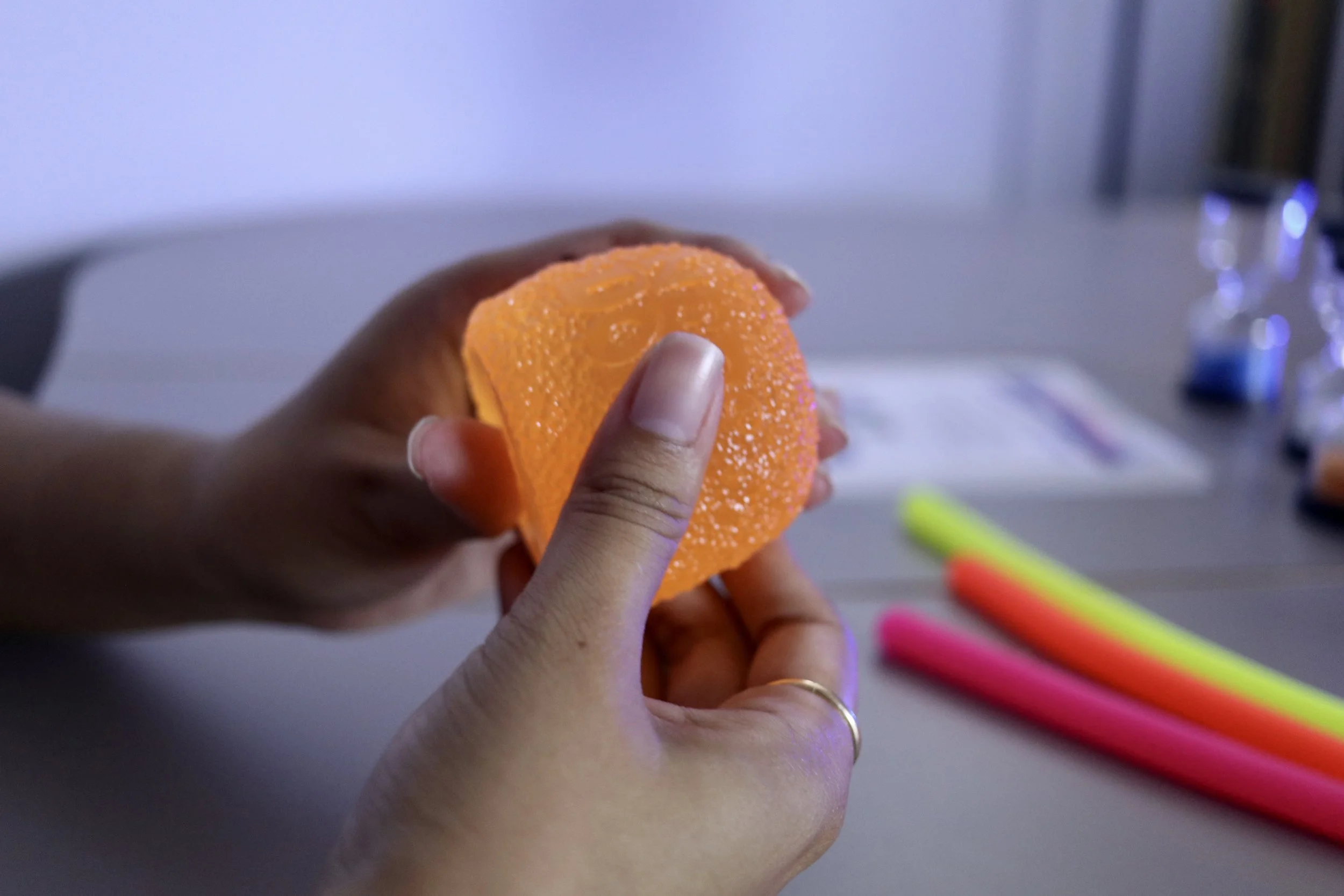
Fidget Table offers a variety of fidget toys, sensory strips, and kinetic sand. Squishing, pulling, and wiggling offer tactile input and release energy.
Tactile Table features textured objects like sensory strips and silly putty that provide a tactile sensation, which can directly support one’s sensory regulation by activating the parasympathetic nervous system.
Touch Corner is a floor area that encourages visitors to sit or lay down on the floor while exploring interactive, safe-to-touch light items that support tactile and visual regulation.
Calming Corner features comfortable seating with a bean bag and rocking chair, an aurora light projection and a jellyfish lamp, to provide relaxation and support sensory regulation.
Now in its second year, the project runs a research study with a survey and follow-up talk story sessions, examining how sensory-friendly spaces support stress management and well-being. Feedback from more than 300 visitors, including students, faculty, and administrators, illustrates the room’s outreach and impact. Survey results to date show a statistically significant increase in positive emotions after using the space. For example, visitors most often reported feeling calm, relaxed and happy, while reports of stress, anxiety, overwhelm, tiredness, nervousness, frustration, and feeling upset dropped significantly post-visit.
How people use the room also tells an important story. Most visitors spent between 31 minutes and an hour in the space. There is also a pattern of returning visitors, especially students, suggesting that many individuals have incorporated sensory breaks into their campus routines.
Student Experiences
Most students described coming to the room for sensory regulation and stress relief, with others finding it valuable for studying and peer collaboration. The room was consistently described as a safe, playful, and calming environment.
Students emphasized how the sensory room differed from the fast-paced, overstimulating, and often neurotypical campus environment. Stepping into the room creates a sense of calm. One student “immediately felt peaceful when entering,” while another highlighted “the low lighting and large space to move around and experience different items.” For college students navigating stress and anxiety, ADD/ADHD, or sensory processing challenges, the calm ambience was deeply appreciated:
“I finished my reading in good time, there is good company here, and I genuinely feel calm and quiet which is hard with ADHD/ADD/bipolar.”
During exam periods, student visits peak. One student noted that coming into the space was “a great stress reliever,” while another captured the experience vividly:
“Finals are so stressful. I love coming in here to relax and forget about it for a brief moment until I go back into chaos.”
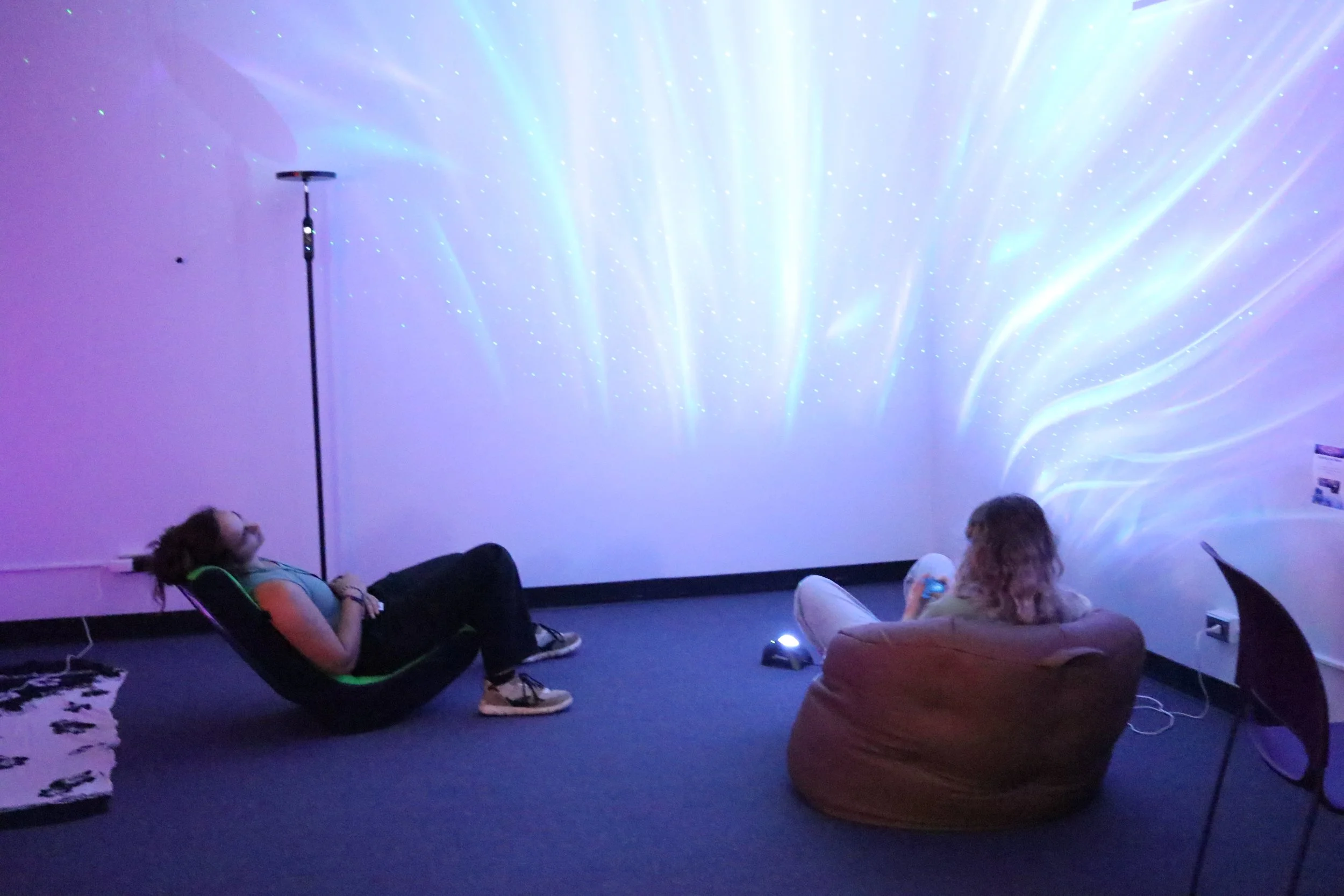
Features such as bean bags, rocking chairs, and soft background music help create a comfortable environment that supports focus and makes going about daily tasks more manageable.
Beyond sensory regulation, the room is often perceived as a playful and social space. Tactile and interactive items invite visitors to engage in ways they rarely experience on campus or other public spaces. As one student reflected:
“I felt like a kid again. I did not feel any judgment playing with the items and I just felt comfortable letting my guard down.”
In such moments, academic boundaries soften while allowing imagination and curiosity to surface.
Faculty Perspectives
Many faculty visitors described experiencing stress, anxiety, and emotional strain tied to high-stakes meetings, workload pressures, and academic competition. While well-being is still rarely discussed openly among the faculty, caring for student well-being cannot be separated from faculty well-being. Thus, the faculty appreciated having shared and accessible sensory spaces on campus. One of them described the room as a place of “collective struggle,” recognizing that stress and overwhelm are not limited to students only:
“It brought the class together with me as the professor in the room and leveled the playing field a little bit, and kind of let everyone know that we have a shared humanity in that stress, and also the stress reduction.”
Faculty who came in for guided class visits noticed shifts in student behavior while in the room. Students appeared more willing to move around, explore, and interact with their peers, during and even after visits. As per one faculty:
“I really enjoy seeing all the students there, the joy in their faces. They were curious… They became active in the room, playing around with the toys there, and [they] started communicating, talking with one another.”
While some faculty initially worried that bringing sensory items in the classroom might distract from studying, learning about the research behind sensory integration shifted their assumptions. Understanding that sensory tools can improve one’s focus while relieving stress and anxiety reframed sensory play as a helpful resource that supports student learning and regulation.
Campuses of the Future
In less than two years, the UHM Sensory Room has emerged as a vital resource for the campus community and a model for well-being initiatives that can be replicated across different contexts and for diverse populations. Just as importantly, it highlights a growing need for permanent sensory-friendly spaces.
Progressive educators remind us that learning does not happen in isolation from the body, the environment, or our emotional selves. Just as trusting relationships and a sense of belonging are essential to learning, the sensory environment can either support or hinder individuals’ ability to feel grounded and regulated. The CAMP+U Sensory Room initiative brings this philosophy into practice by recognizing sensory regulation not as a special accommodation, but as a shared and universal human experience.
Works Cited:



ABOUT THE Contributors:
Holly Manaseri, Ph.D. is a faculty member at University of Hawaii at Mānoa’s Center on Disability Studies and teaches courses in the field of Disability Studies. She holds a PhD in Cultural Foundations of Education and an Advanced Certificate in Disability and Educational Leadership from Syracuse University. With over 25 years of combined experience in K-12 teacher and school leadership preparation and higher education, she has designed and delivered a wide range of courses for both preservice and in-service teachers and school administrators and has served as a principal investigator and project director on several grant funded projects in the areas of disability and diversity.
Manca Sustarsic, Ph.D. is a faculty member at the University of Hawaiʻi at Mānoa’s Center on Disability Studies. She holds her doctorate in Educational Foundations from the same institution. Her work centers on program evaluation and mixed-methods research, particularly involving underrepresented student populations. Her research focuses on the experiences of students in both K–12 and higher education, with particular attention to international students, students from low-income backgrounds, and students with disabilities.
Renz Louis T. Montano, MS is a PhD student in Educational Psychology and a Graduate Research Assistant at the Center on Disability Studies at the University of Hawai’i at Mānoa. He is also pursuing his graduate certificate in Measurement and Statistics. He holds a Master’s Degree in Psychology Major in Clinical Psychology from De La Salle University - Manila.

