By Malia Pimentel
During the school year, I’m a Hawaii Department of Education (HIDOE) early childhood educator, teaching pre-K children on Oahu’s East side at Waiāhole Elementary. This past summer though, I had the opportunity to teach rising 2nd and 3rd grade students at Hanahau‘oli School as part of their summer The Skills We Need (TSWN) program. It was a completely refreshing experience that broadened my perspective as an educator and reminded me how much I enjoy learning alongside children of different ages.
For the past seven years, Hanahau‘oli’s TSWN program has invited Hawaii Public School students to participate in an immersive five-week, full-day summer learning experience. Since 2020, TSWN has been free to public and charter school students, and over the last several years, has prioritized high-need students who qualify for the federal Free and Reduced-Price Meals program, and students at Title 1 schools.
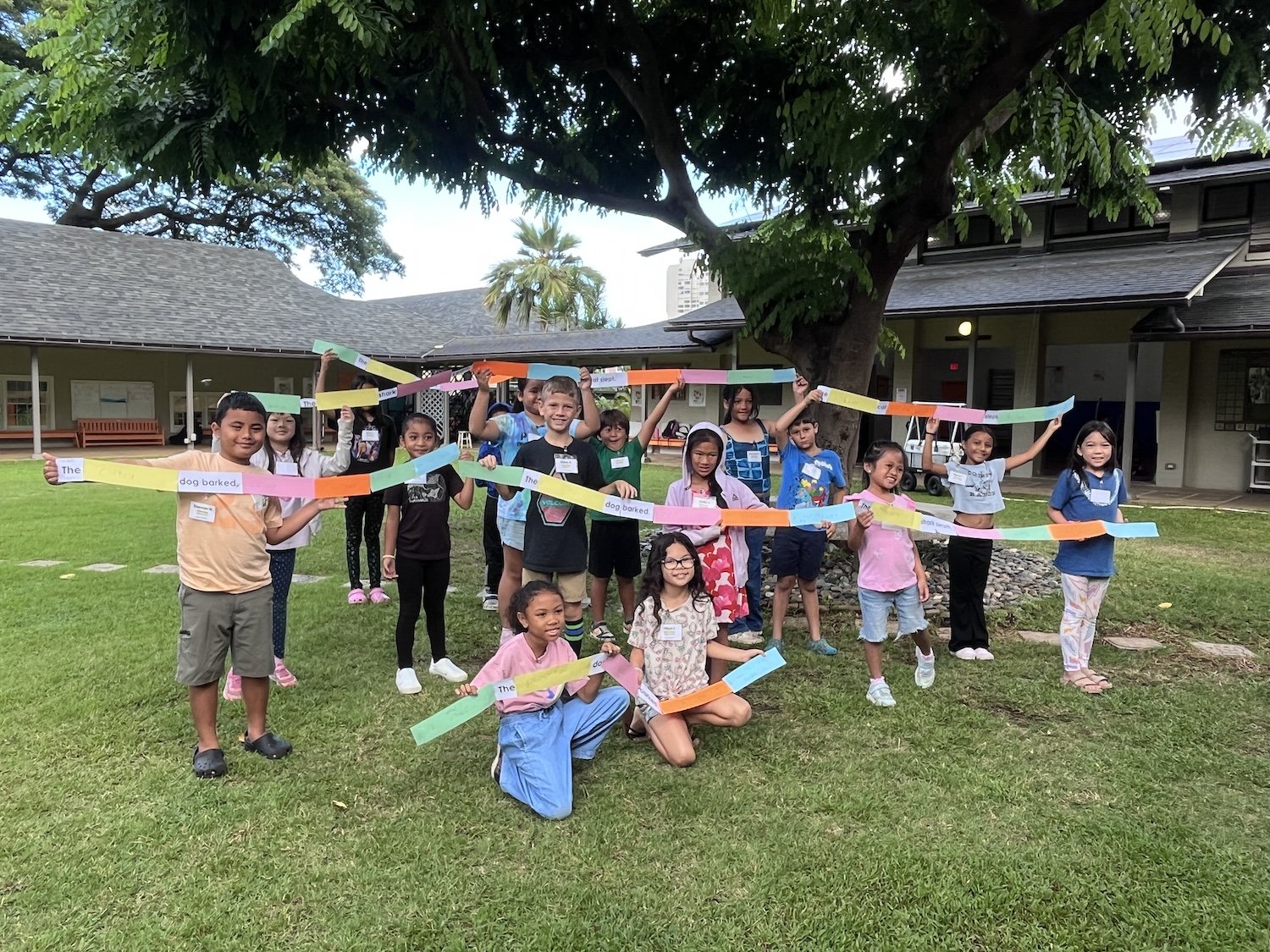
I learned that TSWN was born during the COVID-19 shutdown; created for HIDOE students, who were missing essential classroom instruction time and social experiences due to the limitations of the pandemic. TSWN was created to introduce Hanahau‘oli’s progressive education practices to these students, nurturing literacy and math skills in a fun, interactive, collaborative environment–online at first, and then in-person on Hanahau‘oli’s campus in the years that followed.
Now in 2026, the program is focused on rising 2nd and 3rd graders, and HIDOE principals and counselors nominate students from their schools who could most benefit from the summer of joyous learning at Hanahau‘oli.
The TSWN program was a direct product of Hanahauoli’s Professional Development Center mission: to build upon the school’s rich progressive education tradition by supporting the development of school communities that promote a better future society for today’s children.
While TSWN is an amazing and unique summer bridge program for these students, it’s also an opportunity for educators, like myself, to work and learn alongside Hanahau‘oli’s faculty, experiencing progressive team teaching and learning novel skills that we can bring back to our own classrooms! TSWN leaders purposefully set classroom pairings consisting of one Hanahau‘oli teacher and one external teacher (from a DOE school or another independent school, for example), to maximize our interactions and learning as educators. I was grateful to be a part of TSWN’s faculty this past summer and am excited to bring some of my learnings back with me to nurture at Waiāhole Elementary.
One of the most valuable parts of my experience this summer was co-teaching alongside the TSWN team. At my school, I've always wanted to make team teaching with my educational assistants more intentional, but I wasn't always sure what that could look like in practice. Being part of a collaborative teaching team this summer gave me practical strategies and a model that I brought back to my own classroom this Fall.
Another unique aspect is that TSWN curriculum uses Hanahau‘oli School’s thematic and interdisciplinary approach, even adapting some learning units from the school year. This summer, TSWN students engaged in thematic units of study centered around the ocean ecosystem and an essential question: What can learning about sea creatures teach me about who I am, how I relate to others, and our changing world?
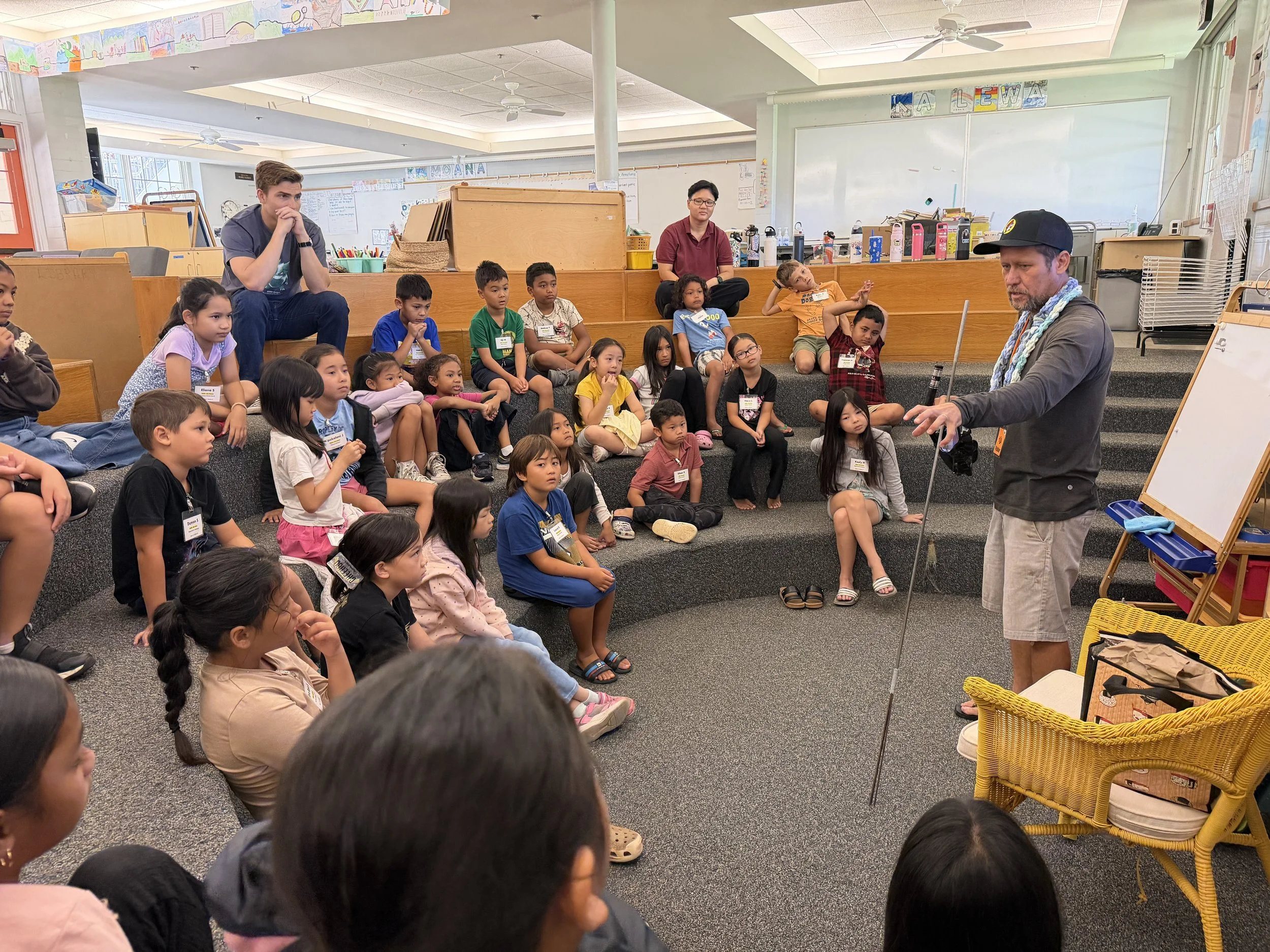
The teaching team put their trust in me, empowering me to tap into my strengths working with 'āina-based community partners. I was able to invite Kanaloa Bishop of Waihapakai, a community leader and Native Hawaiian environmental educator and practitioner, to come and speak to the kids about our ecosystems. He shared a presentation on what the ocean means to him as a fisherman, showed videos of diving for he'e (octopus), and even brought in fish for the children to scale and touch, giving them a hands-on experience with ocean creatures!
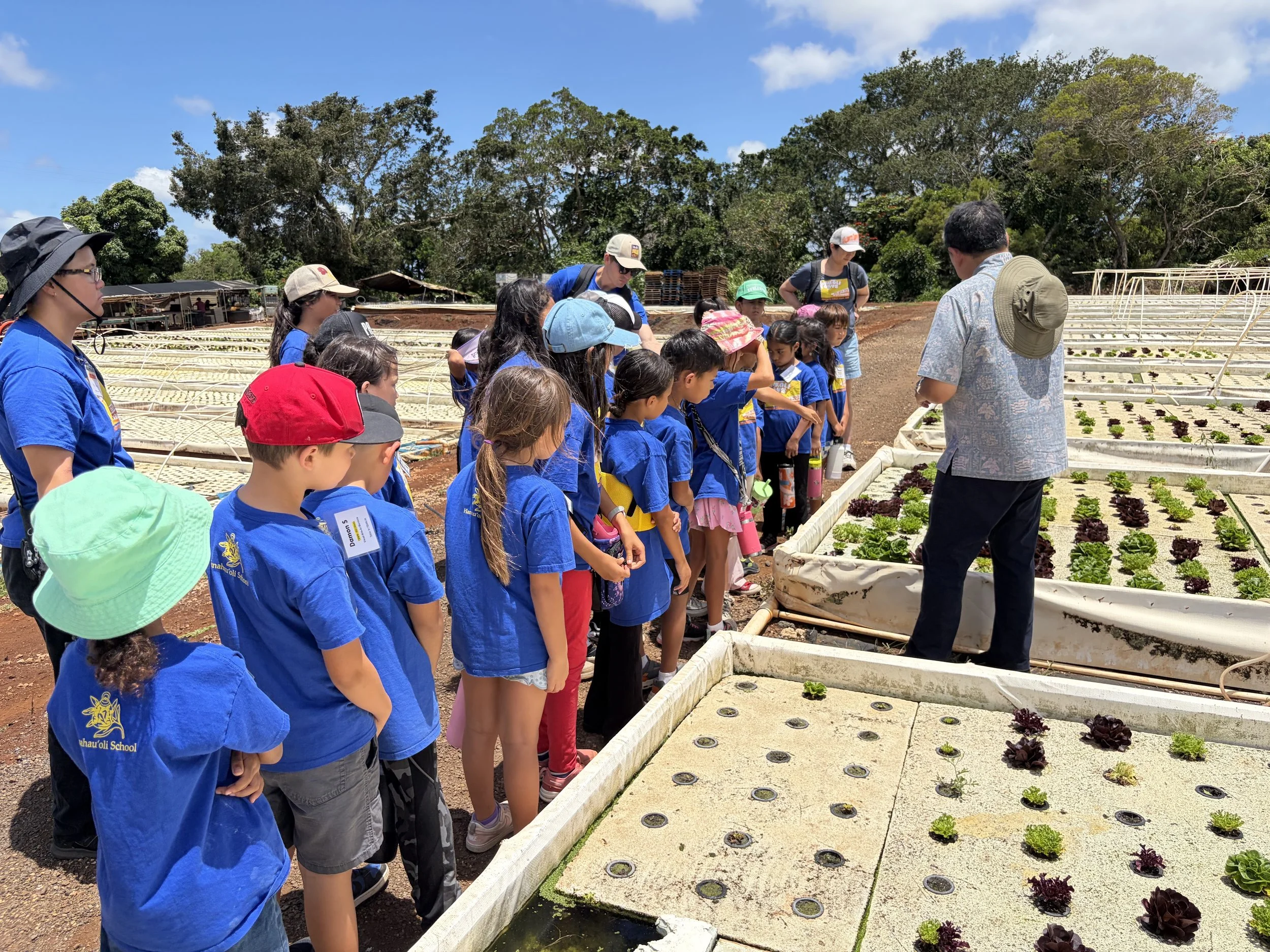
As the summer progressed, we plunged headfirst into our ocean creature research. We even had an exciting field trip to the Waikīkī Aquarium, where students had the opportunity to see many of the incredible sea creatures they had studied, including jellyfish, Hawaiian monk seals, sharks, and the Humuhumunukunukuāpuaʻa.
I really appreciated my team's commitment to observing and reflecting on children, with the goal of truly understanding them as both individuals and as a community of learners. I also loved having dedicated time to dialogue with the other teachers about our observations, which was incredibly valuable. Hearing different perspectives deepened my understanding of the children and reinforced the importance of making space each day for reflective conversations with my educational assistants.
Learning how the TSWN team documents these observations gave me great ideas for strengthening my own classroom practices. For example, this school year, I implemented an online documentation system, similar to that of TSWN, that my educational assistant and I use to record observations of each child. It has been extremely helpful in keeping our notes organized in one place and allowing us to use these observations to add meaningful documentation to each keiki’s portfolio.
TSWN also inspired me to make a greater effort to prioritize dialogue with my educational assistant this year. We regularly discuss what we are noticing and observing about each keiki, which has been especially valuable because we often have different perspectives or notice different things. These conversations have helped us develop a more complete understanding of each child and have strengthened the way we collaborate to support their individual needs.
Beyond the instructional practices, one of the greatest gifts of this experience was being surrounded by like-minded educators who genuinely love teaching, are curious learners themselves, and continuously reflect on their practice. That kind of collaborative, growth-oriented environment was truly a breath of fresh air. It's the kind of culture I hope to foster at my own school, one where teachers see themselves as learners and make time to think, wonder, and grow together.
This summer left me truly energized and excited to bring back the skills that I learned to foster more collaborative teaching methods at my school. You can learn more about The Skills We Need by visiting https://www.hanahauoli.org/tswn.