
Friday, October 23, 2026
9:00 am to 3:00 pm
Hanahau‘oli School Professional Development Center, 1922 Makiki Street, Honolulu, HI 96822
$100 per participant
Scholarships and neighbor island travel stipends available – please inquire here!
To register using a school purchase order, please contact us directly at pdc@hanahauoli.org. Mahalo!
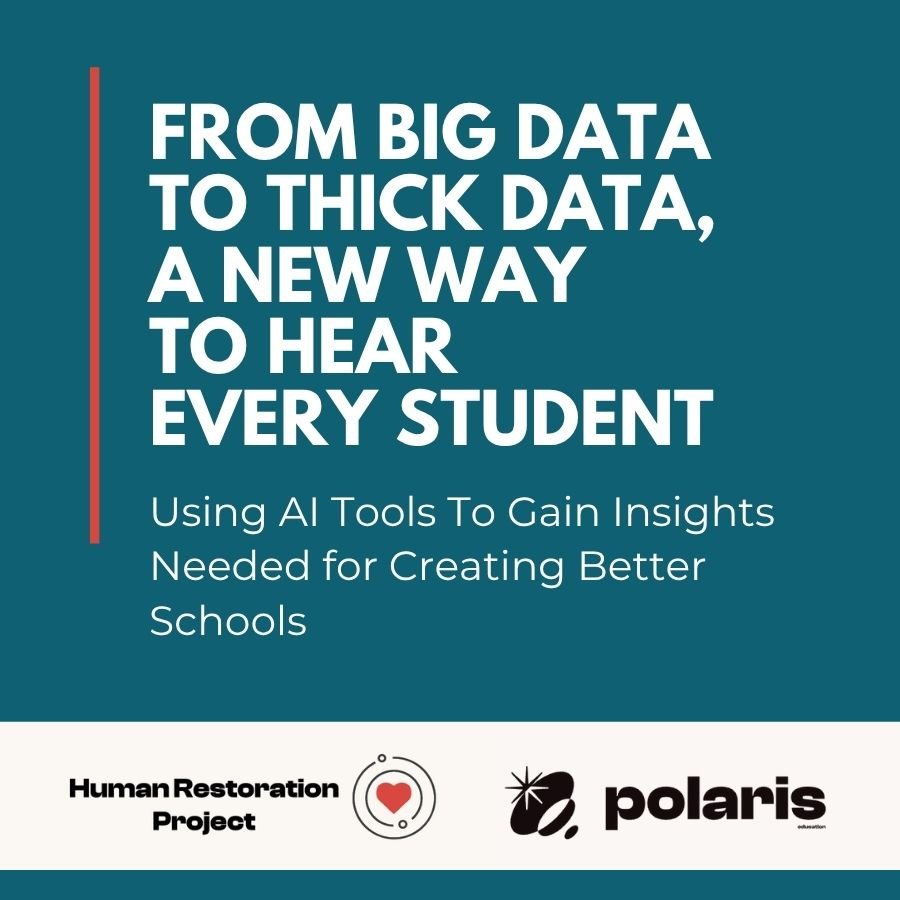
You've likely sat through this meeting: educators gather around a printout of test scores, climate survey results, or attendance dashboards. Someone notes a trend, a few colleagues offer theories, and a handful of action items get scribbled down. Six months later, you're back in the same room, looking at the same numbers, repeating the same conversations and wondering why nothing has changed. School faculty, when handed large quantitative datasets, tend to interpret them through the lens of their existing beliefs, downplay disconfirming evidence, and arrive at conclusions that justify what they were already inclined to do. Schools are drowning in data and starving for insight. The problem is not a shortage of information about students; it is that decontextualized aggregate data can only produce decontextualized aggregate action, and the “why” – the texture of student experience that actually informs change, is nowhere in the spreadsheet.
This workshop grounds participants in the case for "thick data" in K-12 schools: the qualitative, contextualized, story-rich evidence that Safir and Dugan have popularized as “Street Data”. Workshop facilitators will introduce freely available empathy interview resources, walk through the practical mechanics of conducting and analyzing student conversations, and examine published case studies–like California's Healthy Kids Survey follow-up and other recent Continental US district listening reports– to demonstrate what becomes visible (and actionable) when schools listen at scale.
Facilitators will also introduce participants to Polaris Education, the nonprofit AI platform they have built to make empathy interview collection and analysis feasible at the scale of an entire student body rather than a handful of focus groups. Participants will leave equipped to begin thick data work in their own communities with or without the tool. And because Polaris is an AI system operating on student voice, a substantial portion of the workshop is devoted to AI literacy: how large language models actually work, examining algorithmic bias, and how to use AI ethically in this work. Participants will learn how, within reason, AI tools can make doing this type of work more feasible.
Designed for P-20 educators, school leaders, and instructional coaches across a variety of school settings, this session is appropriate both for those new to qualitative methodology and for experienced practitioners interested in scaling student voice work responsibly. Participants will leave understanding both the why and the how, with a clearer framework for evaluating AI tools in educational contexts, and, if interested, an invitation to explore whether their school might be a fit for Polaris Education.
WORKSHOP OBJECTIVES
Participants will be able to:
Distinguish between "big data" and "thick data" in education, and explain why student voice is essential to school improvement
Apply the MIRACLE framework (Younas et al., 2023) to evaluate the quality of qualitative data in their own contexts
Explain/understand how AI tools can (ethically) be used to make sense of qualitative data.
Identify 2-3 questions or initiatives at their own school that could be informed by empathy interview data
Create an action plan for implementing qualitative research/data collection at their school/institution.
WORKSHOP AGENDA
9:00-9:30: Intentional Connections & the Power of Conversations
9:30-12:00: "Semiotic Transfer" Activities - Parallel Experiences Toward Understanding
~12:00: Lunch
12:30-1:30: Introduction to Qualitative Reasoning & Latest Research
1:30-3:30: Building an Empathy Interview System
ABOUT THE FACILITATORS

Chris McNutt is the co-founder and executive director of Human Restoration Project, a nonprofit organization focused on student engagement, well-being, and motivation. His work centers on realizing systems-based change, examining how progressive pedagogical shifts (e.g. PBL, ungrading) reimagine school to best suit the needs of students and teachers alike. He was a public high school digital media & design educator who focused on experiential learning, portfolio-driven assessment, and community involvement.
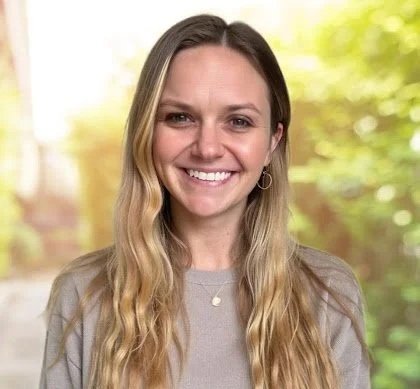
Cassie Nastase is a former school counselor from West Michigan who believes in providing students with educational experiences that cultivate curiosity, creativity and meaningful connection to self and community. She is passionate about integrating SEL standards and therapeutic approaches into everyday teaching practices to create nurturing learning environments that support the holistic development of students. Outside of her professional life, you may find her at one of Michigan’s beaches or exploring the Montana mountains with her husband and two daughters.
THIS WORKSHOP IS INTENDED FOR
P-20 educators, instructional coaches, professors, school administrators, district leaders, and anyone responsible for school climate, culture, or improvement work. No prior experience with AI tools required. Particularly relevant for progressive educators interested in student voice, equity-centered school transformation, and qualitative research methods. The beauty of this work is that it is truly applicable in any context!