Friday, September 11 and Saturday, September 12, 2026
8:30 am - 4:00 pm
Hanahau‘oli School Professional Development Center, 1922 Makiki Street, Honolulu, HI 96822
$300 per person
Scholarships available! Please inquire here.
To register using a school purchase order, please contact us directly at pdc@hanahauoli.org. Mahalo!
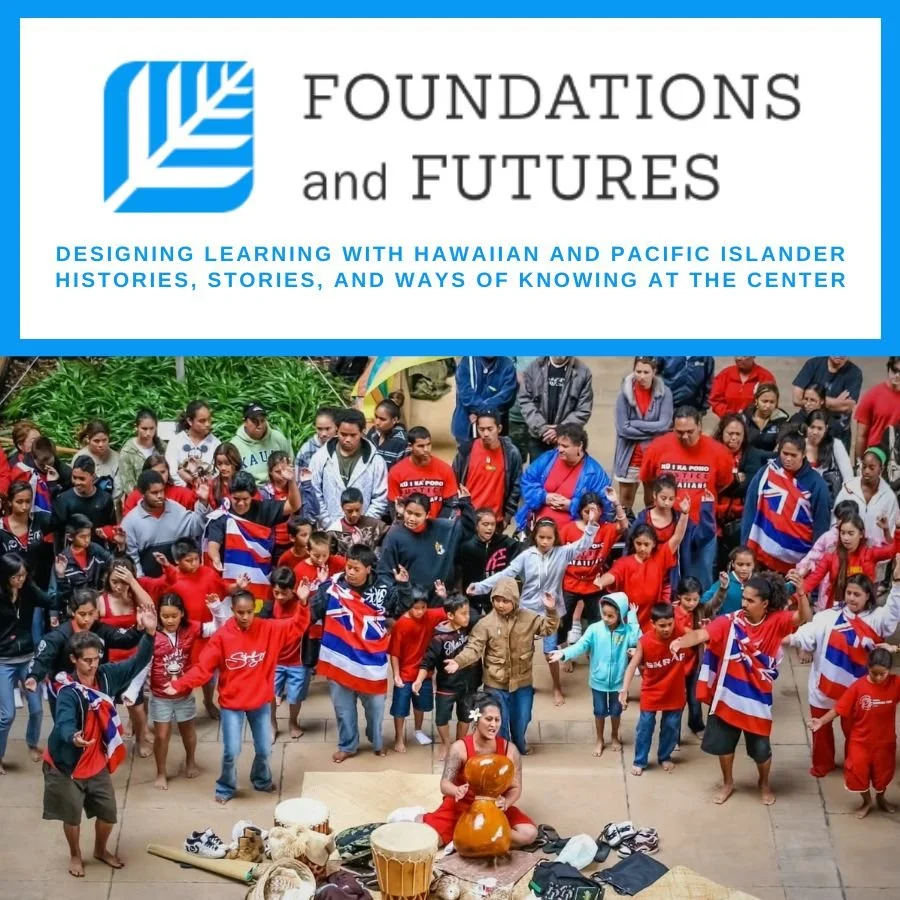
How might we create learning experiences that help young people understand the stories of the Pacific islands while honoring the knowledge, resilience, and wisdom of the people who have shaped them? This two-day workshop invites educators into a collaborative exploration of the UCLA Foundations and Futures Asian American and Pacific Islander Multimedia Textbook as a living resource for inquiry, reflection, and curriculum design. Through multimedia stories, primary sources, collaborative protocols, and time for deep exploration, participants will examine Hawaiian and Pacific Islander histories, sovereignty, self-determination, climate justice, and Indigenous ways of knowing while considering how these perspectives can deepen students' sense of place, identity, empathy, and civic responsibility.
Grounded in backward design and the belief that teachers learn best by engaging in meaningful work together, participants will design a lesson, unit, or implementation plan that is immediately relevant to their own school community or non-profit organization. Throughout the workshop, educators will experience protocols that cultivate equitable dialogue, critical thinking, and collective meaning-making while receiving thoughtful feedback from colleagues. Participants will leave not only with classroom-ready plans and resources, but also with renewed inspiration and a community of educators committed to creating learning that is culturally sustaining, inquiry-driven, and rooted in the relationships between people, place, and one another.
WORKSHOP OBJECTIVES
Participants will:
Build a foundational understanding of the chapter: “Kānaka ʻŌiwi: Indigenous Hawaiians” by Davianna Pōmaikaʻi McGregor, including the histories, perspectives, and contemporary experiences spanning the precolonial to the present day.
Create an implementable plan using their foundational knowledge of the Kānaka ʻŌiwi: Indigenous Hawaiians” chapter.
Develop literacy and the skills to communicate, understand, engage, and articulate different perspectives through understanding multiple ways of knowing, including indigenous, ancestral, familial, and diasporic knowledge.
Nurture critical thinking and inquiry on fundamental assumptions related to empire, capitalism, race and racism, gender and patriarchy, and other structures of power and inequality and how they shape society and the environment.
Cultivate holistic well-being amongst all and connections across difference by strengthening historical empathy, self-worth and mutual respect, cultural expression, and cross-cultural understanding.
Grow wisdom and agency to imagine and create new possibilities and solidarities for a more just, equitable, democratic, non-racist, compassionate, and sustainable society and world.
WORKSHOP AGENDA
Day 1: Knowledge, Perspective & Critical Exploration
8:30 am Breakfast then Gathering
9:30 am Guest Speaker: Davianna McGregor
10:45 am Overview of Resource
11:00 am Deep Dive with Tea
12:00 Lunch
12:45pm Kuana Aʻo prompts
2:15pm Literacy Strategy
3:15pm Ethnic Studies Pedagogy Harvest
3:30 Homework/Reflection
4:00pm Closing Pōʻai
Day 2: Pedagogy, Unit Design & Implementation
8:30 am Breakfast and Gathering
9:00am Backwards Design
10:00am Unit Funnel
11:00am Tuning the Unit
12:00pm Lunch
12:45pm Classroom/Site Integration
2:00pm Peer Review
2:45pm Work Time
3:30 Closing
ABOUT THE FACILITATOR
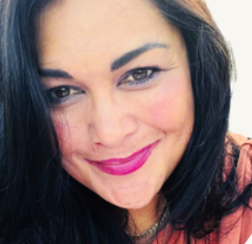
Jaimee Rojas, Ed.M., has spent most of her 26 years in education at an equity-centered project-based charter school organization, High Tech High, in San Diego. She is currently a Growth Coach at Punahou School where she has also served as an Instructional Coach. She has collaborated with Kanehunamoku Voyaging Academy on their Ka Pou Kū Mau: Building Ocean & Climate Literacy Curriculum, and with Waiāhole Elementary School coaching their ʻāina-based projects, and is currently working with Kamehameha Schools on their middle school ʻāina-based, transdisciplinary projects. She also has worked as a School Designer with EL Education, supporting schools with their improvement plans. She received her Masters in Education in School Leadership from Harvard University Graduate School of Education and her Bachelor's Degree from Pepperdine University in English and Writing. She holds teaching credentials in English, Social Science, and Special Education and was a middle and high school Humanities Teacher for most of her career. Jaimee is passionate about serving schools to cultivate student-led experiences of deeper learning and belonging. She has founded three schools in her career with High Tech High. She has a 23-year-old son and loves to go on road trips with him, watch him play baseball, and just continue to connect as he enters young adult life. She also loves good food, good company, hot yoga, running on the beach, chasing waterfalls, and traveling.
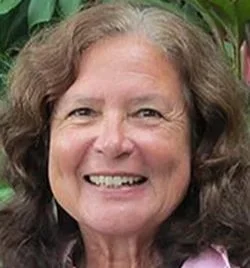
We are very fortunate to be joined by Davianna McGregor, Professor Emerita of Ethnic Studies and Oral History, at University of Hawaiʻi Mānoa to teach about her chapter, Kānaka ʻŌiwi: Indigenous Hawaiians, featured in this newly launched multimedia textbook. Davianna McGregor is a historian of Hawaiʻi and the Pacific and a founding member of the Ethnic Studies Department at the University of Hawaiʻi at Mānoa. Her work research and engagement has focused on the persistence of ancestral Hawaiian subsistence, cultural & spiritual customs, beliefs & practices in rural communities–Molokaʻi; Puna, Kaʻu & Waipiʻo on Hawaiʻi; Keʻanae-Wailuanui & Hāna on Maui and Waiahole-Waikane on Oʻahu. The continuity of Native Hawaiian governance of Hawaiʻi, and its re-establishment today, is another focus of her scholarship and responsibility.
THIS WORKSHOP IS INTENDED FOR
K-12+ educators, including but not limited to: history, social science, ethnic studies, environmental studies teachers, curriculum designers, admin, literacy specialists and non-profit leaders and employees.