
By Luke Steller
The Hanahau‘oli School Professional Development Center had the pleasure of hosting researcher Dr. Luke Steller for an immersive school-day visit in September 2025. A science communicator and community engagement leader from Australia’s Northern Territory, Dr. Steller was exploring how STEM education can be strengthened through authentic collaboration with local communities as a Winston Churchill Fellow. His visit to Hanahau‘oli School was one of 19 program visits across Hawaiʻi, Arizona, New York City and London, and his observations and unique insights into opportunities for empowering STEM education in Australia are published in a comprehensive and inspirational report that can be downloaded and viewed in its entirety here.
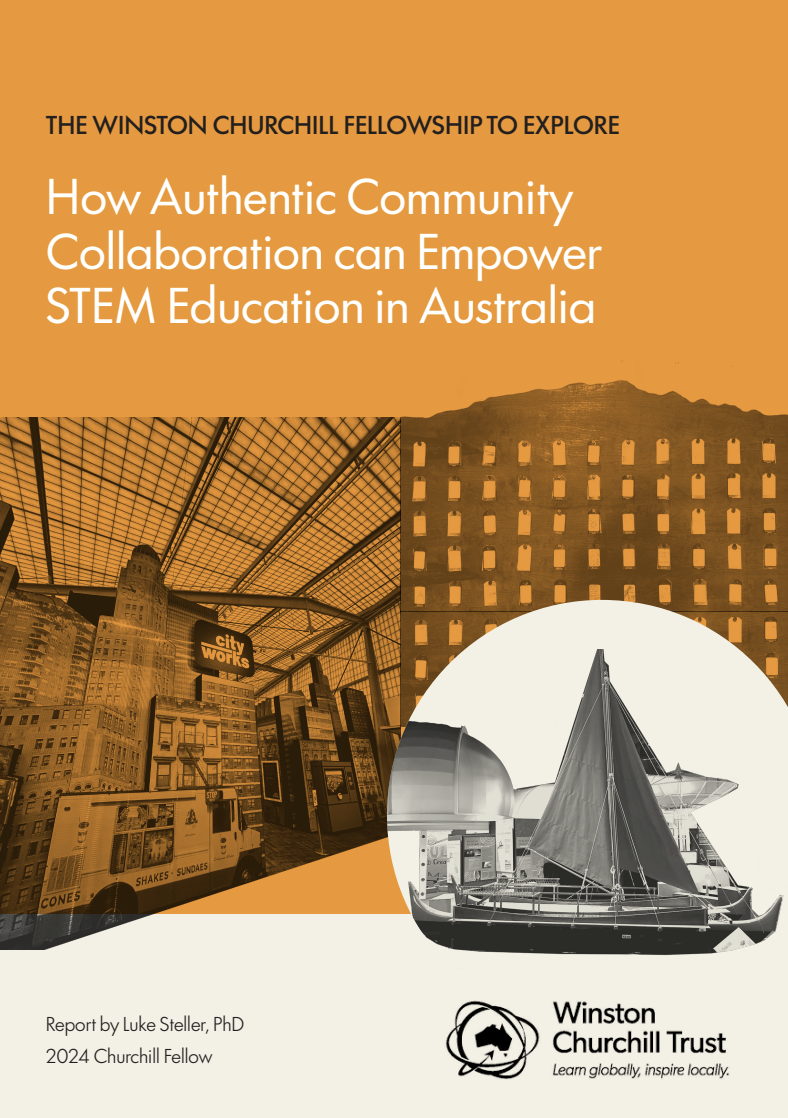
With his permission, we will share two excerpts from “The Winston Churchill Fellowship to Explore How Authentic Community Collaboration can Empower STEM Education in Australia” that focus on his visit to Hanahau'oli School. Dr. Steller’s insights into who we are and what we value as an institution, after just a single day of observation and engagement with our faculty and students, took our breath away. We hope his conclusions below, and the full report of his research and reflections will serve as a springboard for those of you, who like us here at Hanahau‘oli School, seek to challenge existing perspectives and continue growing.
In this first excerpt, Dr. Stellers notes that the most successful STEM partnerships aren't born from matching curriculum standards, but from a deeper alignment of mission. Progressive educators often look to the broader community as an extended classroom, seeking place-based and real-world contexts to ground learning. However, it is easy to fall into the logistical trap of seeking partners to help "cover" a concept or unit of study, treating the community as a resource for content rather than a partner in purpose. When a school and a community organization share a fundamental belief in the agency of children, the "how" and "what" of learning—from complex mathematics to environmental stewardship—fall naturally into place. Hanahau‘oli School’s fourth and fifth grade class collaboration with the Mānoa Heritage Center illustrates this concept well, and reminds us that the strongest bridges are built on shared values.
The following is an excerpt from Dr. Luke Steller’s report, “The Winston Churchill Fellowship to Explore How Authentic Community Collaboration can Empower STEM Education in Australia”.
Background and context
Hanahau‘oli School was founded in 1918 as a small primary school in Honolulu. From the beginning, the school was shaped by the ideas of the progressive education movement, where children learn through doing, relationships are central, and that learning should connect closely with the real world rather than remaining confined to textbooks. That tradition remains visible in the present day. During my visit, this philosophy was evident in the confidence of the students, their willingness to speak openly with adults, and the way staff consistently connected classroom practice to shared beliefs about learning.
I was interested in their ongoing relationship with Mānoa Heritage Center, a cultural and environmental site located close to the school. The centre's work focuses heavily on native plants, cultural history and caring for Place. Its gardens showcase a wide range of endemic and indigenous Hawaiian species and have become a site for school programs and community learning.
Activities, observations and lessons learned
I visited the school over two days, spending time with their Professional Development Centre (explored in more detail in case study 3), and connecting with teaching staff. My conversations with staff centred on how the school's philosophy shapes its community partnerships and how that, in turn, shapes STEM learning. Hanahau‘oli uses long-term themes that run across multiple year levels, encouraging students to pursue inquiry and make connections between subjects. These themes give structure to the school's place-based and community-linked learning.
A clear example of this relationship-led, mission-aligned approach was the propagation shed project at Mānoa Heritage Center. The partnership emerged through an existing relationship with a Mānoa board member who was also a parent at Hanahau‘oli, and who therefore had first-hand experience of the school's commitment to student-led, inquiry-driven learning. That shared understanding created trust and opened a conversation not about curriculum coverage, but about purpose. The Heritage Center had a genuine community need for a propagation space that supported environmental care and access to culturally significant plants, while the school recognised that this need aligned strongly with its ethos of student agency and learning through real work. Only after this alignment of mission was established did the project take shape as an interdisciplinary learning experience, demonstrating how shared values and community purpose can meaningfully drive STEM learning, rather than curriculum requirements alone.
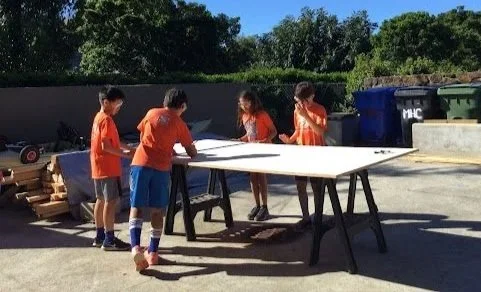
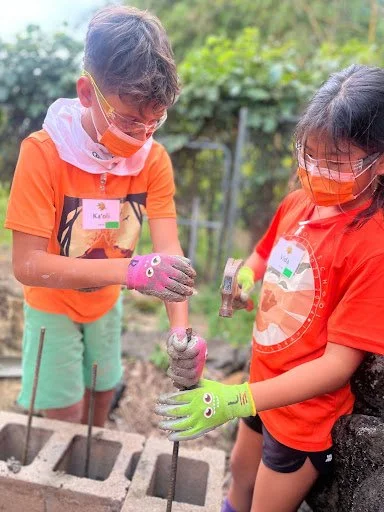
The initial phase of the project ran over seven to eight months. Year 4 and 5 students were divided into working groups responsible for site preparation, plant research, design, measurements, budgeting, purchasing materials, construction and planning the opening ceremony. Students chose their preferred roles, which created strong ownership. They spoke proudly about being in the purchasing group, the propagation group or the measuring and cutting group. Students were trained and trusted to use tools, make decisions that would impact the project, and take on “risks” normally not considered possible when working with a community group.
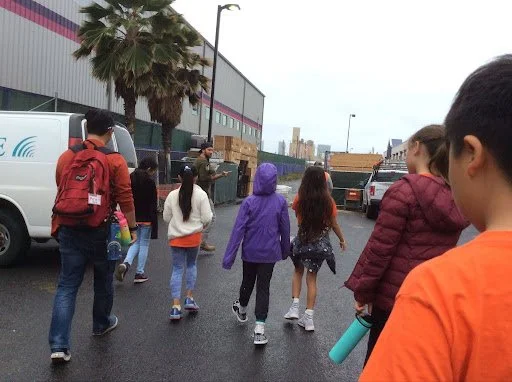
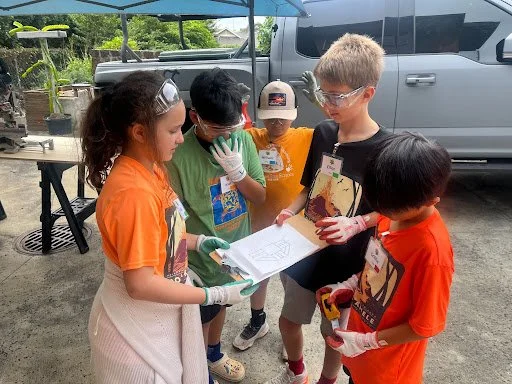
Mathematics was woven through the entire process. Students compared prices at hardware stores, calculated measurements and costs, and documented their findings so the school accountant could verify the budget. Scheduling was a consistent challenge, as teachers needed to manage learning trips and maintain continuity in other subjects. Over time, the project effectively became the core mathematics and science program for the year.
The cultural and community aspects were equally important. The centre wanted plants that were both useful and culturally meaningful, such as kalo (taro), so students needed to understand how plant selection linked to local stewardship practices. They also worked with staff to learn about the environmental conditions across the site. The project concluded with a Hawaiian blessing, chants and a celebration, and students left their handprints on a water container near the shed. Current classes regularly visit the site and learn that the structure was built by children from their school, and use the shed to learn about propagation.
Lesson: Mission alignment before content
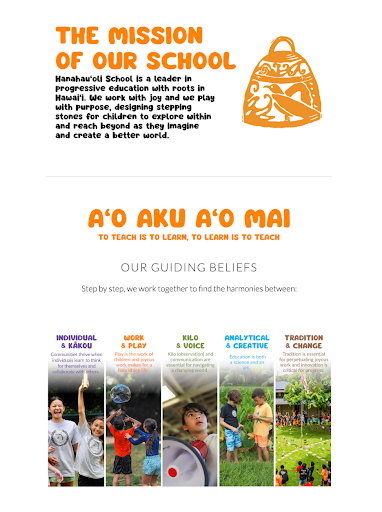
Reflecting on my visit, this partnership challenged my assumptions about how school-community engagement should begin. When I asked the principal what mattered most in developing this project with a community partner, she immediately spoke about mission alignment, a common phrase heard in any project requiring partnerships. However, I realised that I had the mission all wrong. I realised that I often viewed the mission as the content that the class was trying to study: if a class is studying water filters, find a water filtration plant; if they are learning about plants, find a plant nursery. At Hanahau‘oli, the starting point was the purpose and philosophy of the school. The question was not “where is there an alignment in our topics?” but “where do we share our beliefs about students, learning, responsibility and community?”
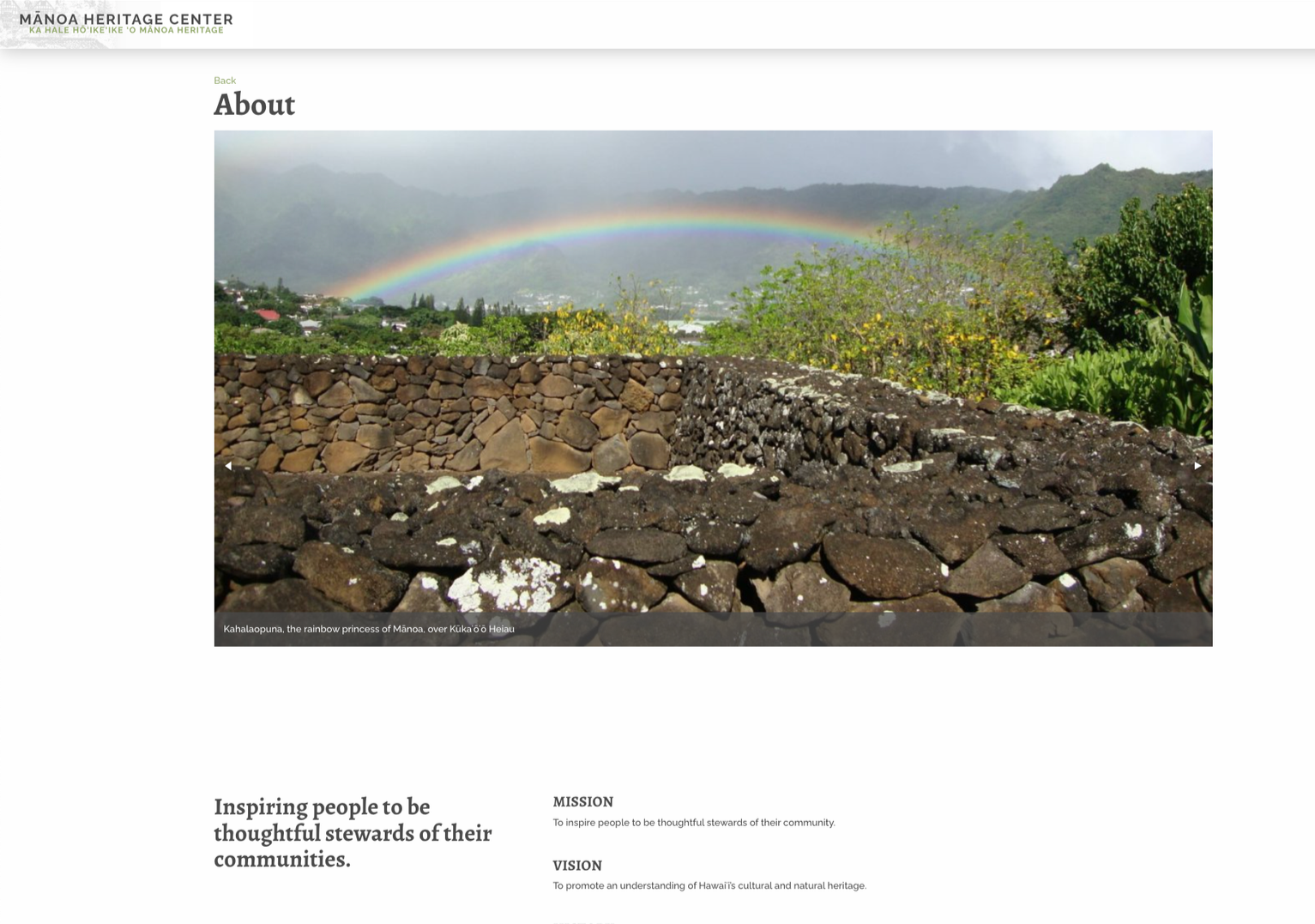
The first lesson from this visit is that strong community partnerships begin with ethos alignment rather than content alignment. In the propagation shed project, both the school and Mānoa Heritage Center believed that children are capable contributors to community life. The centre trusted students to use real tools and make meaningful design decisions. The school trusted the centre to be an educational partner whose values aligned with its own. This alignment of community views and teaching ethos, not just learning content, made it possible to run a complex, long-term project that ended up becoming central to the curriculum.
Implications for an Australian context
Although Hanahau‘oli is a well-resourced independent school, the principles underpinning its partnerships can translate to Australian contexts, including the Northern Territory. Schools do not need a century-old progressive philosophy to articulate what they believe about learning, student agency and relationships with the community. Making this ethos explicit provides a strong foundation for selecting community partners who share similar values.
For schools in the Northern Territory, this may involve beginning conversations with community organisations by discussing shared purpose rather than curriculum topics. A school that wants students to build responsibility for Country might work with ranger groups on projects related to water, fire or biodiversity. A school that wants to strengthen civic participation might collaborate with councils or youth groups on STEM projects linked to local issues. Curriculum outcomes can then be woven into the partnership, rather than driving it entirely.
The depth of the propagation shed project also highlights the value of long-term, meaningful work. Even when resources are limited, it may be more effective to develop one or two strong partnerships where there is clear mission alignment than to maintain many shallow connections. These deeper collaborations can become key examples that help other schools and communities build their own STEM partnerships grounded in shared purpose and local identity.
ABOUT THE CONTRIBUTOR:
This post was curated by the Hanahau'oli School PDC. The introduction was co-authored with Gemini, reflecting our ongoing exploration of how AI can support the sharing of progressive educational narratives.
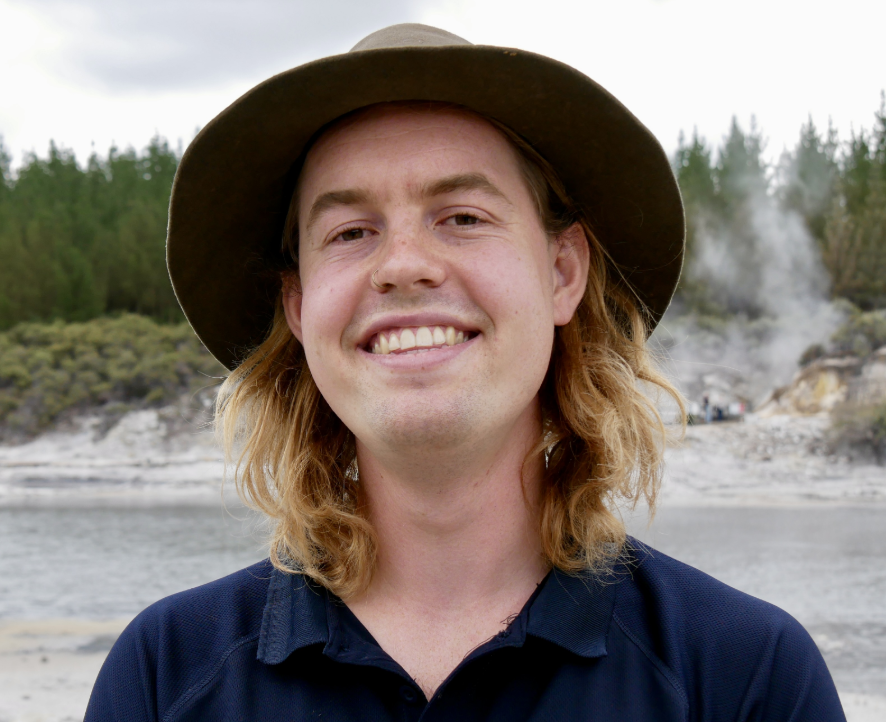
Luke Steller is an education and community engagement specialist focused on building networks that support and amplify under-represented voices in education. Over the past eight years, he has led projects that bring people together to explore how science education can be used as a tool for community empowerment
His work includes building partnerships between schools and First Nations Knowledge Holders to support On-Country learning and developing programs that use education to support communities transitioning from coal-based economies towards sustainable futures. He also created The STEAM Room, a national science comedy show featuring Dr Karl, which trained researchers to share their work through storytelling and performance.
Now based in Mparntwe, Alice Springs, Luke is the Northern Territory Regional Leader for Questacon, the Australian Government’s National Science and Technology Centre, where he builds networks and resources to support teachers and communities across the NT.
He holds a PhD in geology from the University of New South Wales, where his research explored the environmental setting of the Earth’s oldest fossils in the Pilbara on Nyamal Country in Western Australia.

