
By Amber Strong Makaiau and Katrina Delaunay
Hosted by science journalist Shankar Vedantam, Hidden Brain is a popular podcast that uses science and storytelling to explore the unconscious patterns, hidden biases, and psychological triggers that drive human behavior, shape our choices, and influence our relationships. In two recent episodes, Vedantam had a conversation with Dr. Lisa Miller, a psychologist at Columbia University, Teachers College. She is also the author of The Awakened Brain, The New Science of Spirituality, and Our Quest for an Inspired Life. You can find links to the two Hidden Brain episodes here:
I love Hidden Brain, but I was particularly drawn to these two episodes because of some recent writing I’ve been doing with Katrina Delaunay, a second and third grade teacher at Hanahau‘oli School. Inspired by the scholarly research that Delaunay conducted for her Master’s in Progressive Philosophy and Pedagogy program, the two of us collaborated on publishing an article titled “Spirituality, Progressive Education, and Philosophy for Children” in issue 13 (1) of the Journal of Philosophy in Schools. You can access the full volume of the journal using this link, and our article HERE.
In our publication, Delaunay and I explore the intersection of spirituality, progressive education, and the world-wide Philosophy for Children (P4C) movement. We wondered: How does cultivating spirituality in a classroom deepen the aims of progressive education and P4C? We make distinctions between spirituality and religion in educational settings (Peabody 2022), connecting “spiritual development as an integrated purpose of schooling“ (Moulin-Stozek 2020, p.1) to the aims of progressive educators (e.g. Pestalozzi, Froebel, Dewey, Pratt & Parker) and P4C practitioners in Hawai‘i (e.g. Jackson, Lukey, Makaiau, Miller, & Yos). We share the methods of Delaunay’s study and the findings that emerged. 1) Rituals and reverence at school and in the classroom support the development of philosophical communities of inquiry. 2) When students and teachers develop spiritual dispositions like wonder and awe, this supports the creation of intellectually safe learning environments. 3) A teacher’s personal spirituality can act as a resource in their role as a progressive educator and P4C practitioner. At the article’s conclusion, we reflect on the intersections of spirituality, progressive education, and P4C by connecting John Dewey’s (1908) philosophical insights on “Religion and Our Schools” to educational and societal issues facing the modern era.
I hadn’t really thought a great deal about the connections between spirituality, progressive education and doing philosophy with children until I met Delaunay during the first semester of the master’s program in 2021. Now, it is a topic that is quite intriguing, and when I listened to Part 1 of Vedantam and Miller’s interview, I was particularly captivated by the work she is doing that makes connections between spirituality, neuroscience, and education. In this first episode in the two-part series, she discusses how food, safety, and strong relationships are essential to our survival. However, as Miller points out, our brains also crave something else: transcendence. She suggests that spirituality is a universal human capacity, and that feeling connected to something larger than ourselves may be essential to a fulfilling life.
To follow are two exchanges I pulled from a transcript of the Hidden Brain episode Waking Up Your Spiritual Brain: Part 1. They highlight a number of important takeaways. First of all, scientific research (specifically twin studies) demonstrate that spirituality is an innate capacity that all humans share. Two, increased spiritual awareness (e.g. one’s ability to experience transcendence, wonderment, reverence, and awe for examples) is linked to cortical thickness in particular regions of the brain, and when these regions show cortical thinness, people are found to have recurrent major depression. This implies that spiritual awareness may be a protective factor, increasing psychological well-being. Third, Lisa Miller makes a link between spiritual awareness and something called the “awakened brain.” Compared to an achievement-oriented brain (which is also needed), an awakened brain “sets our North Star. Awakened awareness sets our true direction. Achieving awareness rolls out the plan, how to get there.”
As a scholar of progressive philosophy and pedagogy, I see many connections between Miller’s work and the aims of a progressive education. Yes, we believe that schools and teachers need to develop in students their achievement-oriented brain, but educators also need to nurture the development of an awakened brain–their abilities to wonder, ask questions, practice kilo and revere the natural world, experience awe, feel interconnectedness, and find transcendence through art and other creative endeavors–so that they may also cultivate a meaningful and flourishing life. With that said, I deeply appreciate the ways in which Miller is now using scientific research and neuroscience to support what progressive education philosophers have asserted for over a century. To learn more, read the two excerpts from the transcription below, or listen to the full episodes. Additionally, come and visit Hanahau‘oli School to see what an education for the awakened brain looks like in action.
Shankar Vedantam: I understand that in your brain imaging studies, you find changes in cortical thickness in people who are especially spiritual?
Lisa Miller: Every human being on earth is born with a natural capacity for spiritual awareness. We know this through twin studies. We can look at twins raised together, twins raised apart, and factor out commonalities of function of shared environment, shared genes. So for instance, temperament is about half innate, half environmentally formed. IQ is about two-thirds innate, one-third environmentally formed. The capacity through which we experience transcendent relationships is innate. It is one-third innate. Every single one of us is born with the natural neurocircuits for transcendent awareness. But one-third innate, two-thirds environmentally formed, means that our parents and grandparents, the 10,000 exchanges at school, our pastor, priest, imam, rabbi, our relationship to nature, and as we get older, we choose our environment, both outer, the company we keep, the service that we offer or not to our world, and the inner environment, whether I meditate, whether I pray, whether I reflect or read sacred, transcendent text. Two-thirds environmentally formed means that, yes, we are all naturally spiritual beings, but we have the opportunity of our lifetime to cultivate our spiritual awareness. When we do, we see literally a thicker cortex across the regions of the awakened brain, sustaining spiritual life, prayer, meditation, service, right action, often within a faith community, often service outside a faith community. Sustained spiritual life is associated with cortical thickness across the regions of the awakened brain. Now, by sustained spiritual life, in this study which we published in JAMA Psychiatry, we looked over eight years. People who sustained a strong spiritual life, said, my personal spiritual life is highly important to me. Over eight years showed a thicker cortex across the regions of the awakened brain. Shankar, what makes this particularly helpful as we think back to unit six [referenced earlier in the podcast], is that when we sustain our spiritual life, the cortical thickness is seen across the regions, the very same regions that are not thick, but thin in people with recurrent major depression. People with sustained spiritual life show cortical thickness across the very same regions that are not thick, but thin if we are struggling with recurrent major depression, which is to say, the spirituality and depression appear to be two sides of one coin.
Shankar Vedantam: So Lisa, you've made a couple of references in this conversation to the distinction between an achievement-oriented brain and an awakened brain. Can you talk about this distinction for a moment? It's a central portion of your research career these past few decades.
Lisa Miller: Shankar, every one of us has a capacity for two types of reasoning. On the one hand, we have achieving awareness, the ability for strategizing, tactic, research, empiricism. Achieving awareness is extremely helpful at laying out a plan. And we come to achieving awareness with a great deal of practice. We learned in school. You know, the first thing I ever received on my desk in first grade, right there in the center of my first grade desk, was a planner, right? In school, I learned to plan, to organize, to some extent to control. Achieving awareness has tremendous instrumental value. It helps us pay the rent. Achieving awareness helps us move through a scientific problem. But achieving awareness alone is utterly insufficient for a meaningful life. Achieving awareness will get us on the A train and it might send us flying at great speeds. But when we disembark, we may not even know where we are. This is what we learn in school, how to do. But we all are also endowed with another form of perception, our natural awakened awareness. Awakened awareness is the capacity to perceive through intuition, perhaps a mystical experience. Awakened awareness is a receptive form of perception. Awakened awareness asks the question, what is life showing me now? What did I just perceive? That whisper of a hunch. We need both. Awakened awareness sets our North Star. Awakened awareness sets our true direction. Achieving awareness rolls out the plan, how to get there. The problem in our contemporary culture is that very often, we are highly versed and practiced in achieving awareness, but we don't know where we're going because we've yet to find our guiding star through our awakened awareness.
ABOUT THE CONTRIBUTORS:
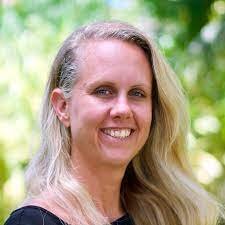

Dr. Amber Strong Makaiau is a Specialist at the University of Hawai‘i at Mānoa, Director of Curriculum and Research at the Uehiro Academy for Philosophy and Ethics in Education, Director of the Hanahau‘oli School Professional Development Center, and Co-Director of the Progressive Philosophy and Pedagogy MEd Interdisciplinary Education, Curriculum Studies program. A former Hawai‘i State Department of Education high school social studies teacher, her work in education is focused around promoting a more just and equitable democracy for today’s children. Dr. Makaiau lives in Honolulu where she enjoys spending time in the ocean with her husband and two children.
Katrina Delaunay is an early childhood educator at Hanahauʻoli School. A former Punahou School kindergarten assistant teacher and Hawaiʻi State Department of Education Special Education teacher, Katrina envisions children as competent and capable of contributing to a more compassionate and just world. Her work in education is centered on human flourishment and well-being. Katrina is a passionate practitioner of Philosophy for Children Hawaiʻi. She holds a B.A. in Psychology, a Post Baccalaureate Certificate in Special Education, a Philosophy for Children Hawaiʻi Endorsed Certificate, and a MEd-CS in Progressive Philosophy and Pedagogy from the University of Hawaiʻi at Mānoa. Katrina lives in Honolulu where she enjoys the wonder and awe of the natural world with her husband and two children.

