Homepage

Music with Mrs. Abbe Assembly

Musical Traditions at Hanahau‘oli School

by Kainoa ’20

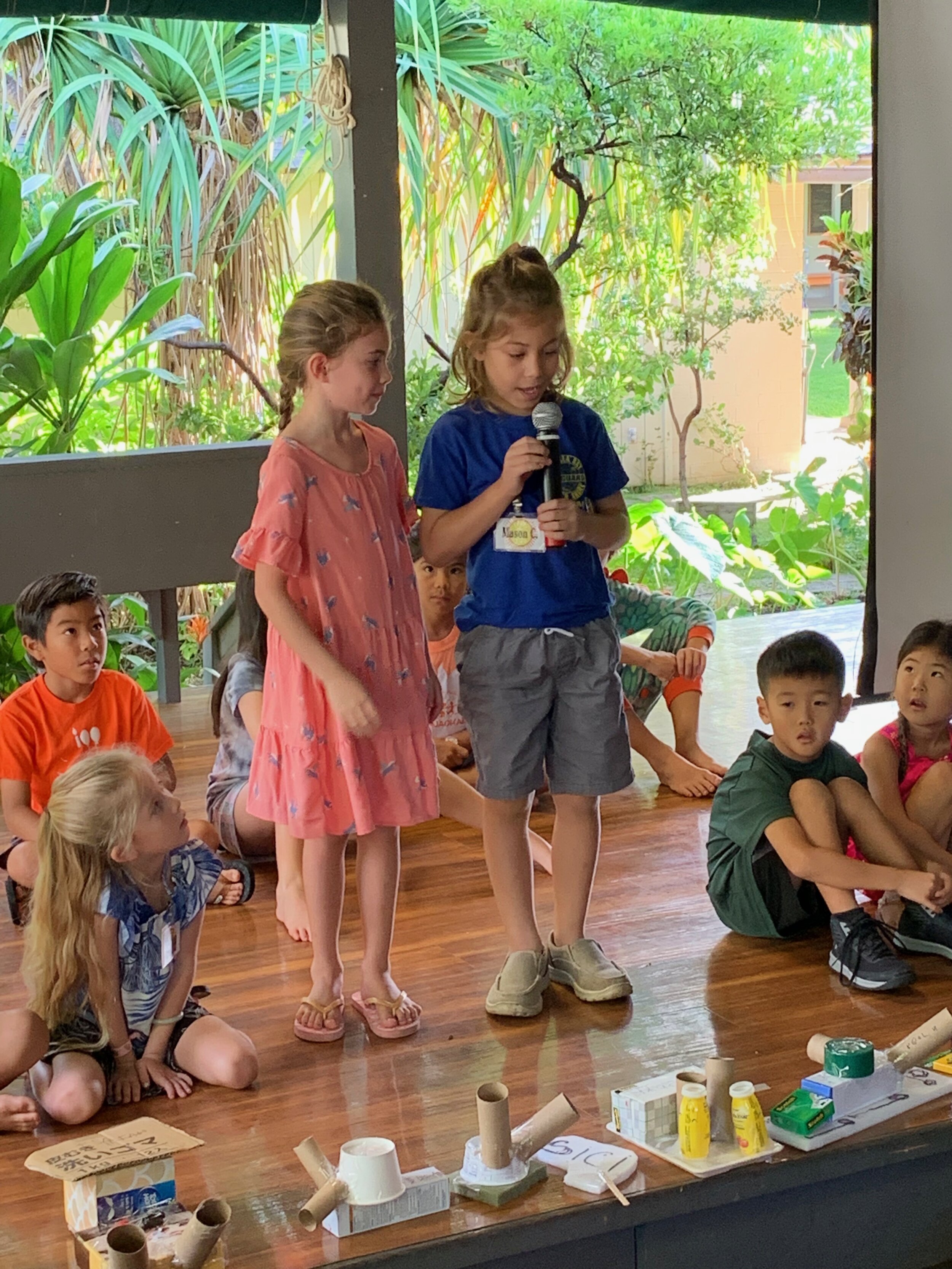
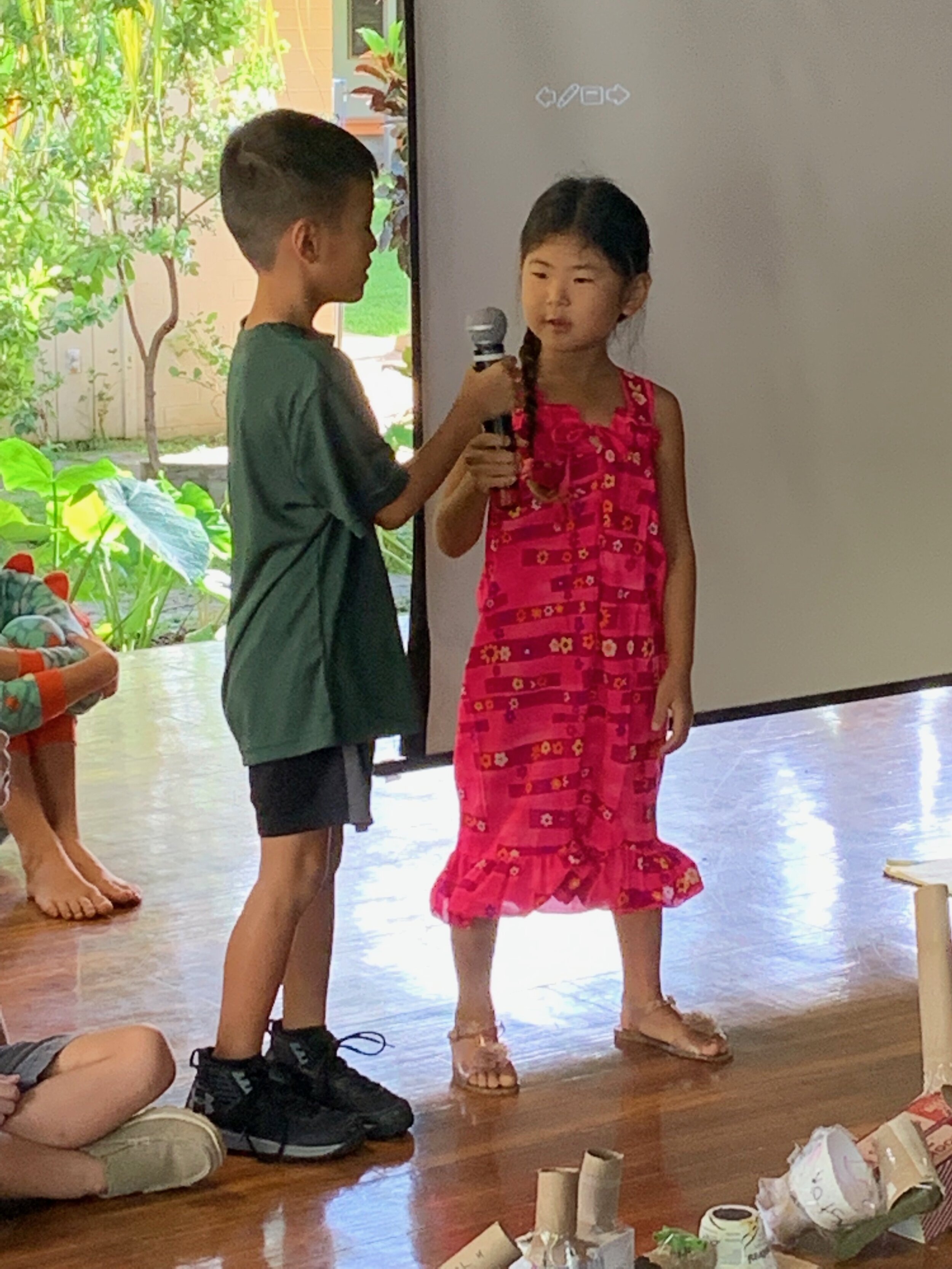
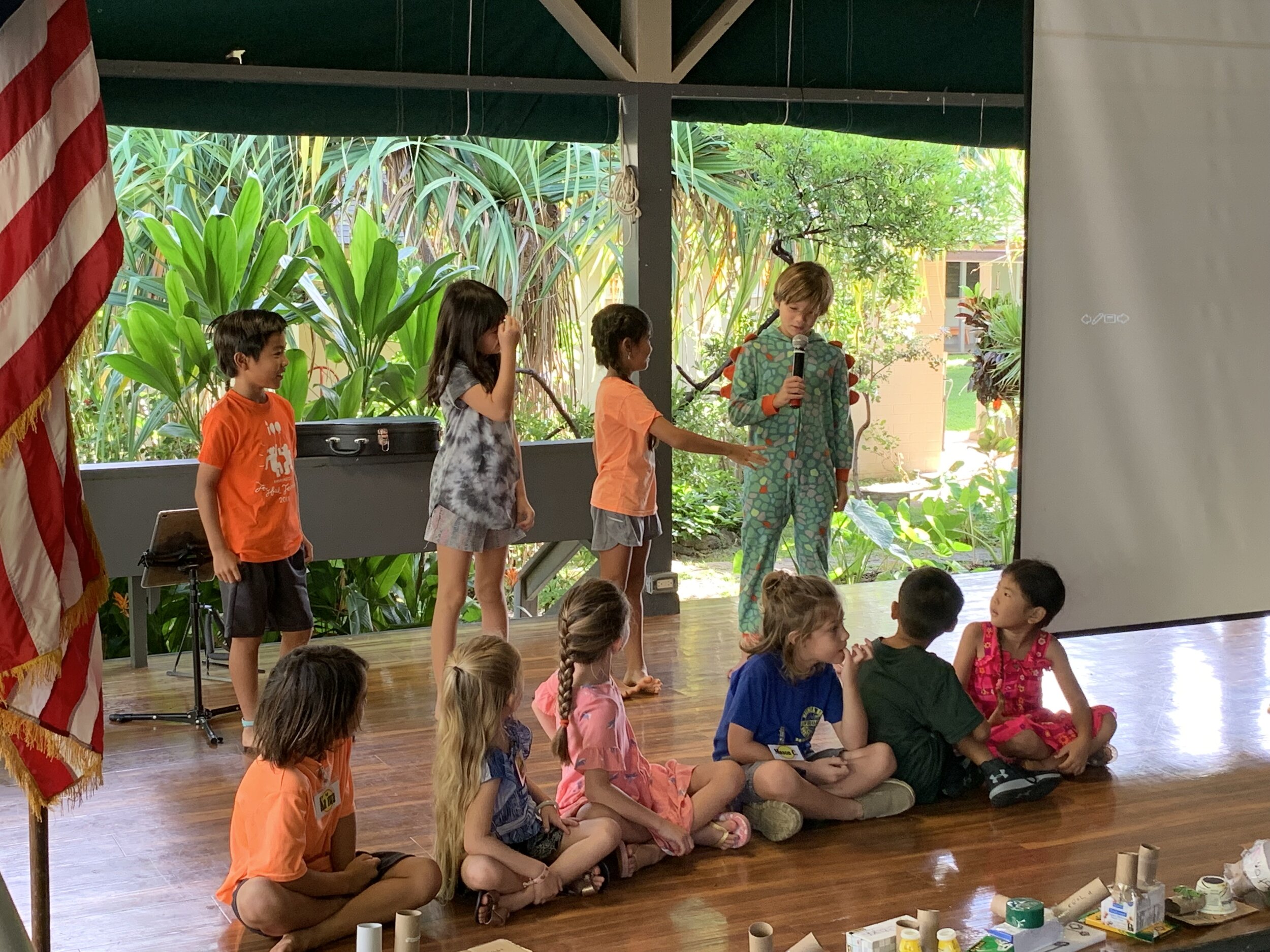
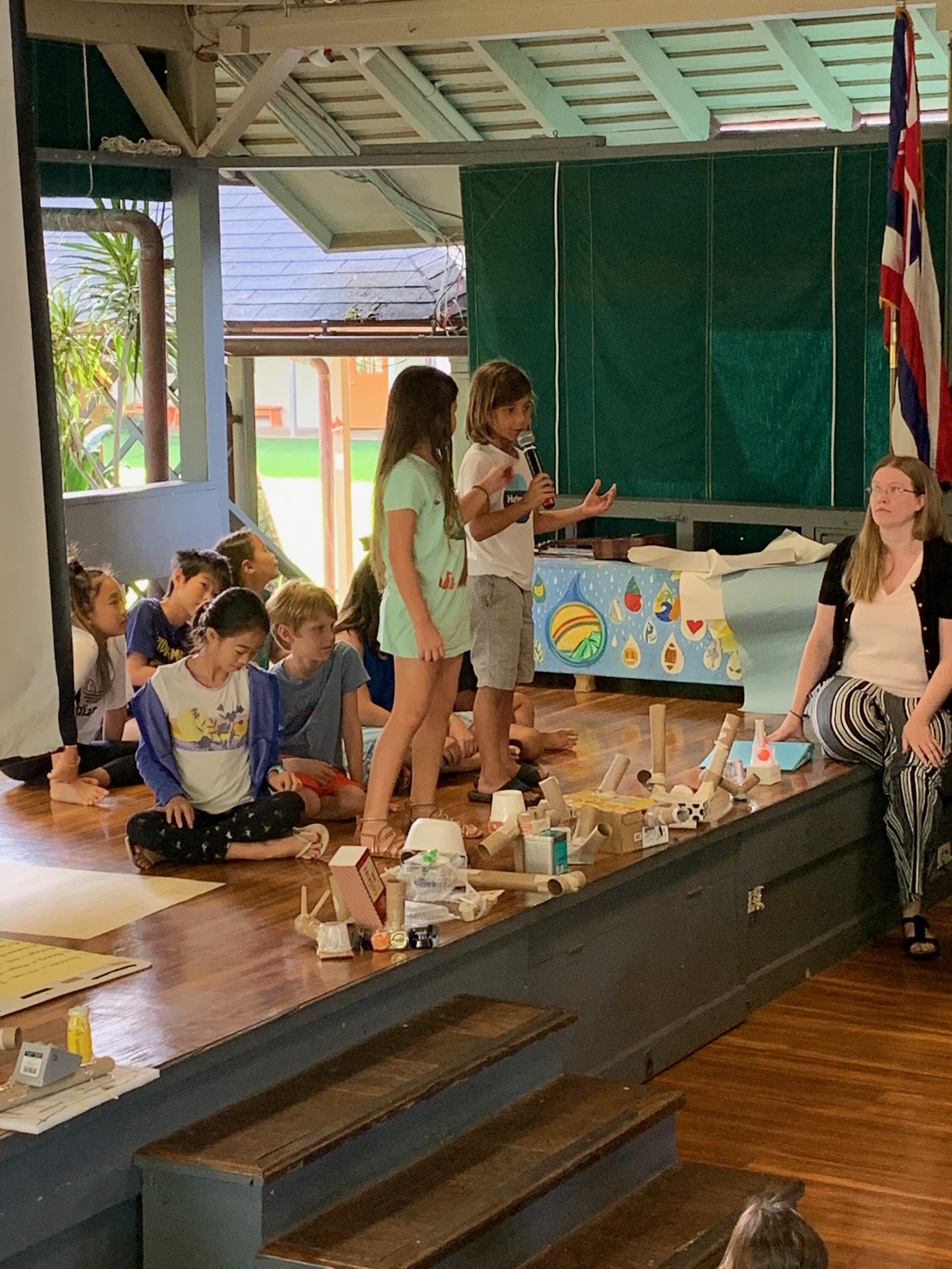
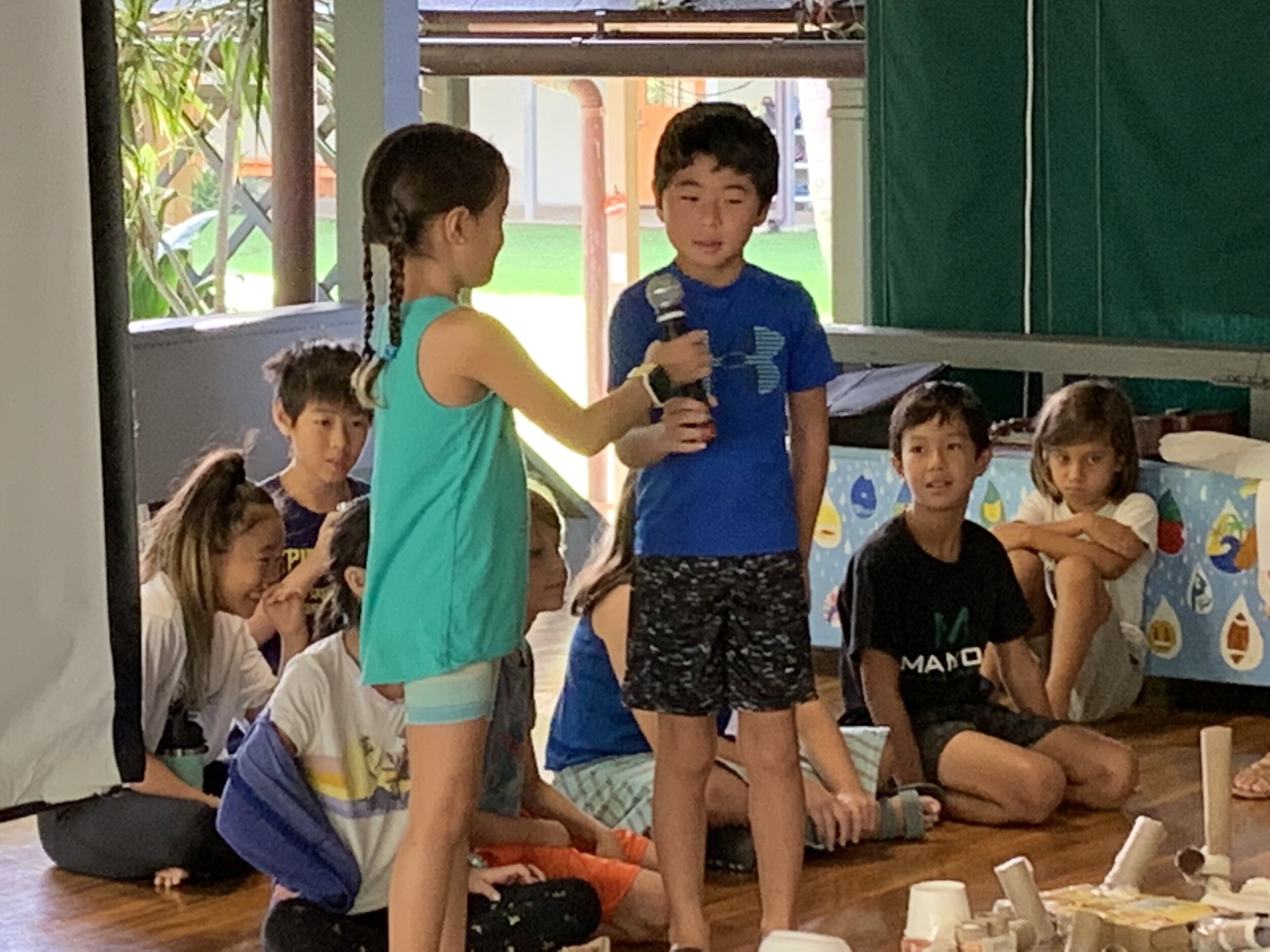
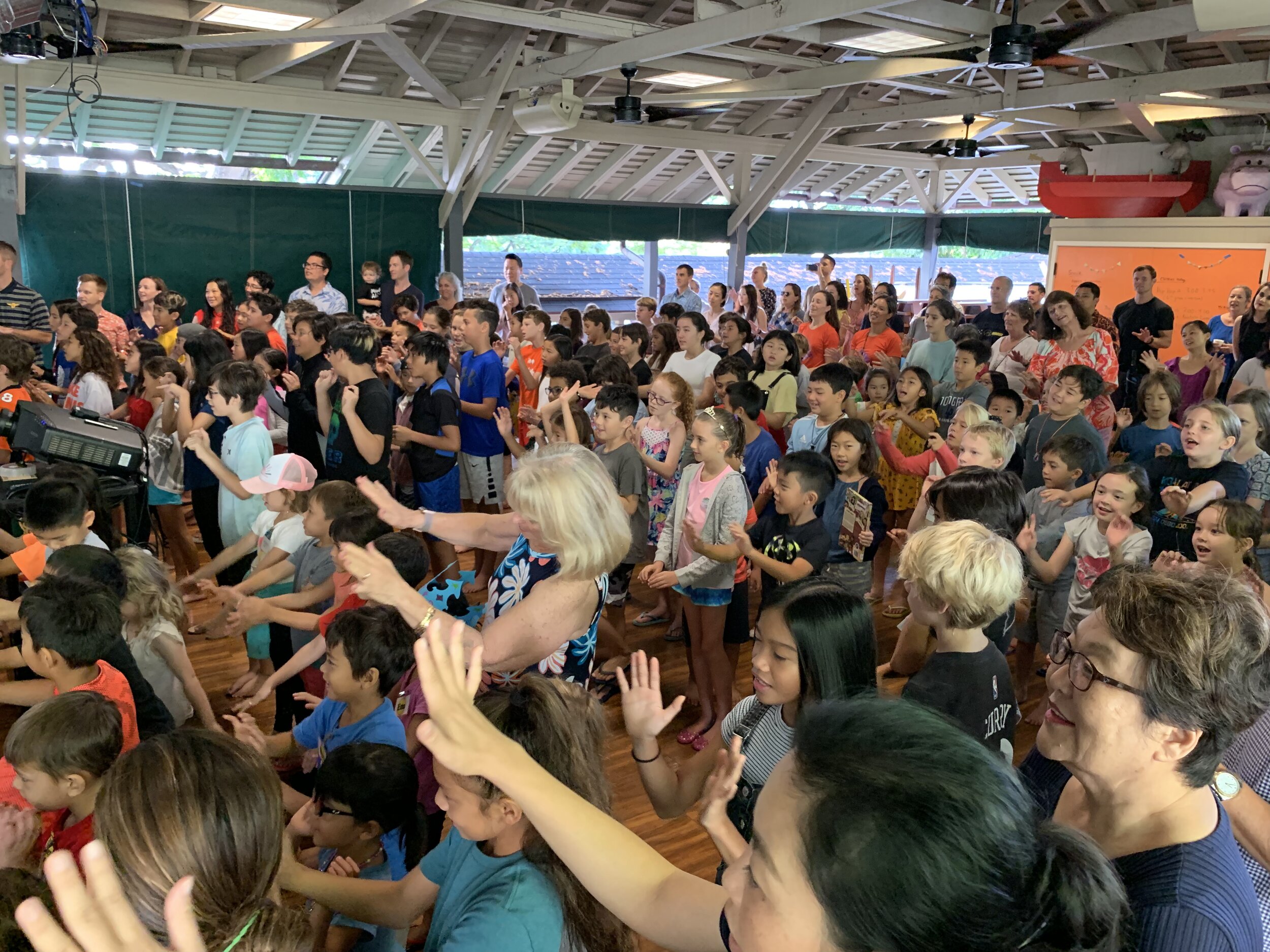
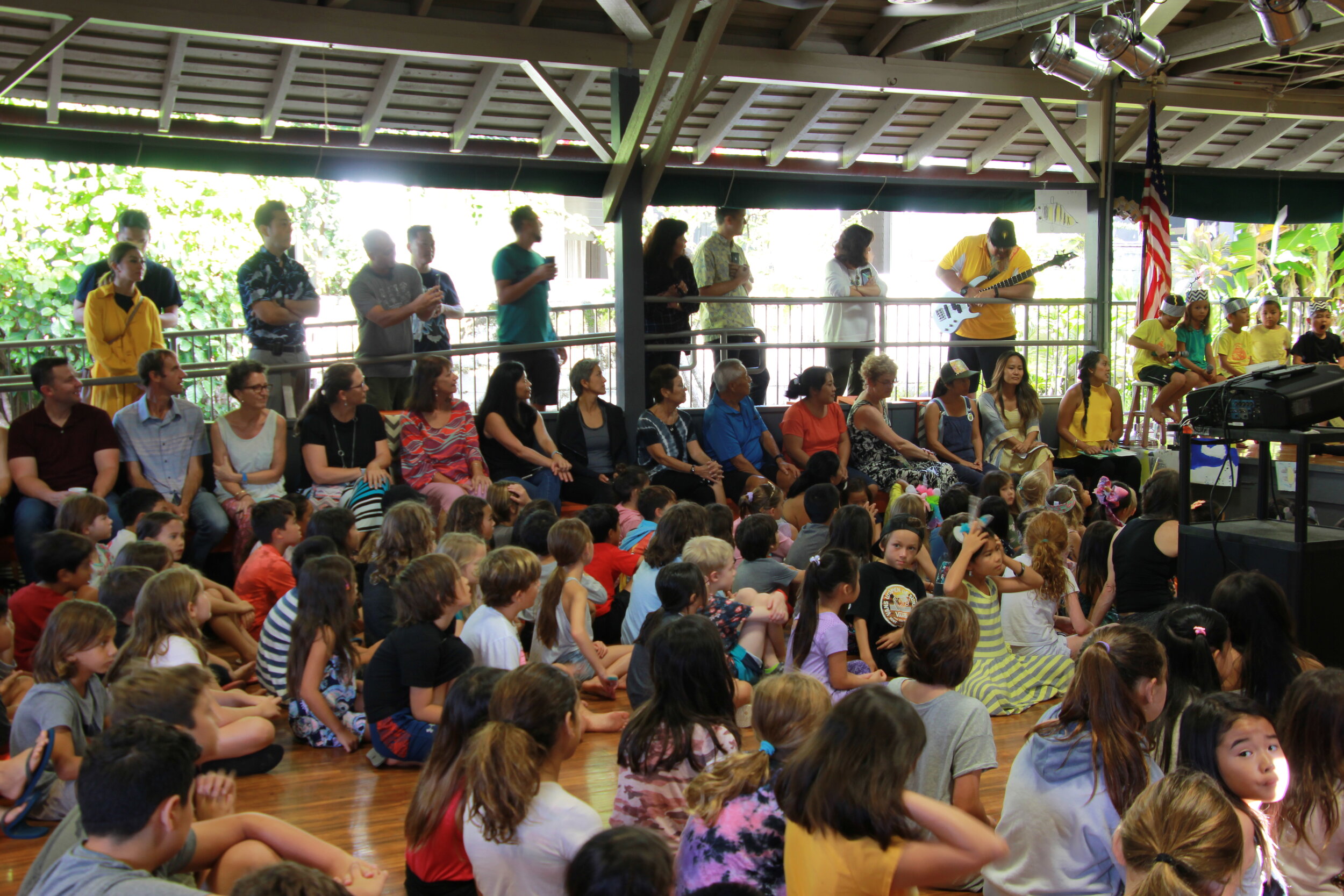
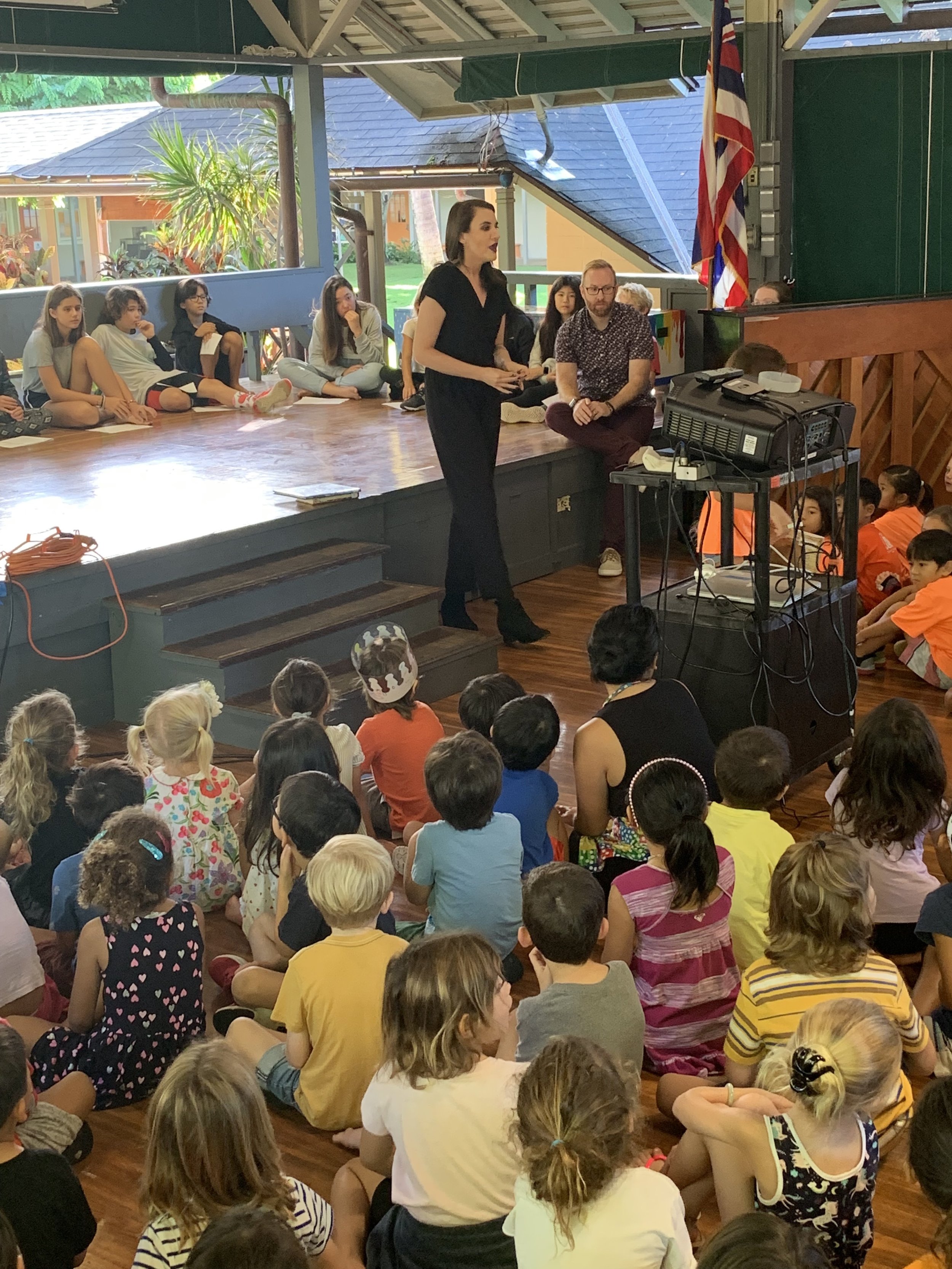
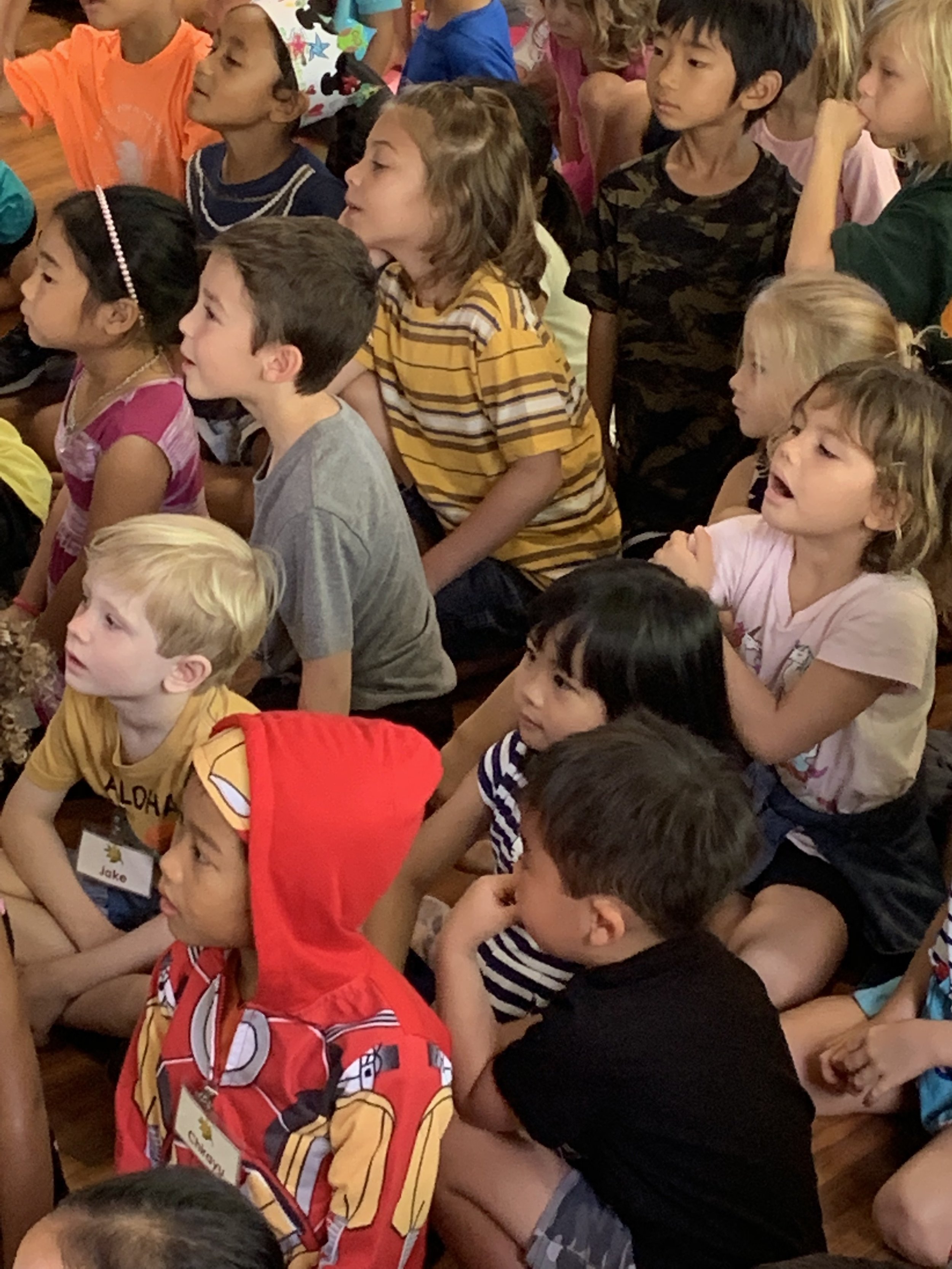
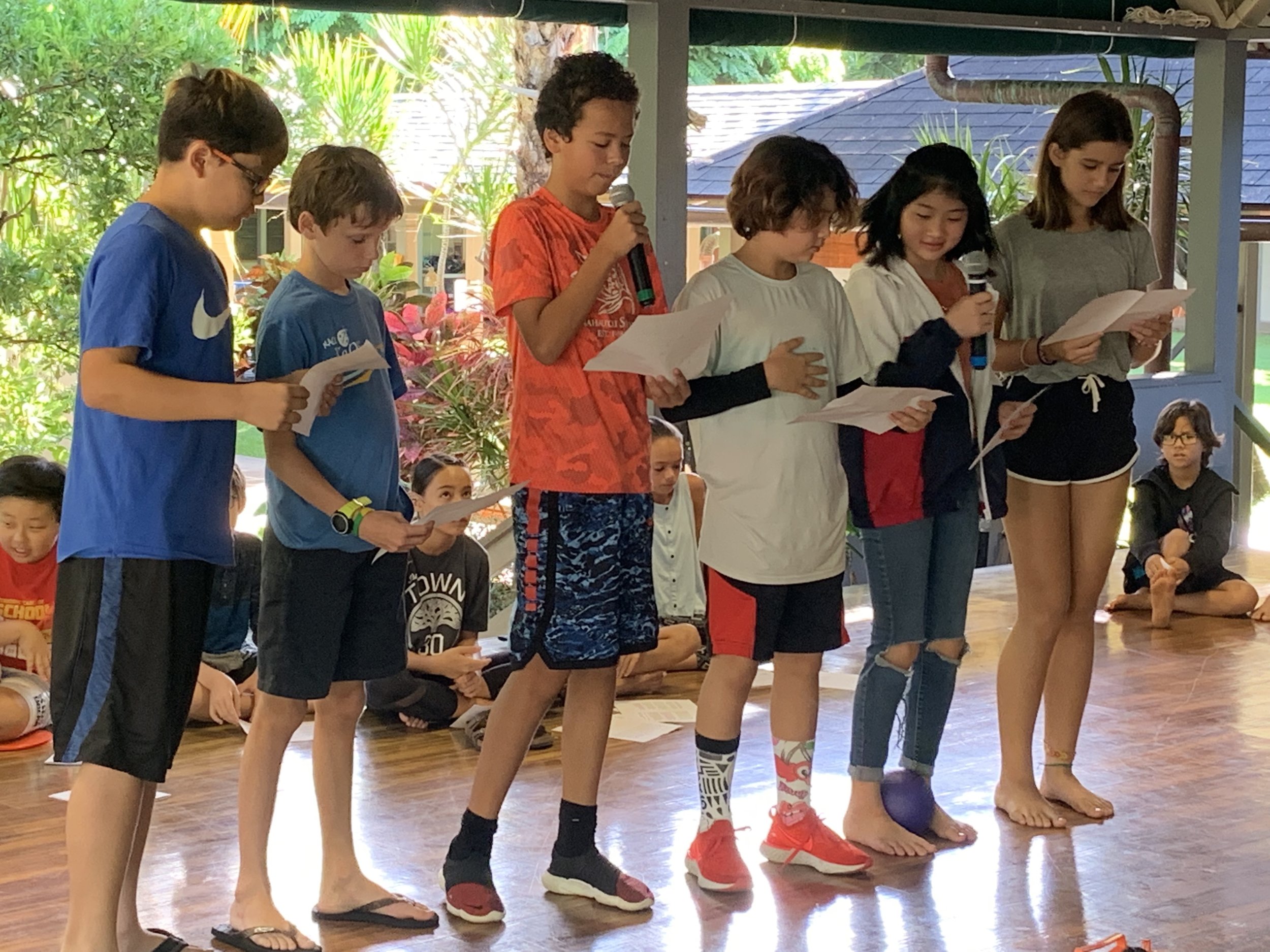
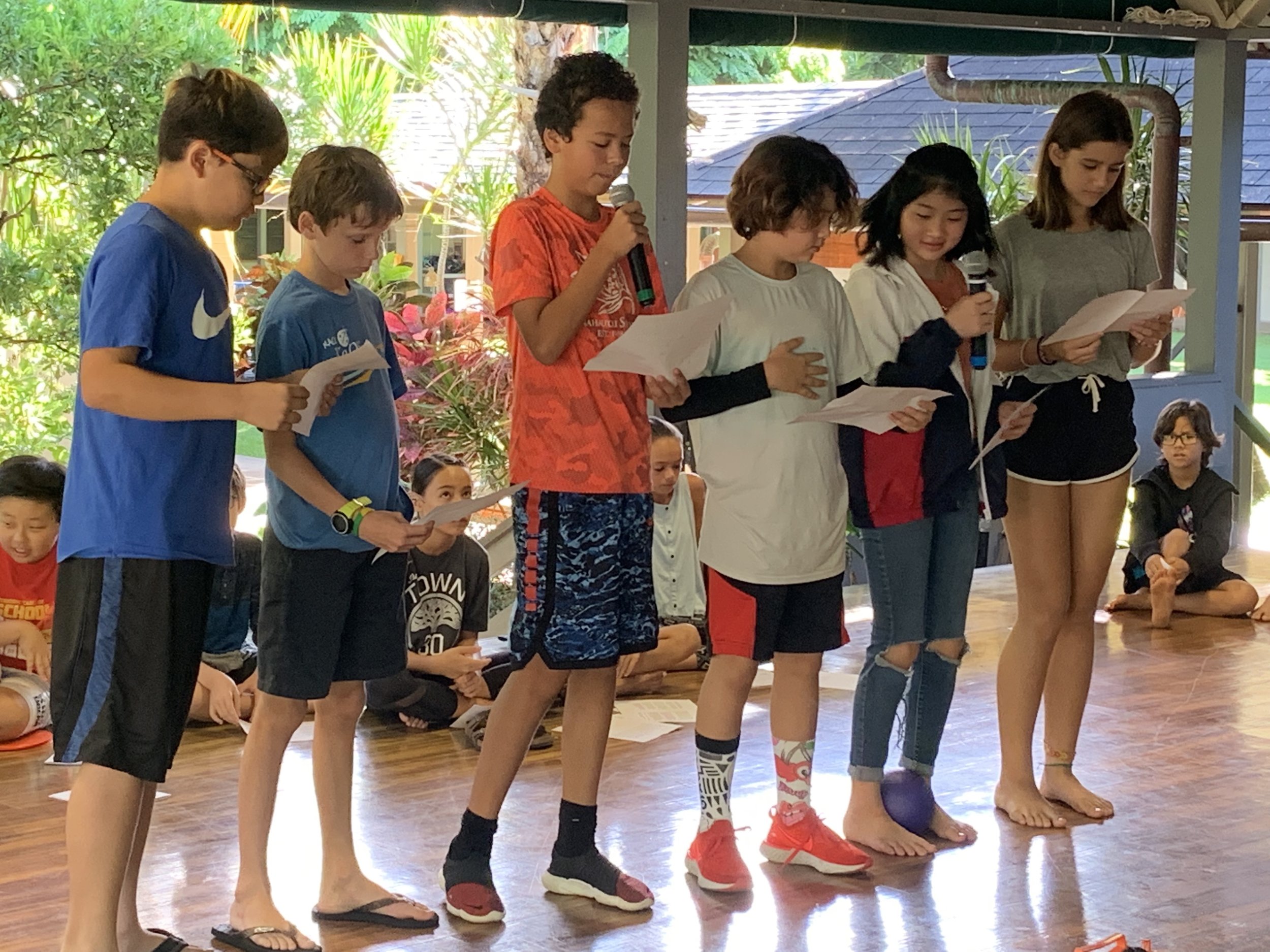
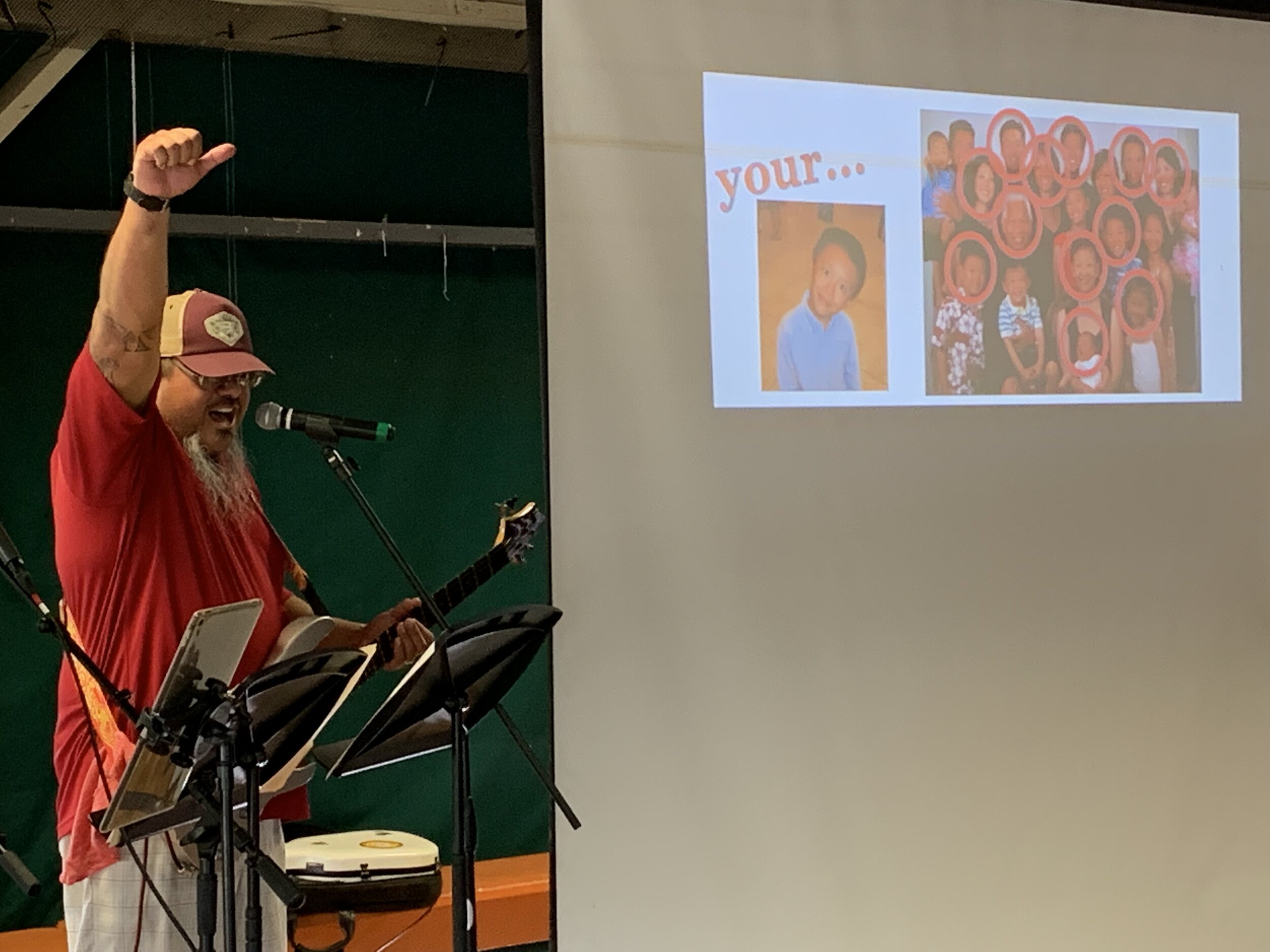
This week’s assembly was run by none other than Mrs. Abby (Mrs. Abby is our music teacher). So therefore the assembly was all about music and tradition! Classes from Kukunaokalā to Po‘e Ka‘ahele chose a song per home group that they thought was important enough to be passed on as a tradition.

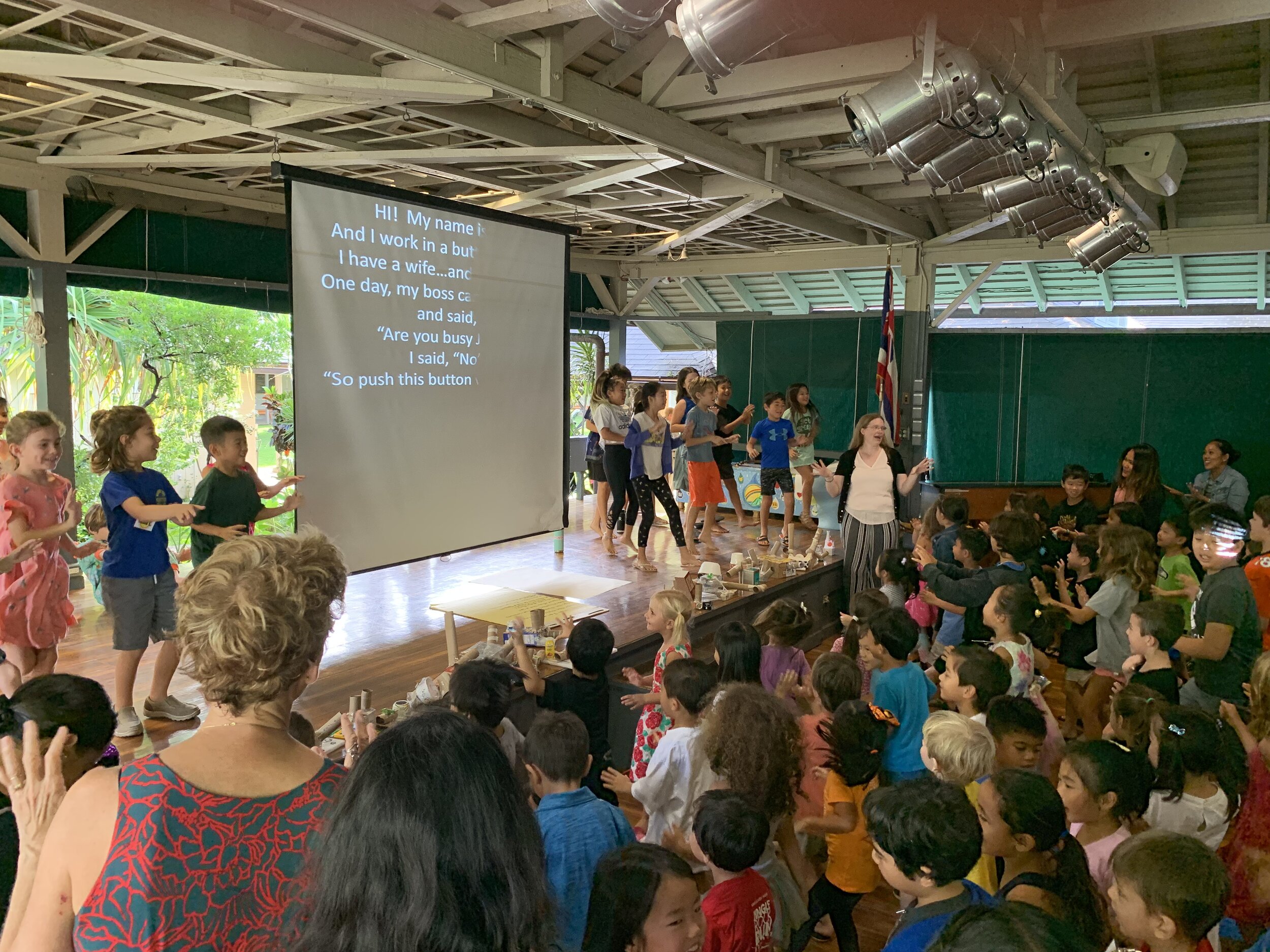
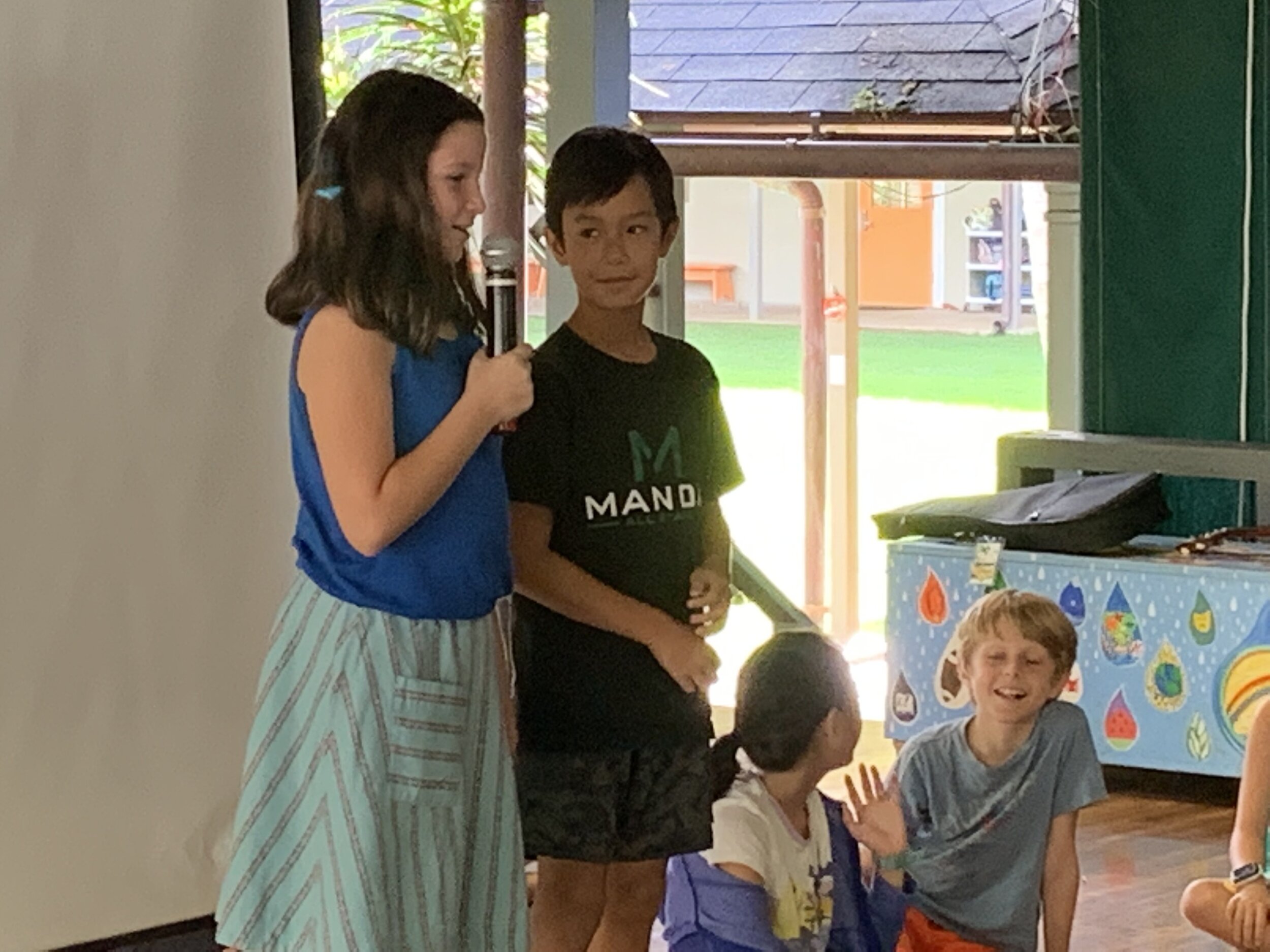
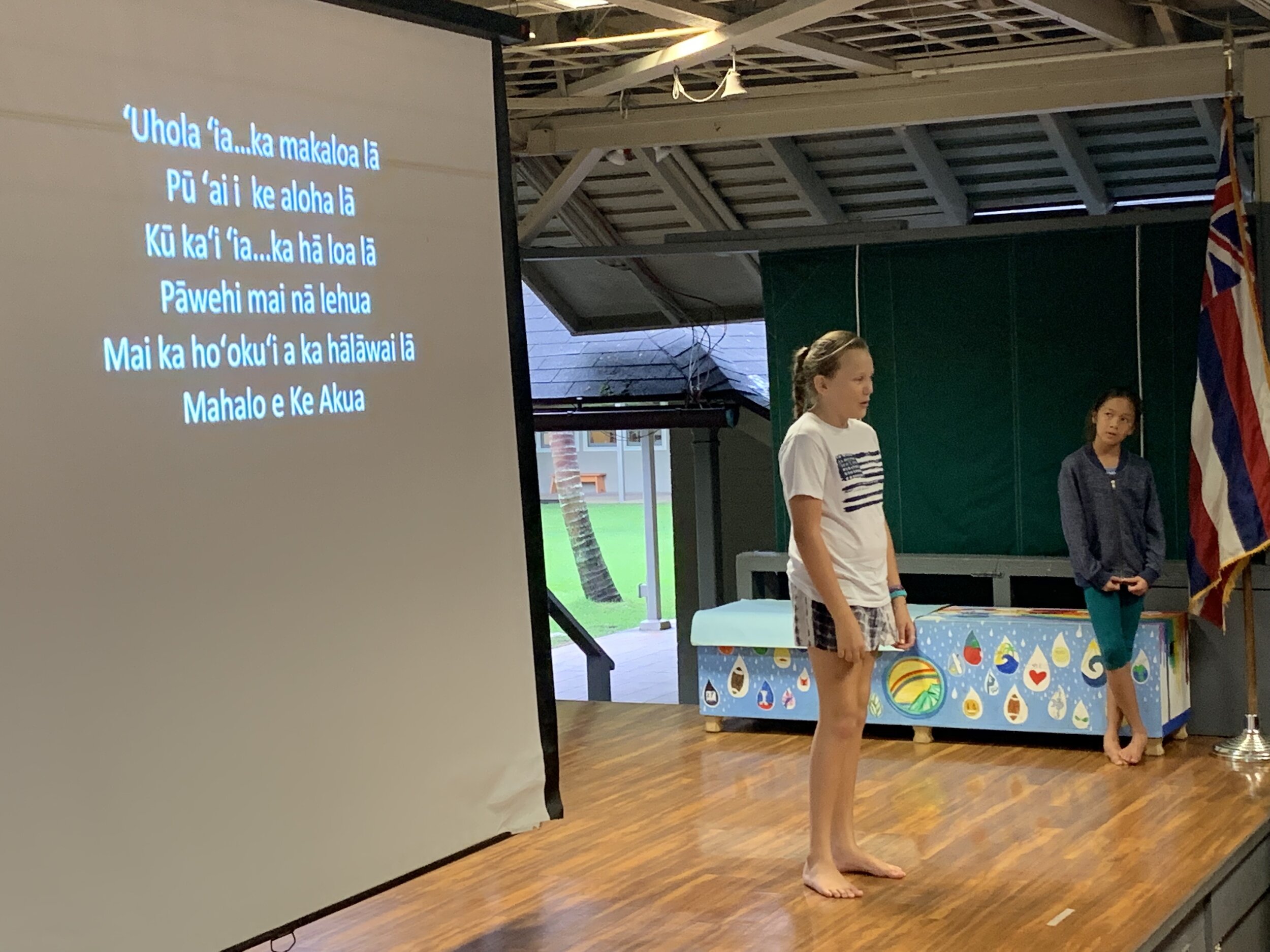
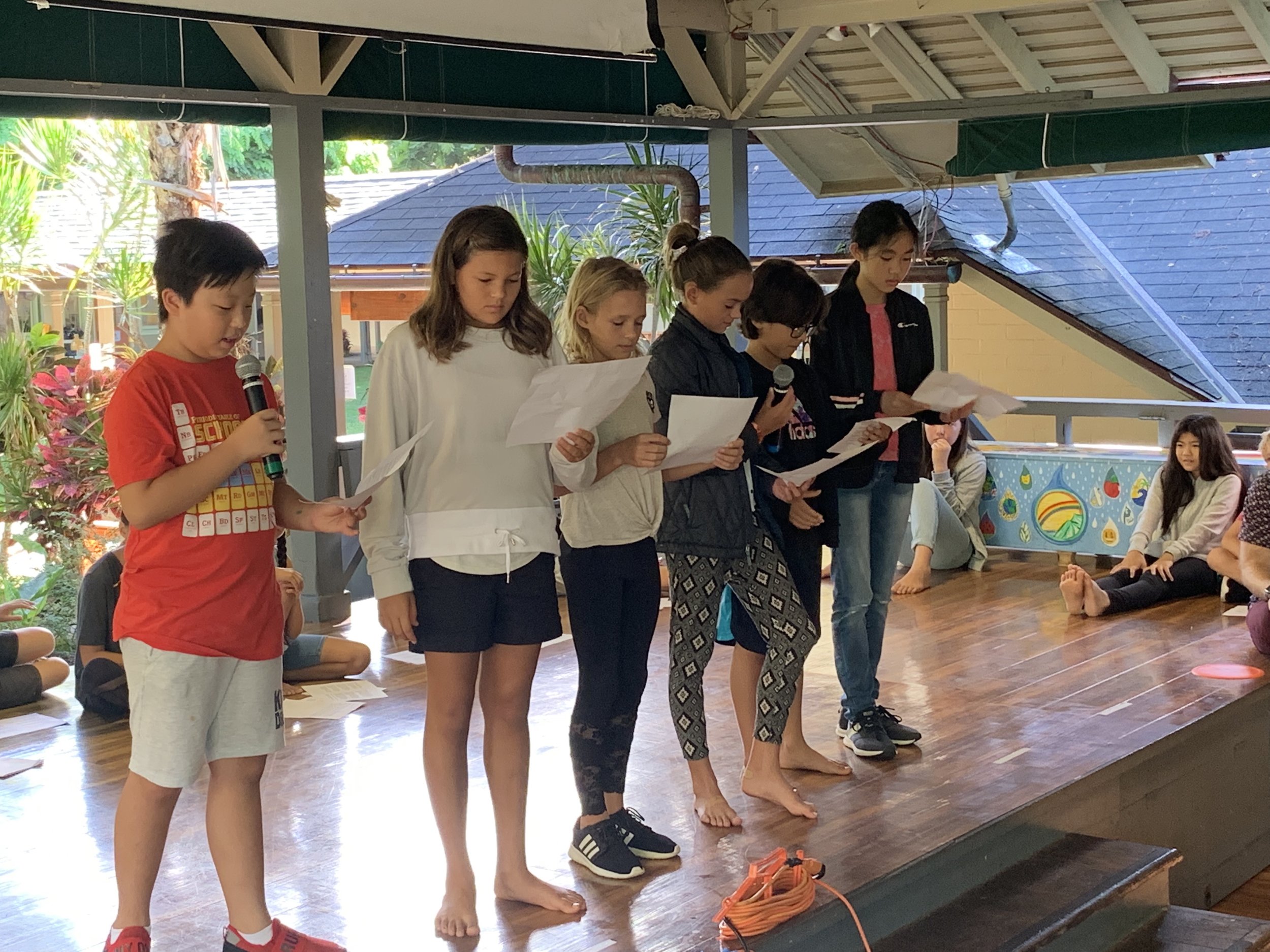
First the Triangles from Kukunaokalā led us in singing “I Am What I Am.” A song that tells a story of journey. Next the Circles sang “Hanahau‘oli, You Are My Sunshine”. It’s a retake on the song you are my sunshine and it tells of how Hanahau‘oli is one big caring family. Next Kulā‘iwi shared the song Ho’omau Hanahau‘oli made by the children here at this school and our old music teacher Mr. Hirokawa. Next Po’e Ka’ahele led us in Ghost of John, a school favorite. Not last and not least Po’e Ka’ahele enters the ring once more with another amazing song, “The Button Factory.” (That one really made me move.) We sang a few more songs which were “On Top of Spaghetti,” “Singing in the Rain” and lastly, “Take Me Out to the Ball Game.” And that’s all for today folks.   


Kukunaokalā | Kulā'iwi | Po'e Ka'ahele

Our Multiage Classroom Names

by Alyssa ’20

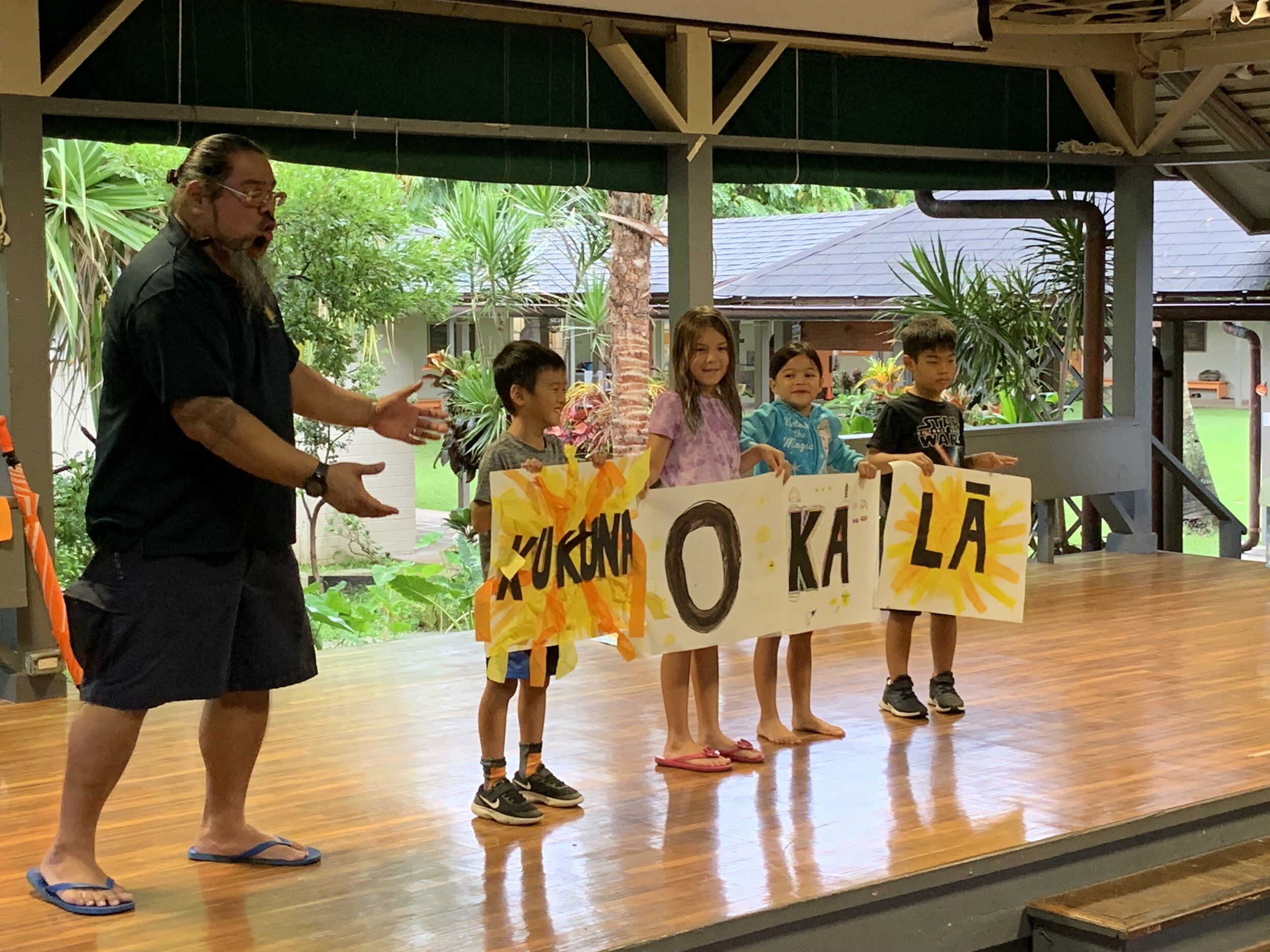
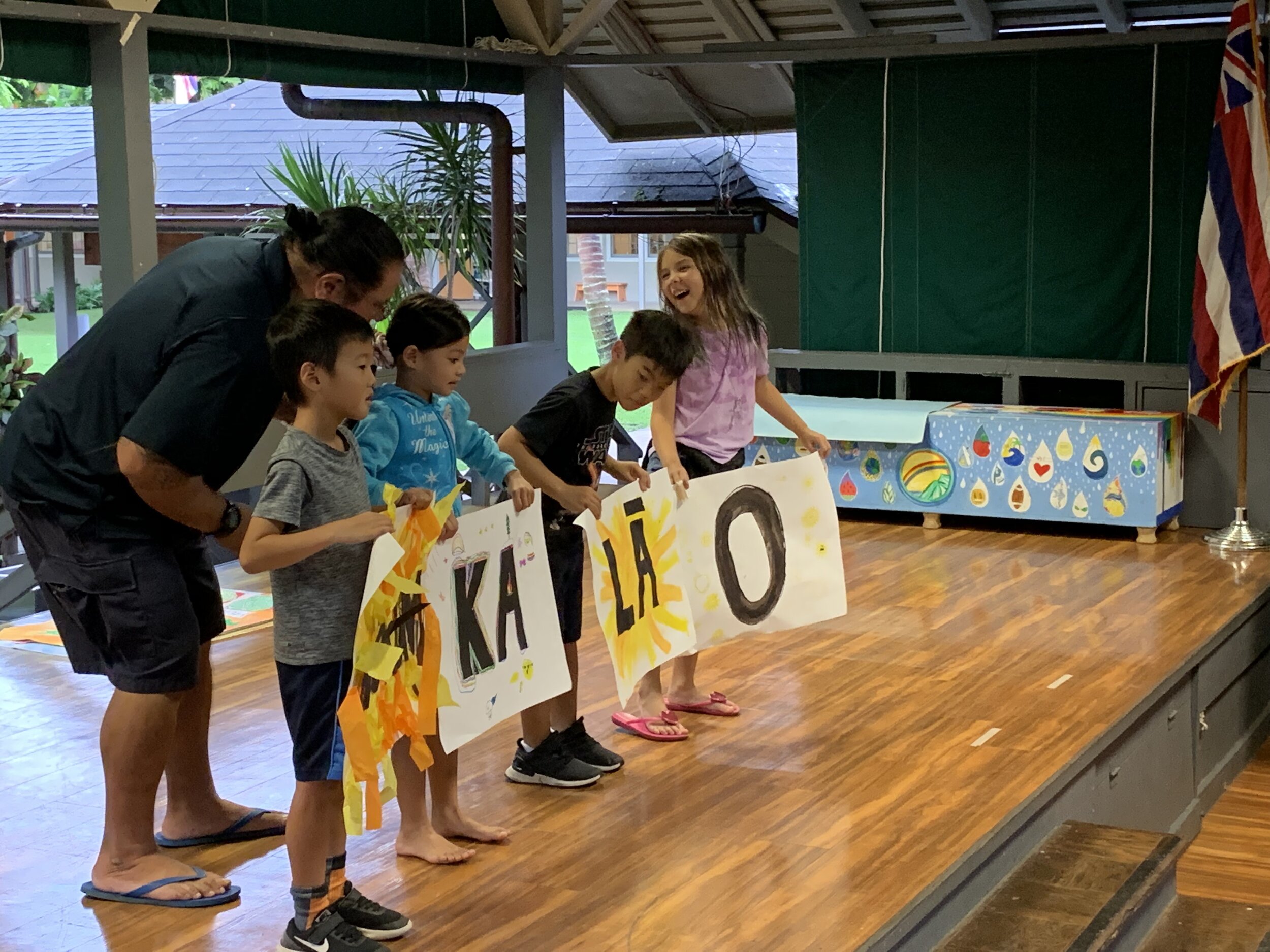
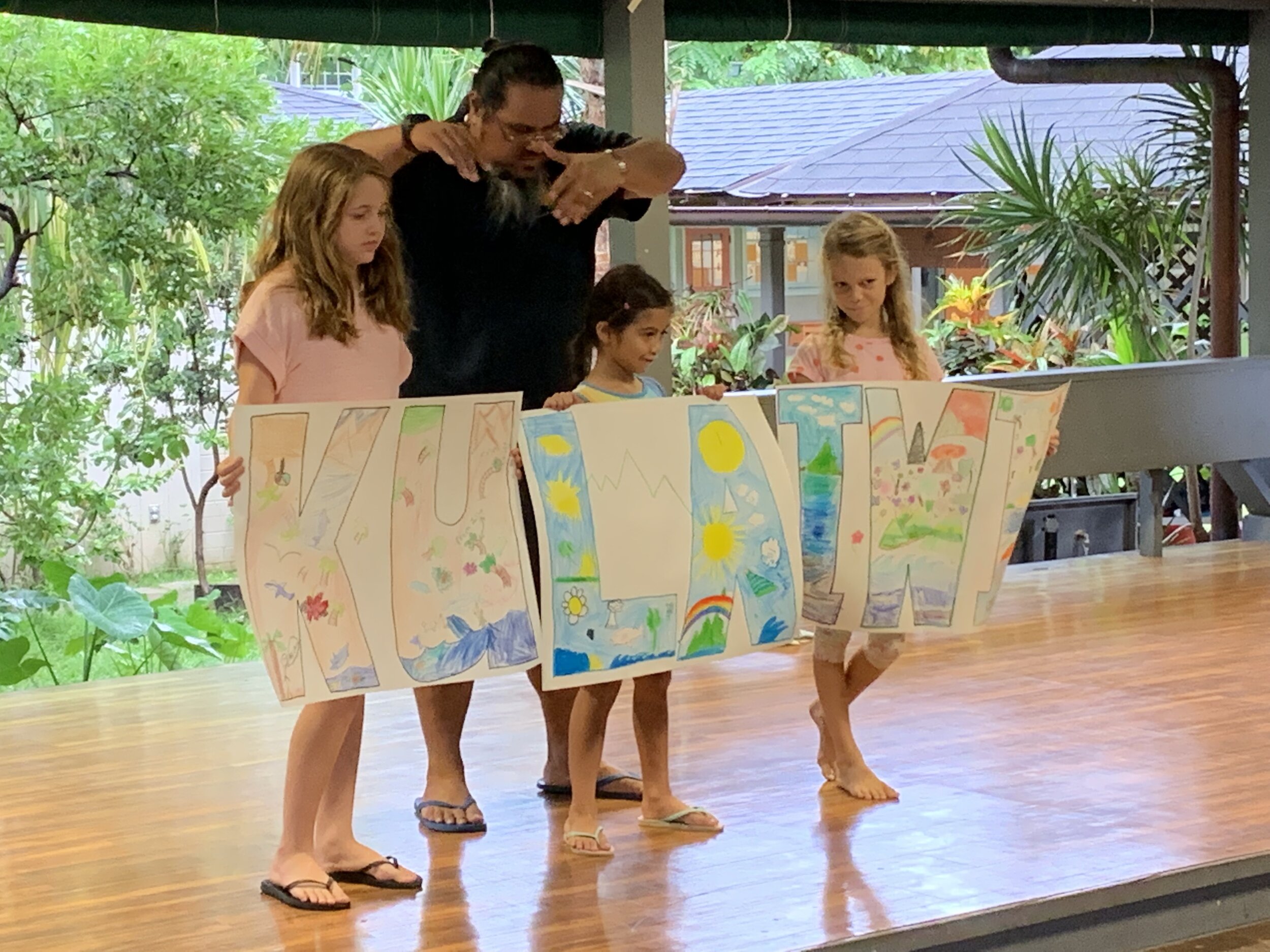
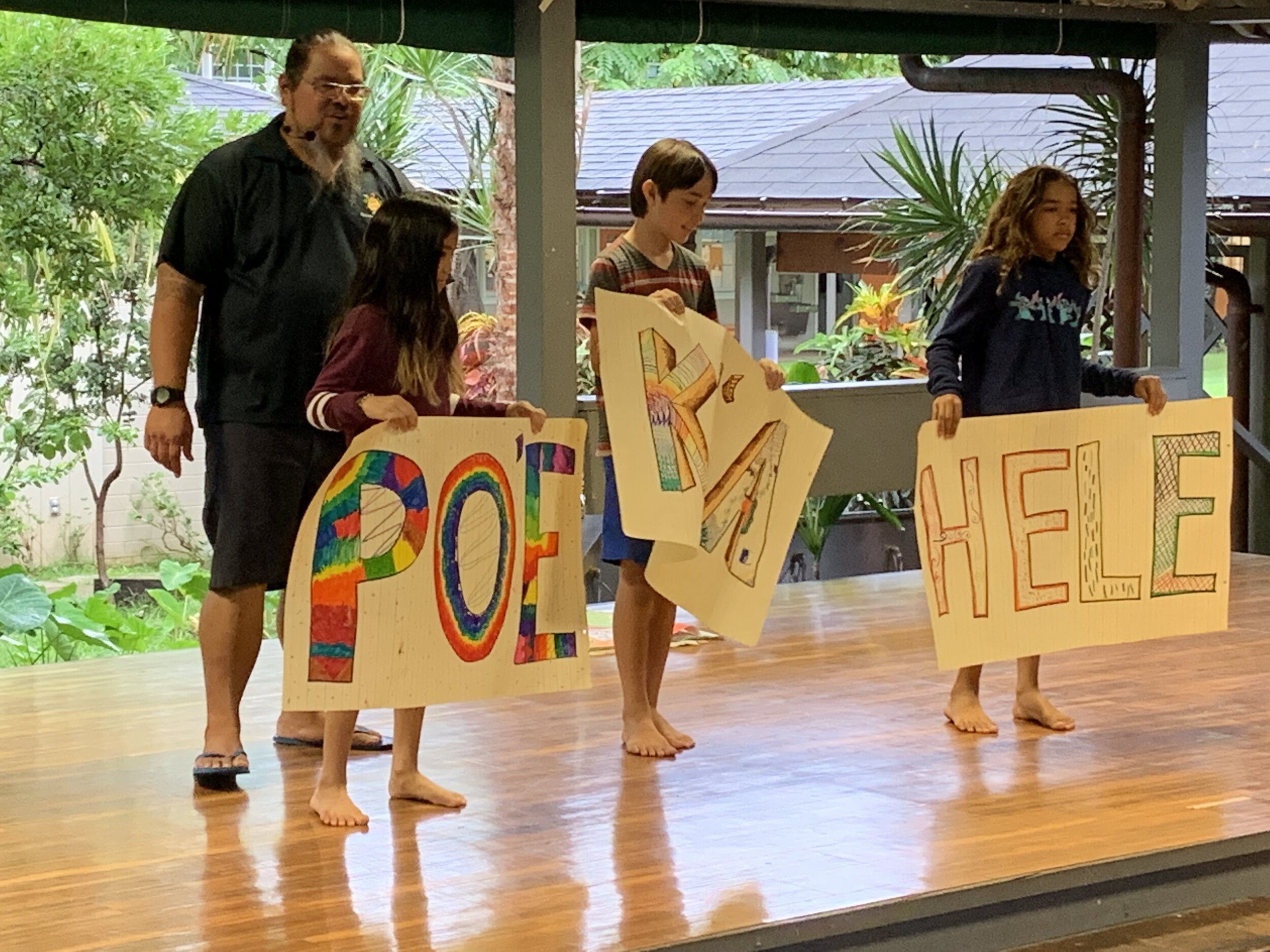
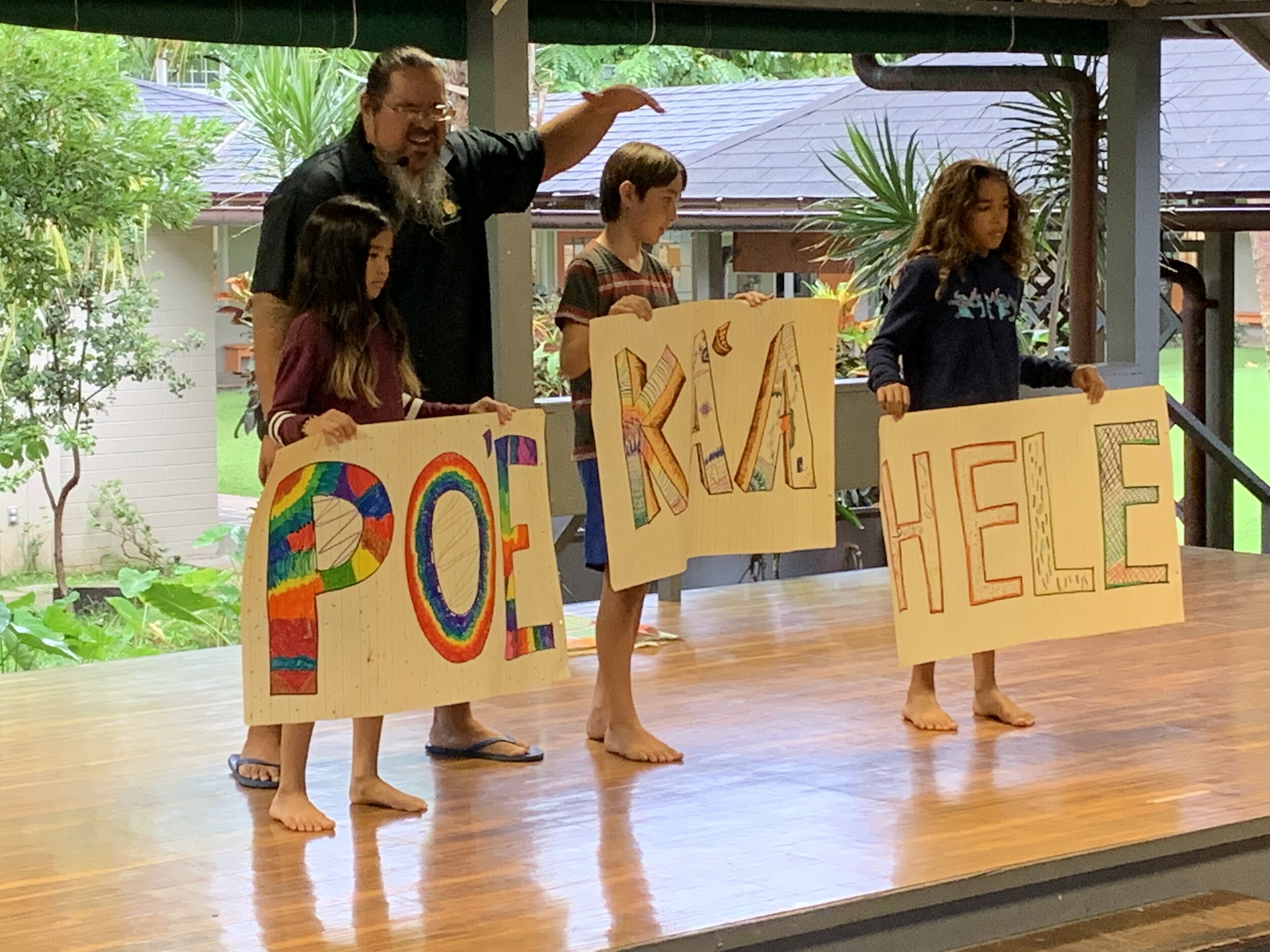
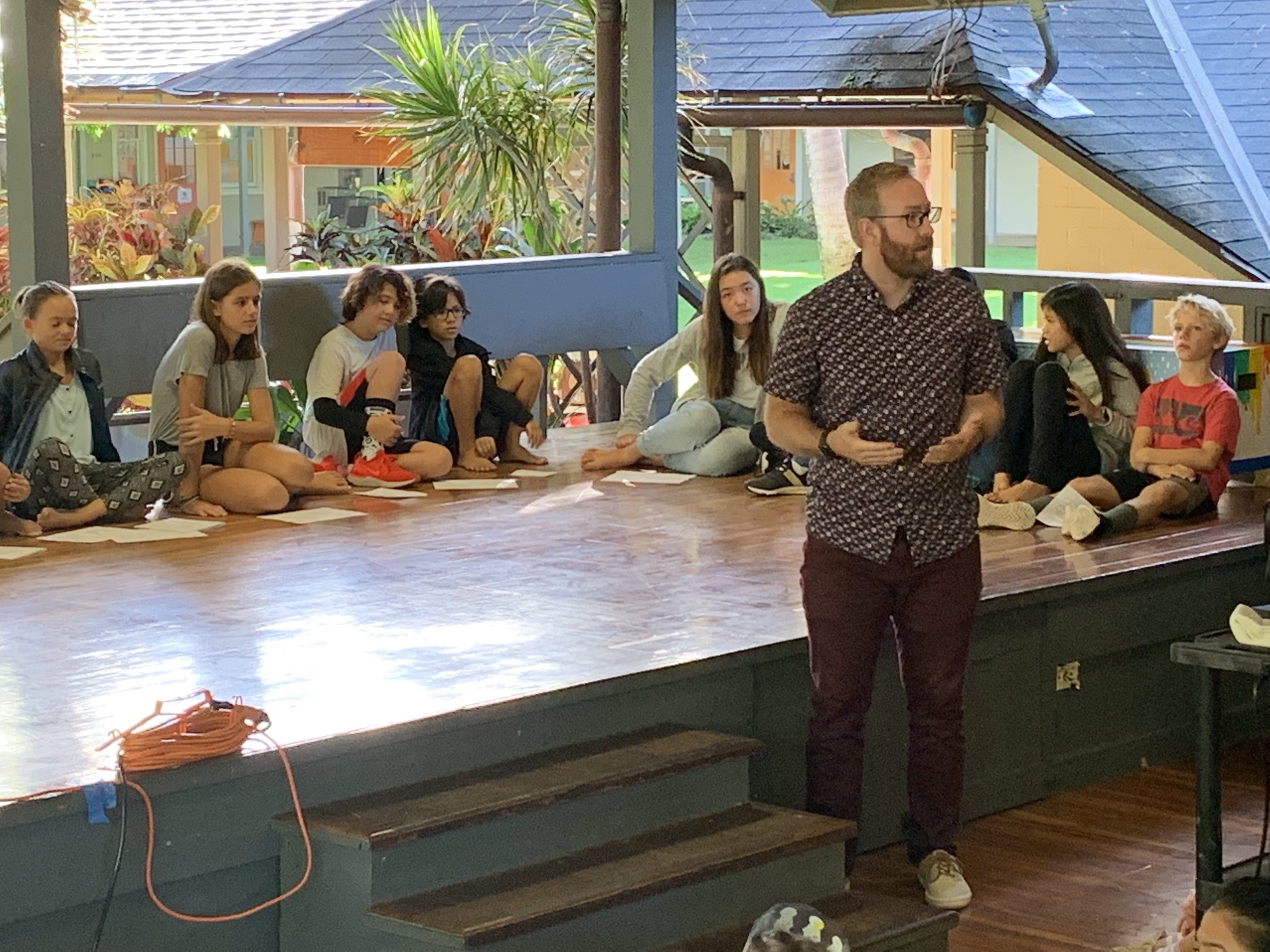
Today at assembly, Uncle Blair taught all the new parents and students about our classroom names. He started off with “Kukuna O Ka Lā”. Kukuna means the beams, O Ka Lā means of the sun. Next, he talked about Kulā‘iwi. Kulā‘iwi means Our island home because “‘Iwi” means bones and "Kula" means large flat piece of land. Bones were buried at home in ancient Hawaiian times. So everywhere you go their are bones of our ancestors. In a way, we “stand” on our ancestors’ knowledge. Ali'i bones were hidden. Finally, Uncle Blair ended with Po’e Ka’a Hele. Po’e Ka’a Hele means the people who travel and that’s why Po‘e “travels” a lot. After Po’e Ka‘ahele, we closed with our school song. 

Our Hawaiian classroom names were graciously gifted to us by past parent, Auntie Lilinoe Ka‘ahanui (Nakoa ’03 and Nainoa ’07) when we became a multiage school in 1997. Kukunaokalā is grades K-1 and means “rays of the sun,” Kulā’iwi is grades 2-3 and means “our island home,” (KU- to stand, LA- light, day, sun, ʻIWI- bones of our ancestors - Standing in the light of those who came before; spiritual enlightenment, familial connection as to the reason you exist in any particular space) and Po‘e Ka‘ahele is grades 4-5 and means “the travelers.” JK and 6th Grade retain their grade level names. Mahalo, Auntie Lilinoe!


BEE-autiful Kukunaokalā Assembly

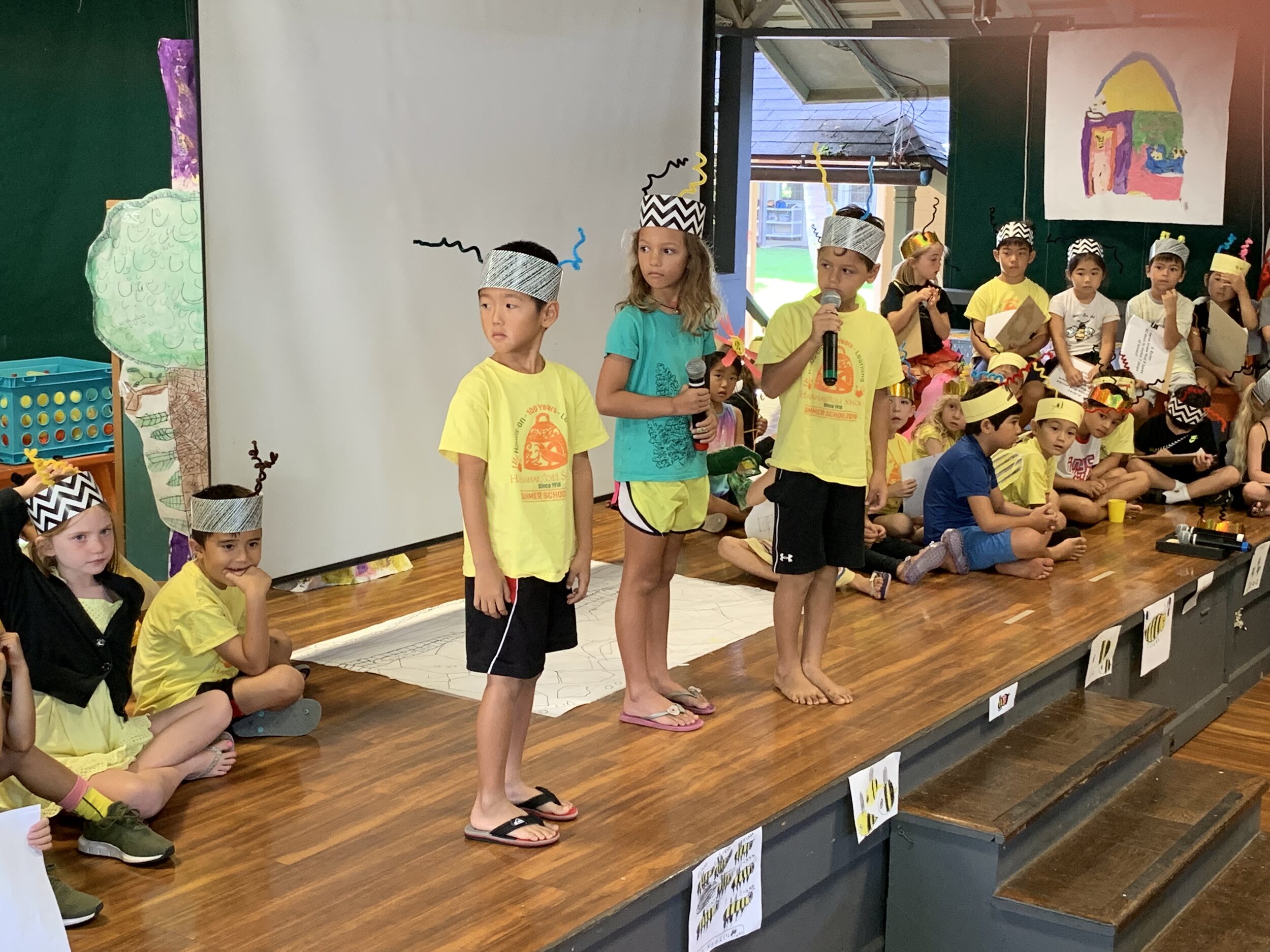
Kukunaokalā’s Bee Assembly

By Ava ’20

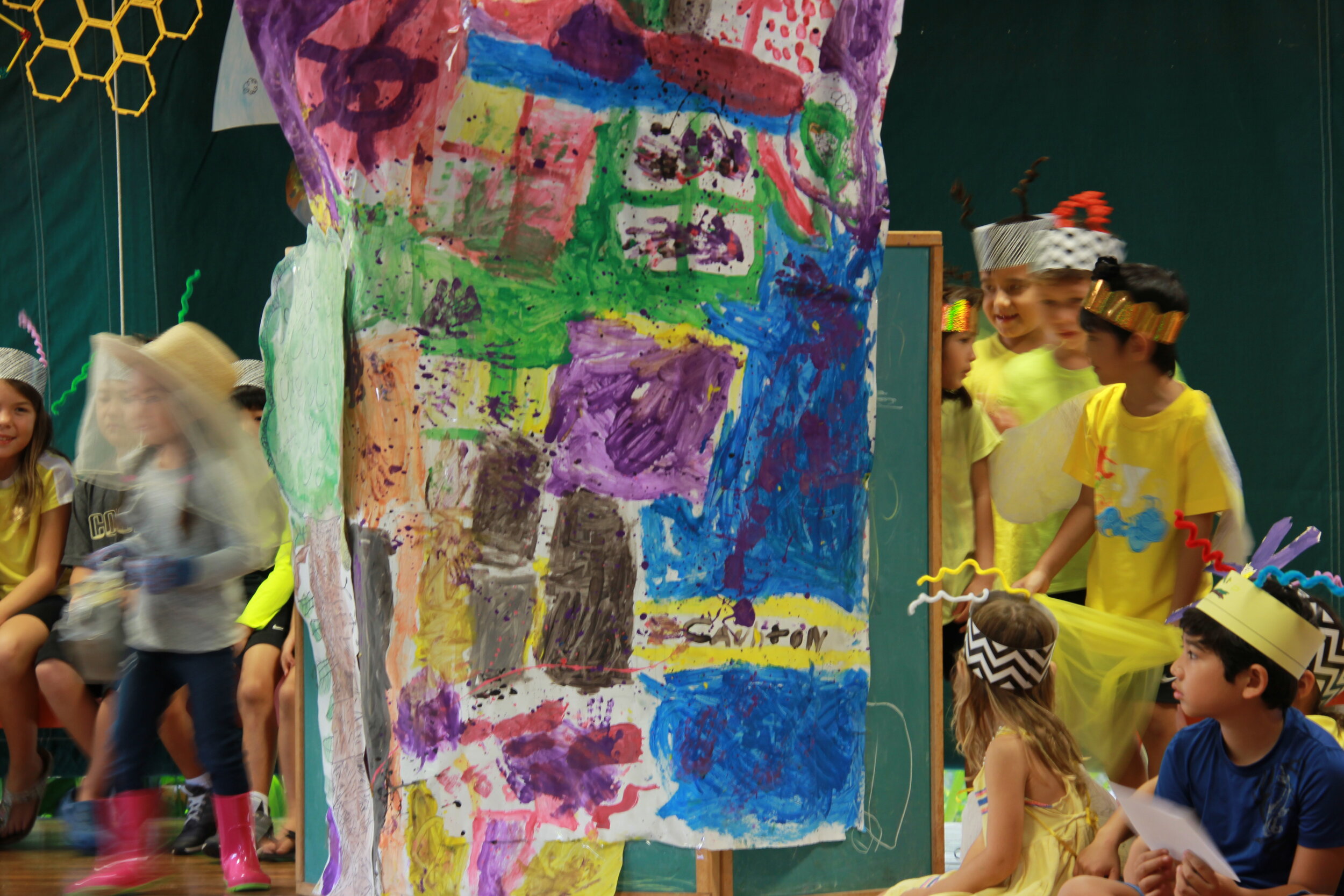
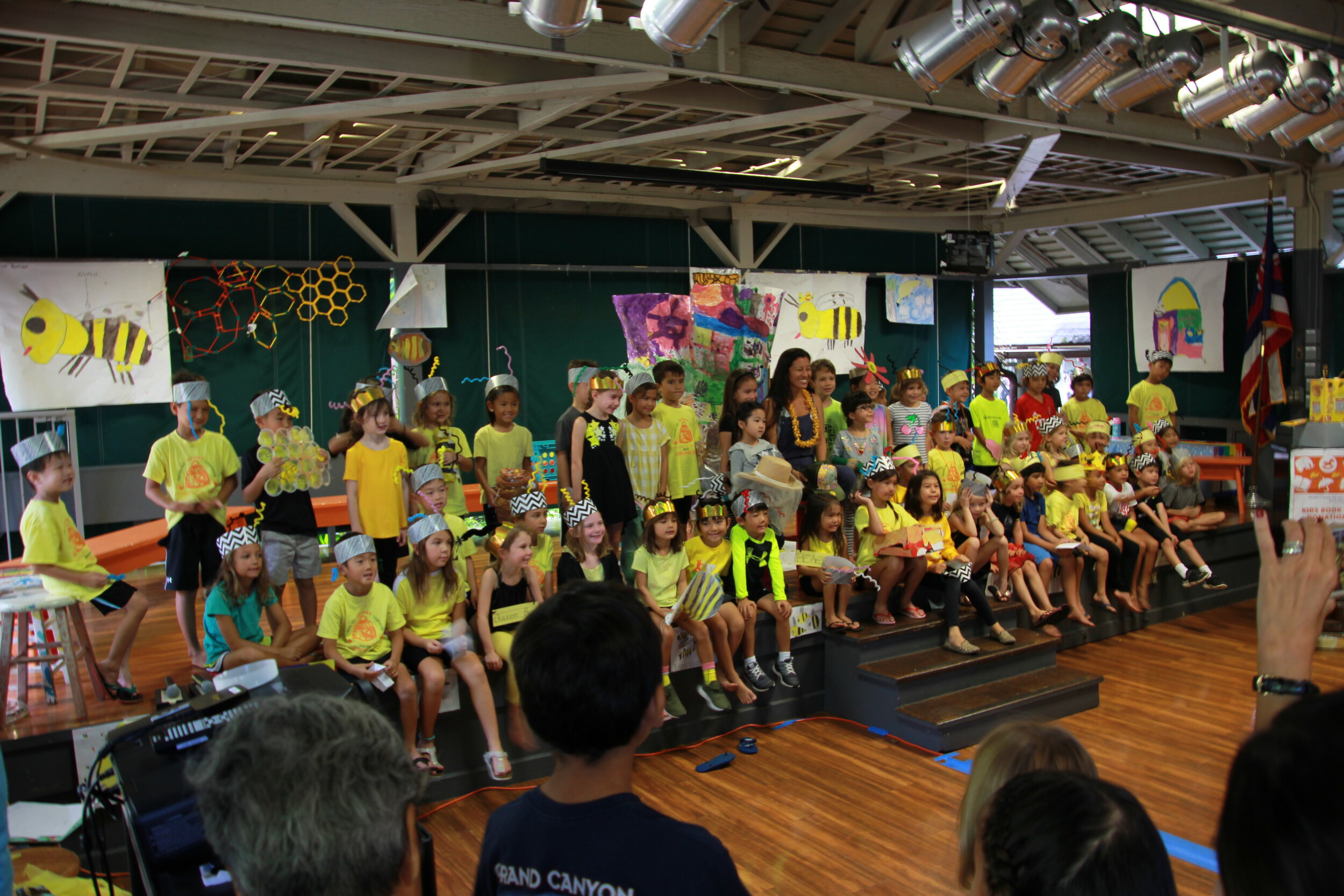
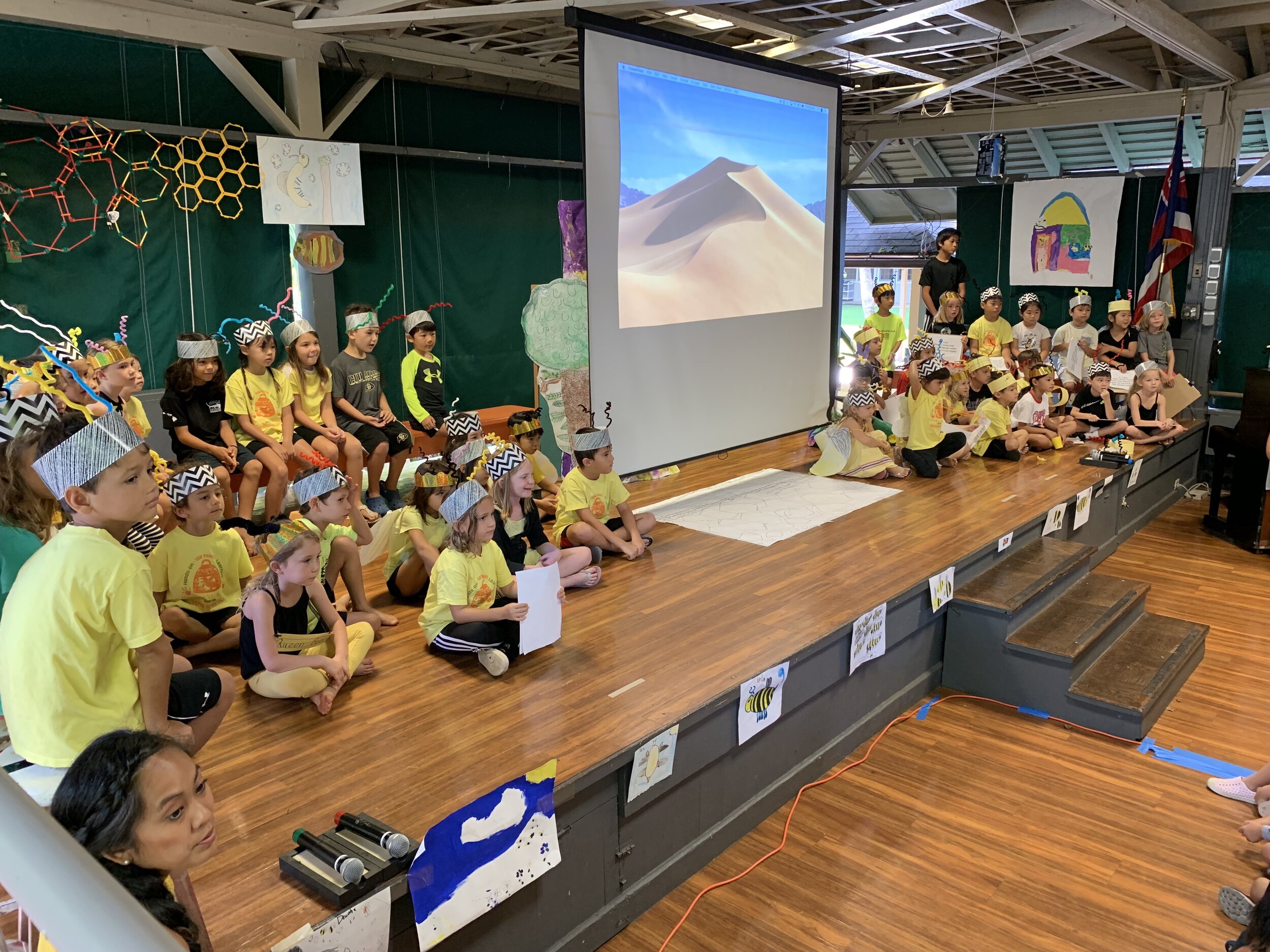
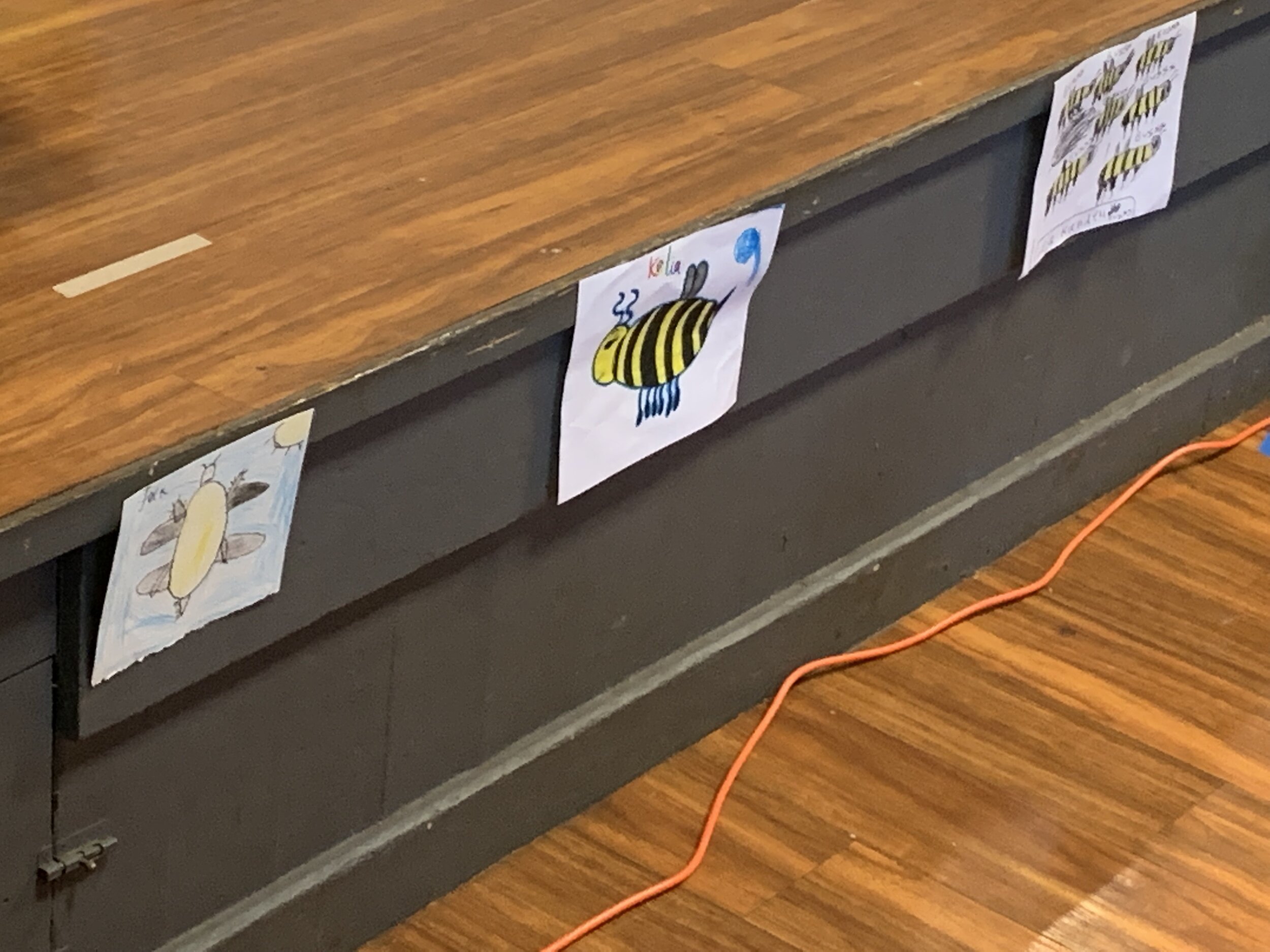
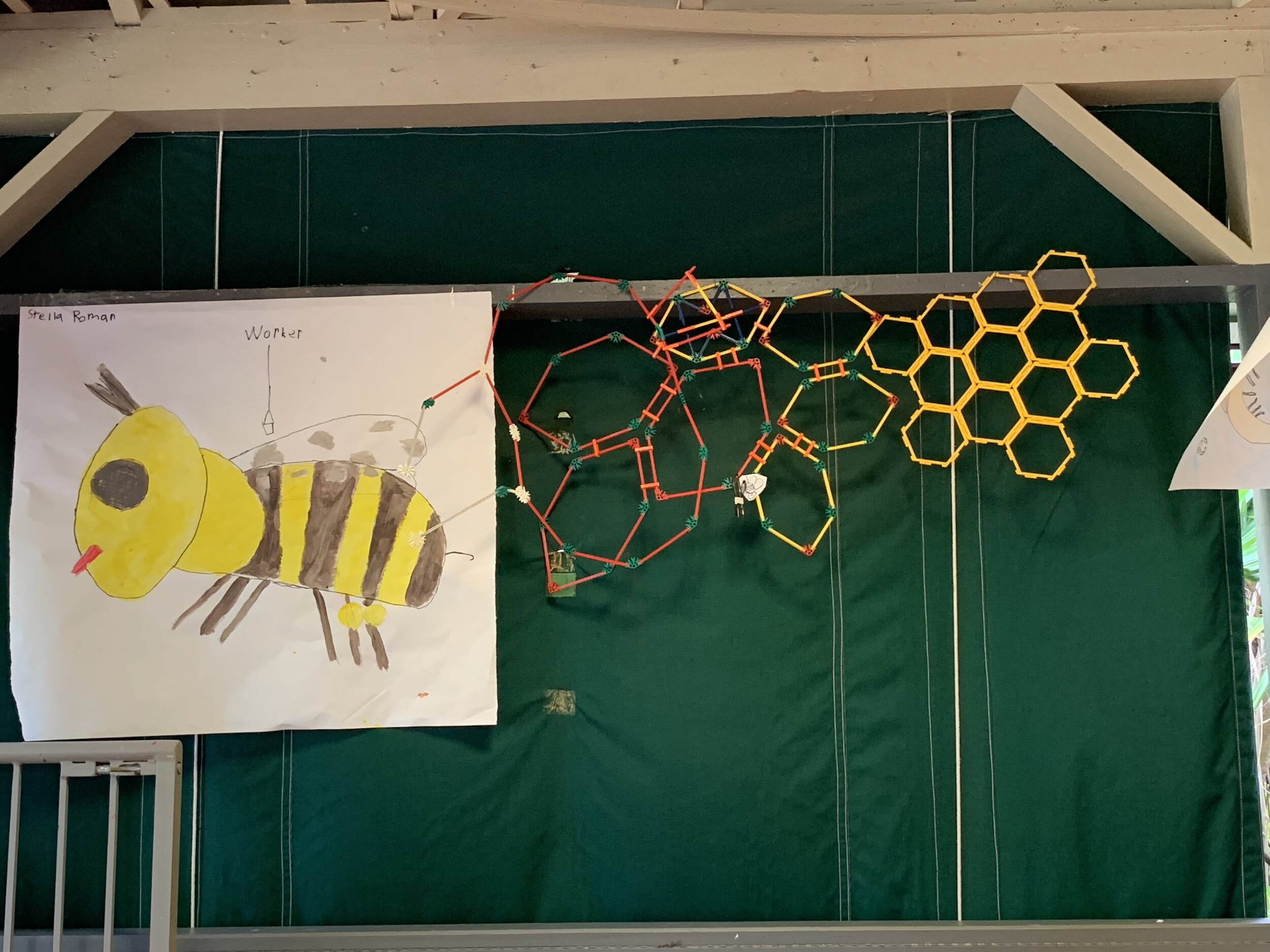
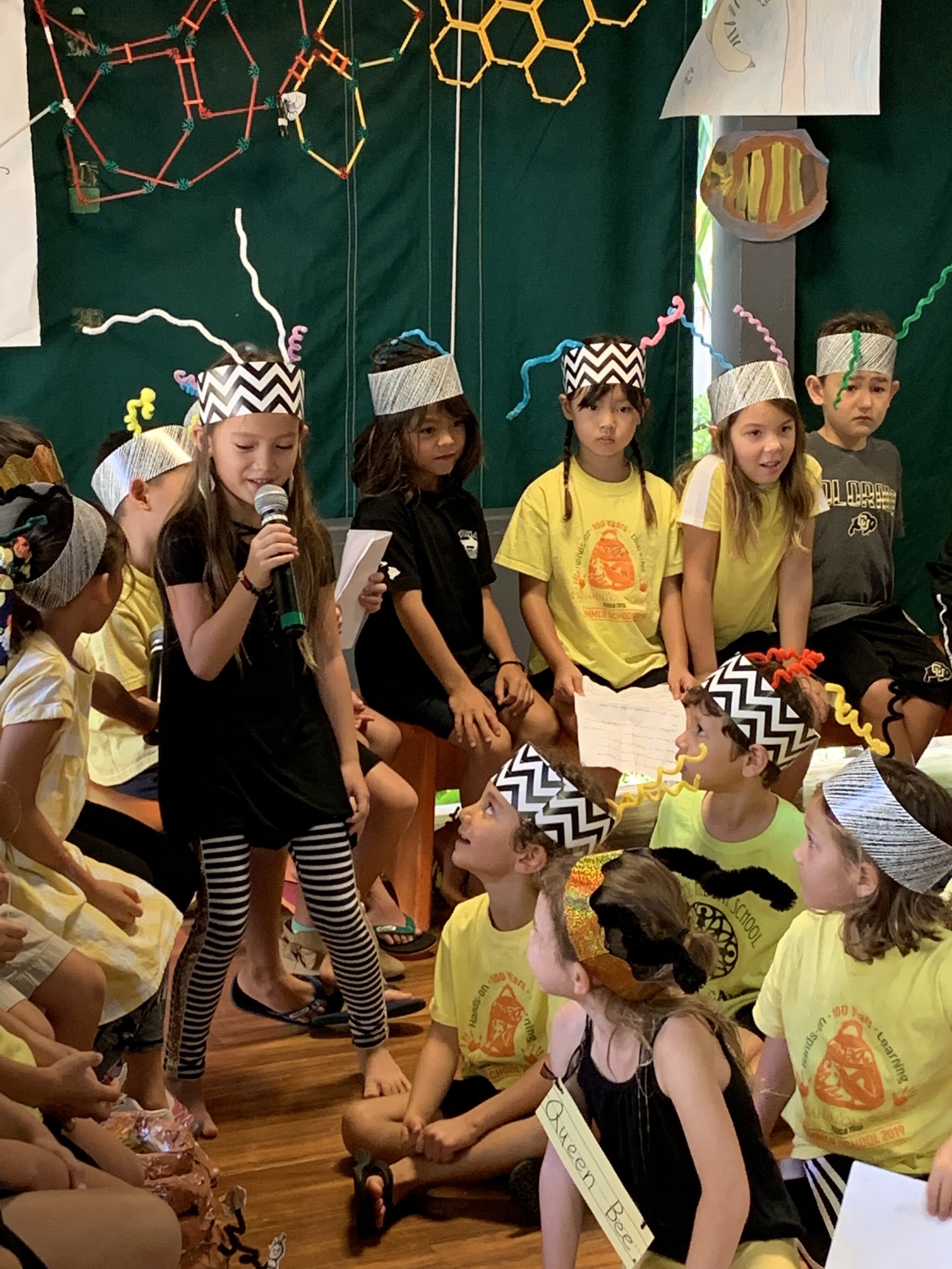
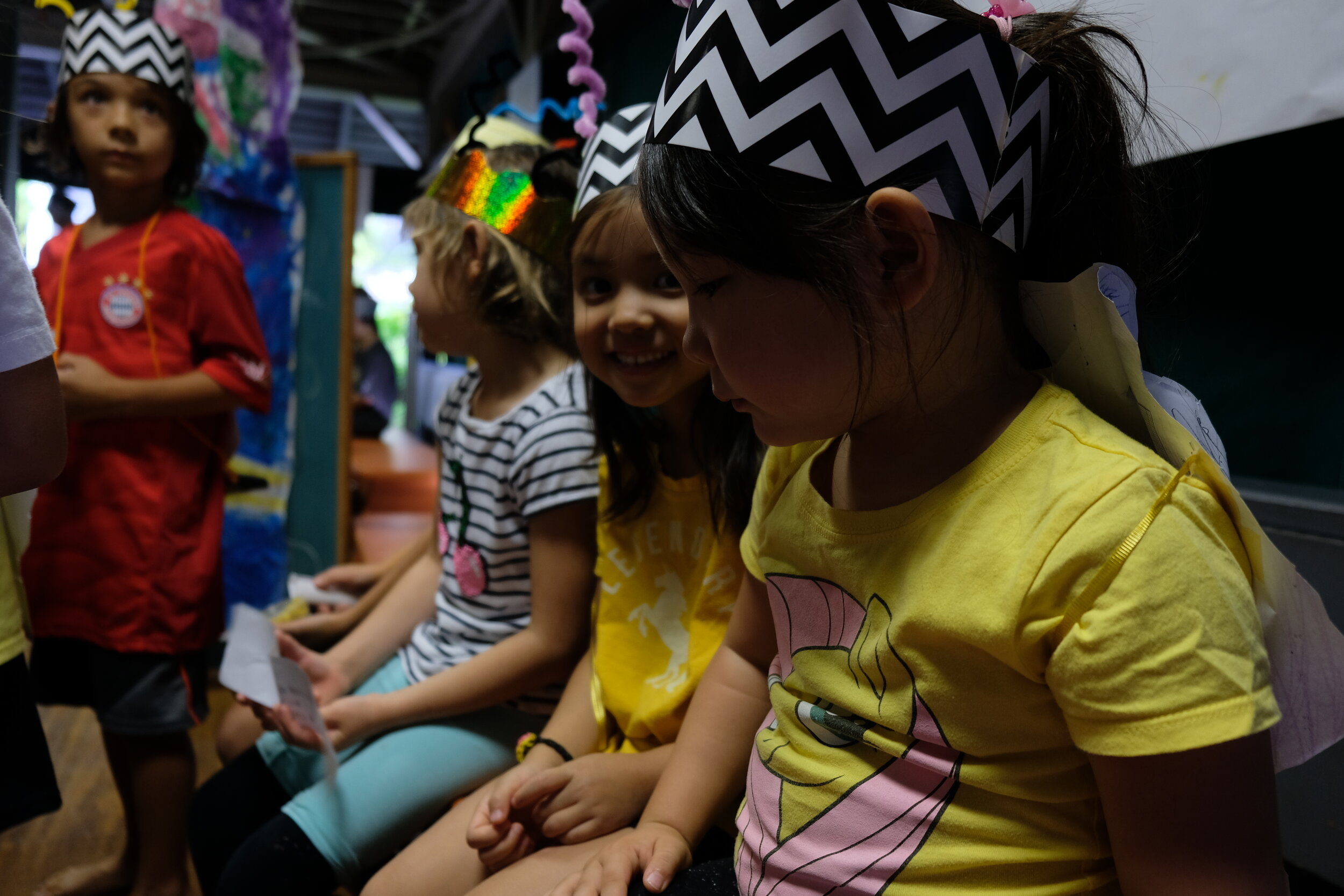
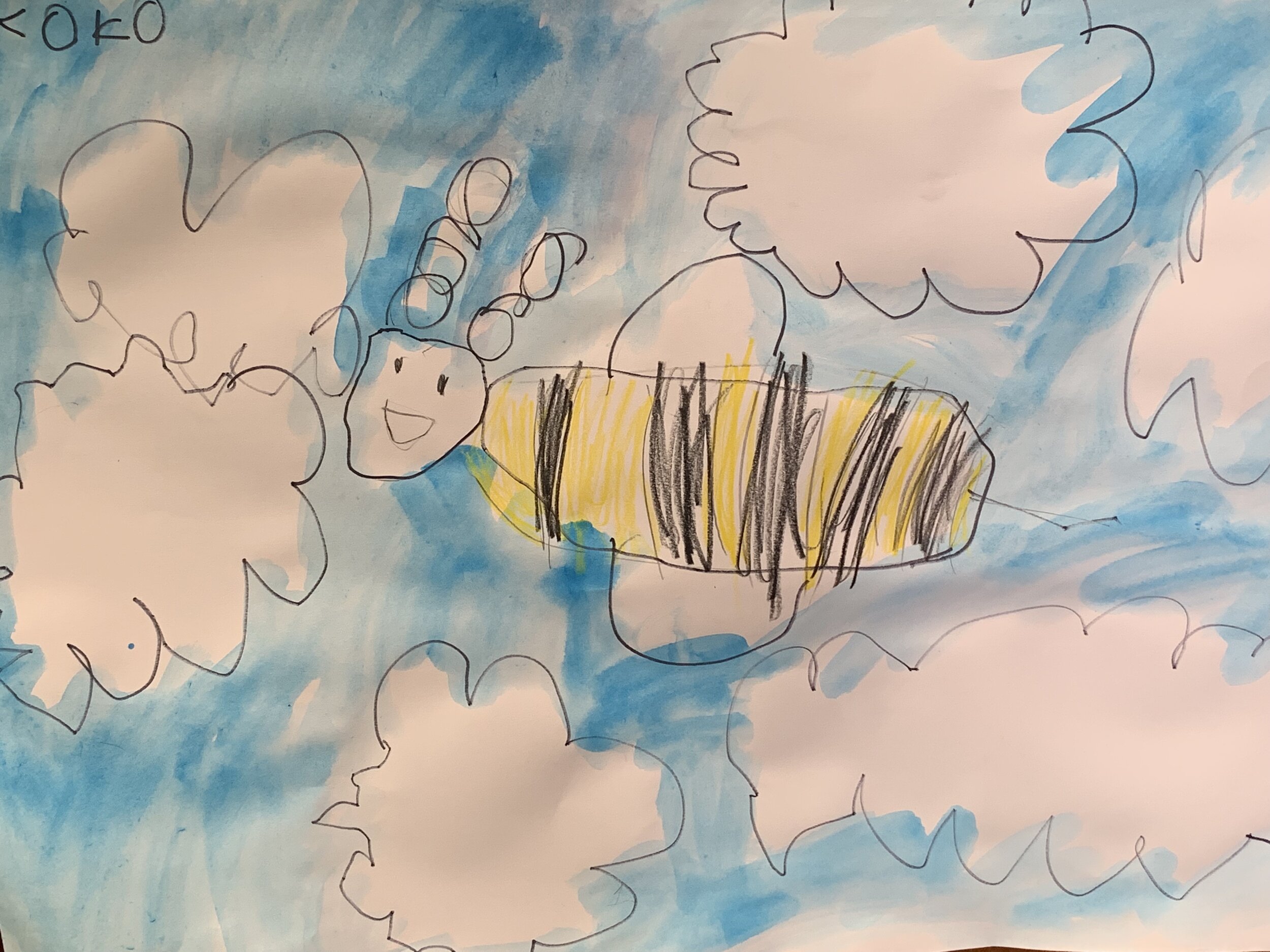
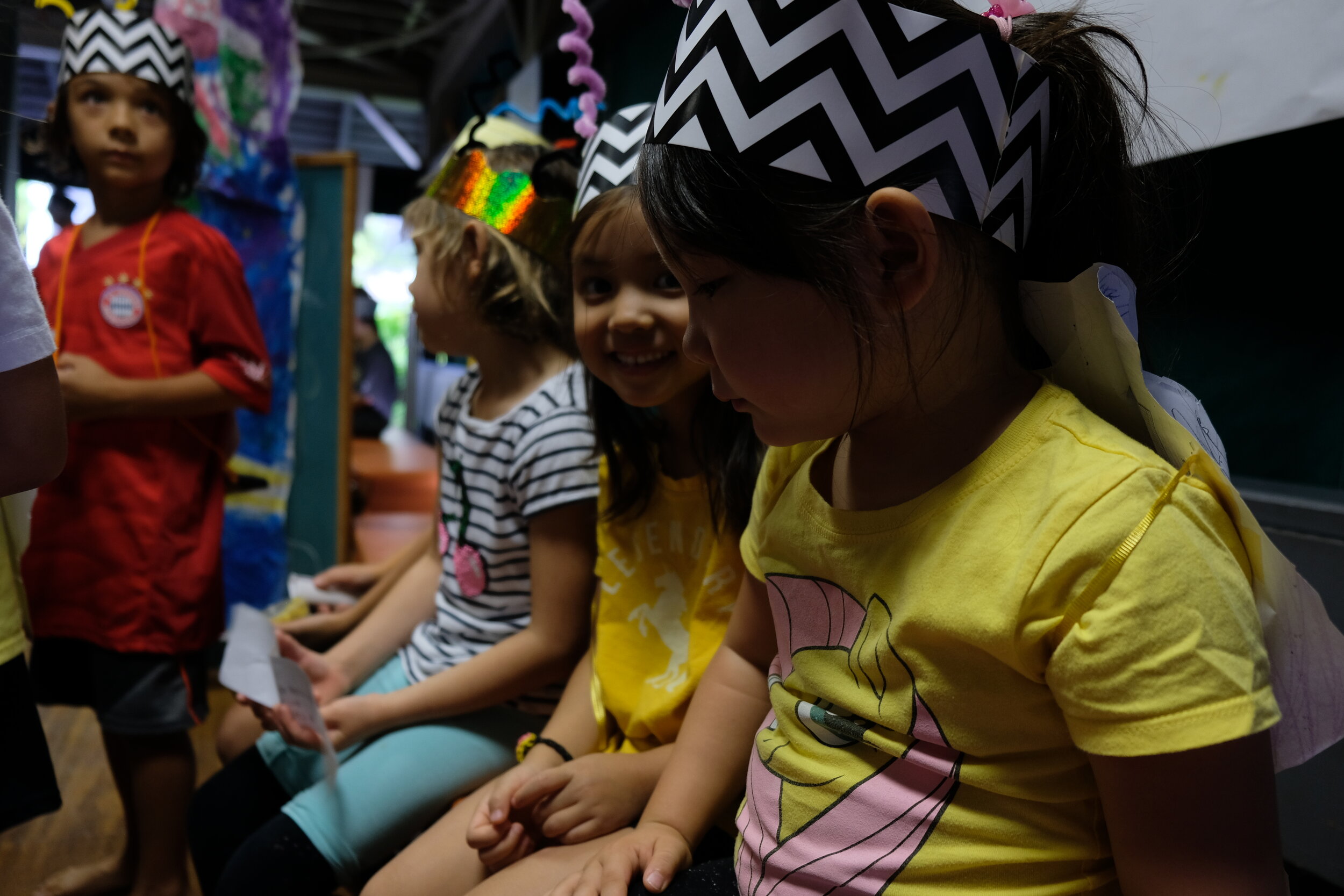
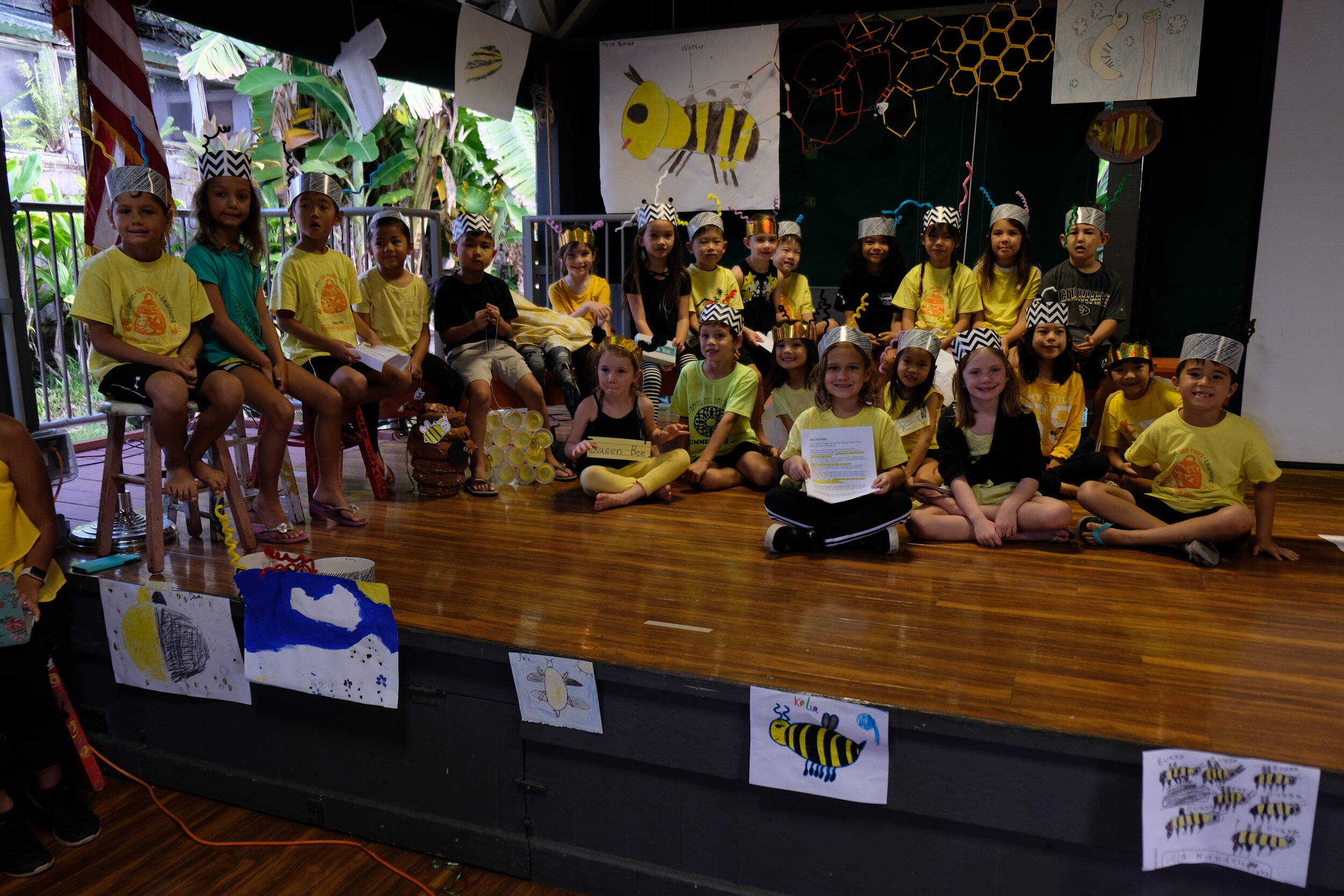
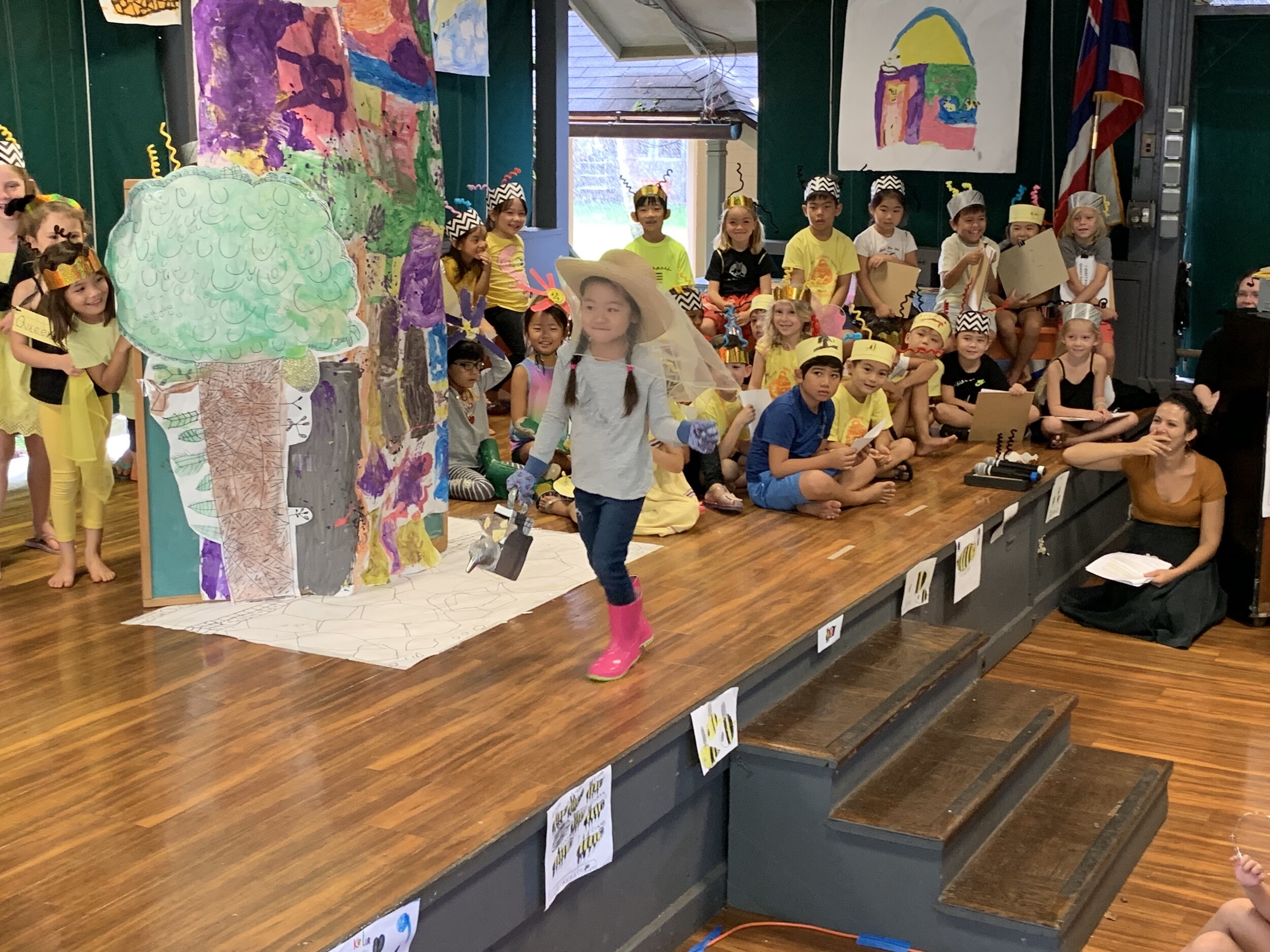
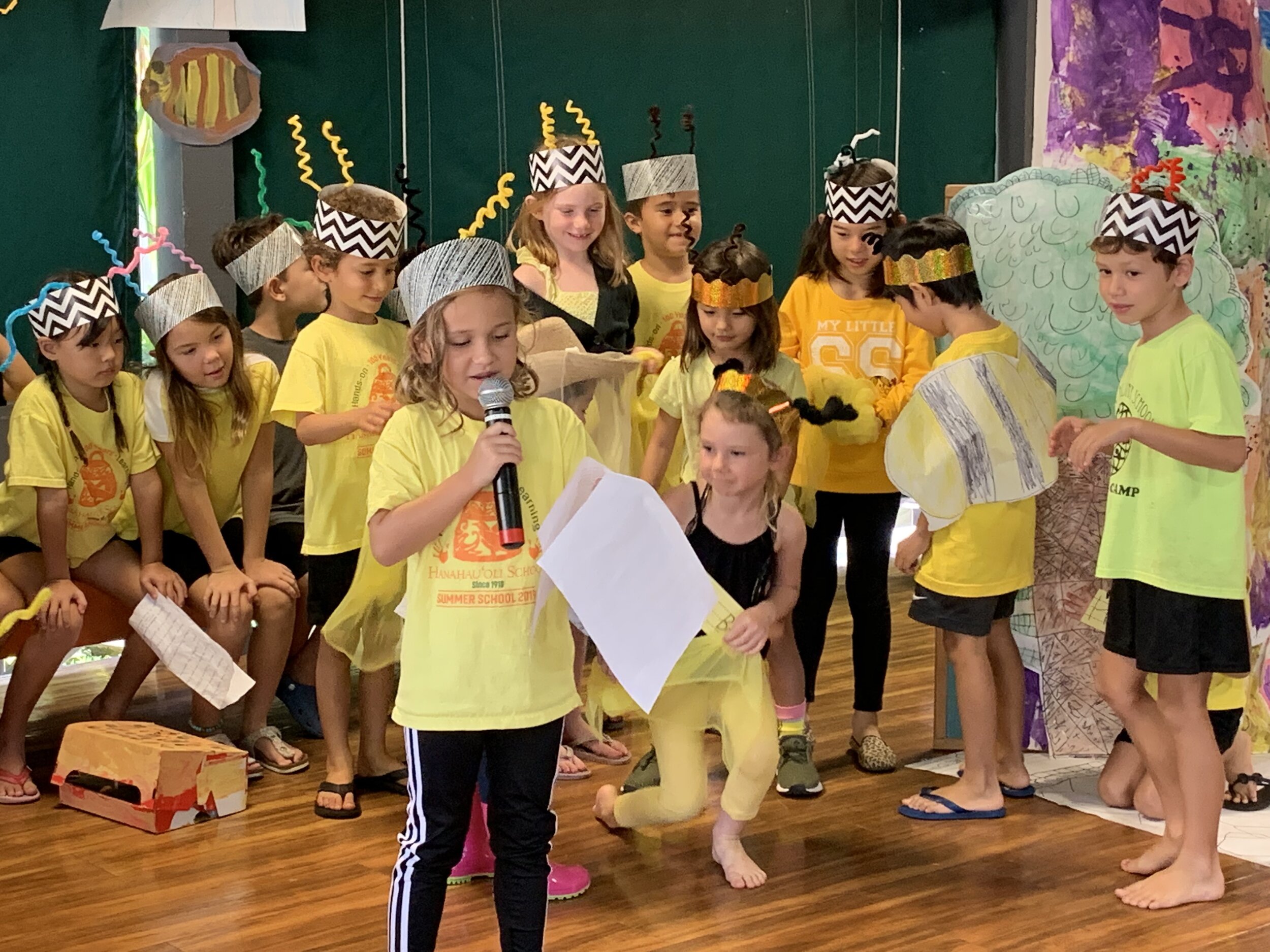
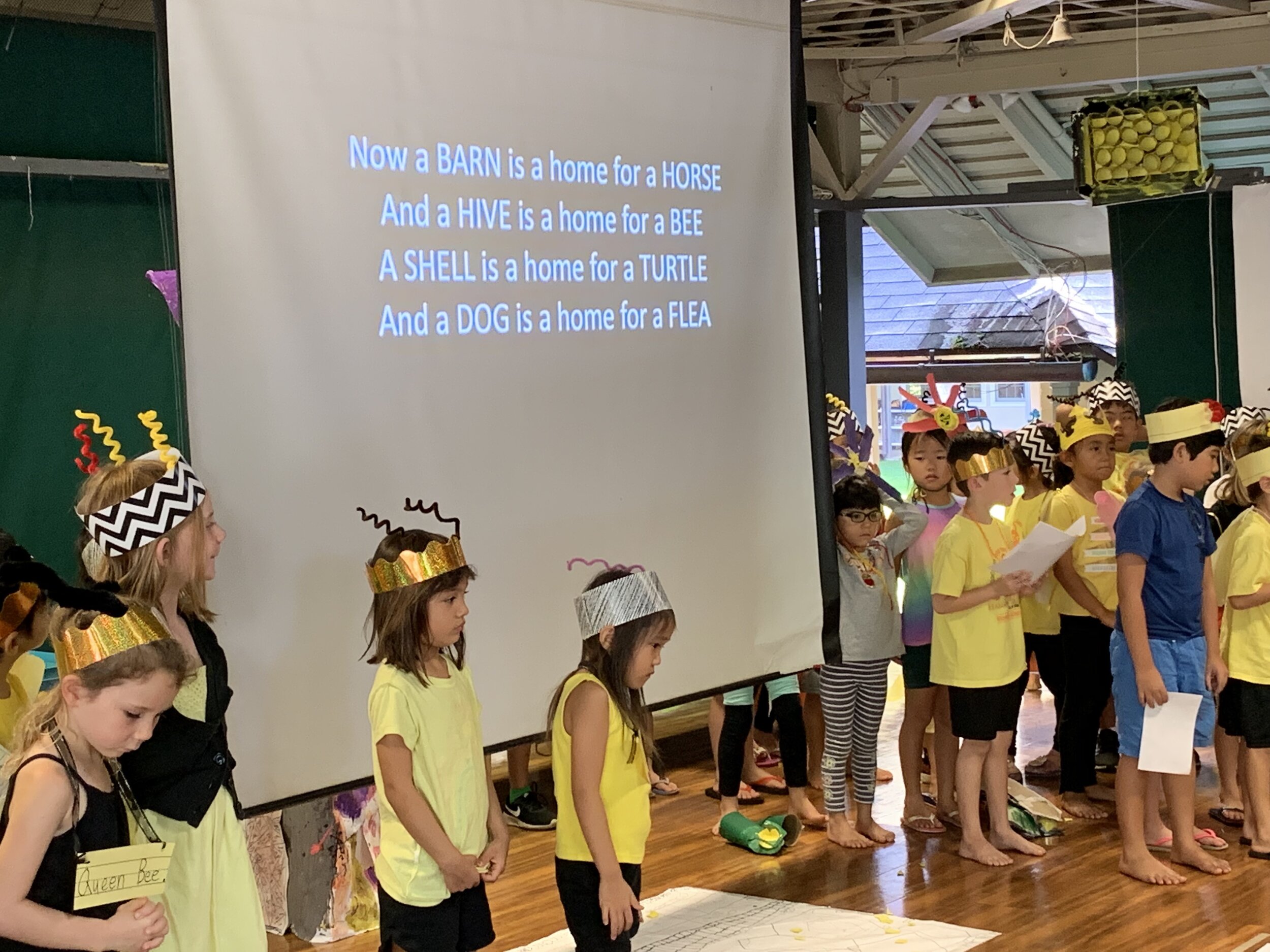
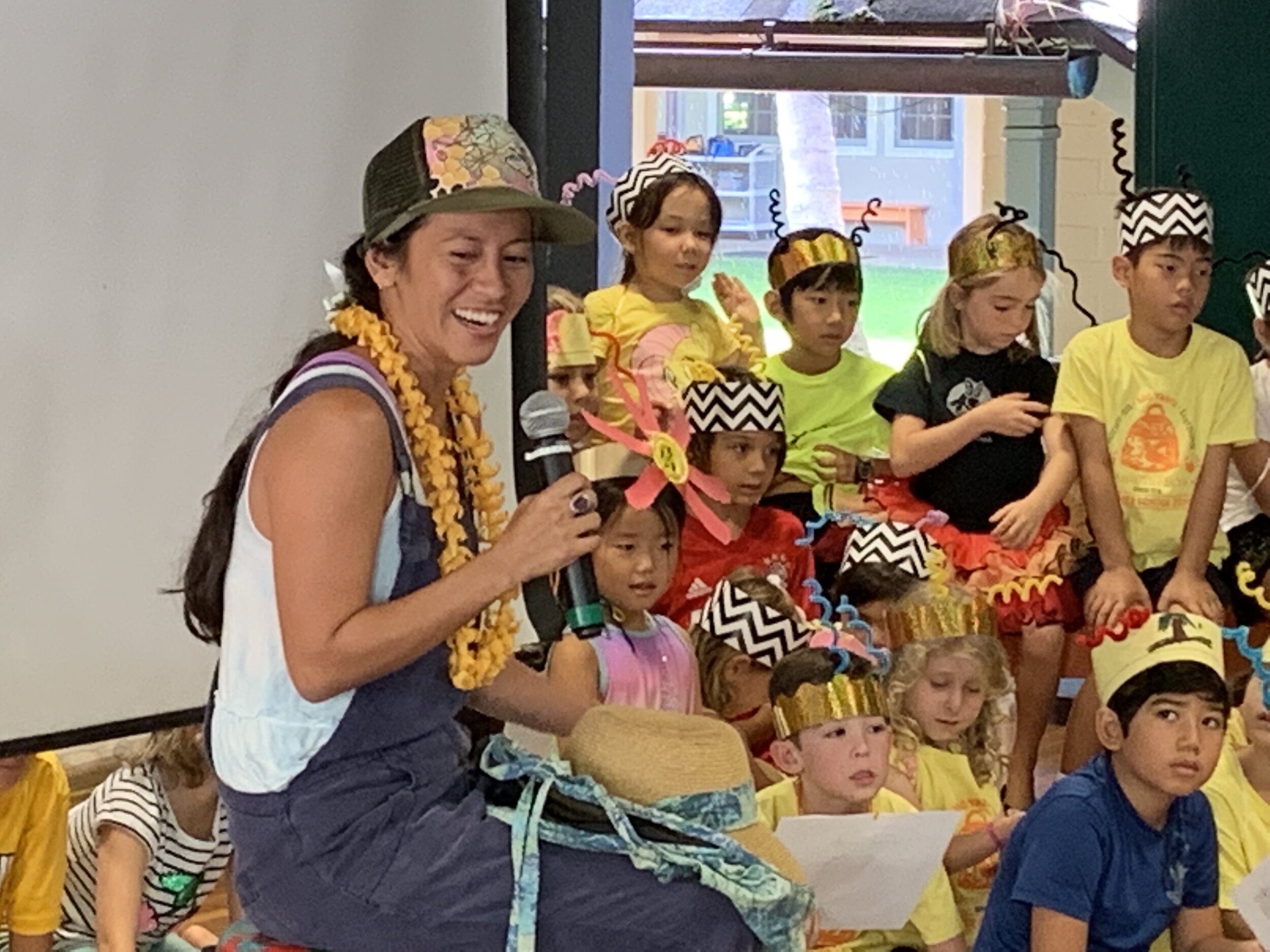
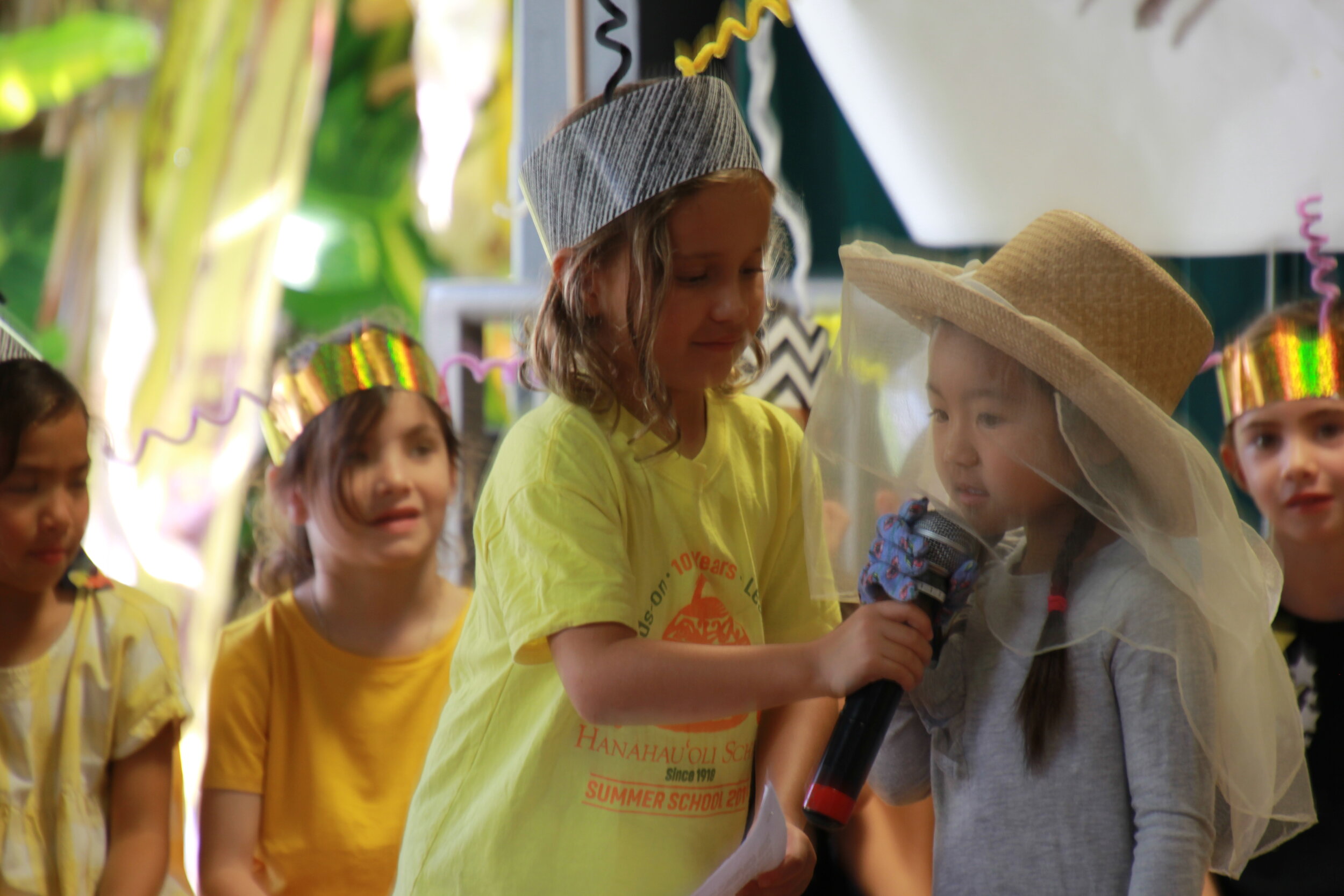
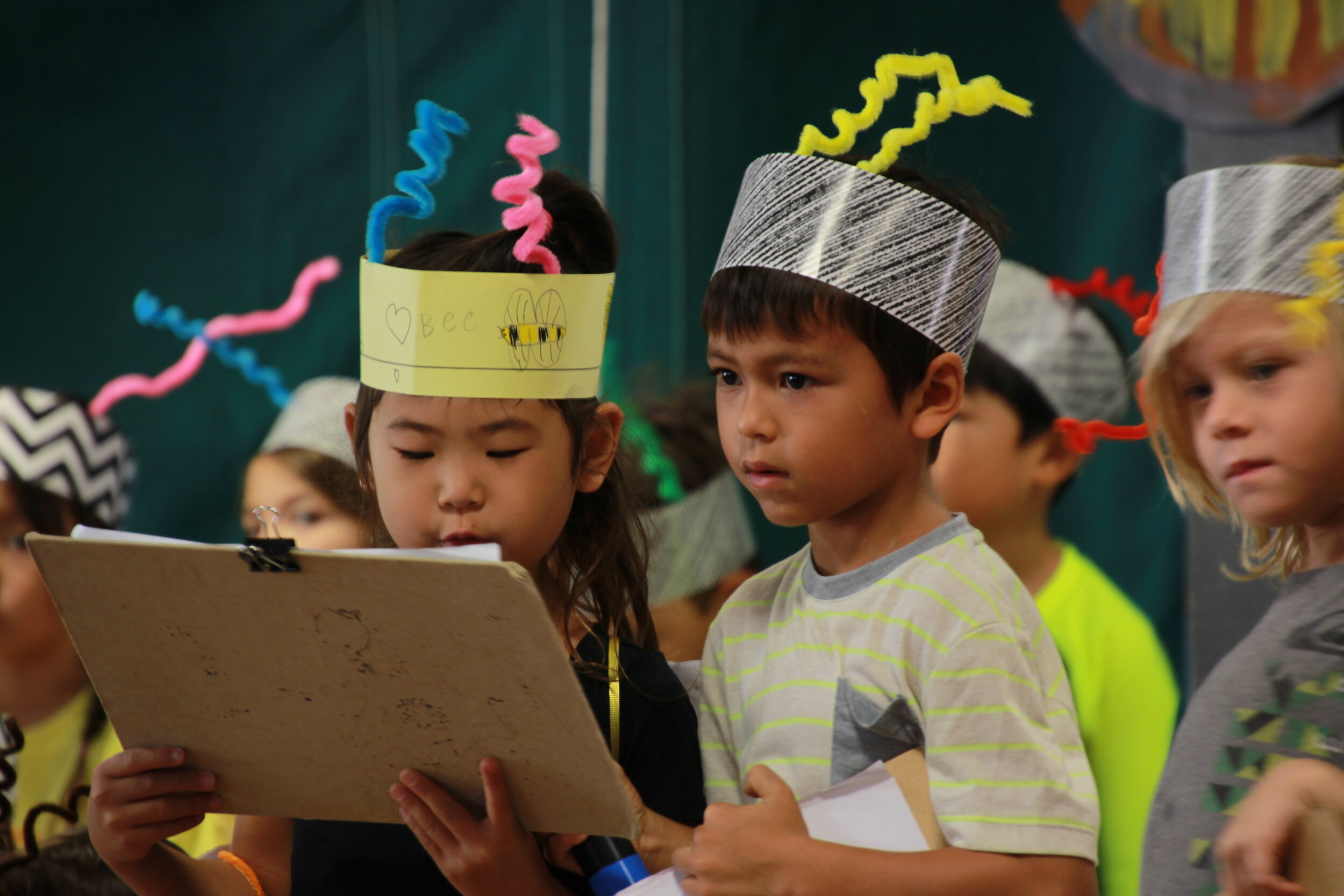
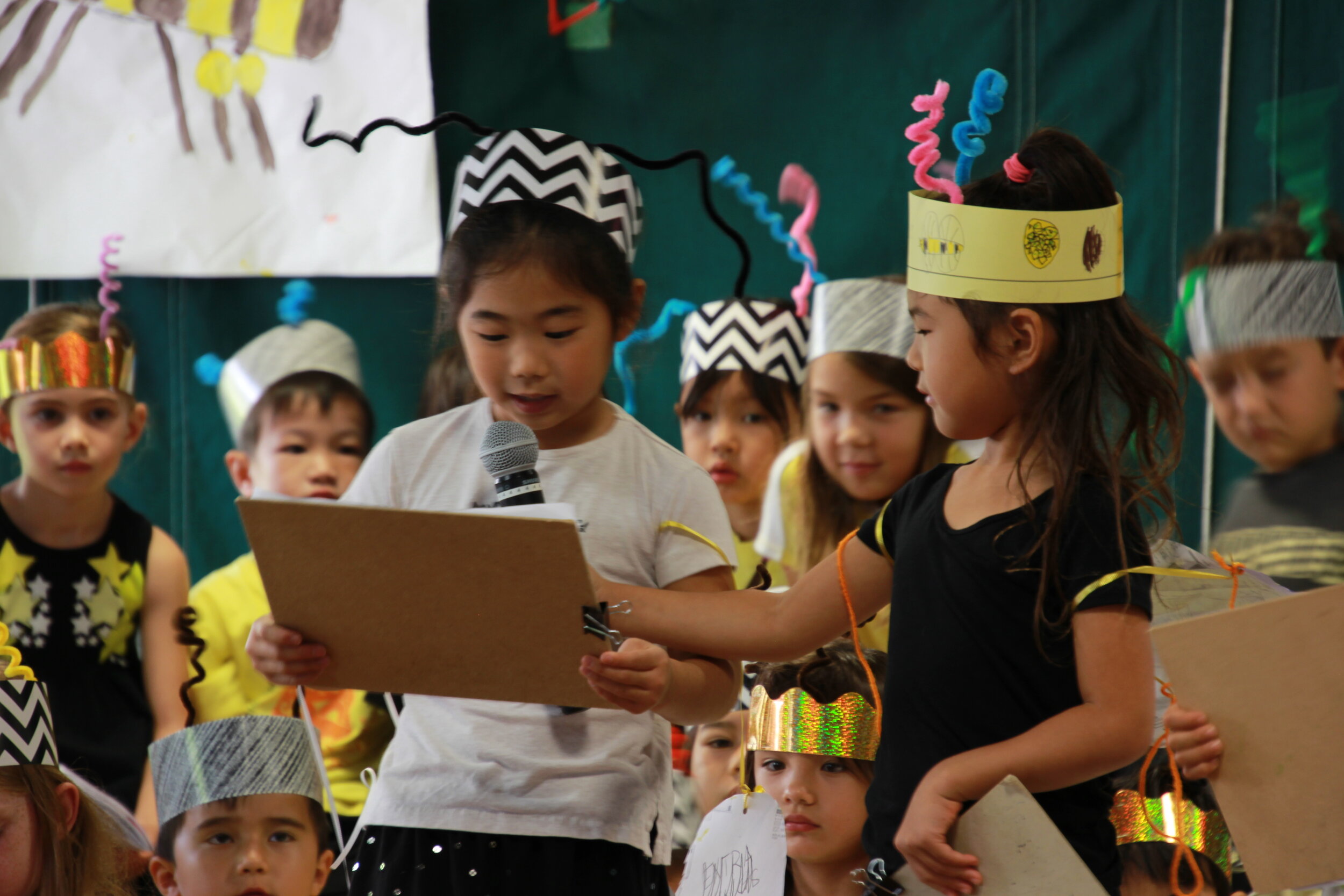
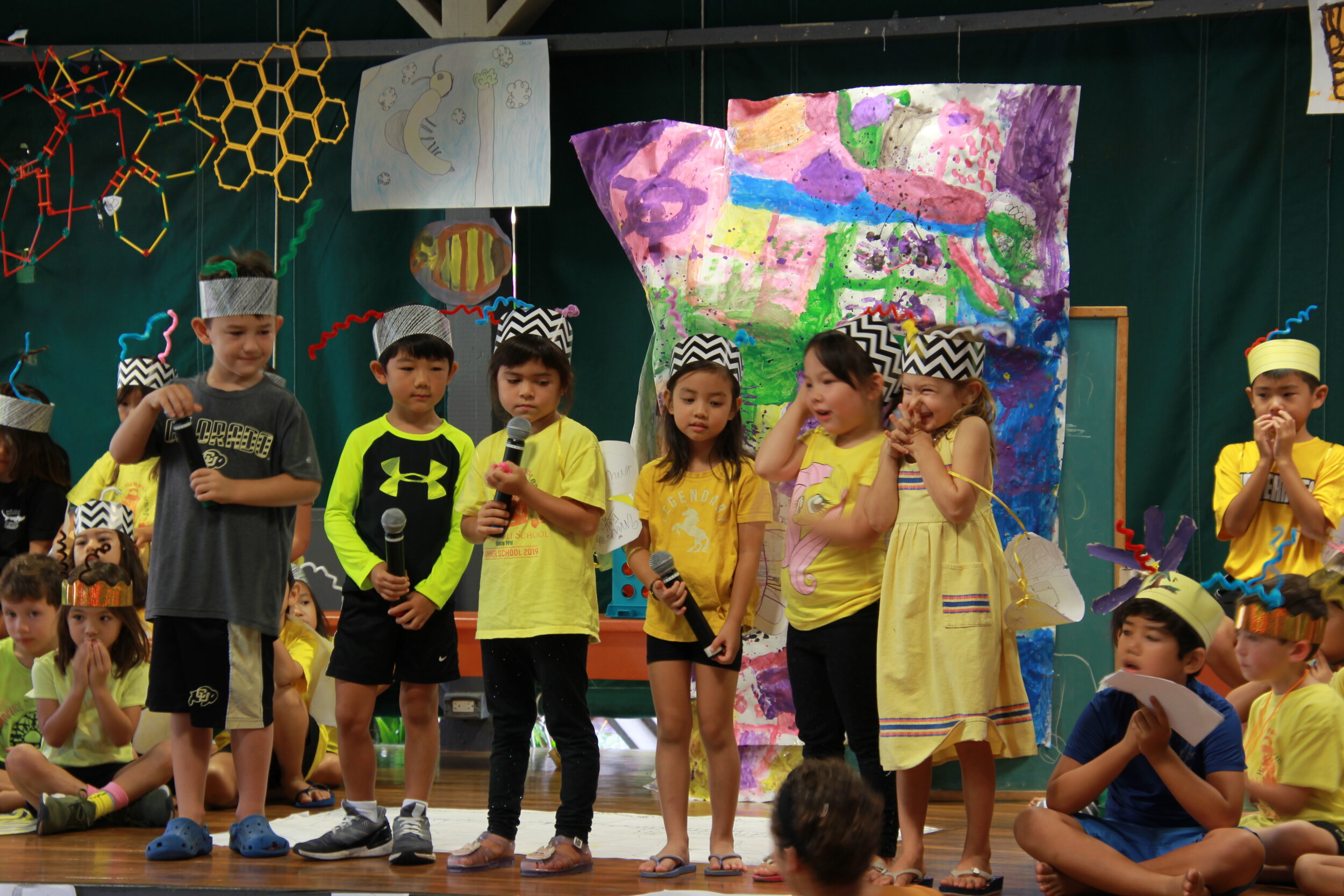
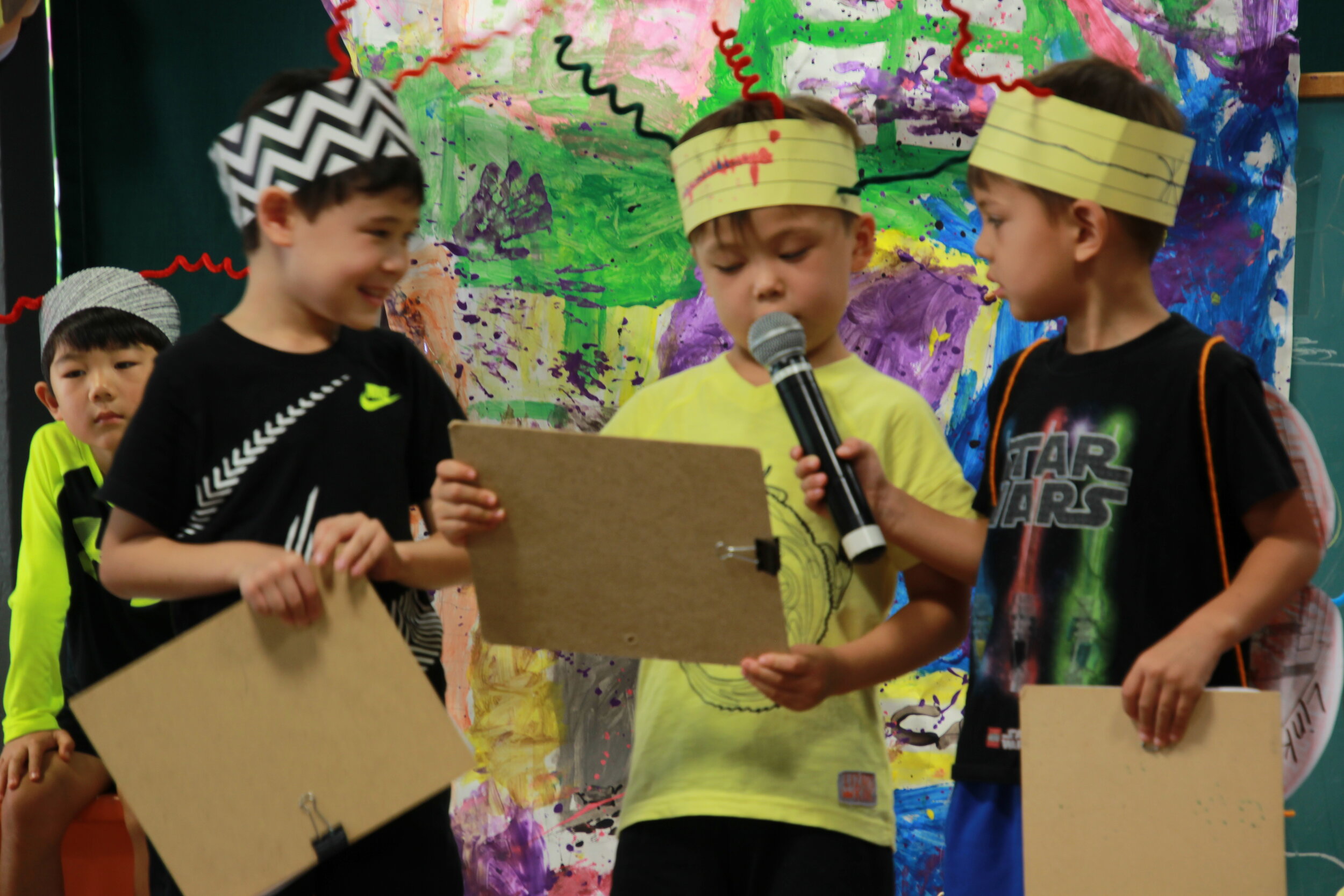
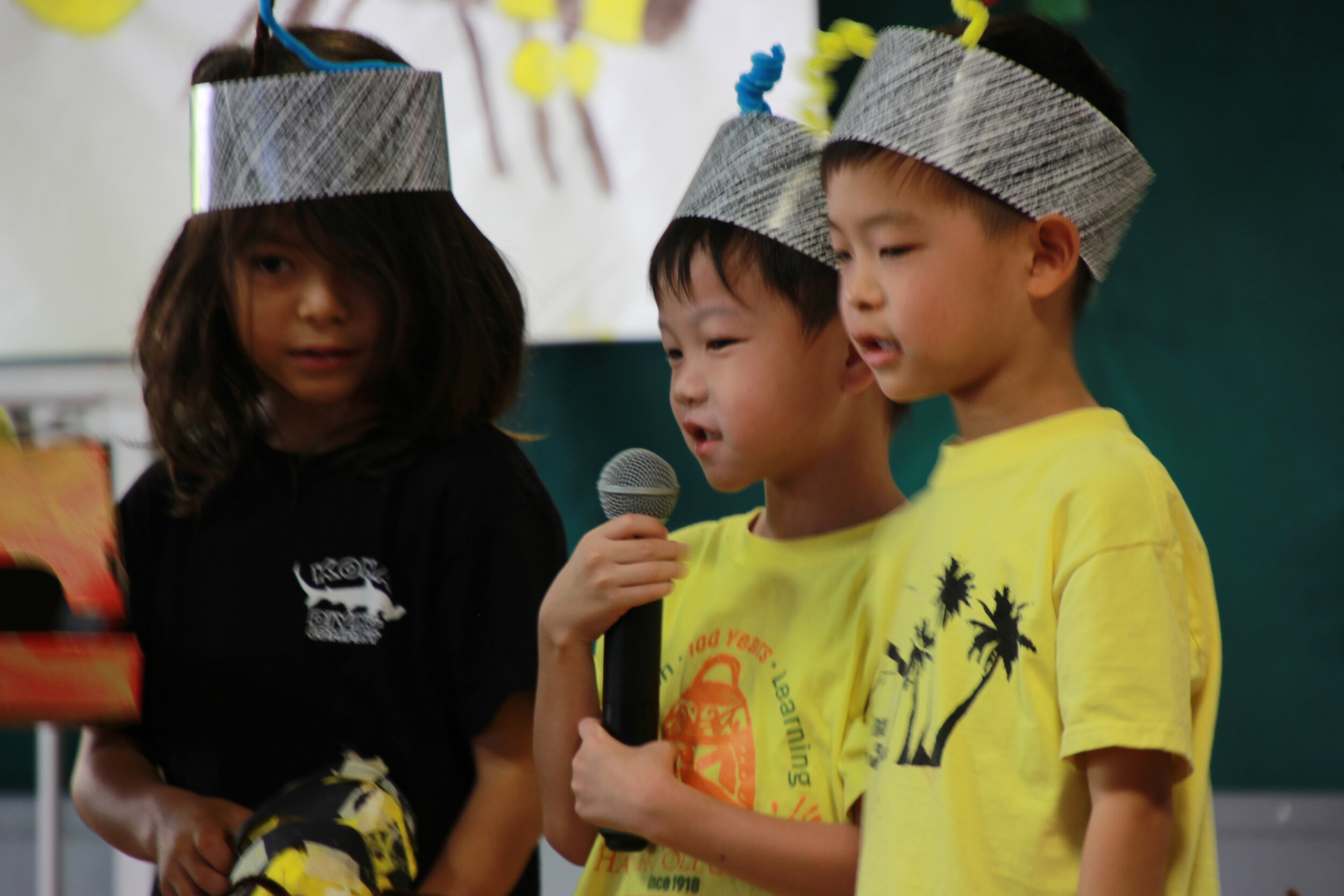
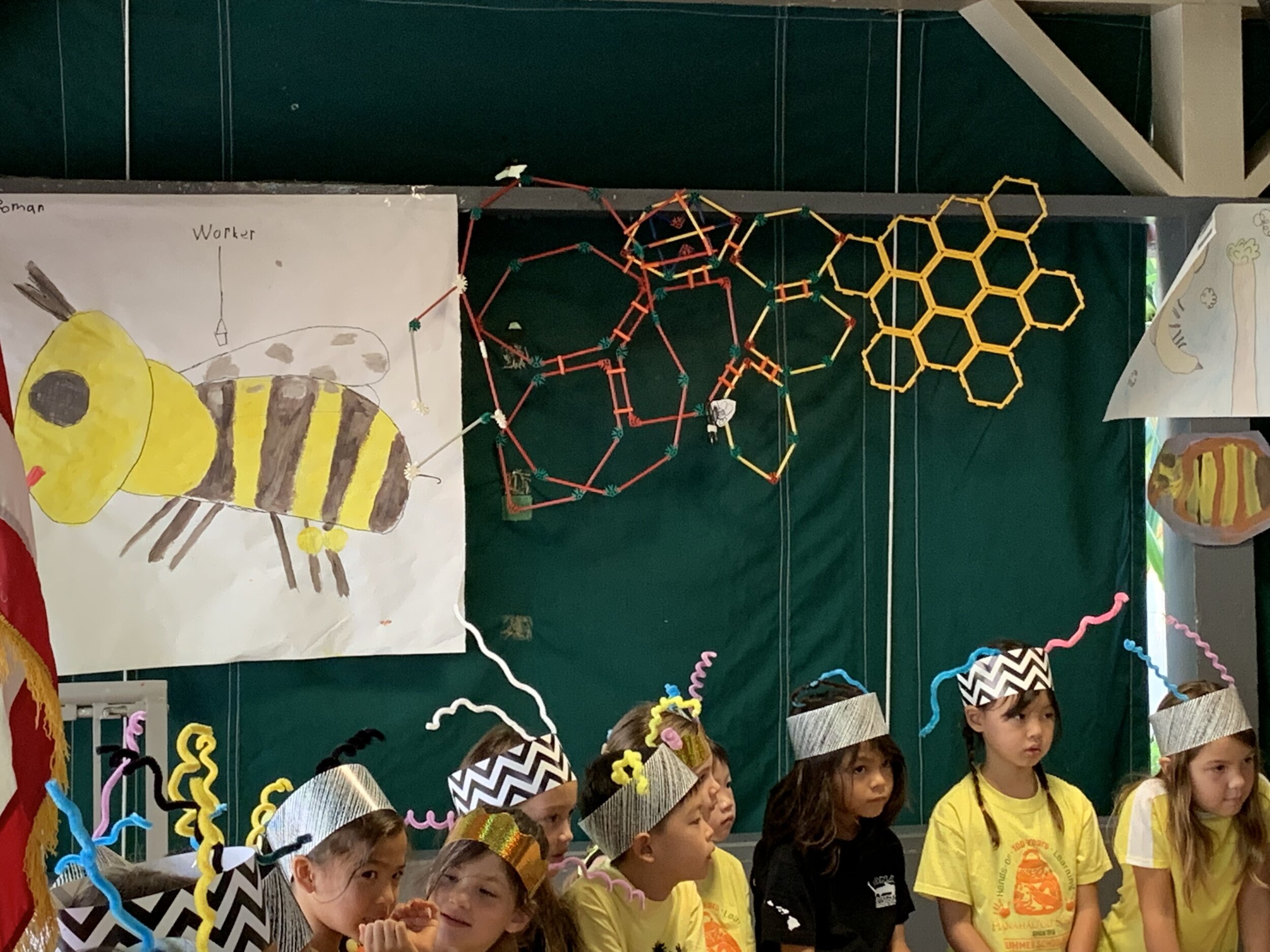
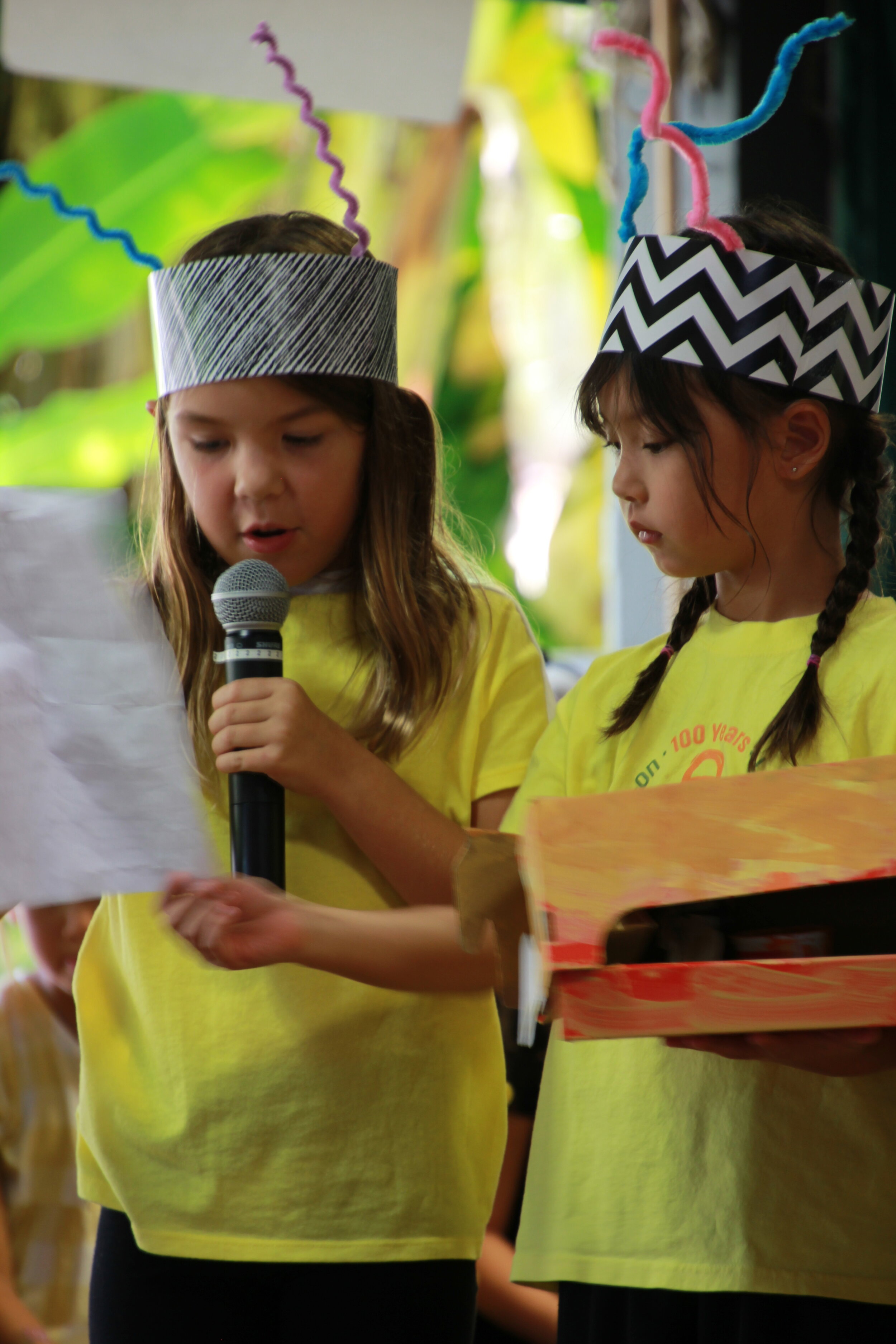
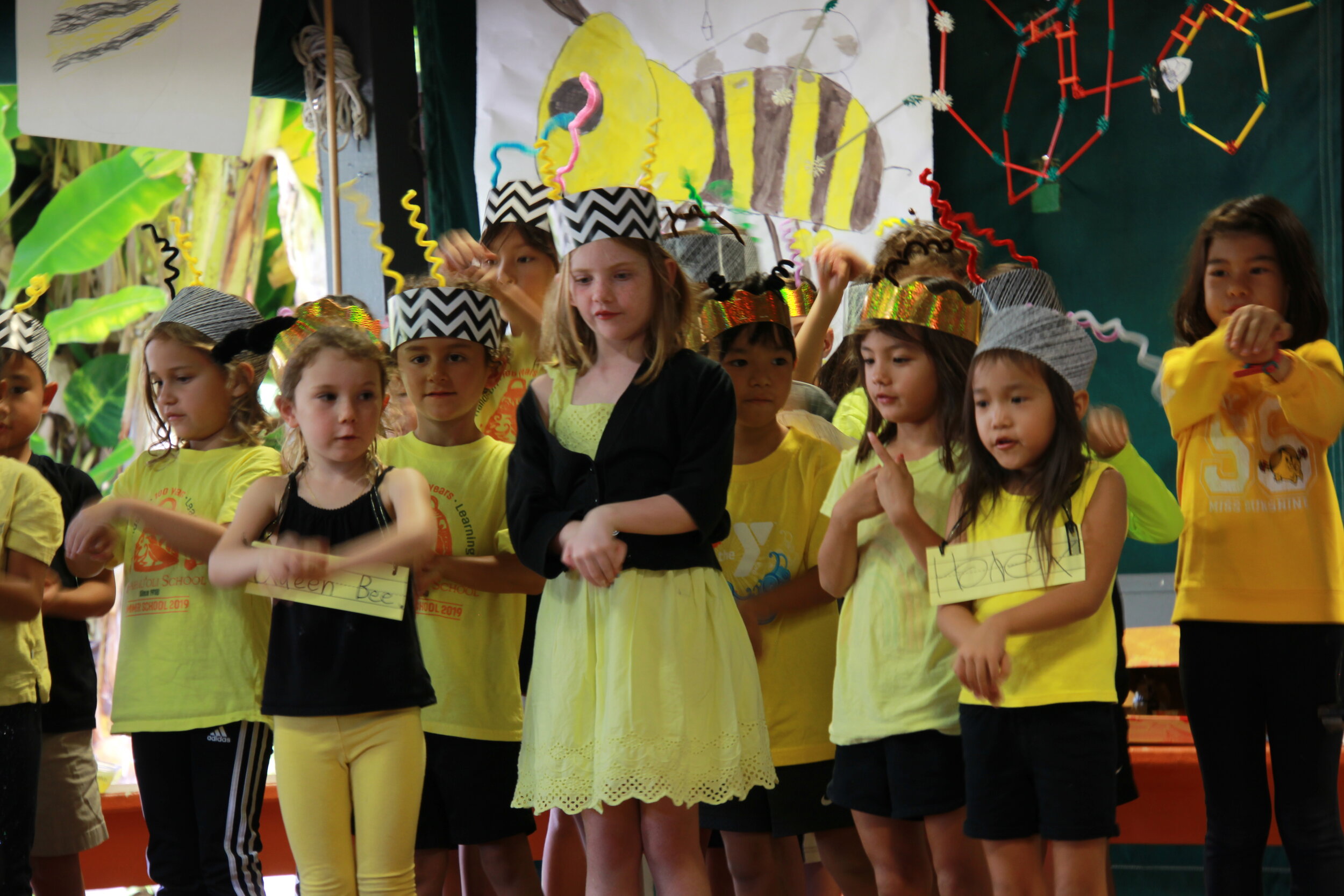
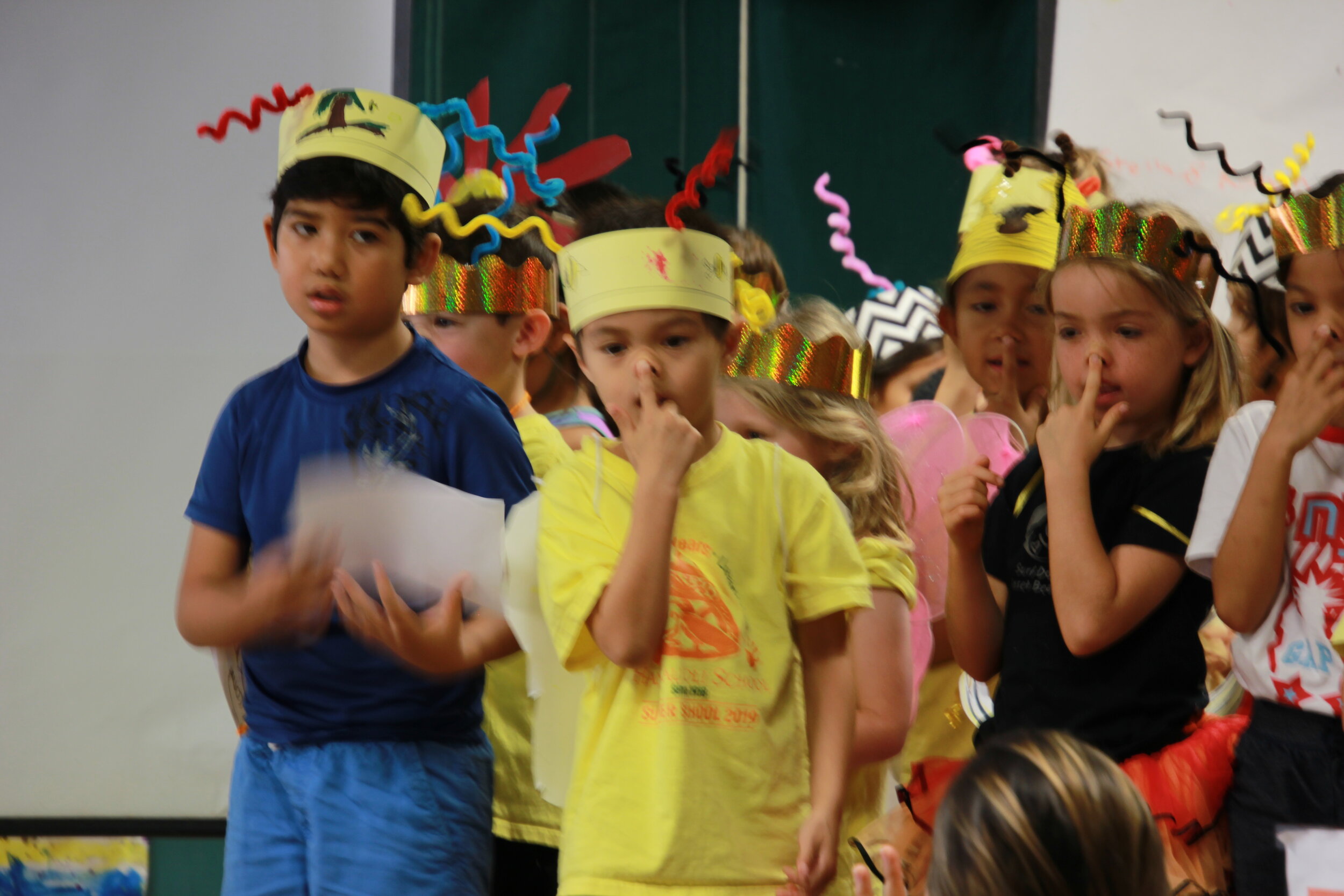
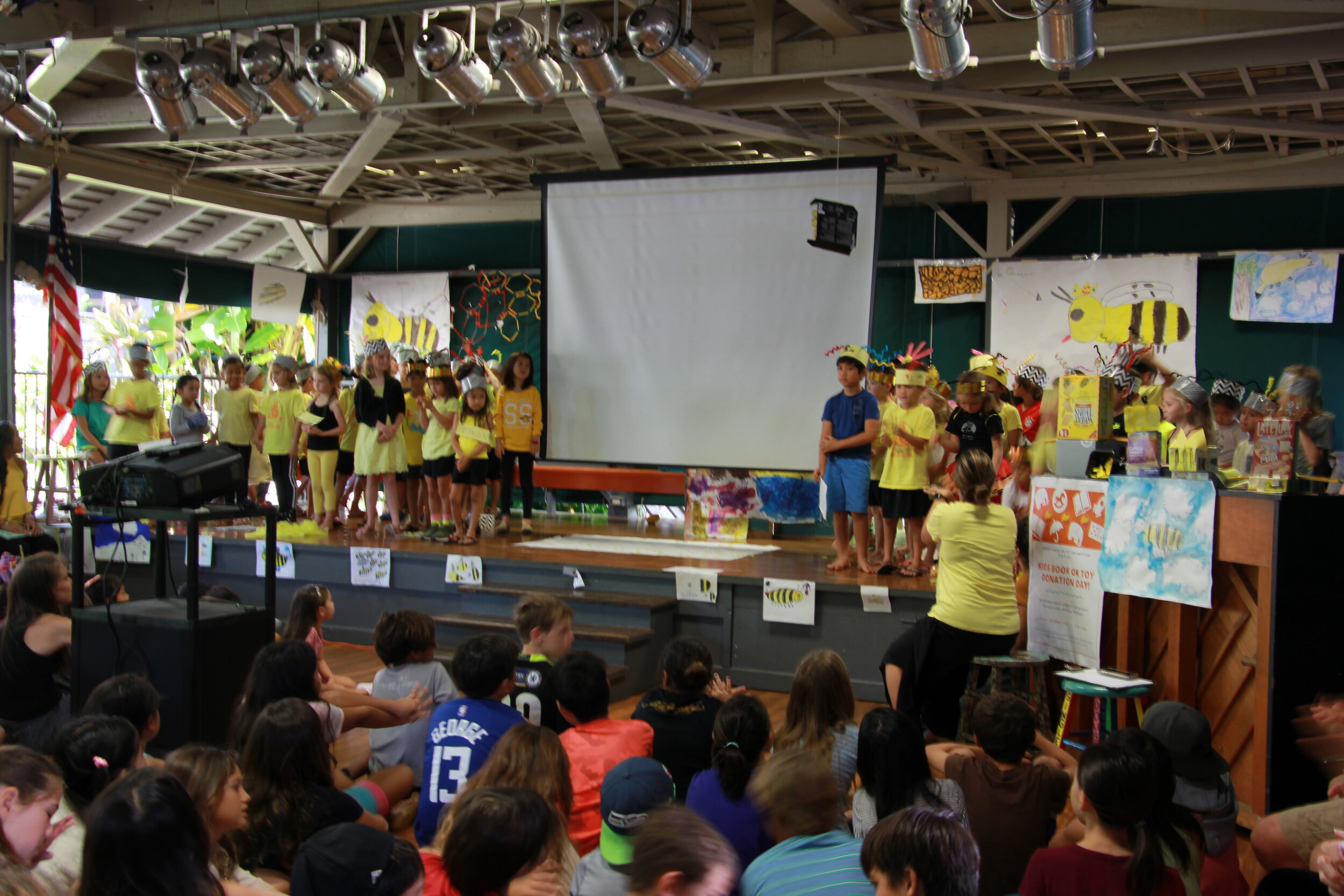
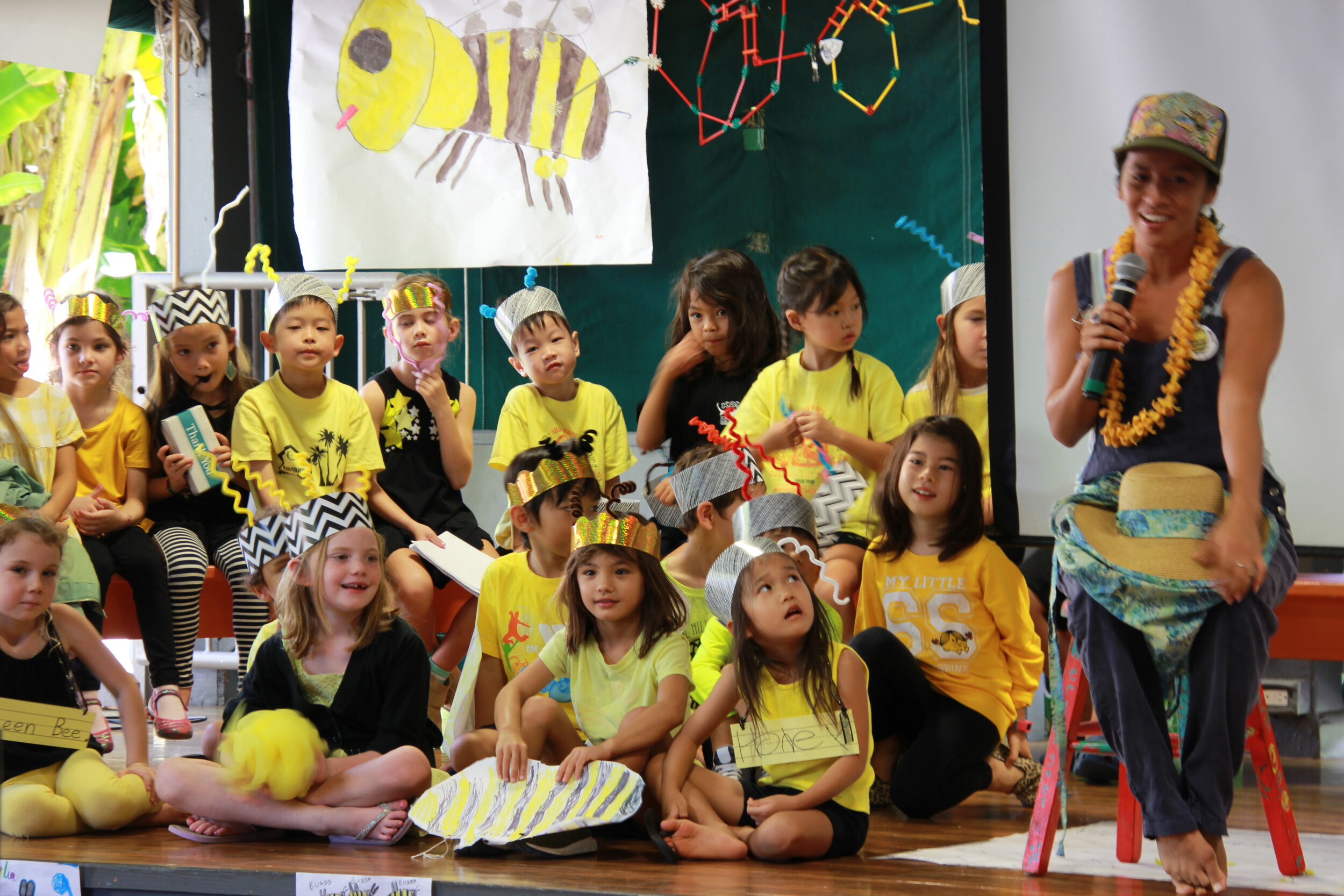
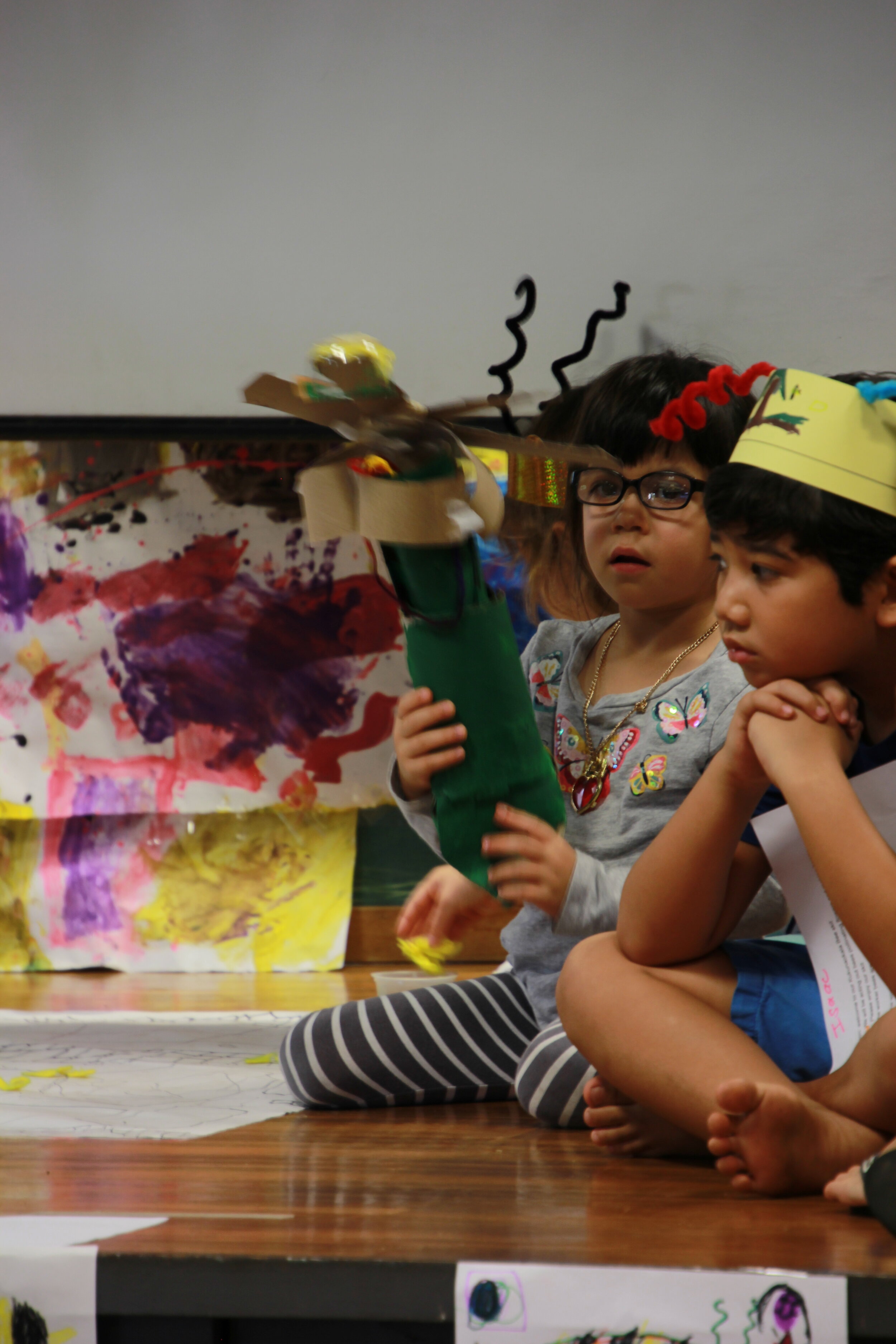
What a bee-utiful assembly Kukunaokalā (K-1) students performed for us. This assembly was based on our bees in the rainbow house, there was a hive living under a plank that was producing new bees every day. Kukunaokalā produced detailed drawings about bees, punts, a mini-play and had great costumes. I learned that it takes one bee 42 days to make 7 drops of honey, I am wondering how much time it takes to make a full bottle of delicious honey. I also learned that a queen bee can lay 2,000 eggs in one day! After Kukunaokalā laid all of the facts down they introduced a beekeeper they called Aunty Jasmine. She helped take the bees out of the rainbow house by finding the queen and without hurting any one of them.  Aunty Jasmine was at the assembly to answer any other questions that we had. There were a lot of questions, to a very interesting topic. Bees are a very wonderful insects to have in this society. If not for them, we would have almost no fruit as bees are responsible for pollinating flowers and we couldn’t enjoy smooth and sweet honey. I hope that everyone understands the impact and importance for humans.


6th Grade Camp Mokuleia Assembly

6th Grade Camp Assembly Blog

By Elle ’20

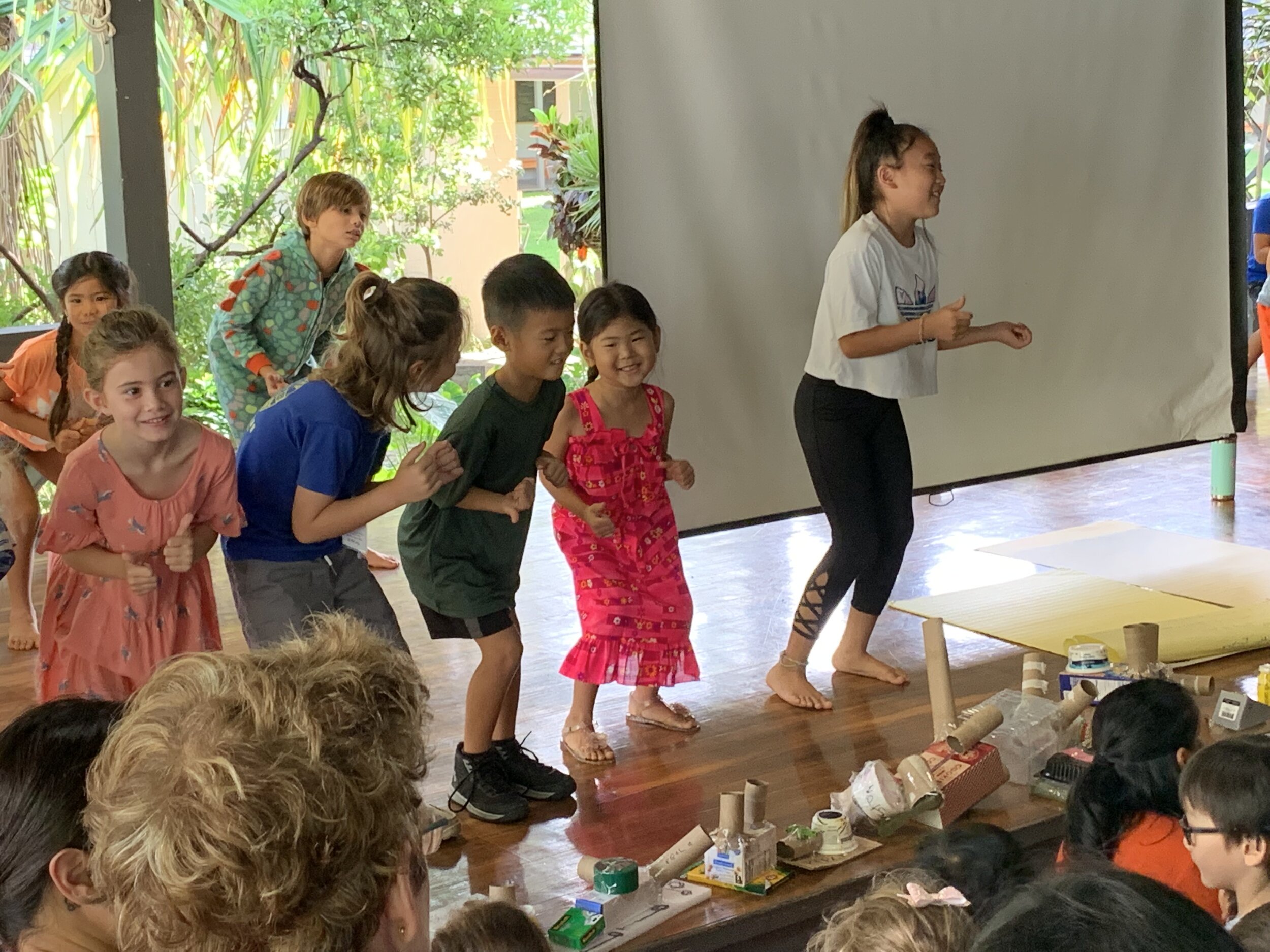
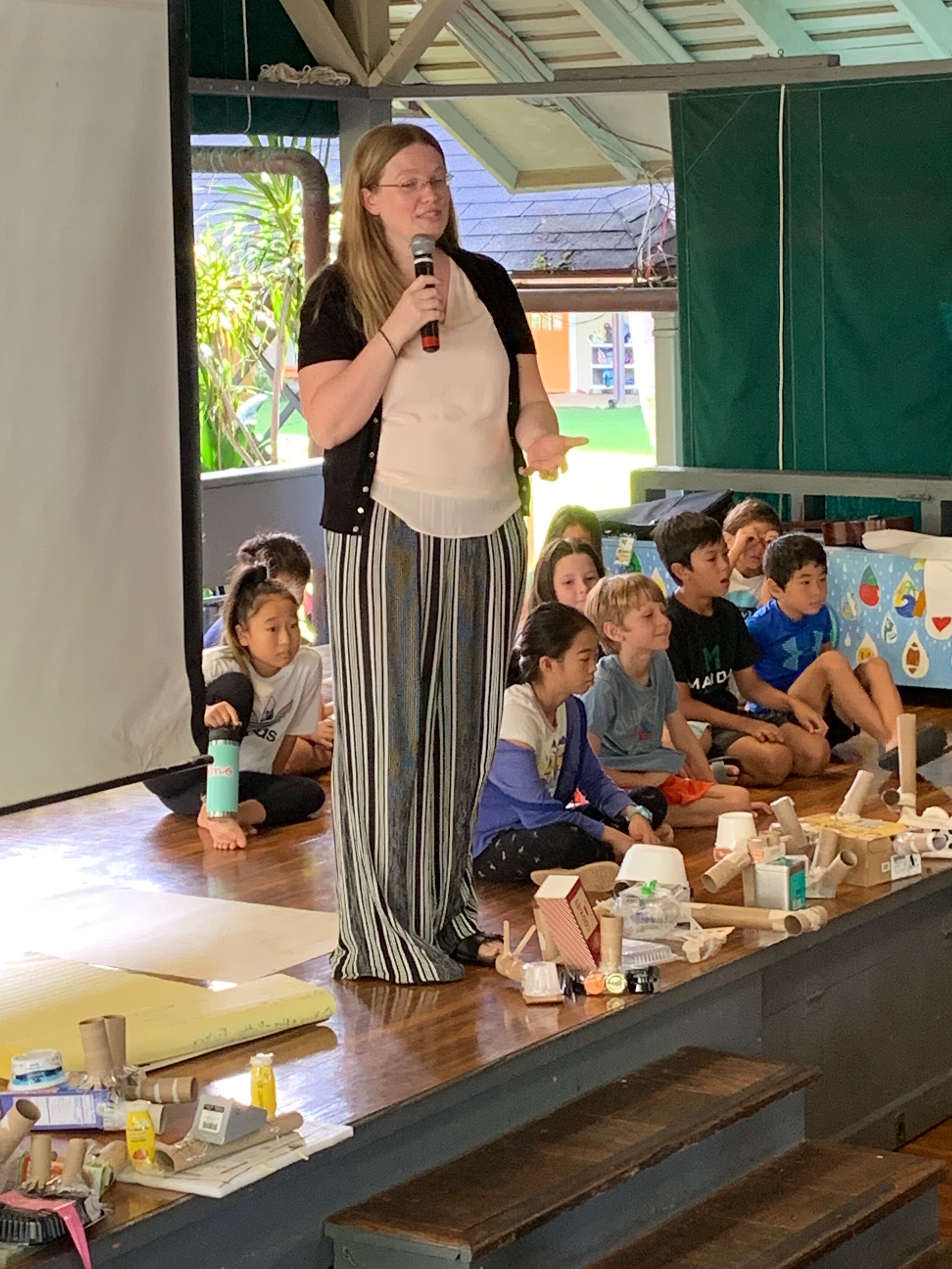
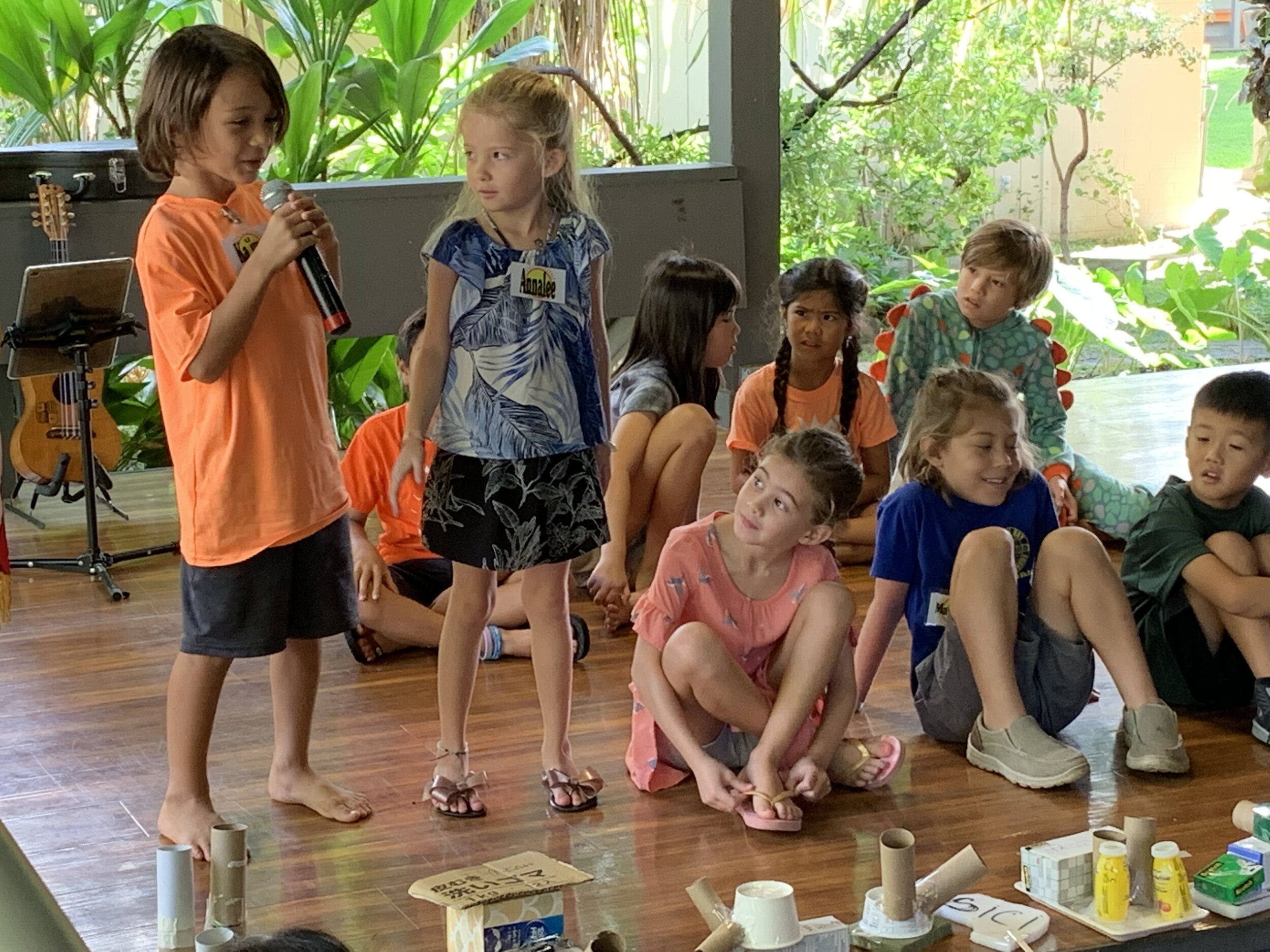
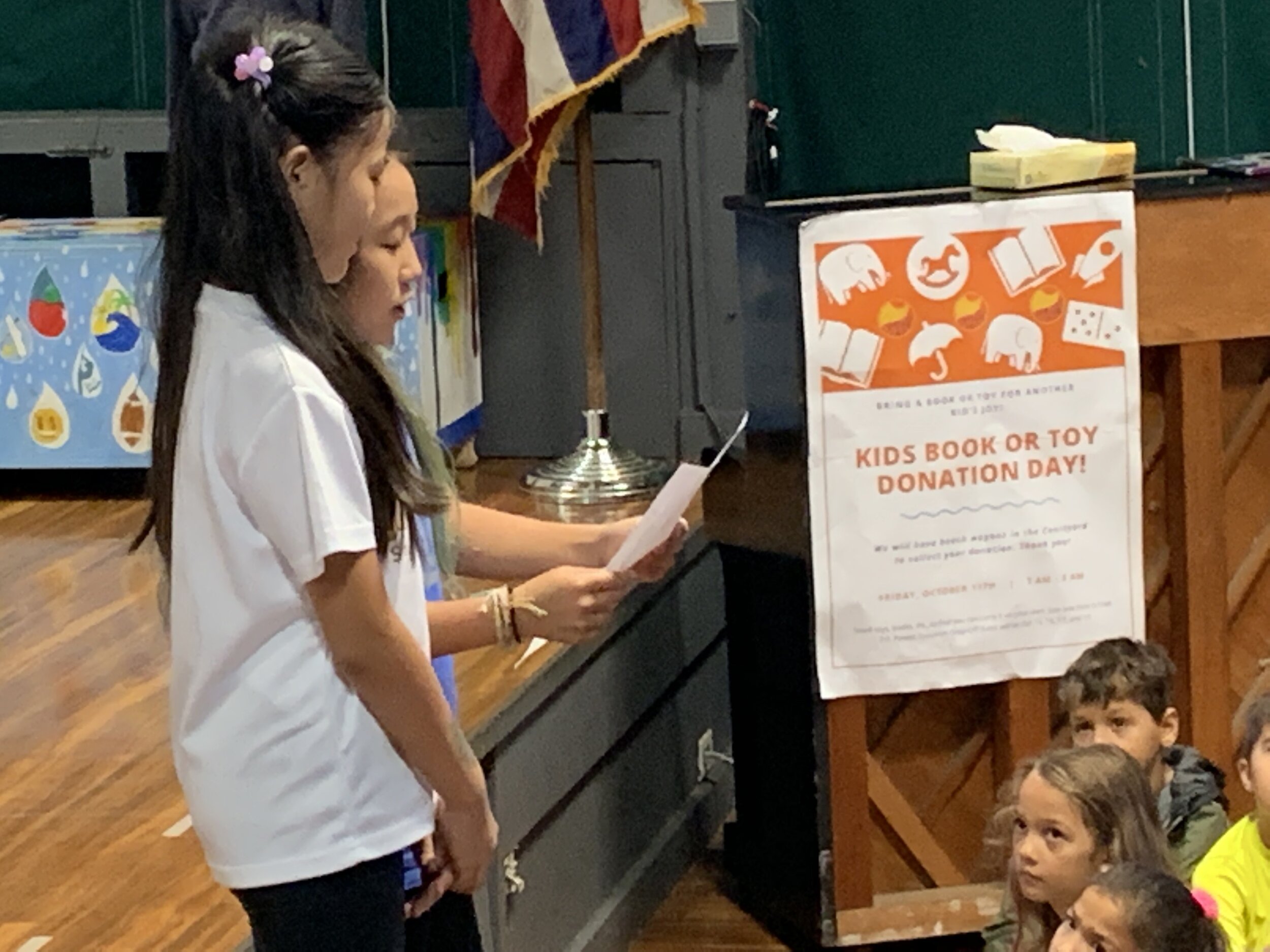
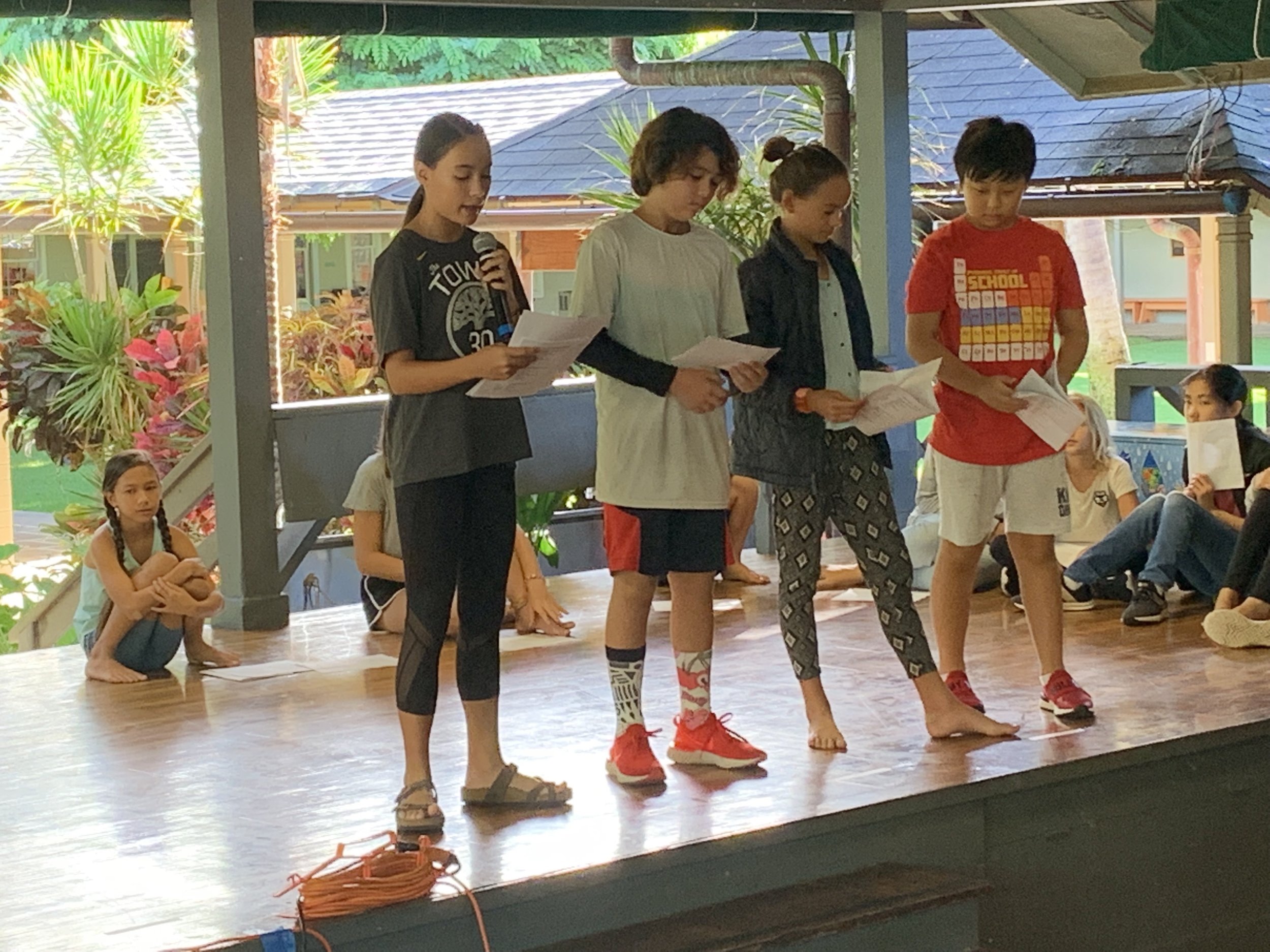
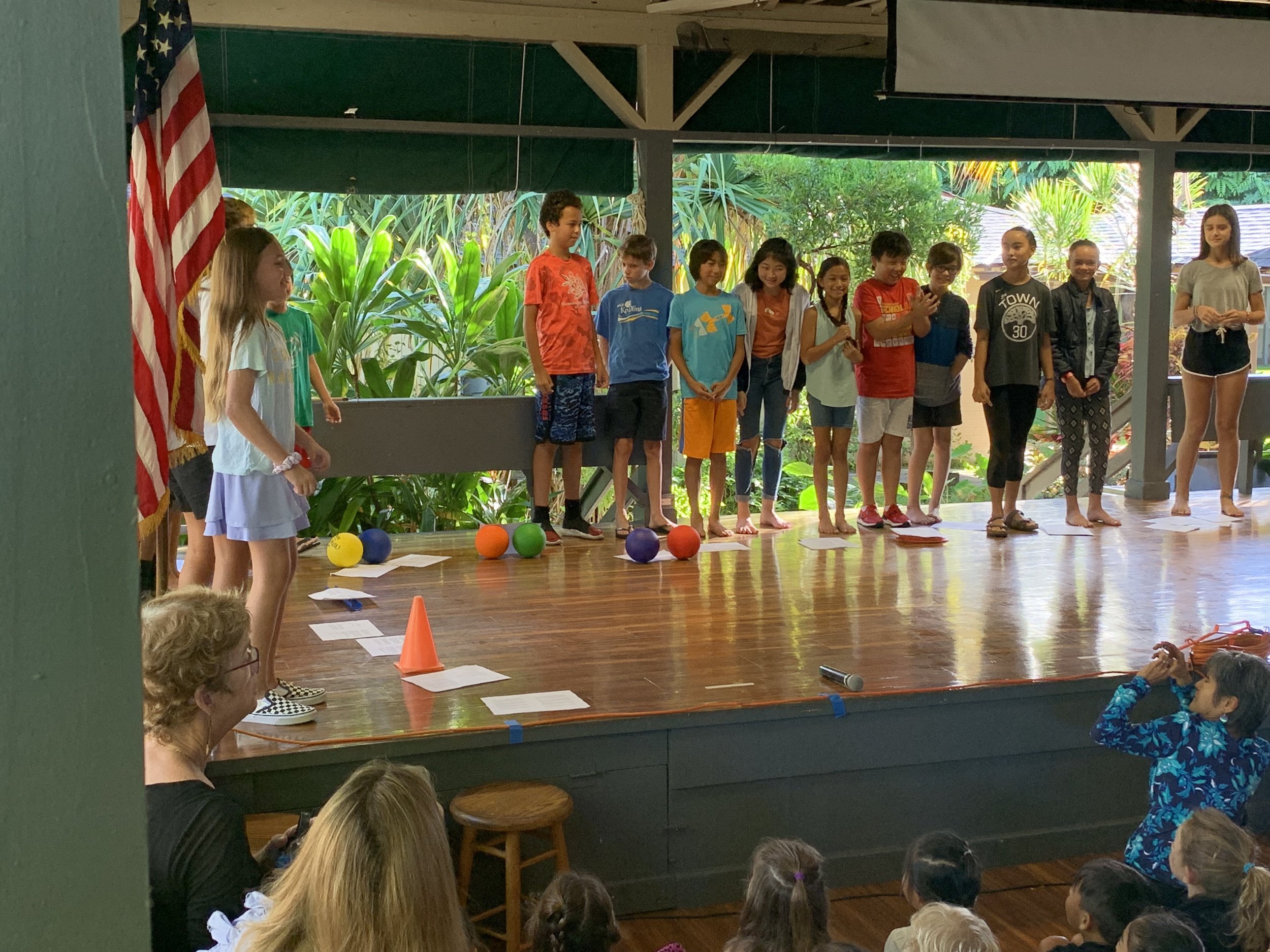
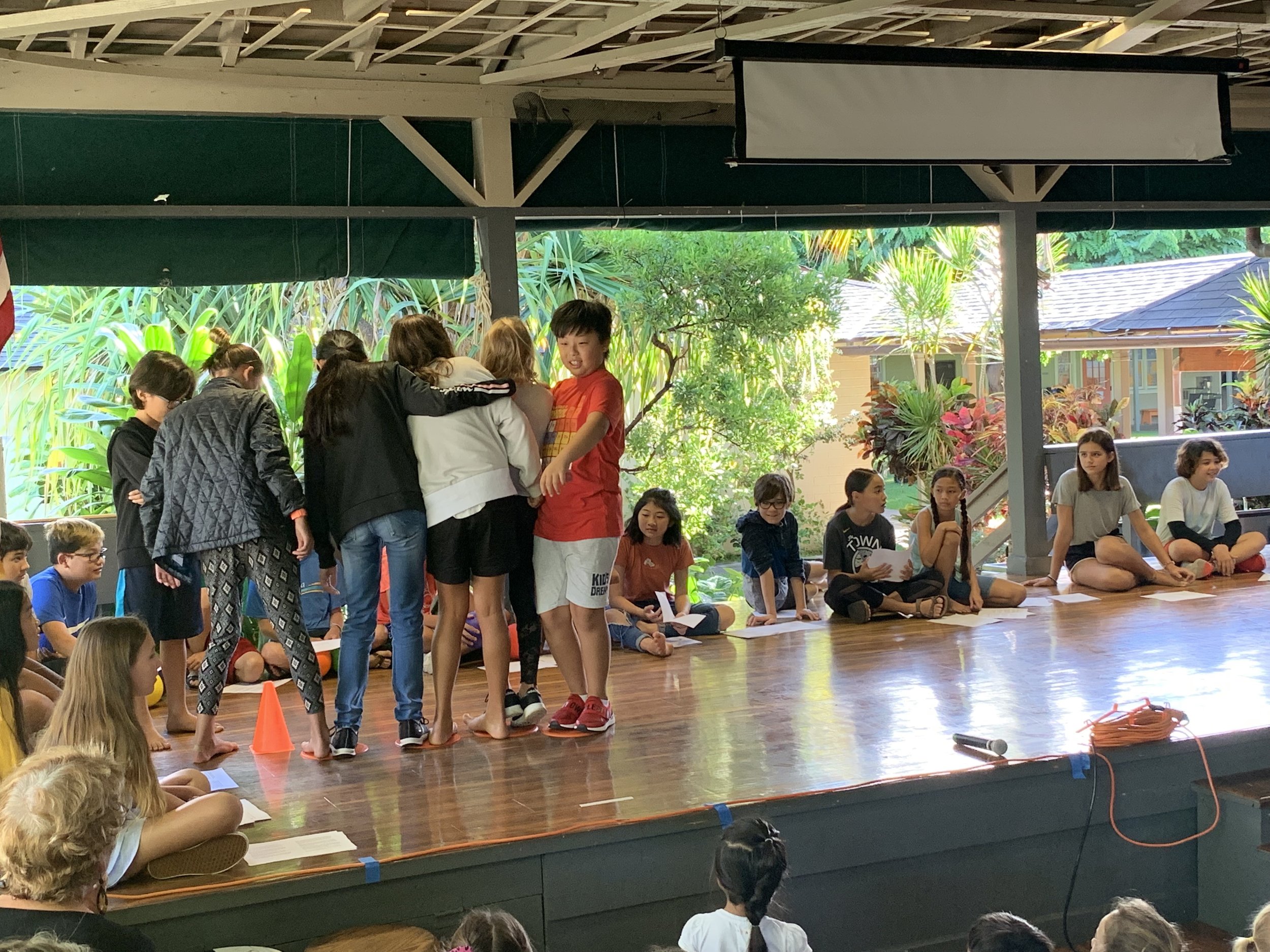
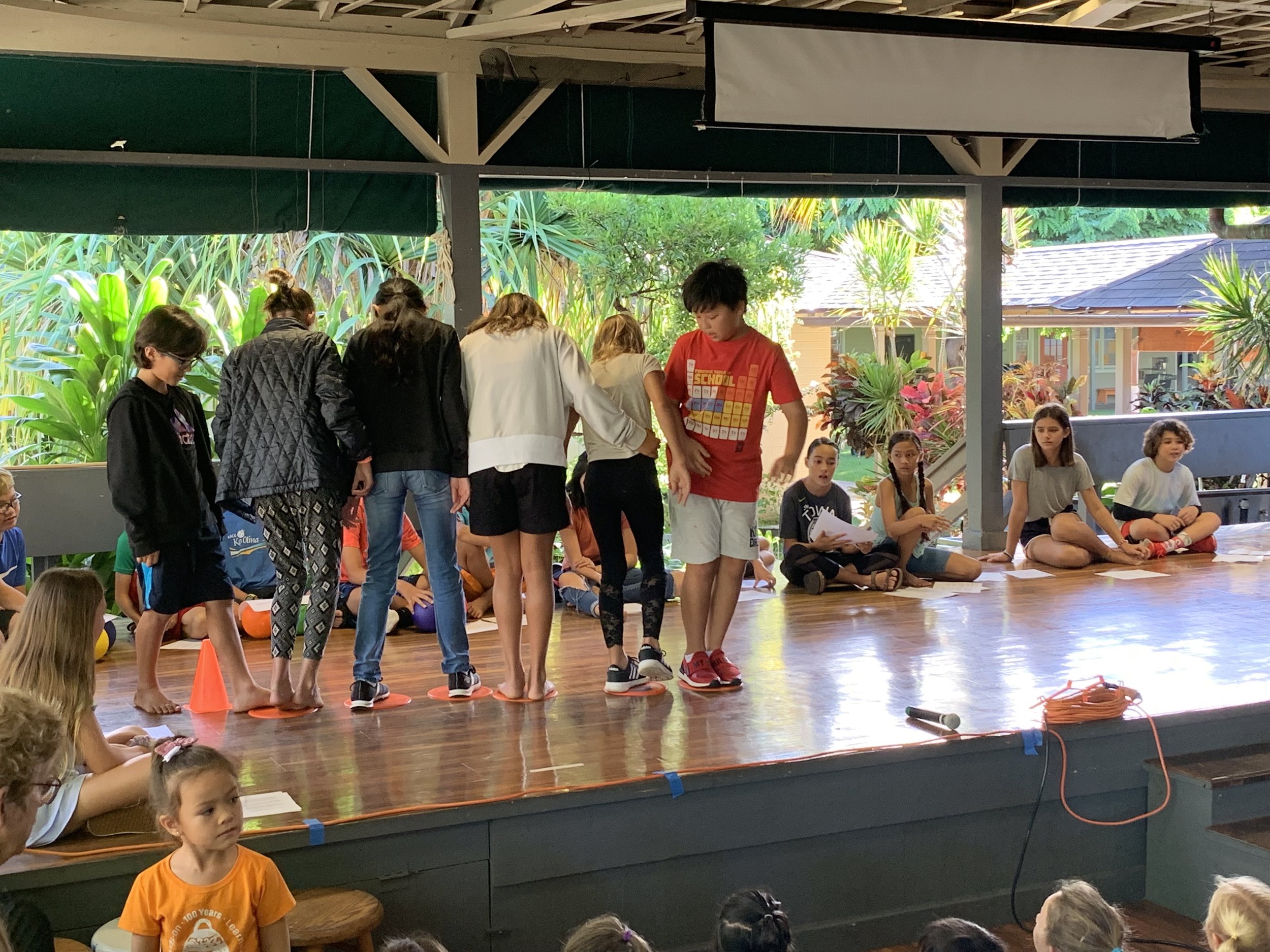
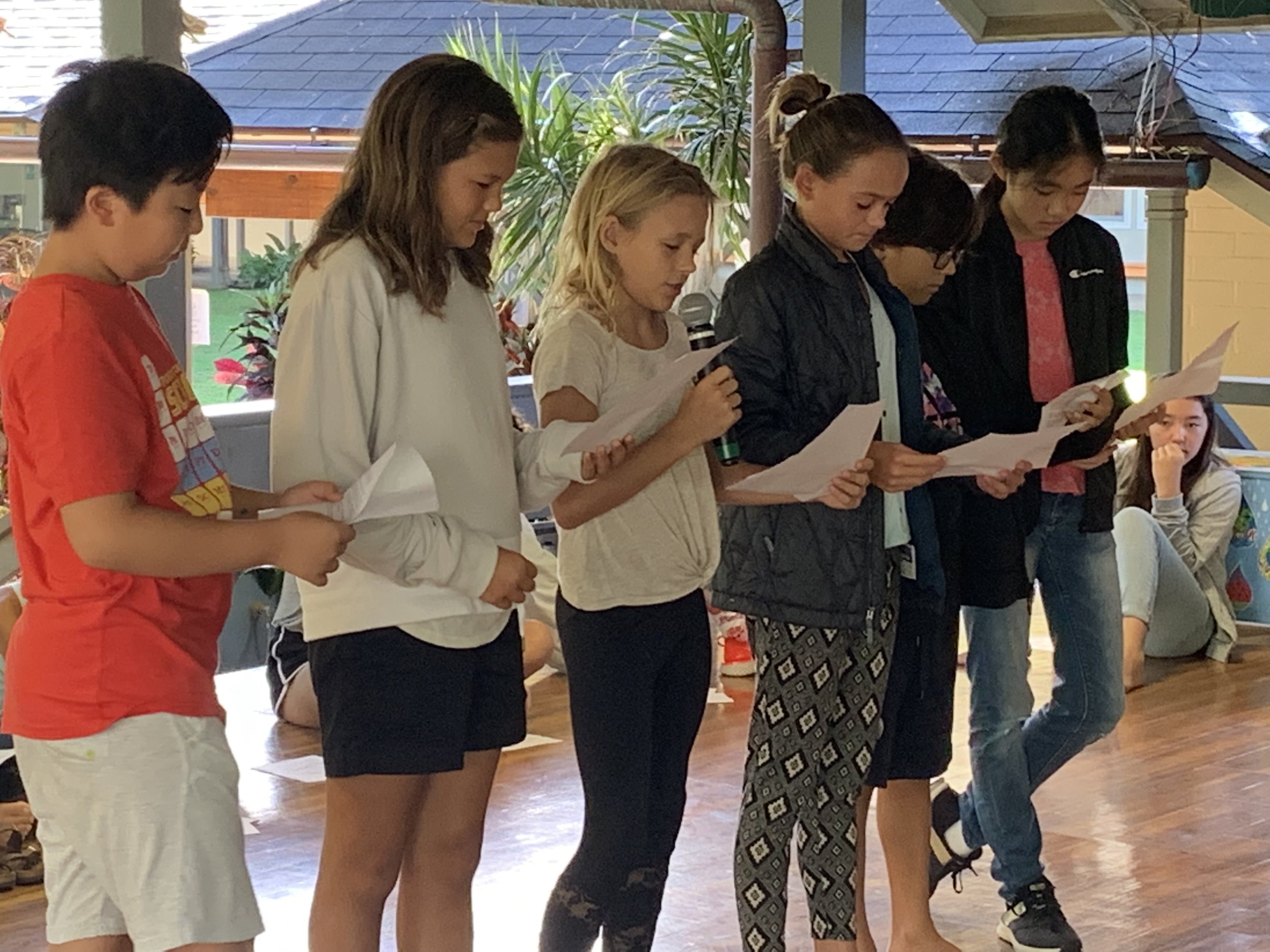
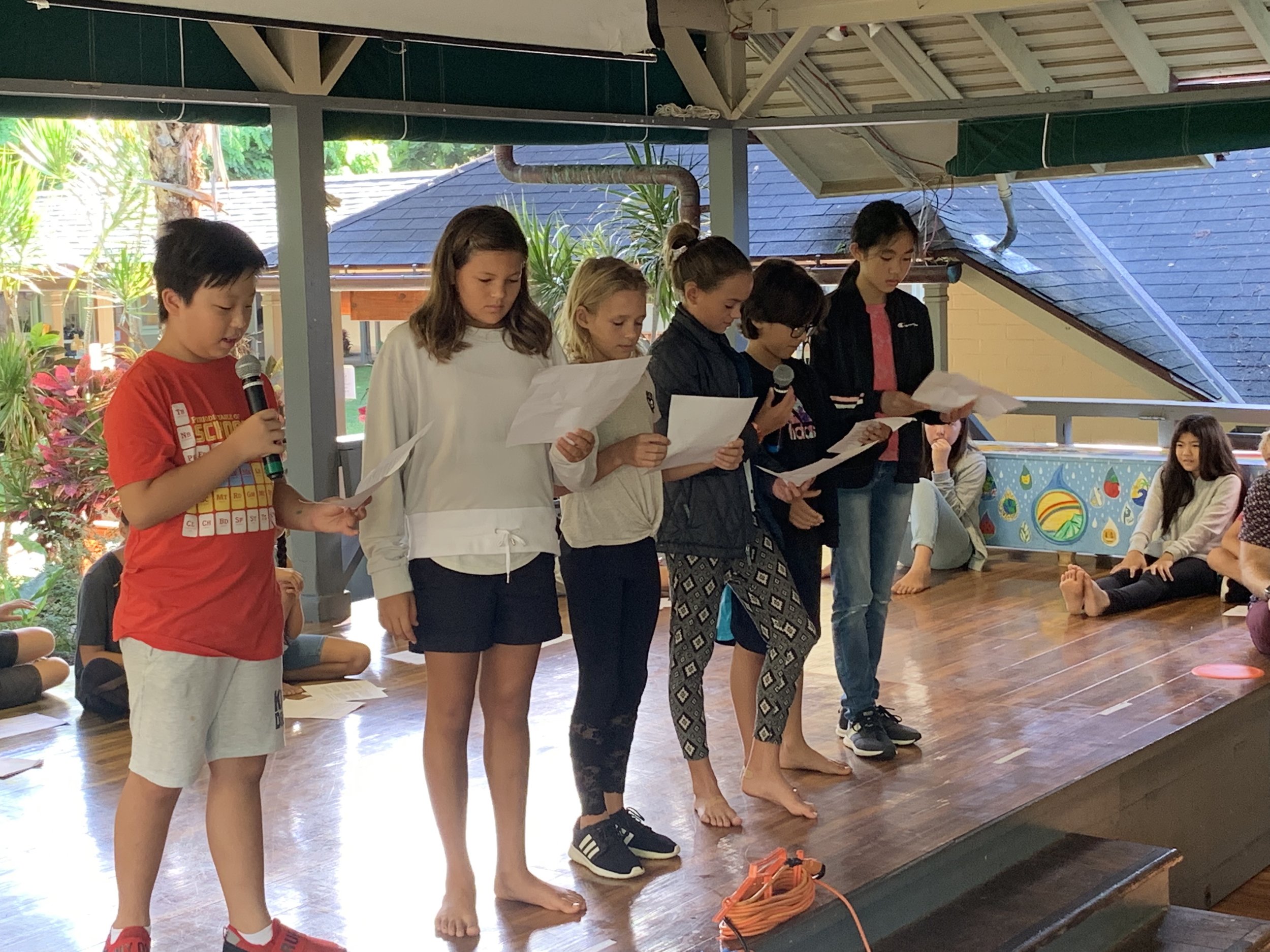
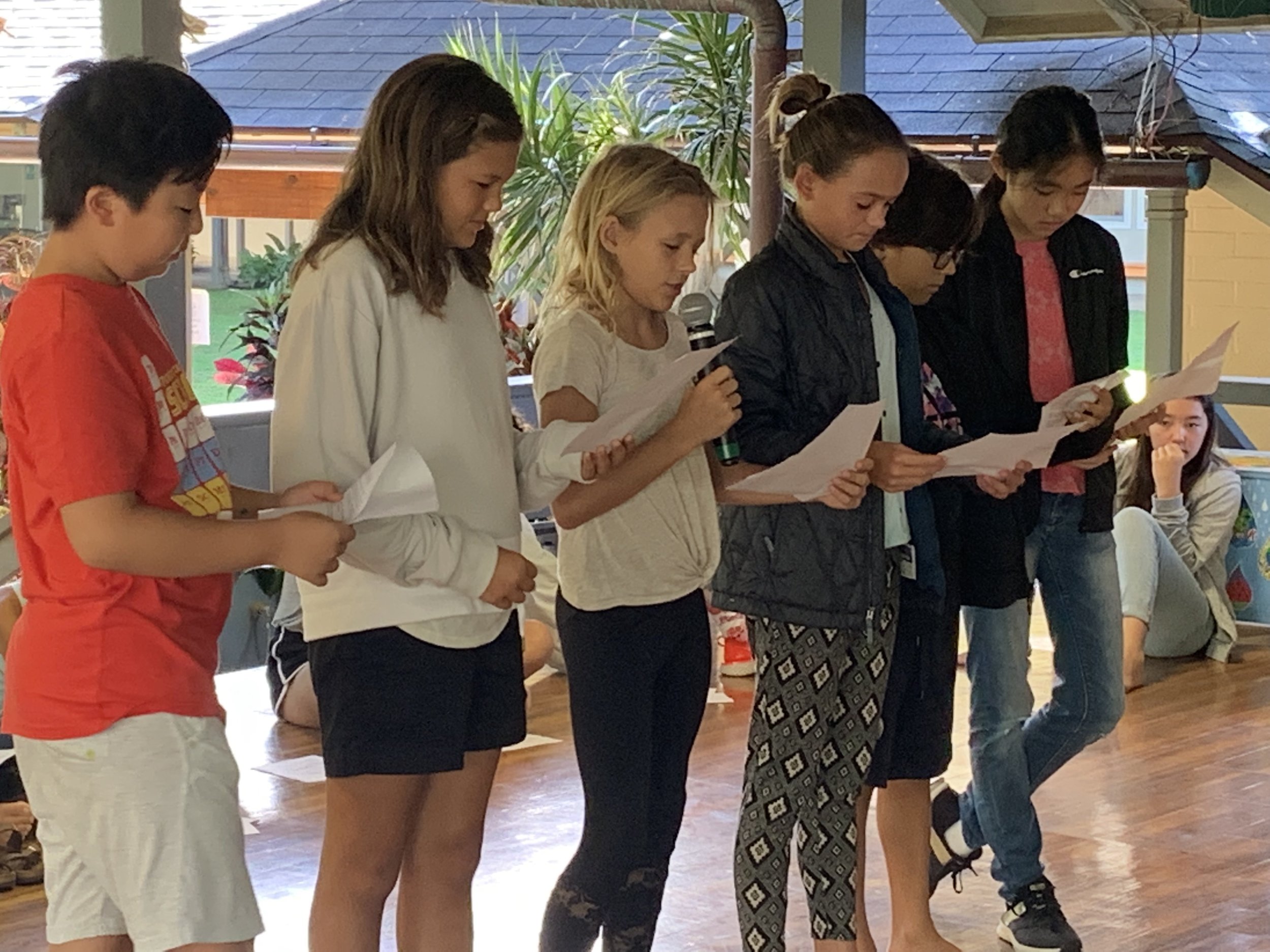
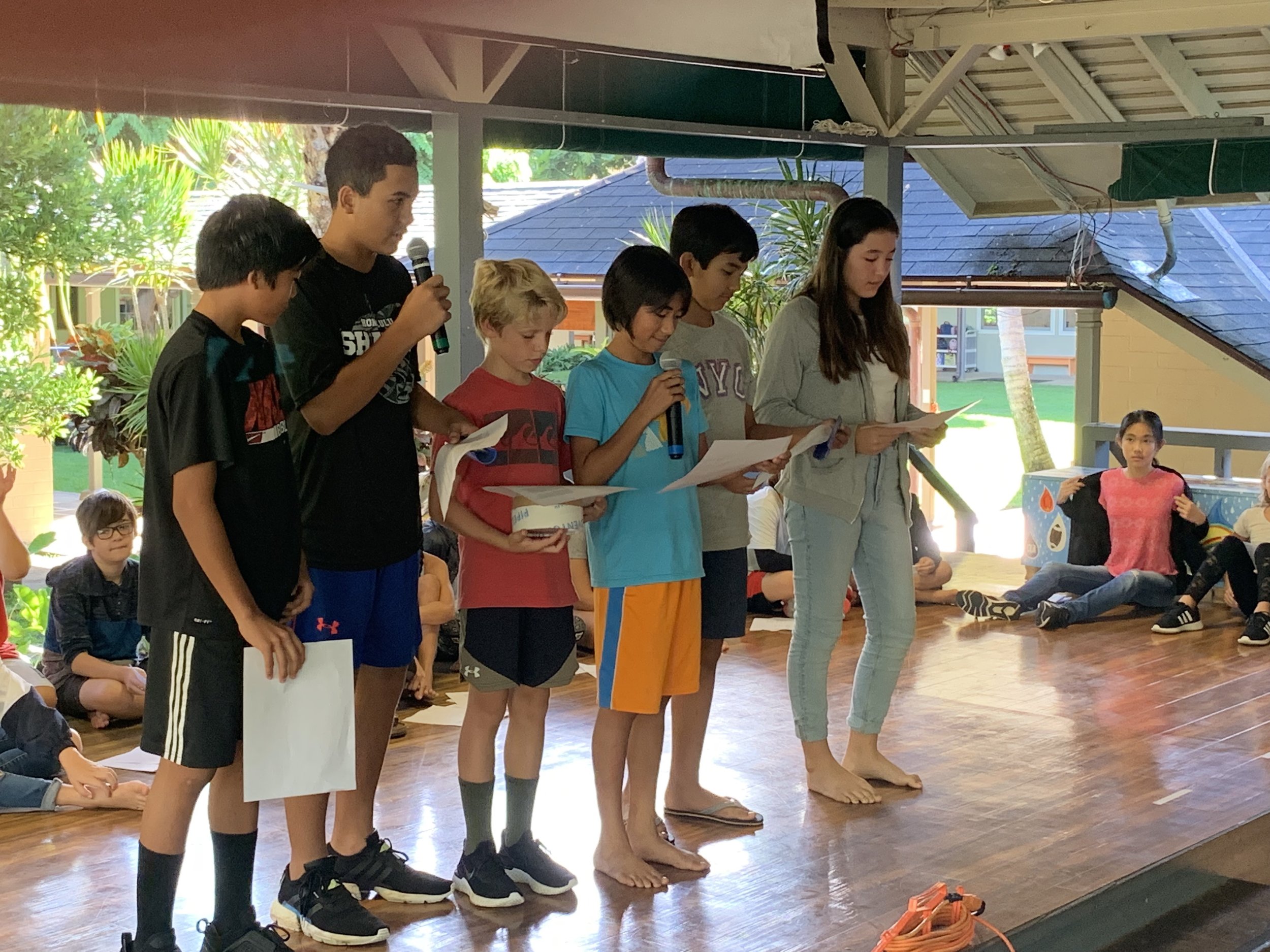
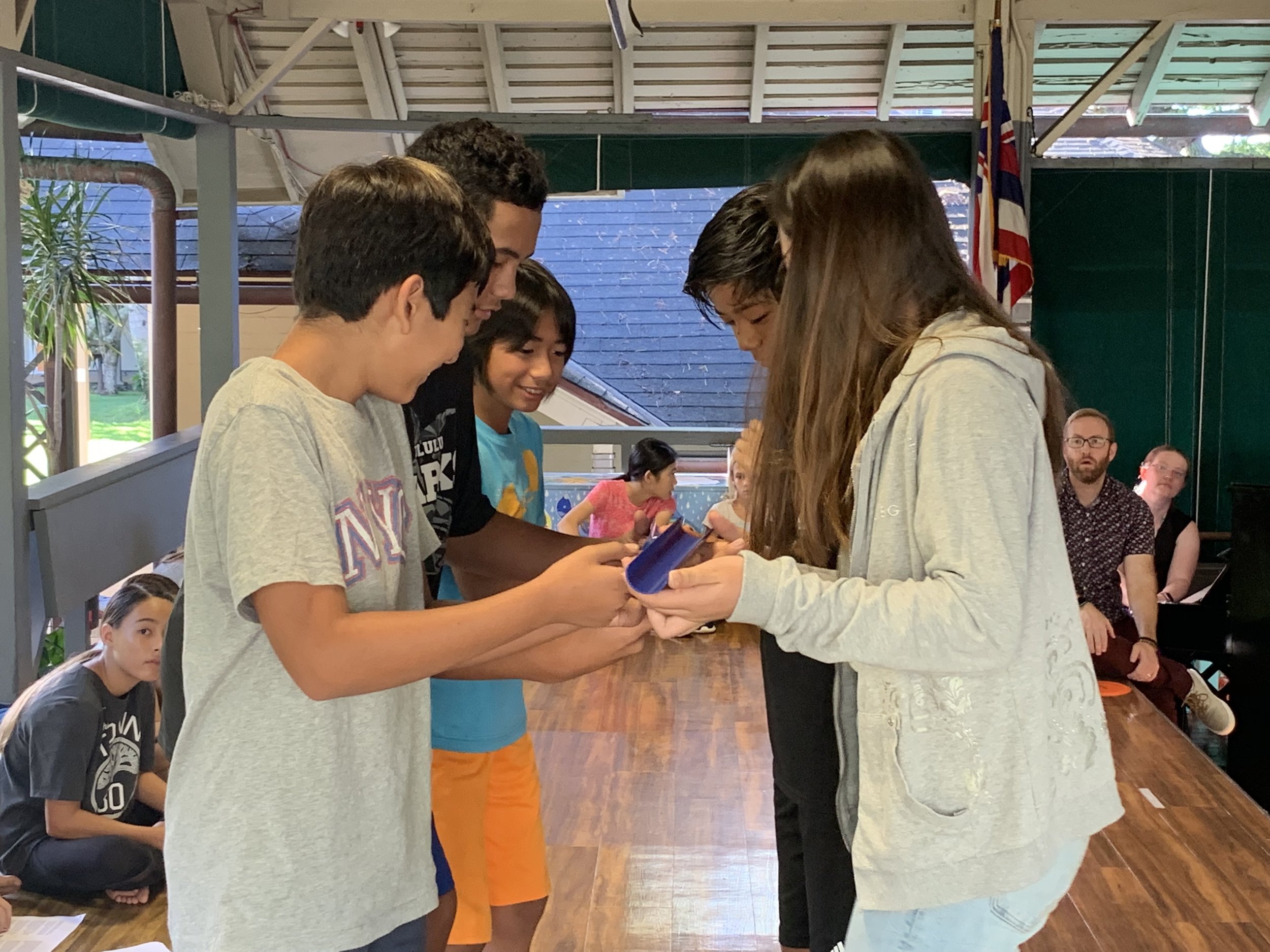
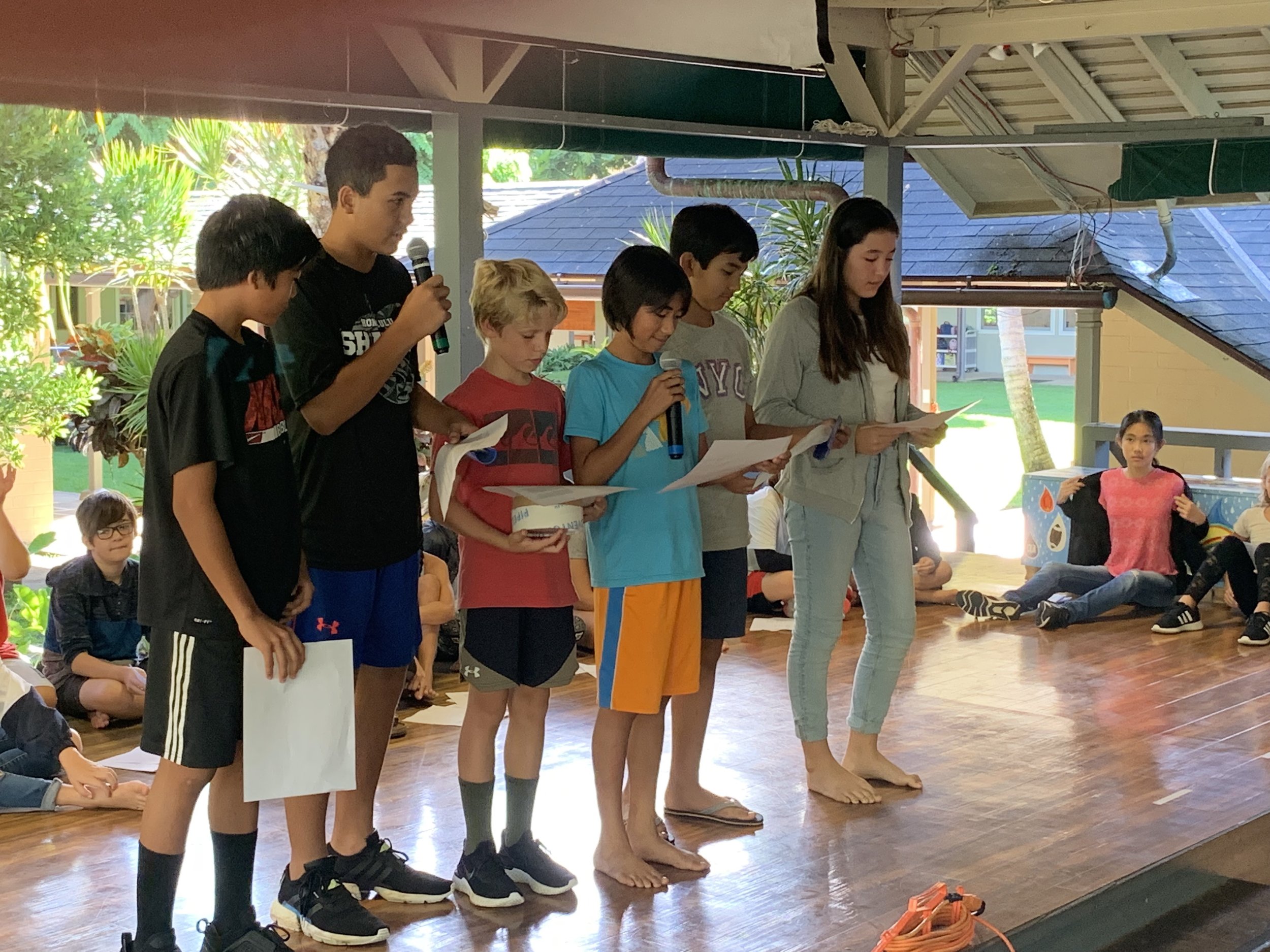
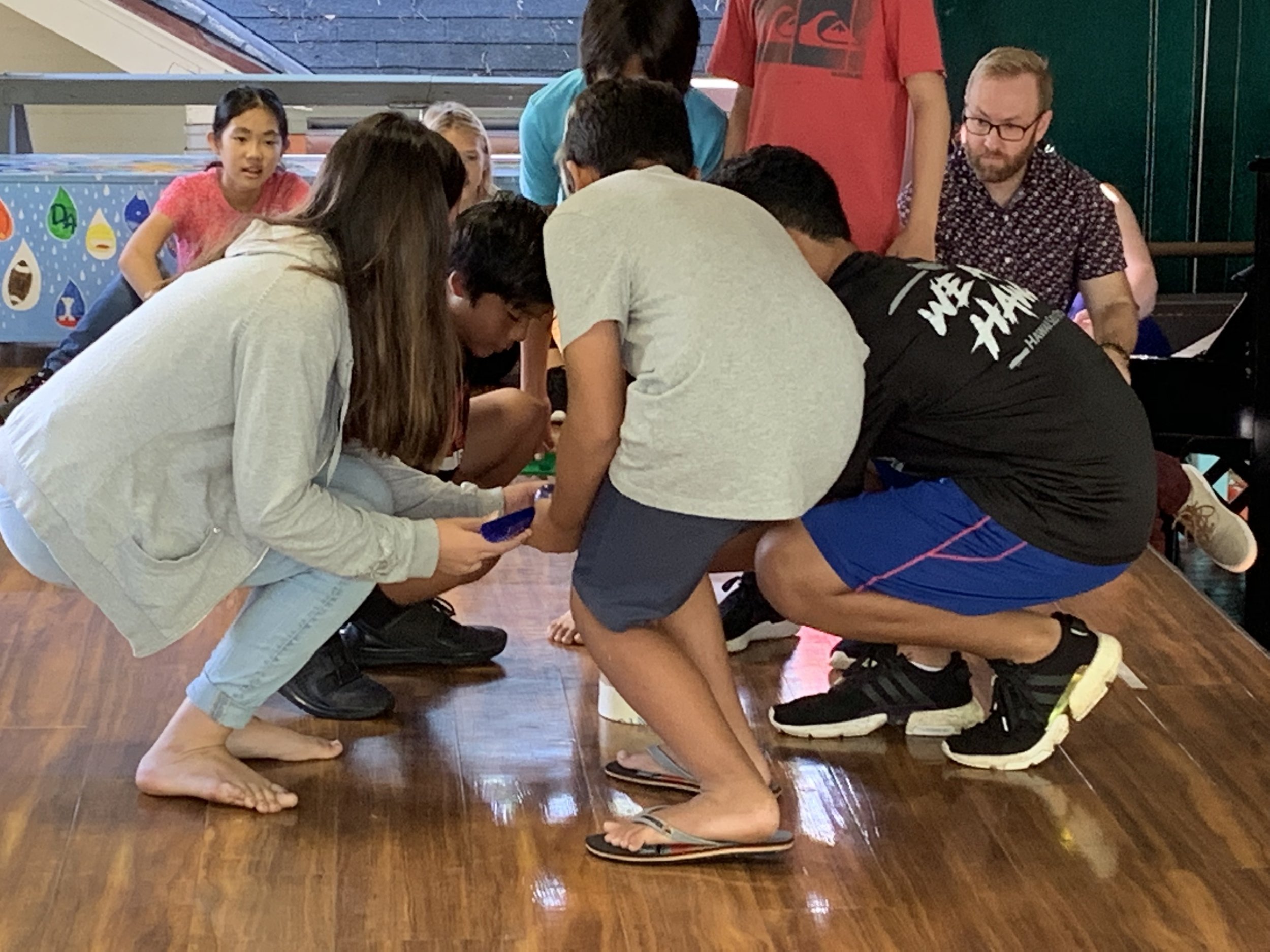
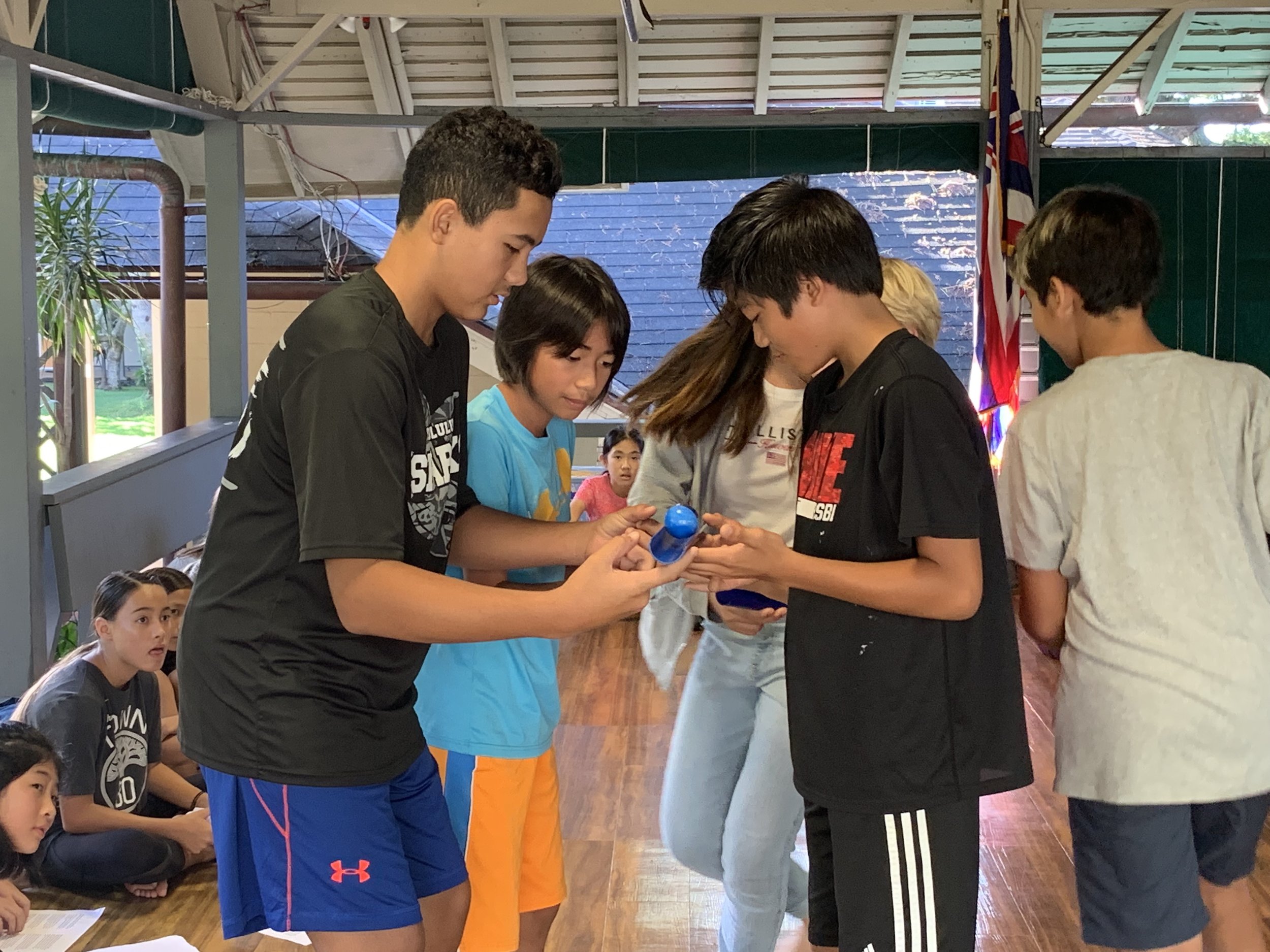
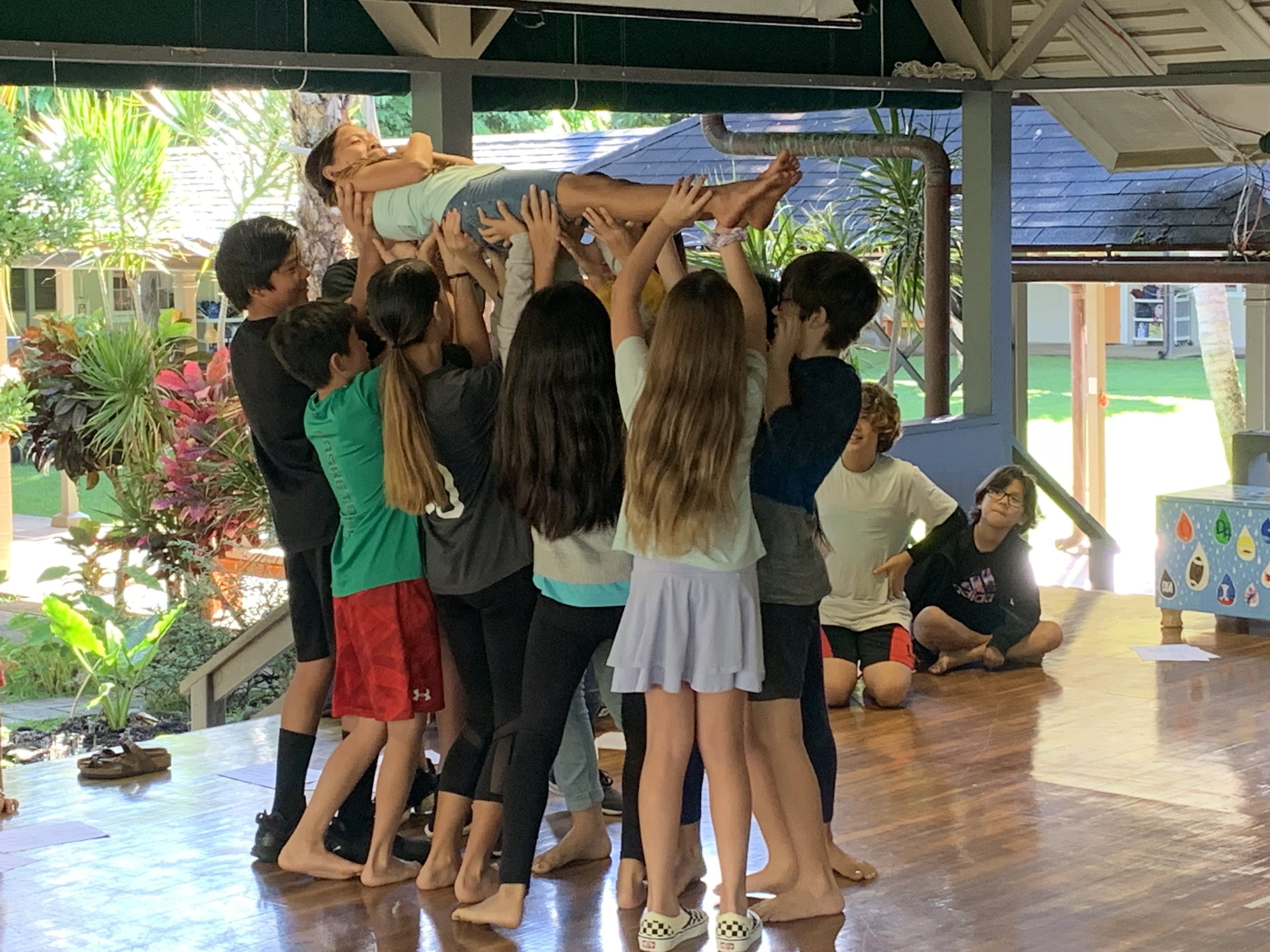
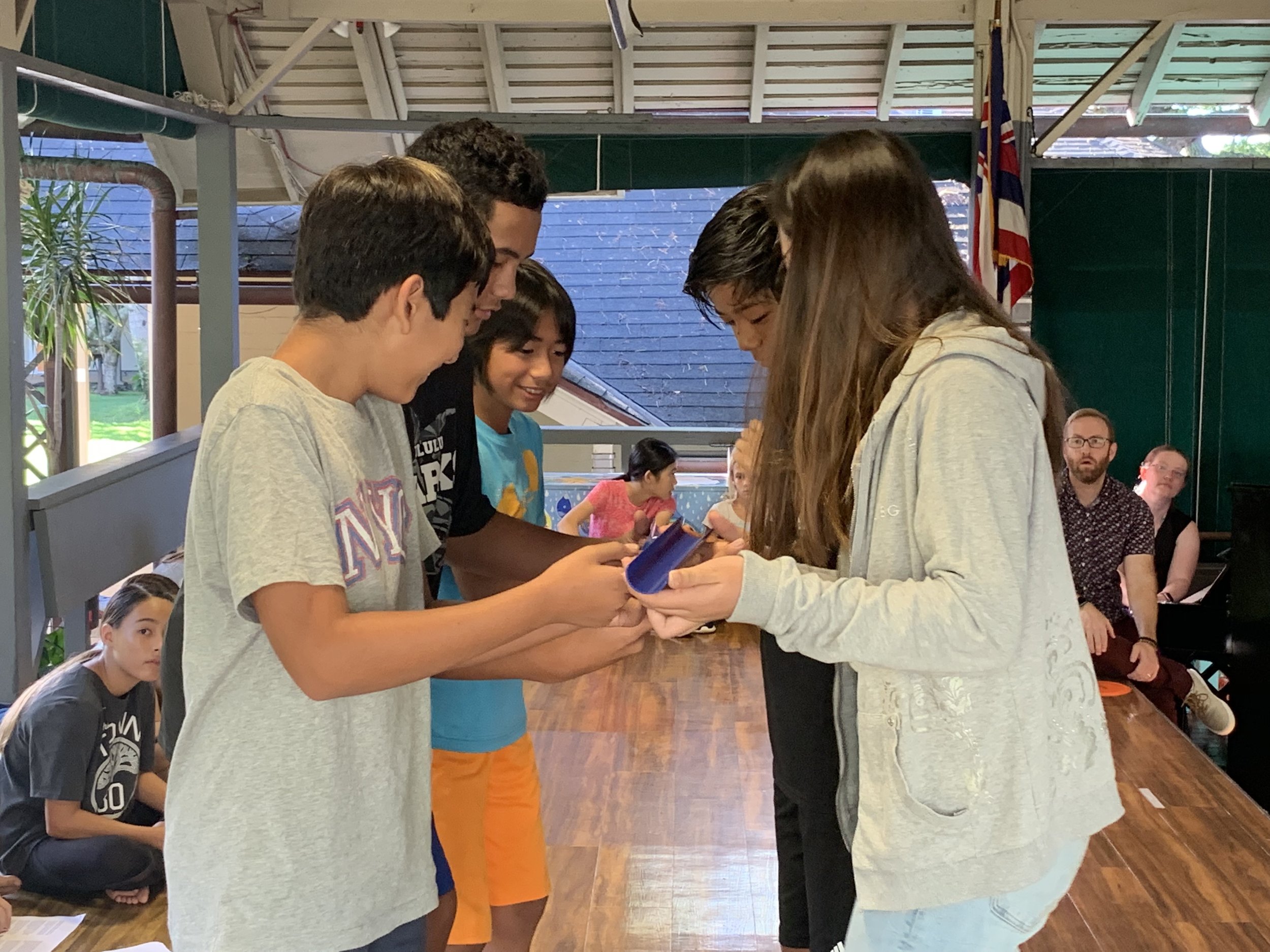
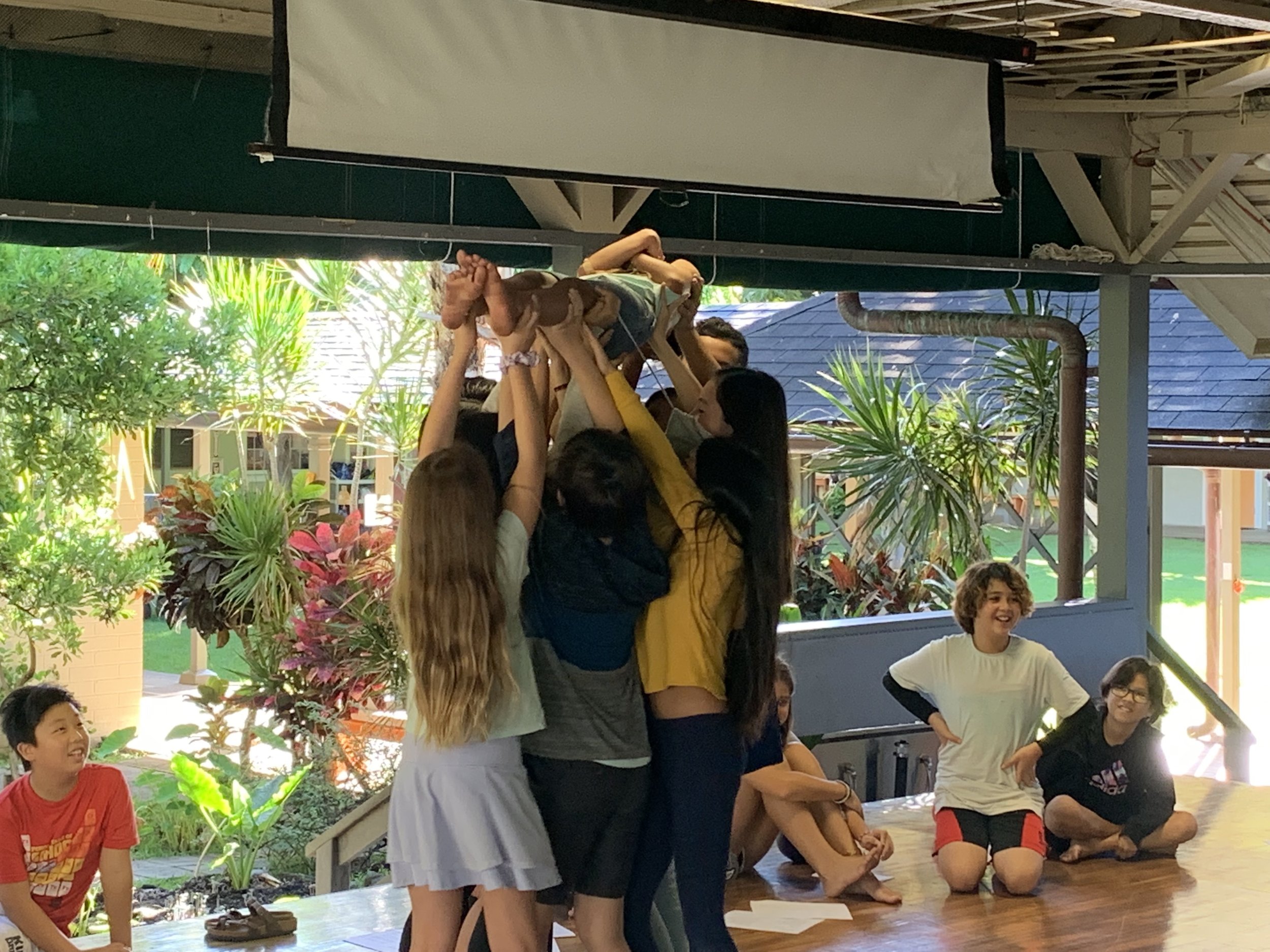
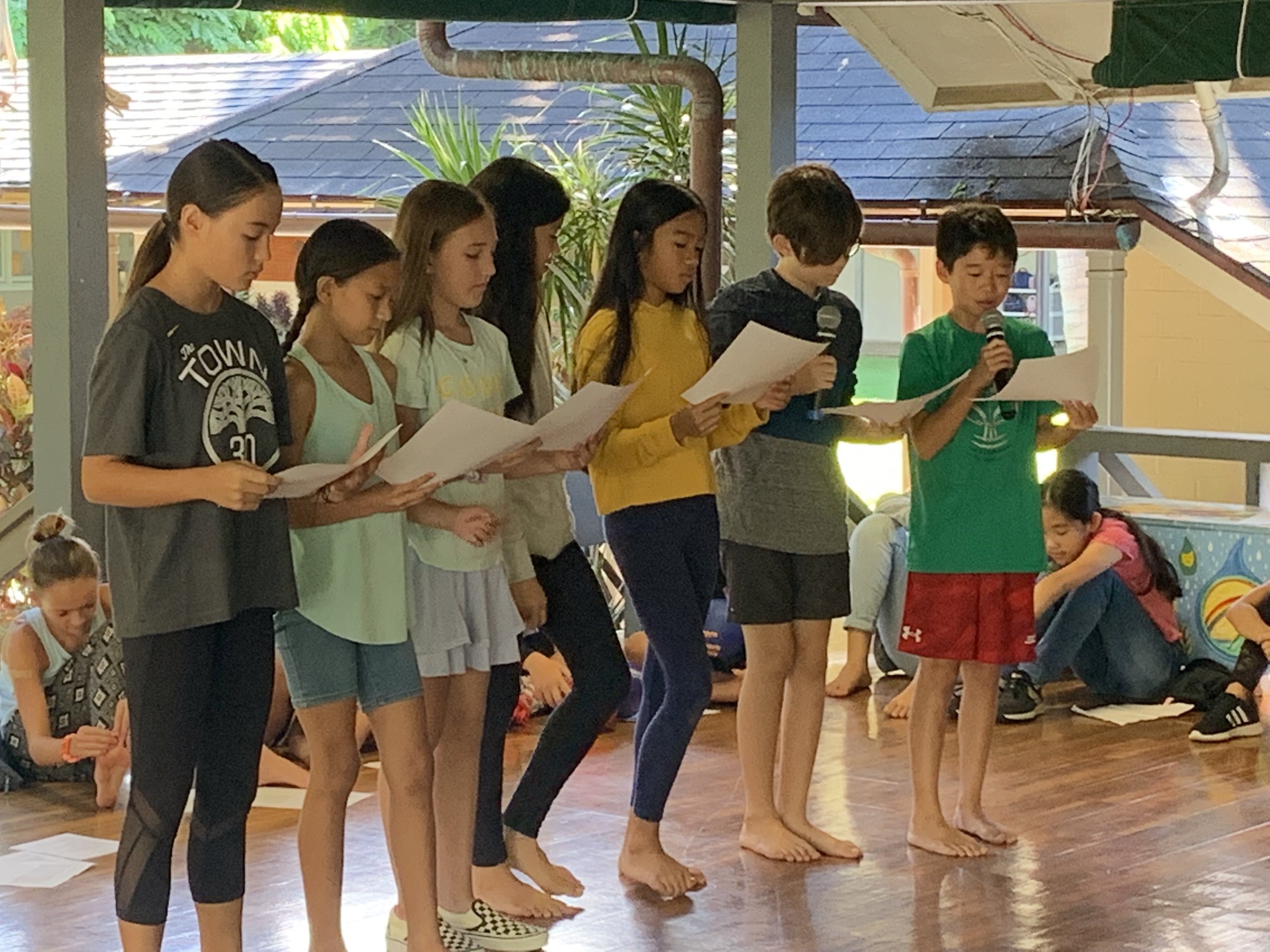
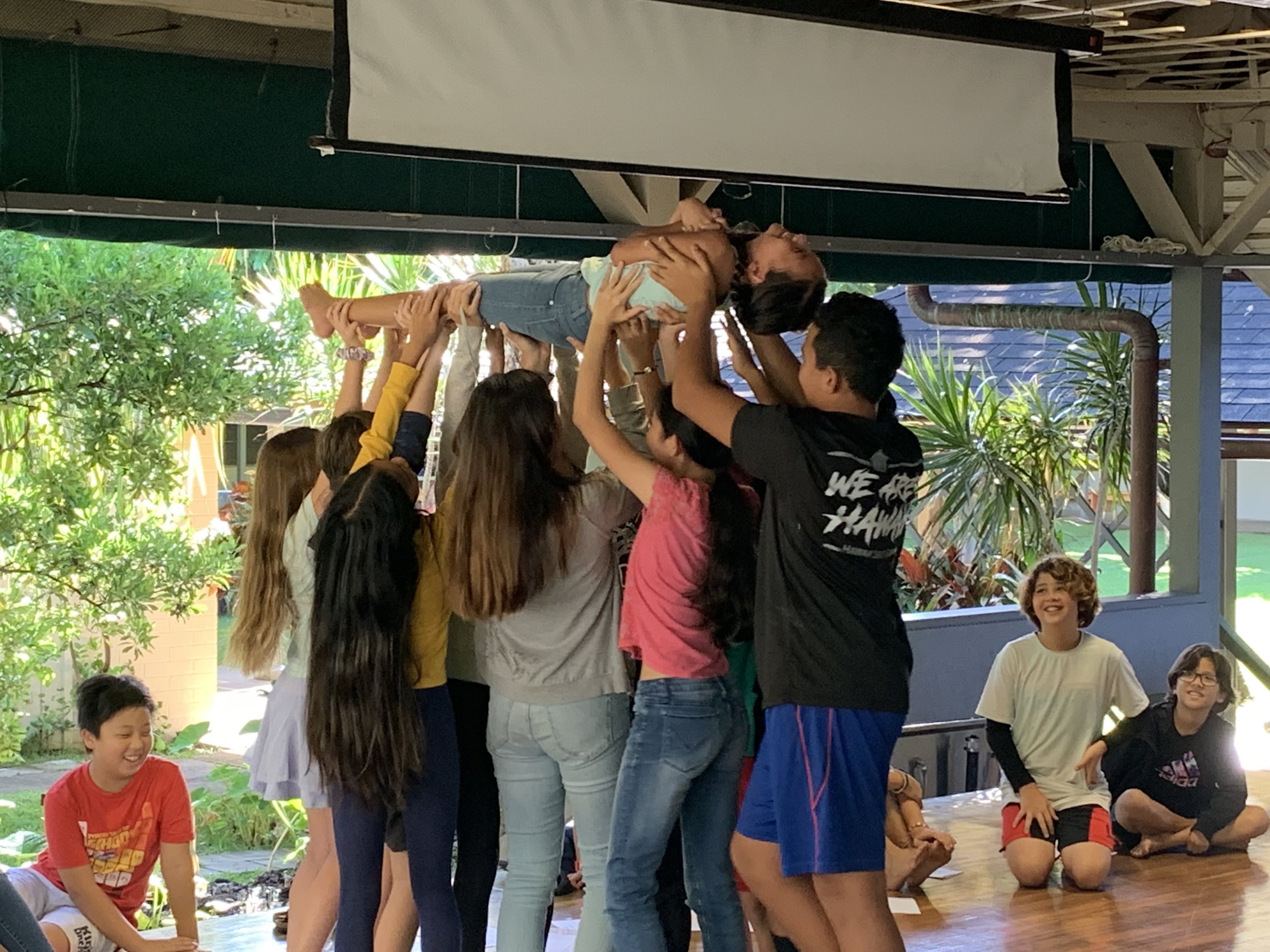
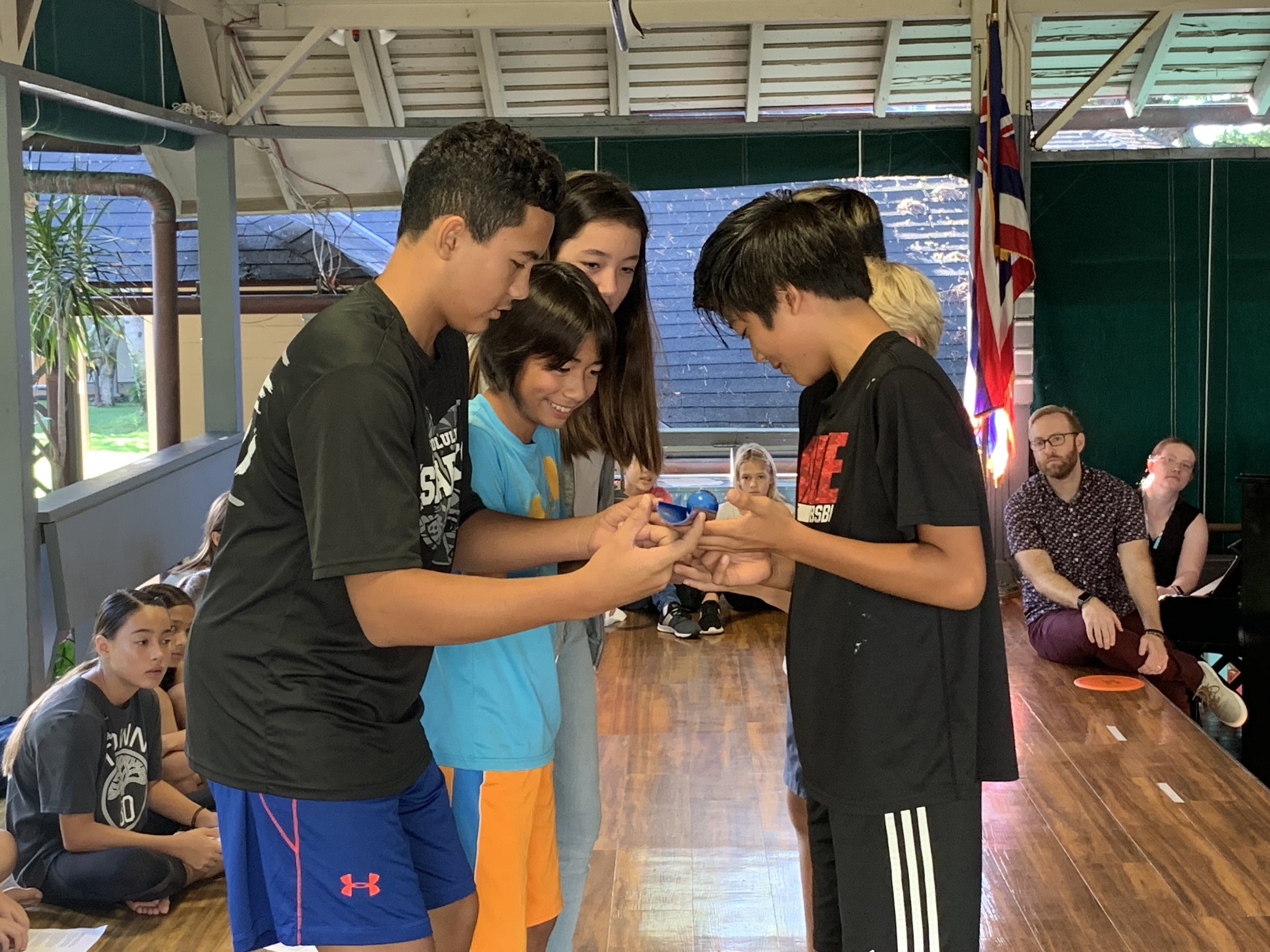
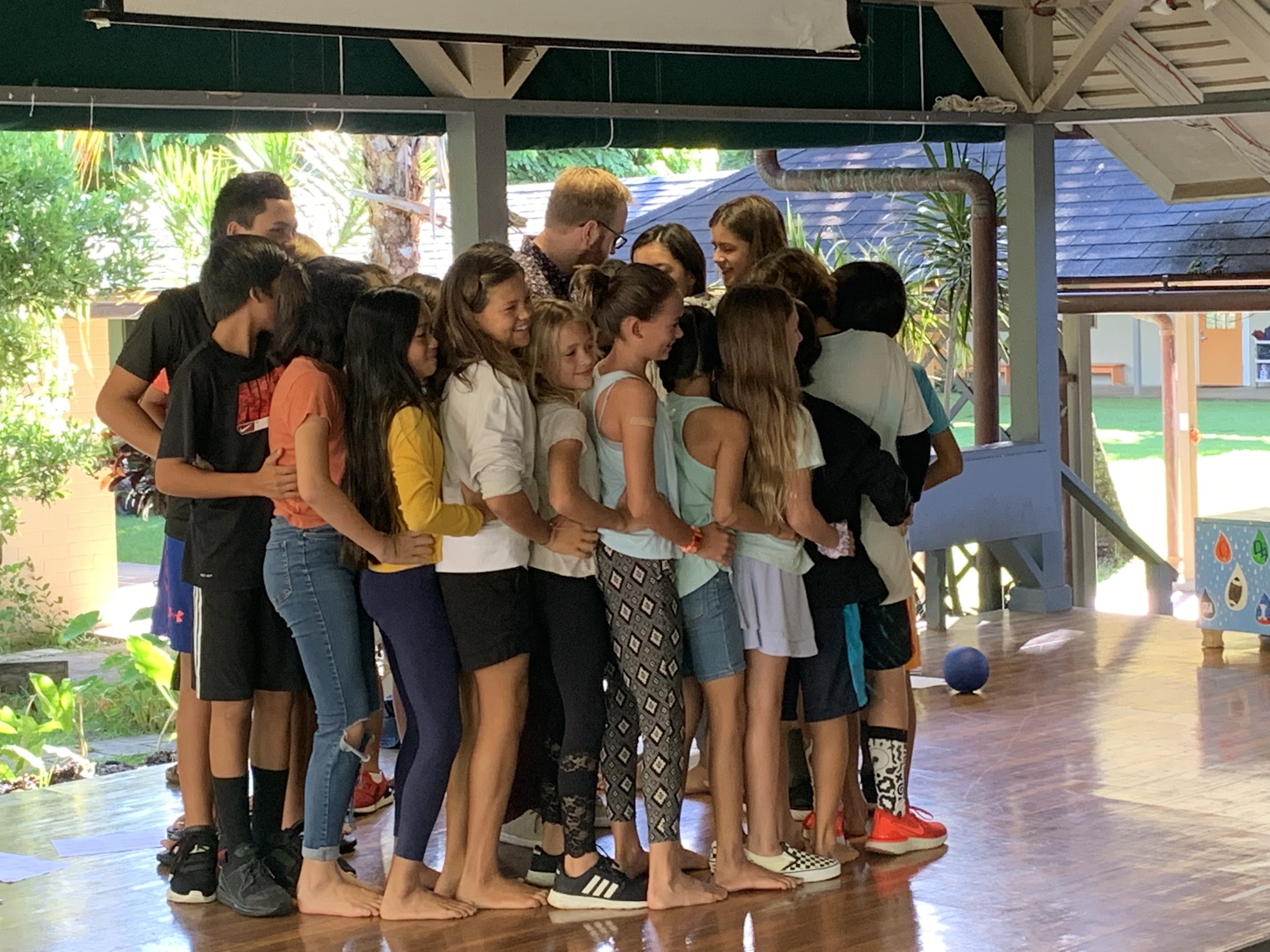
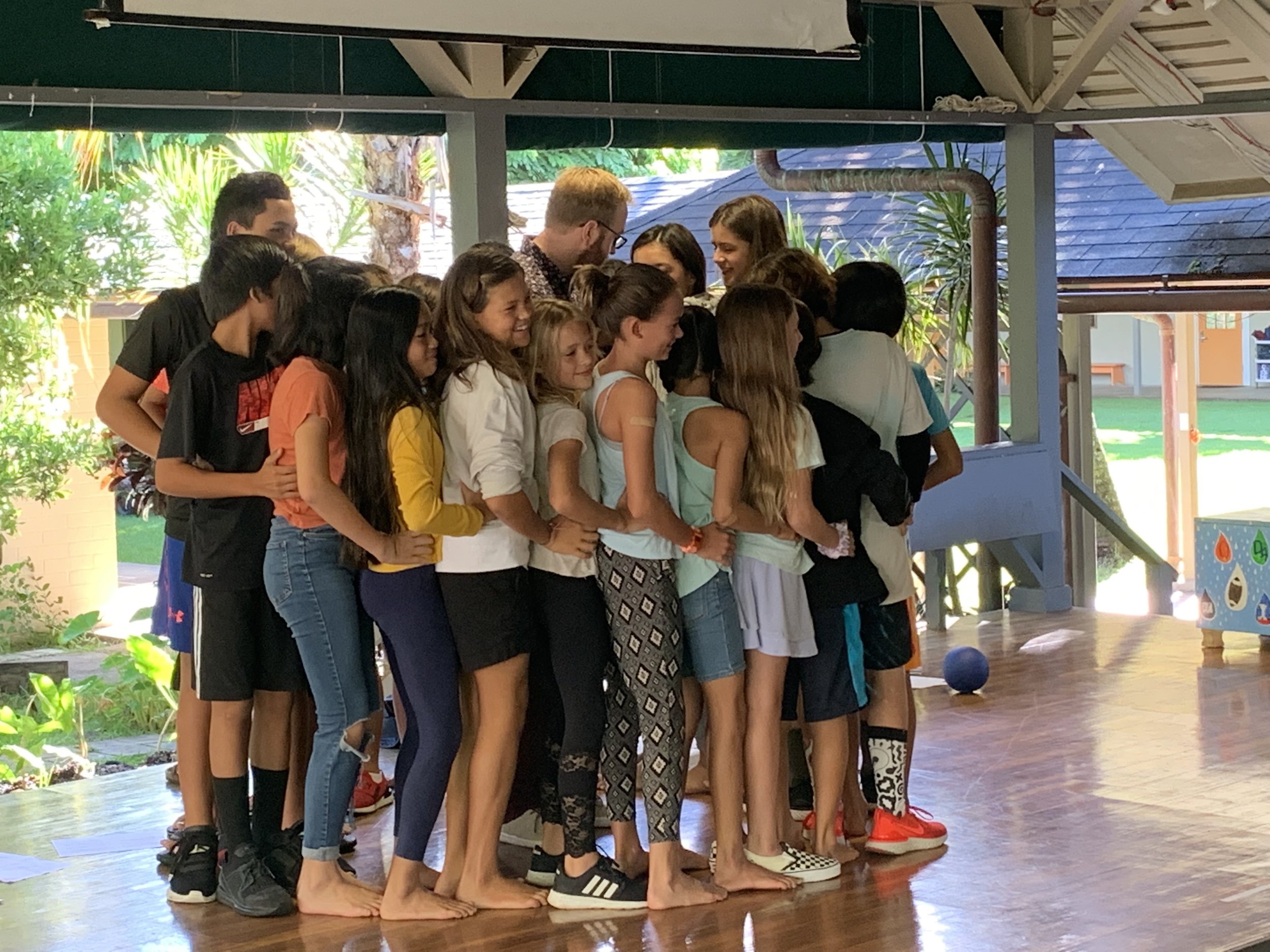
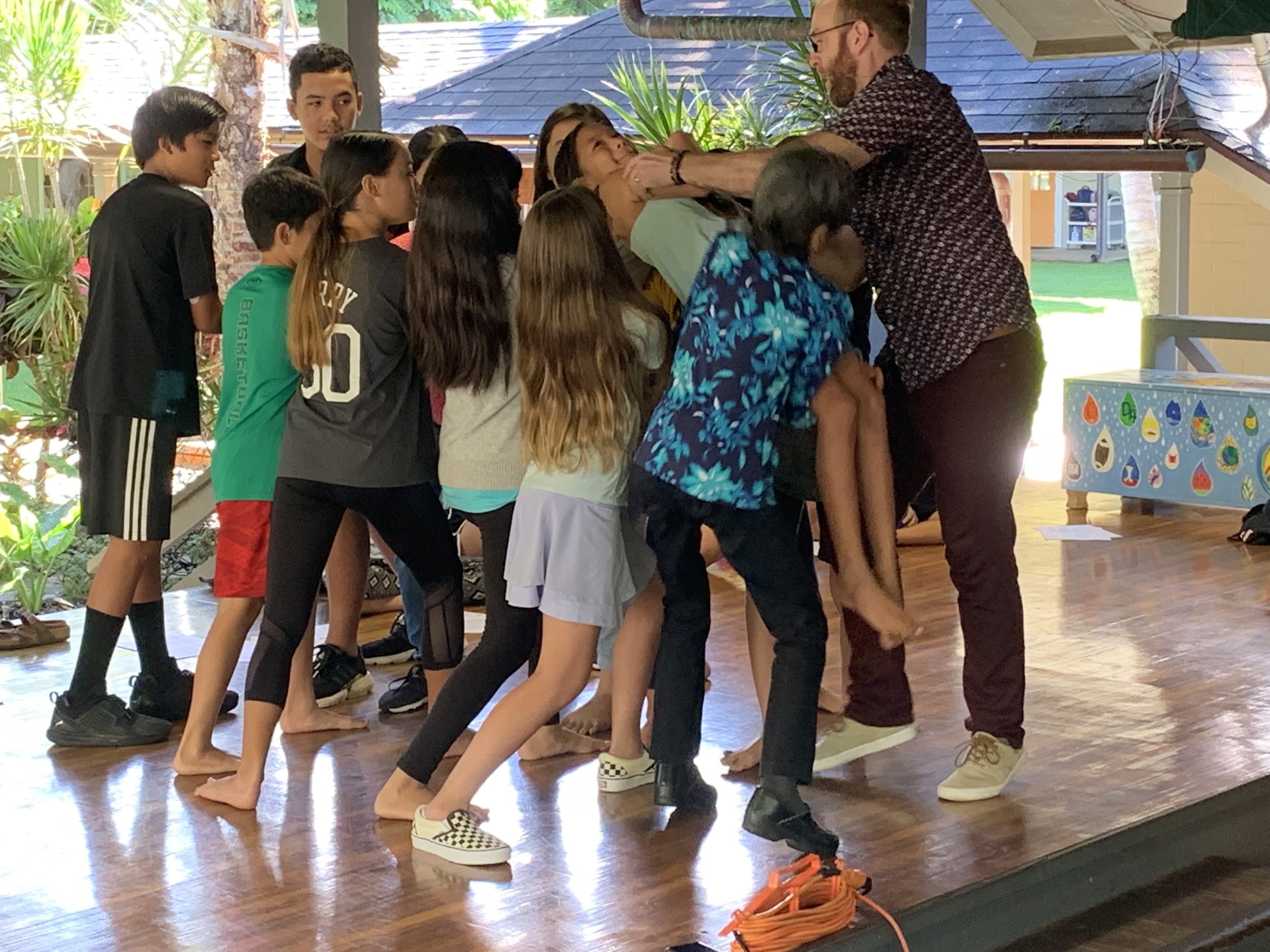
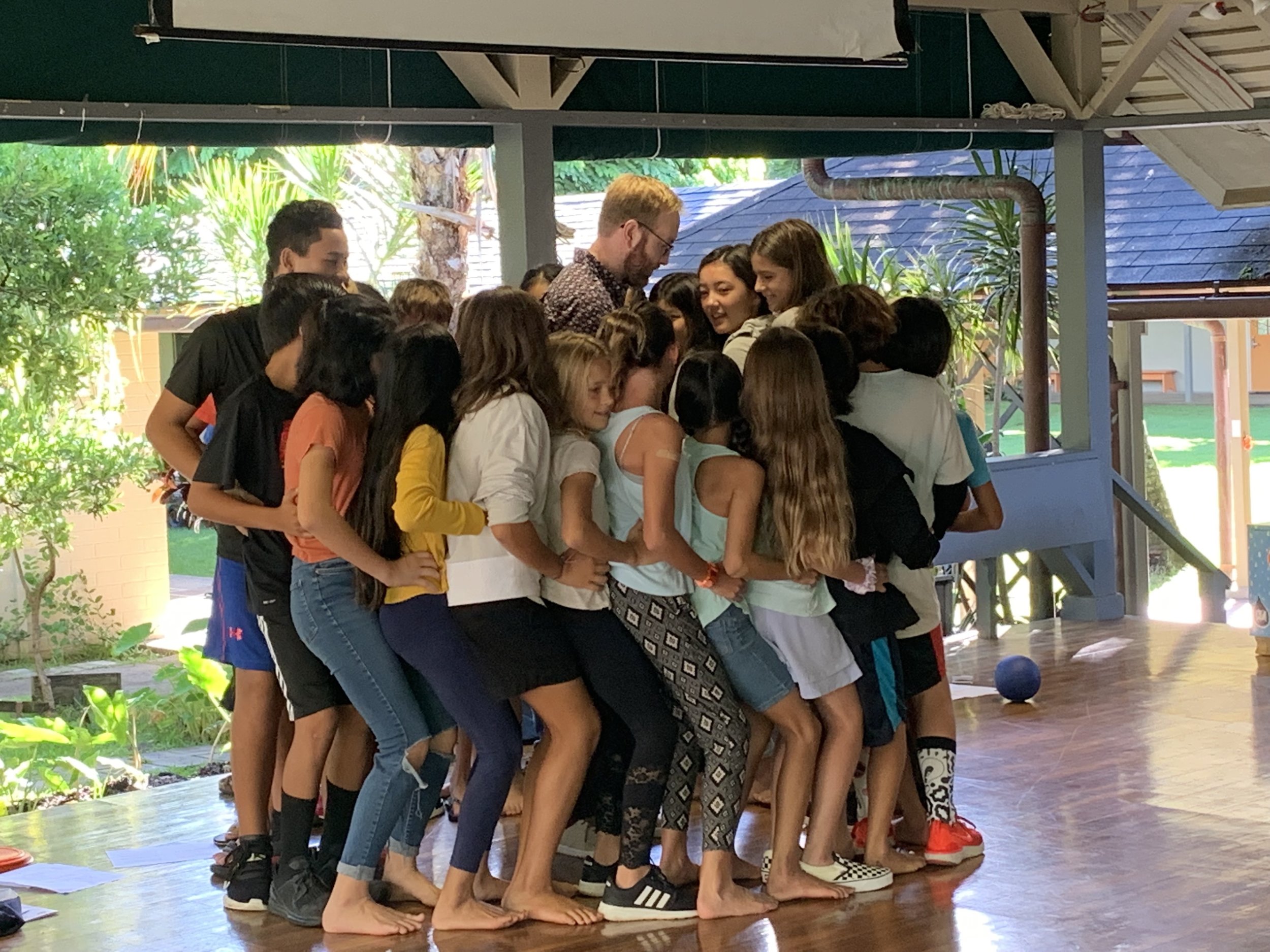
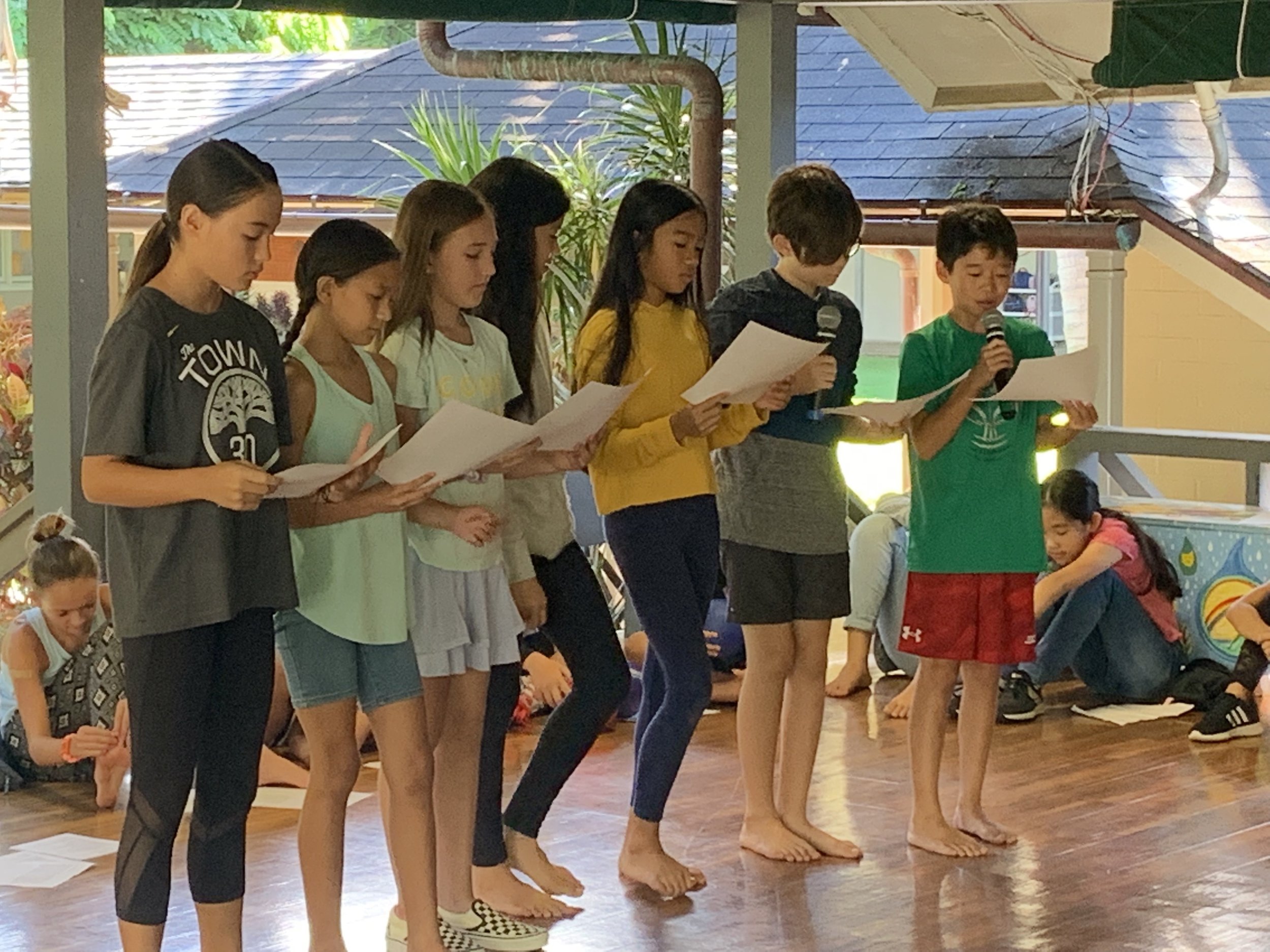
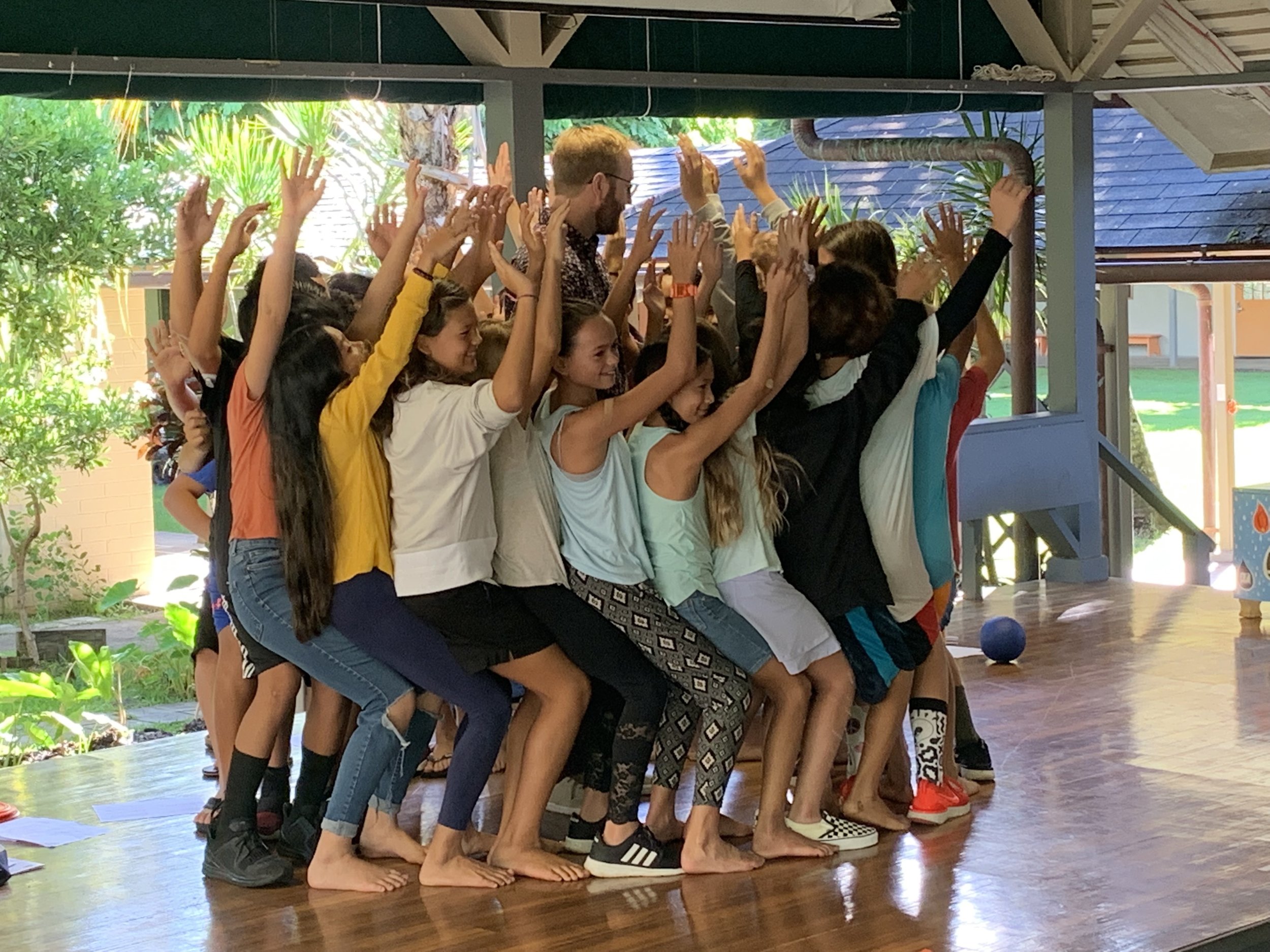
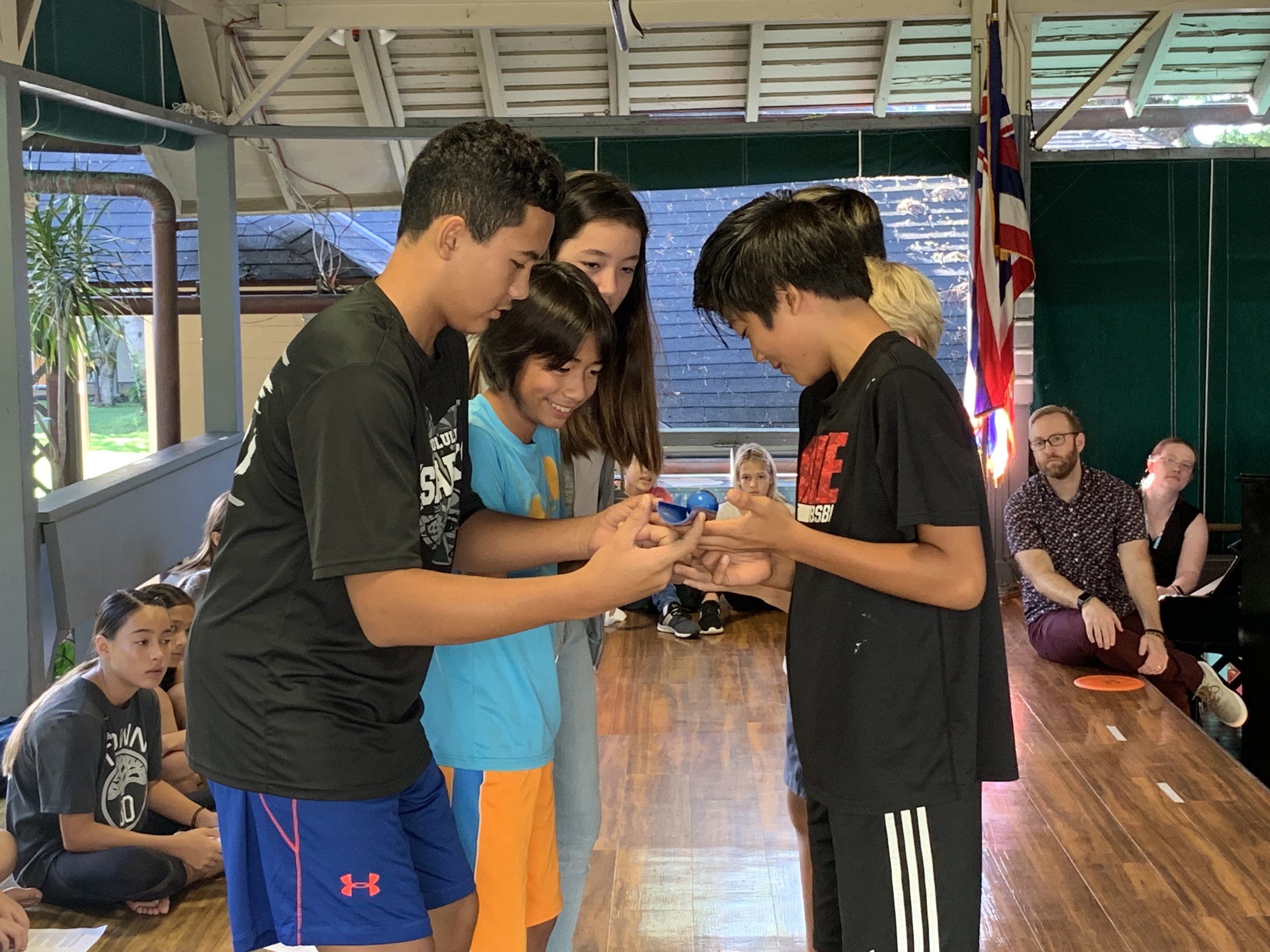
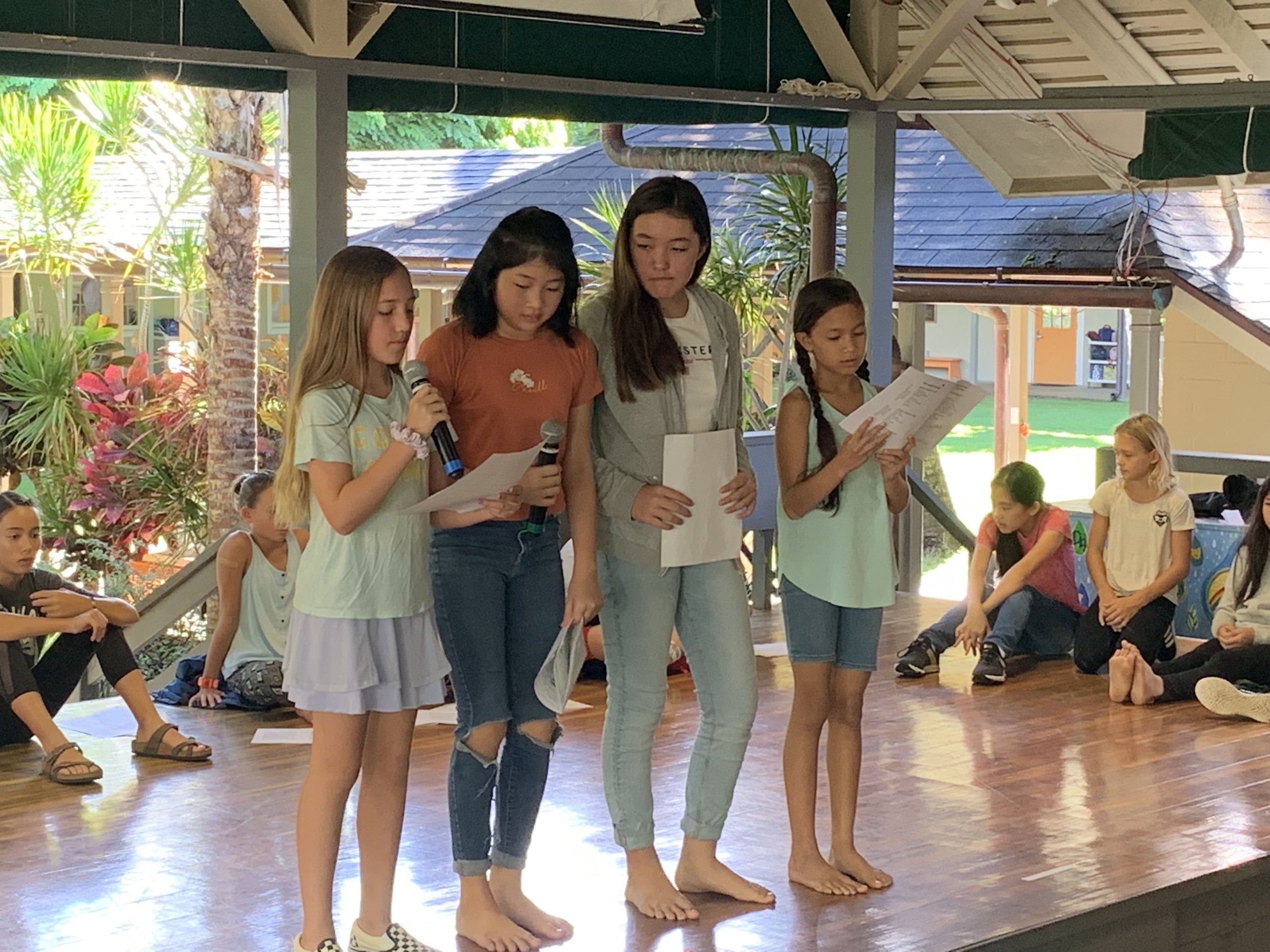
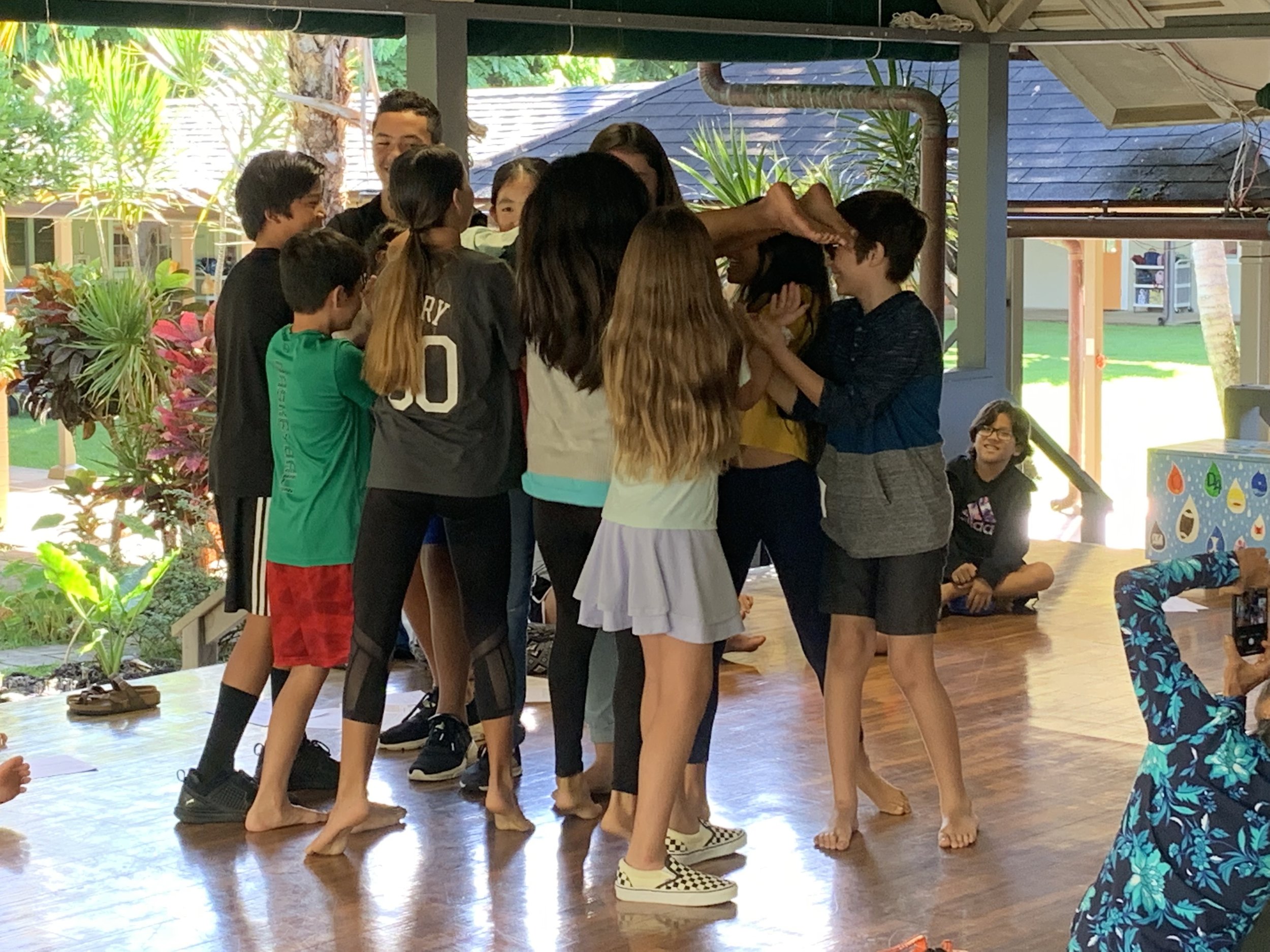
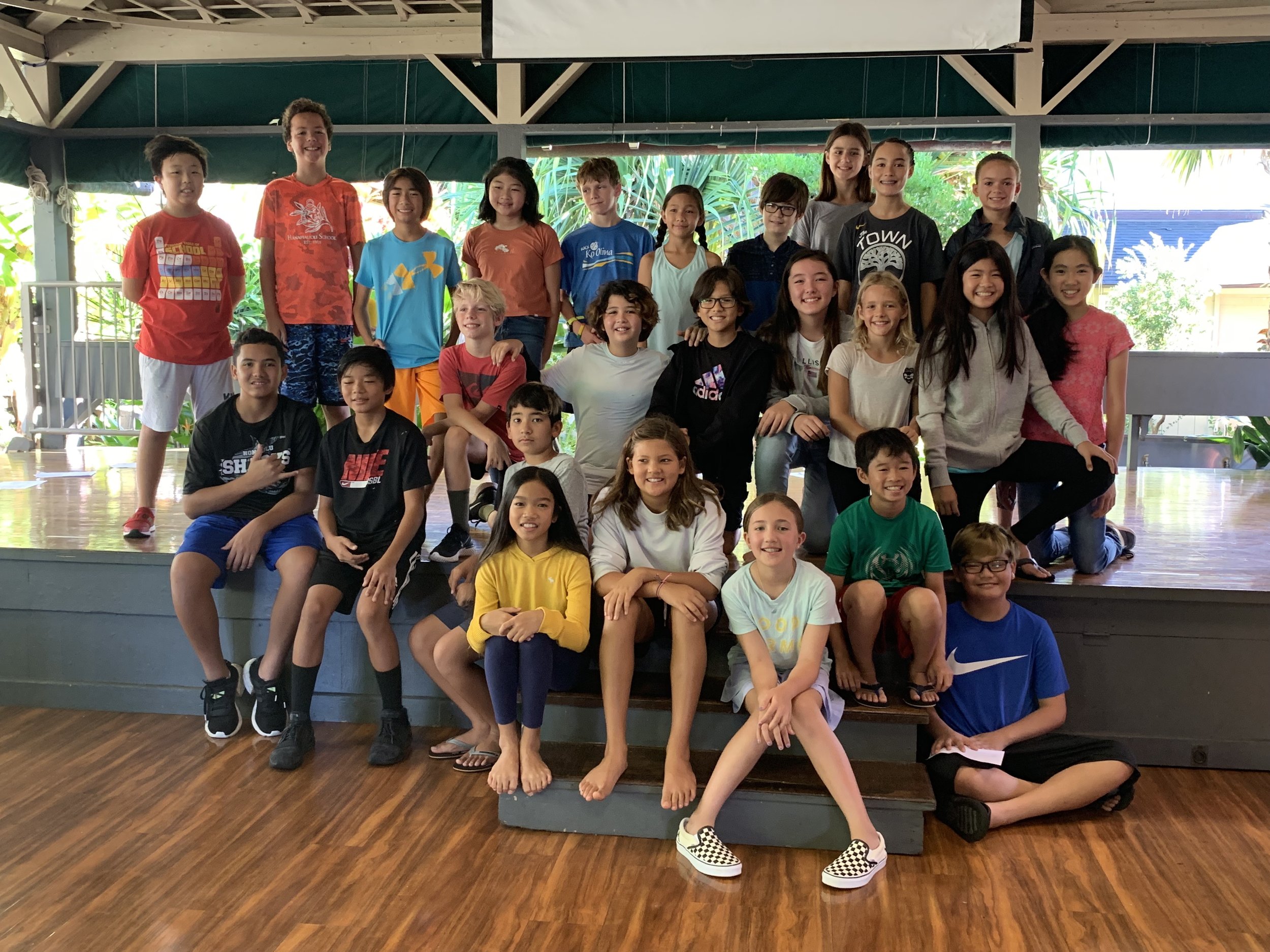
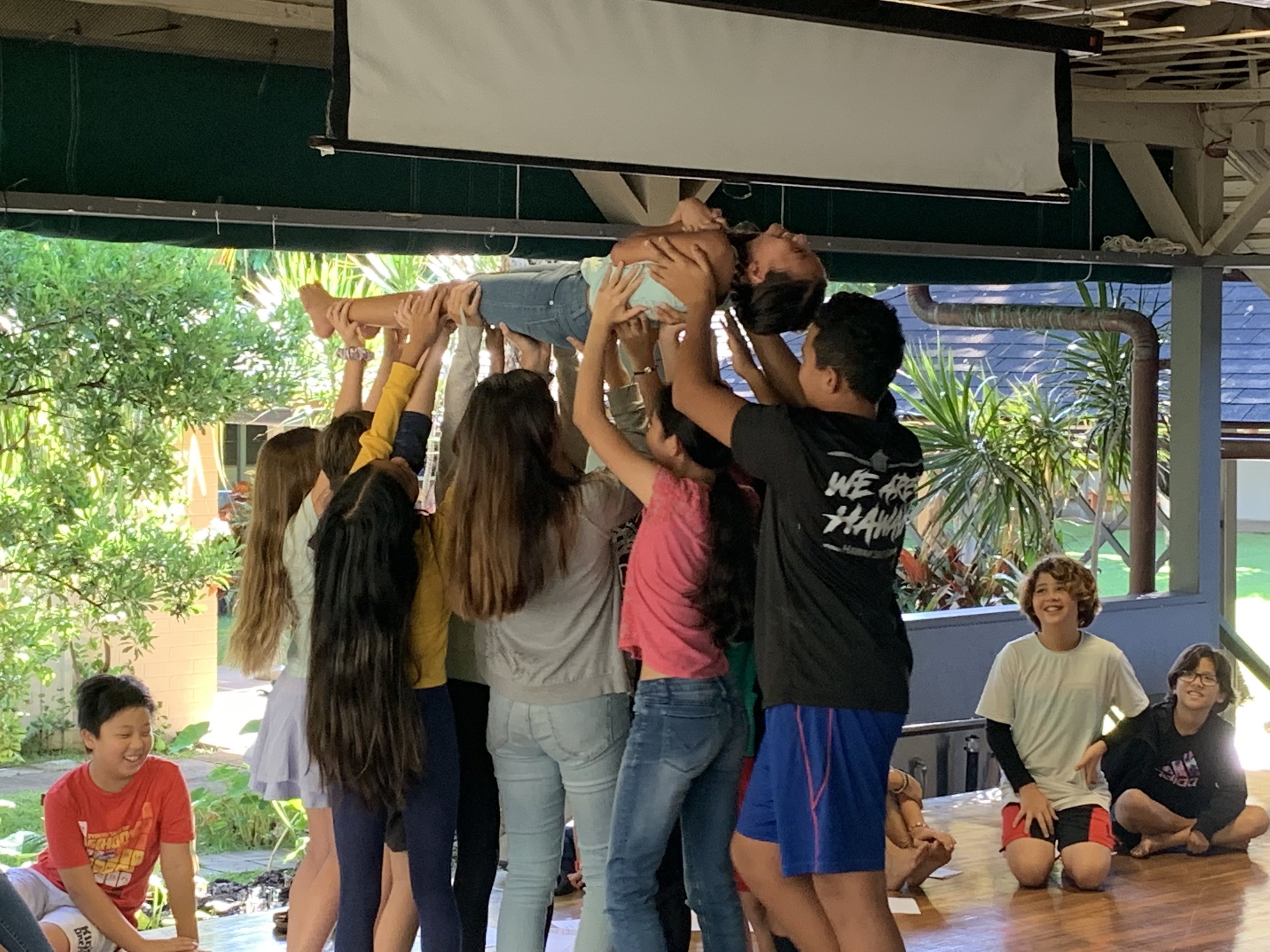
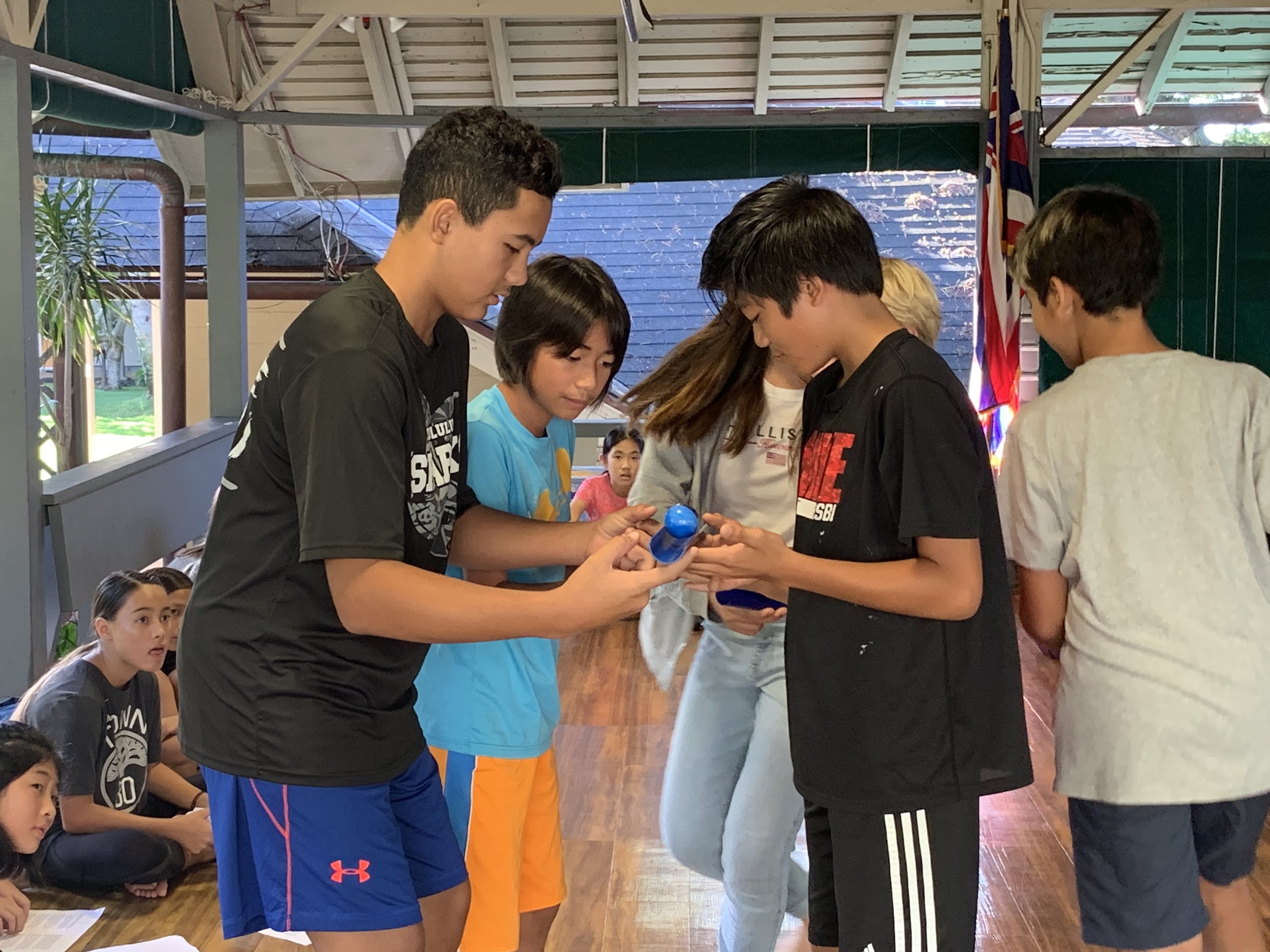
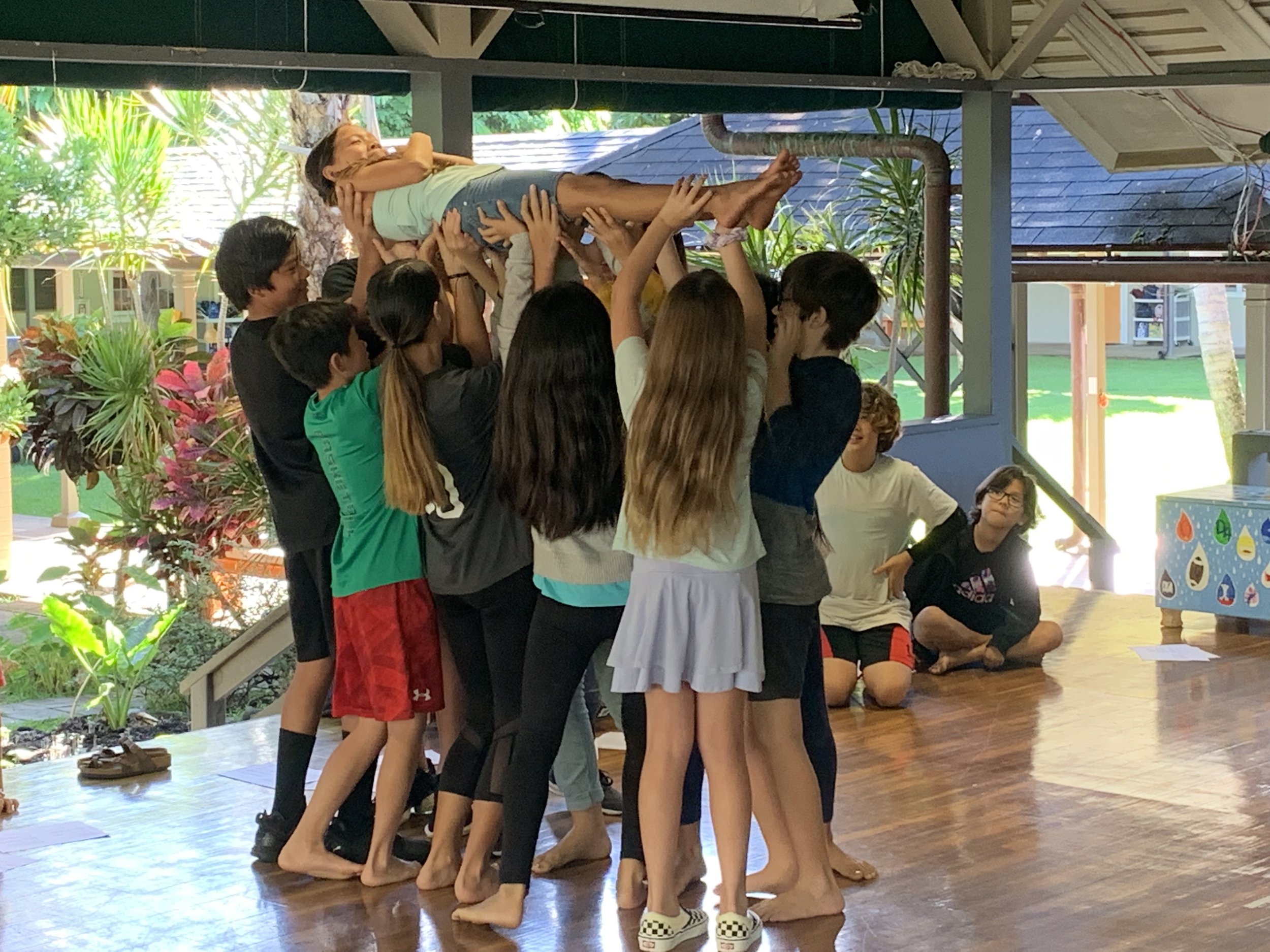
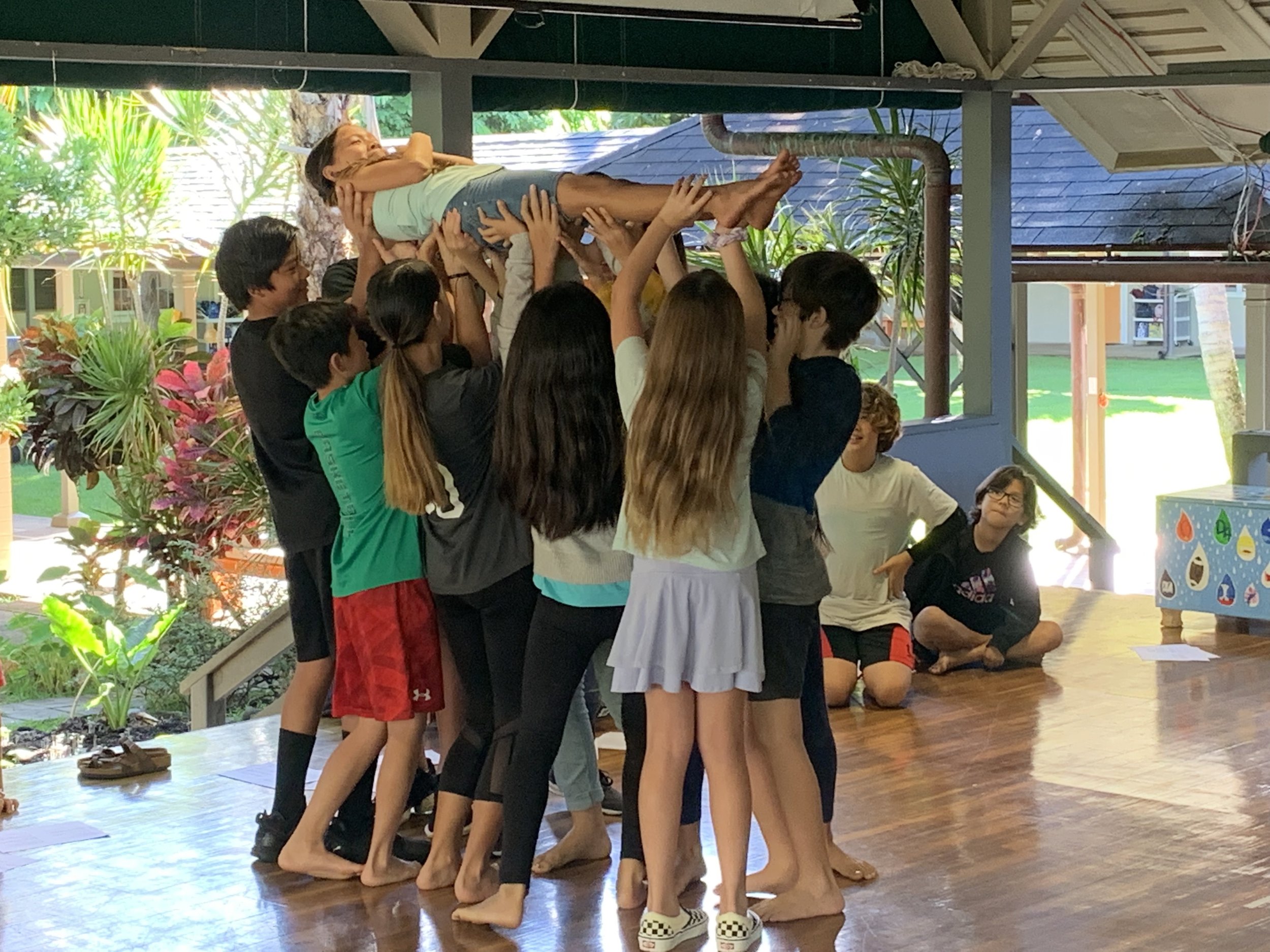
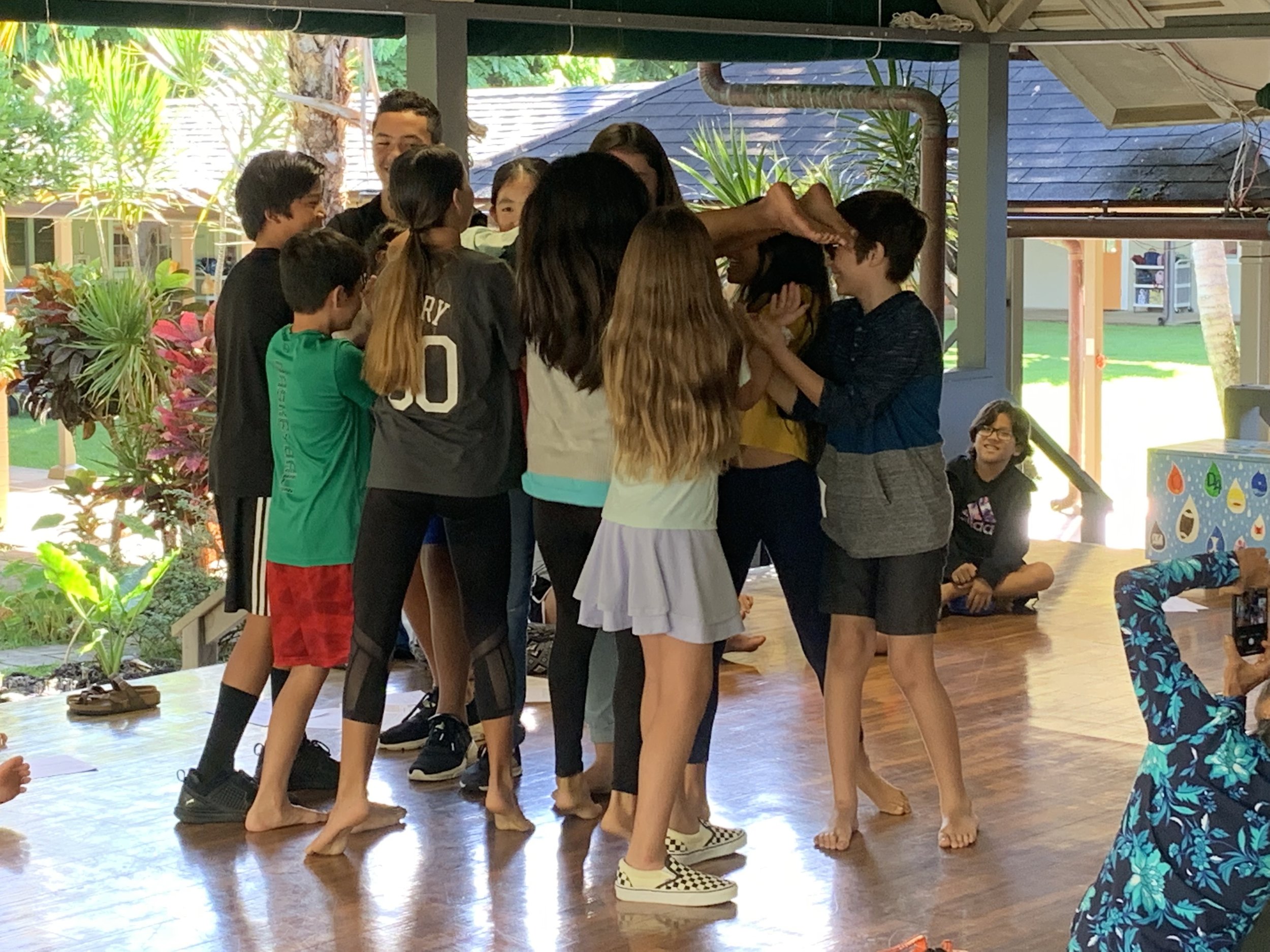
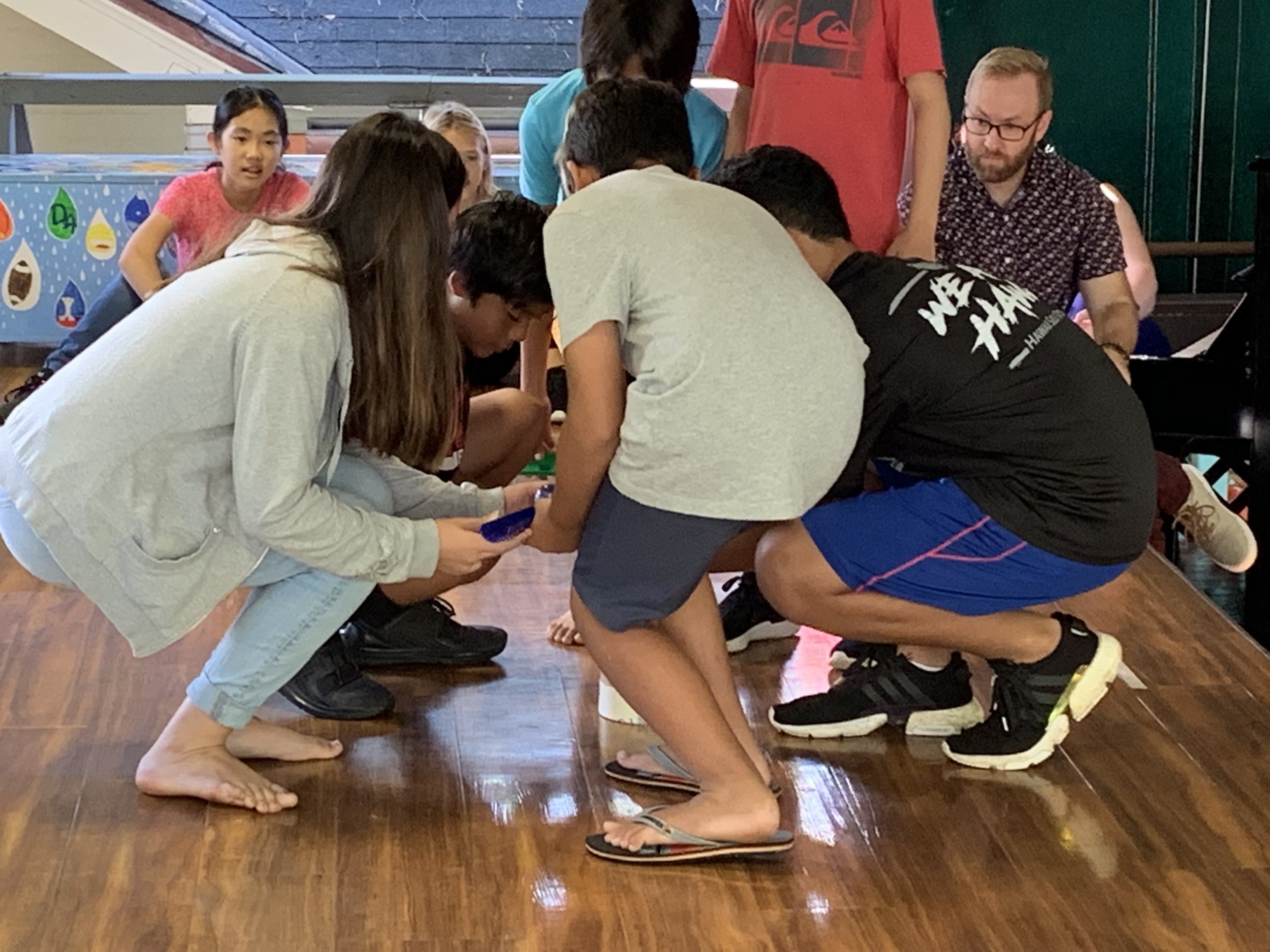
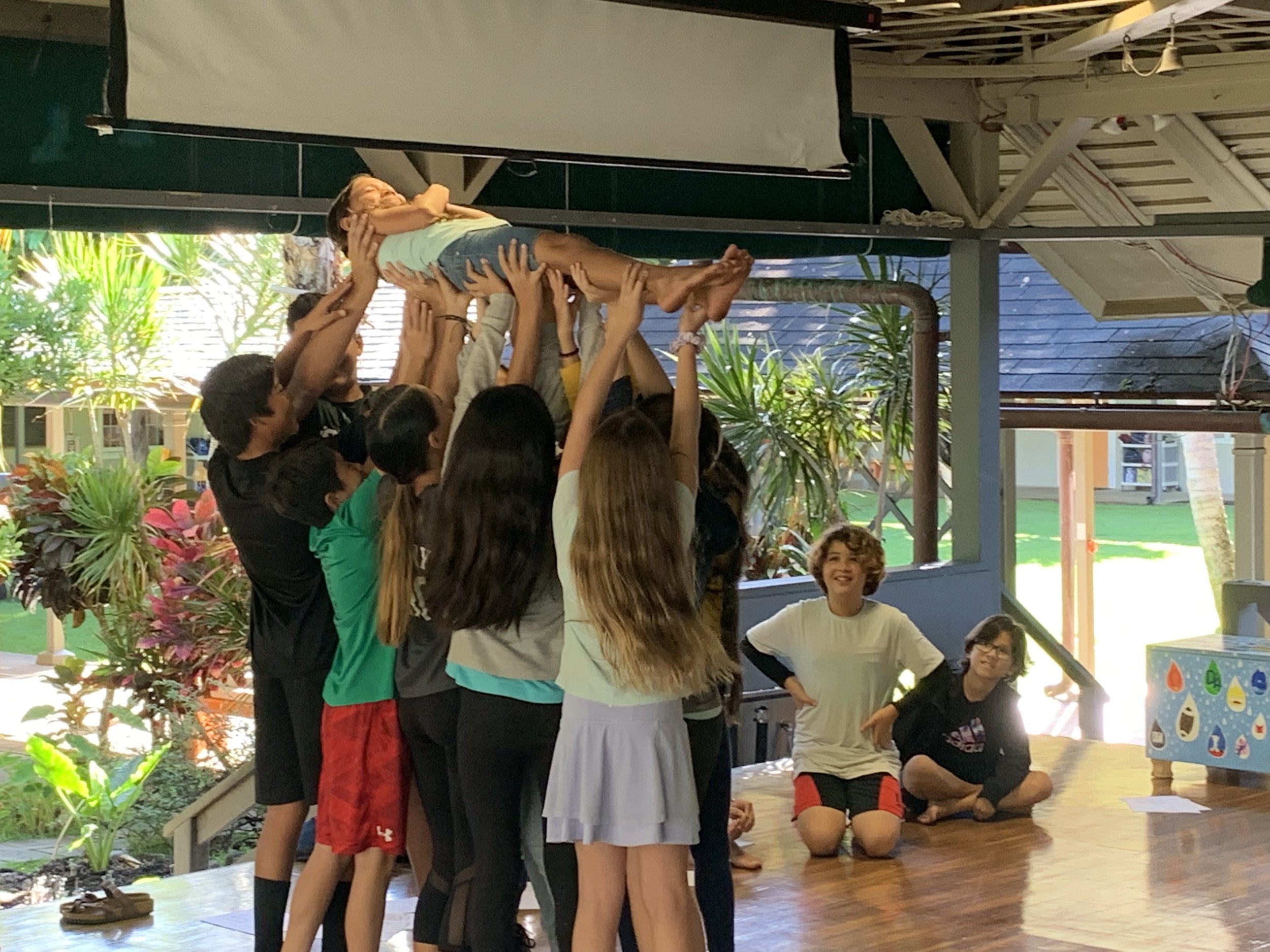
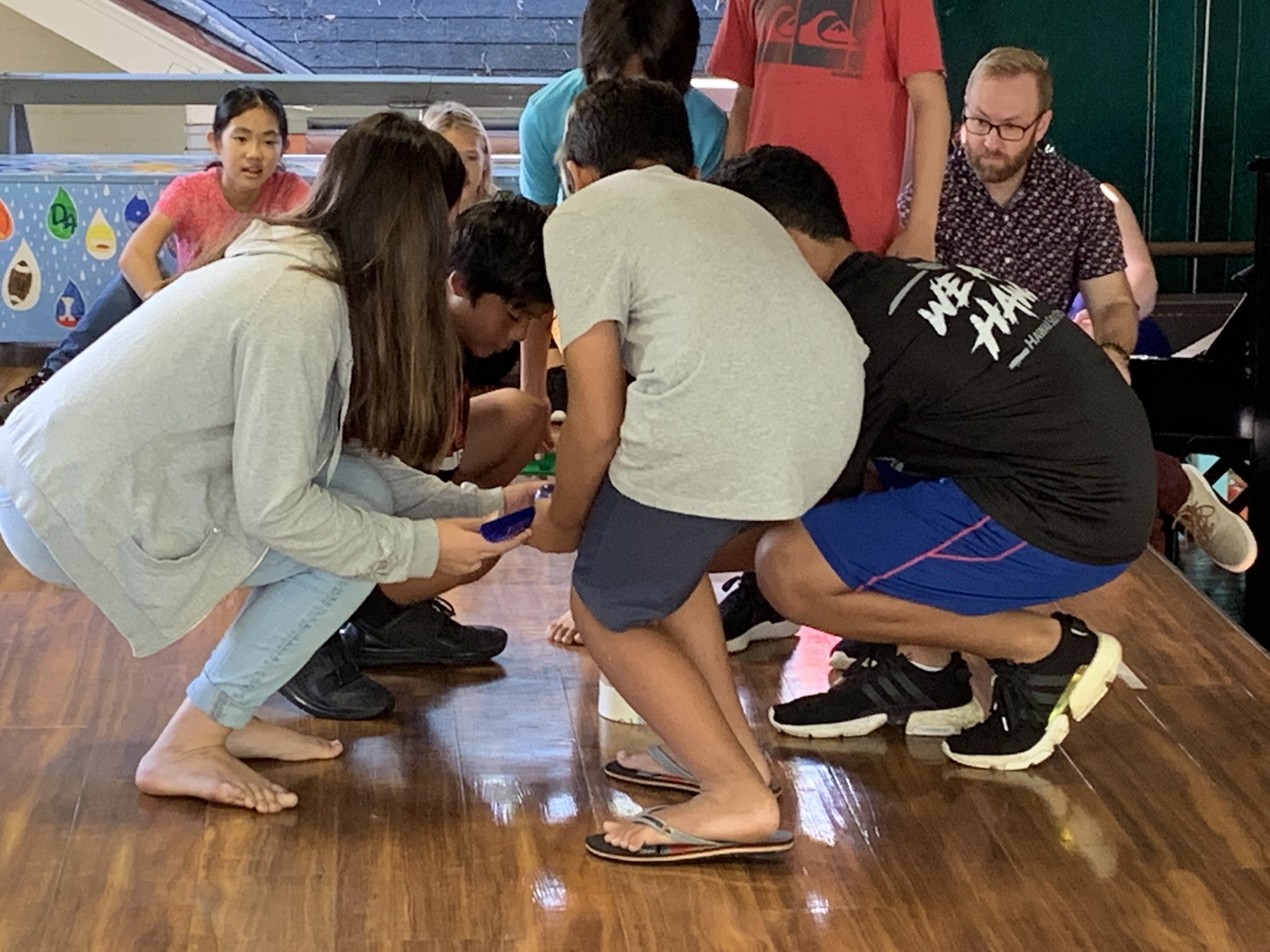
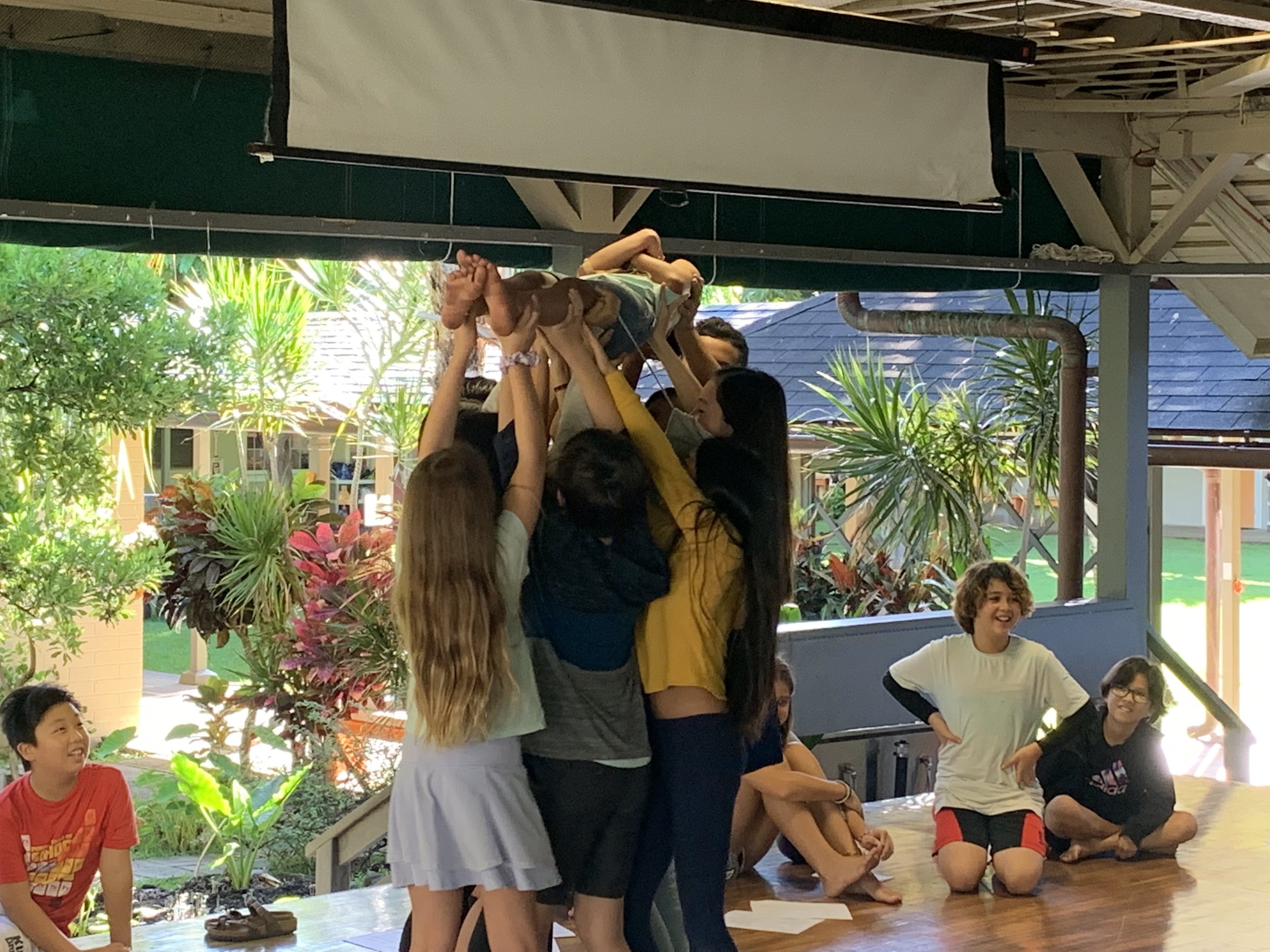
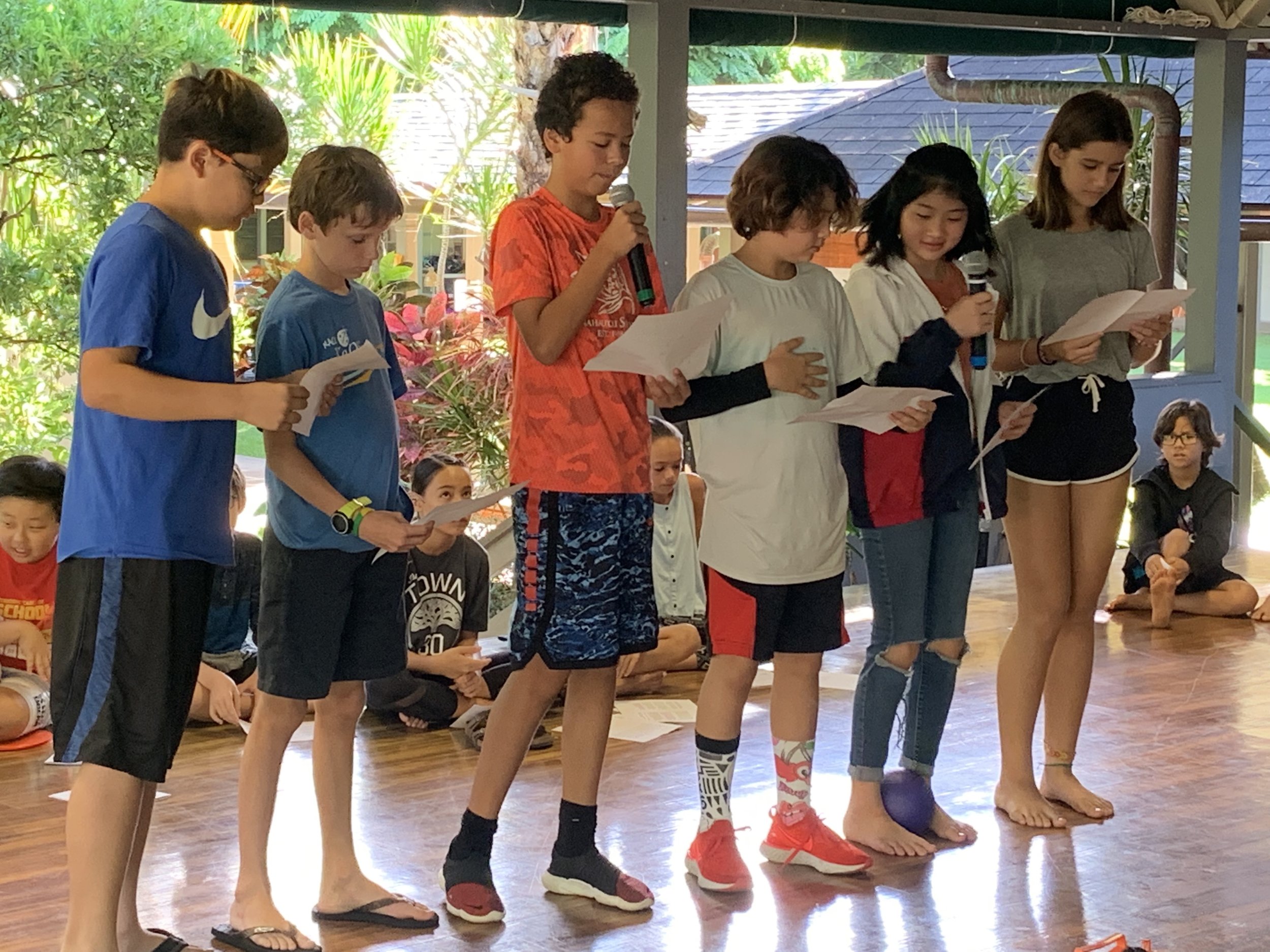
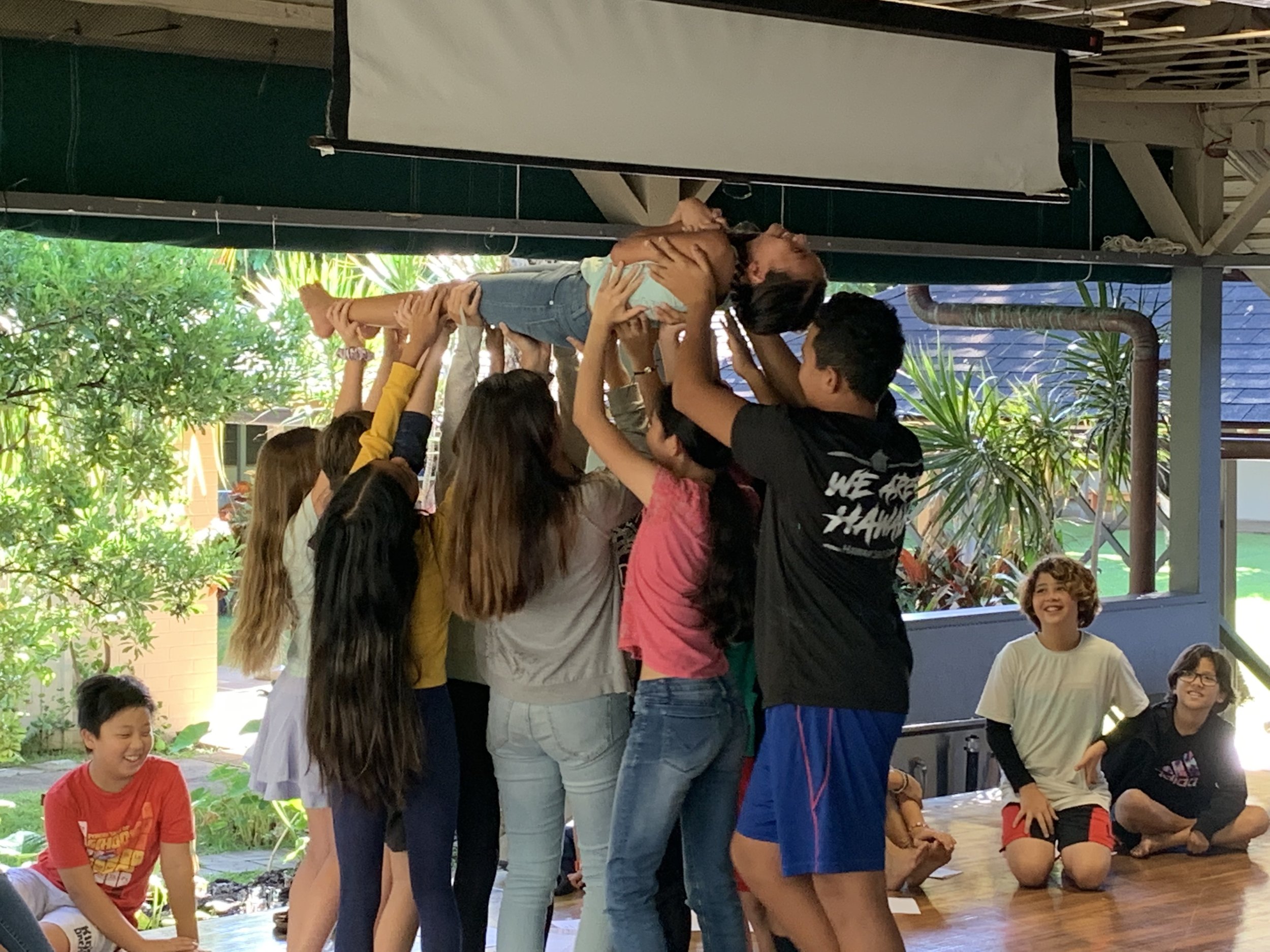
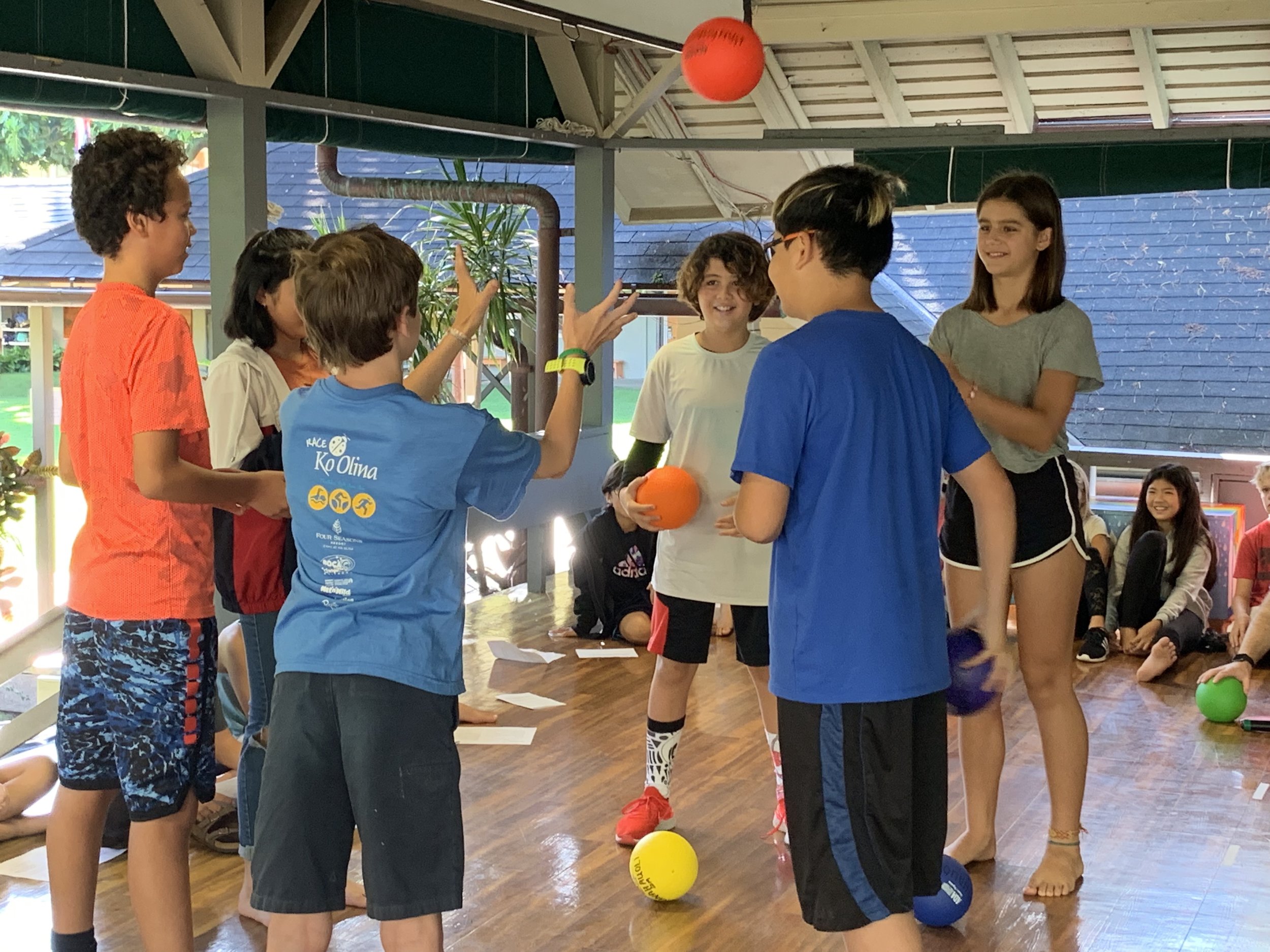
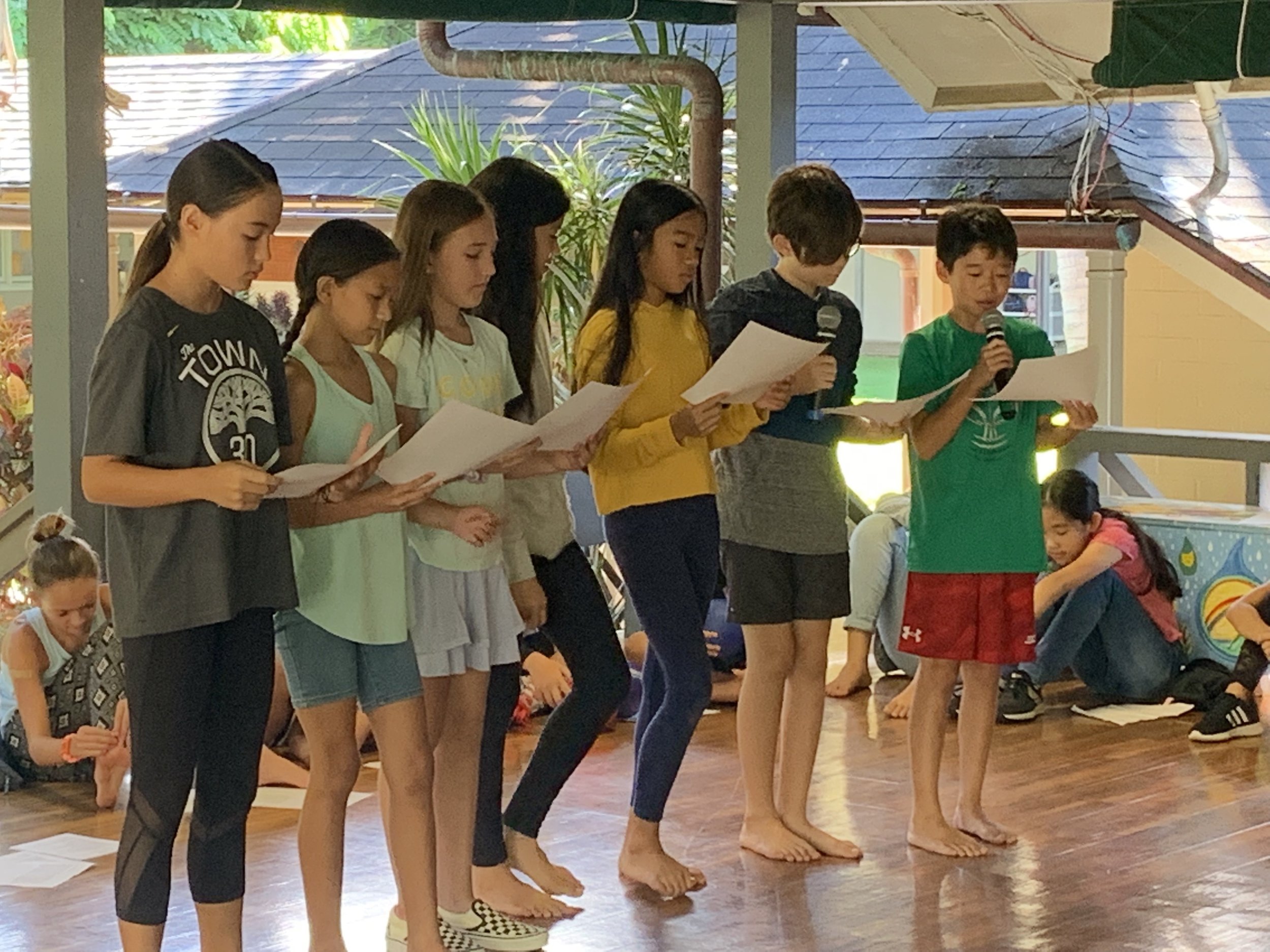
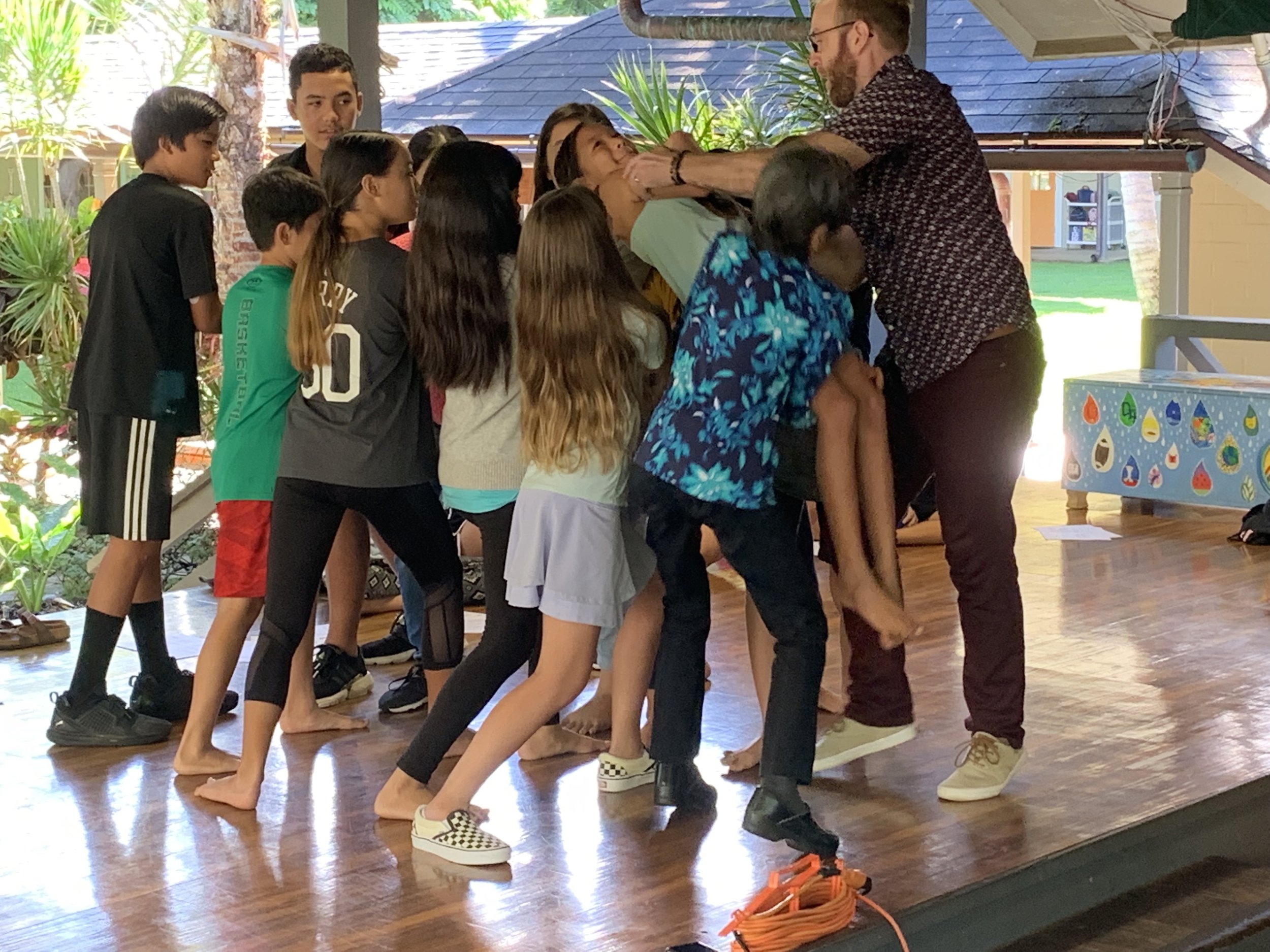
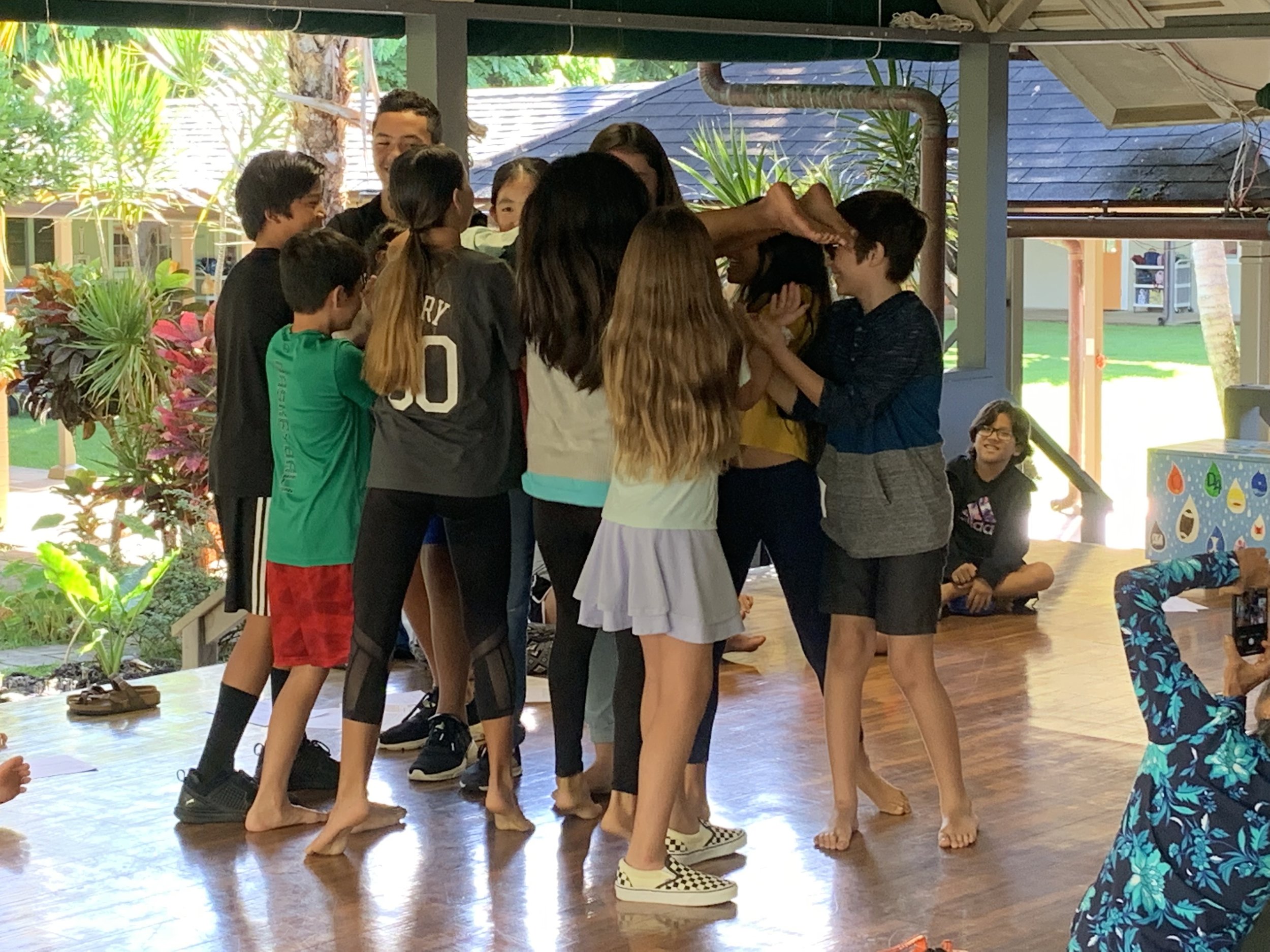
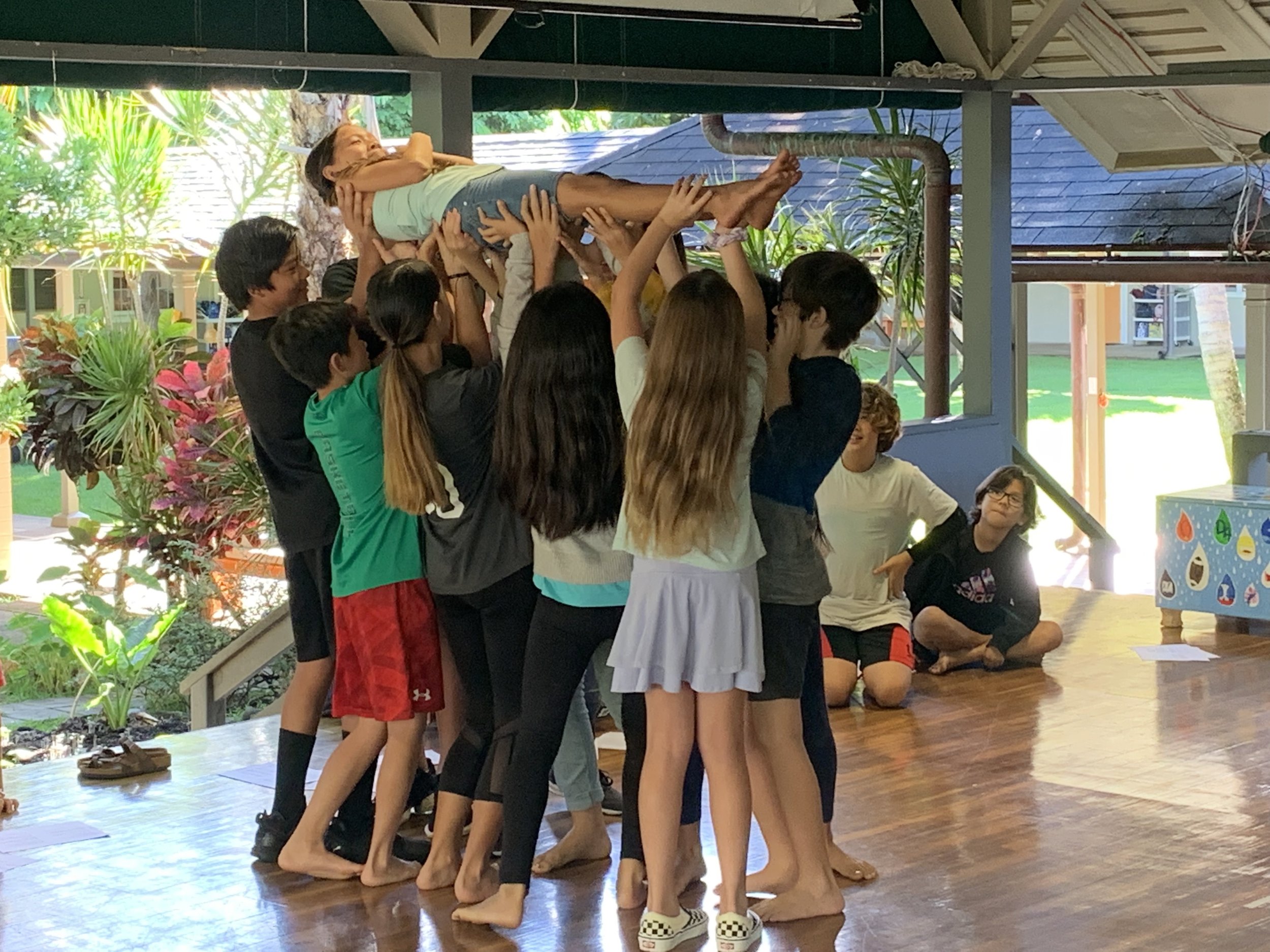
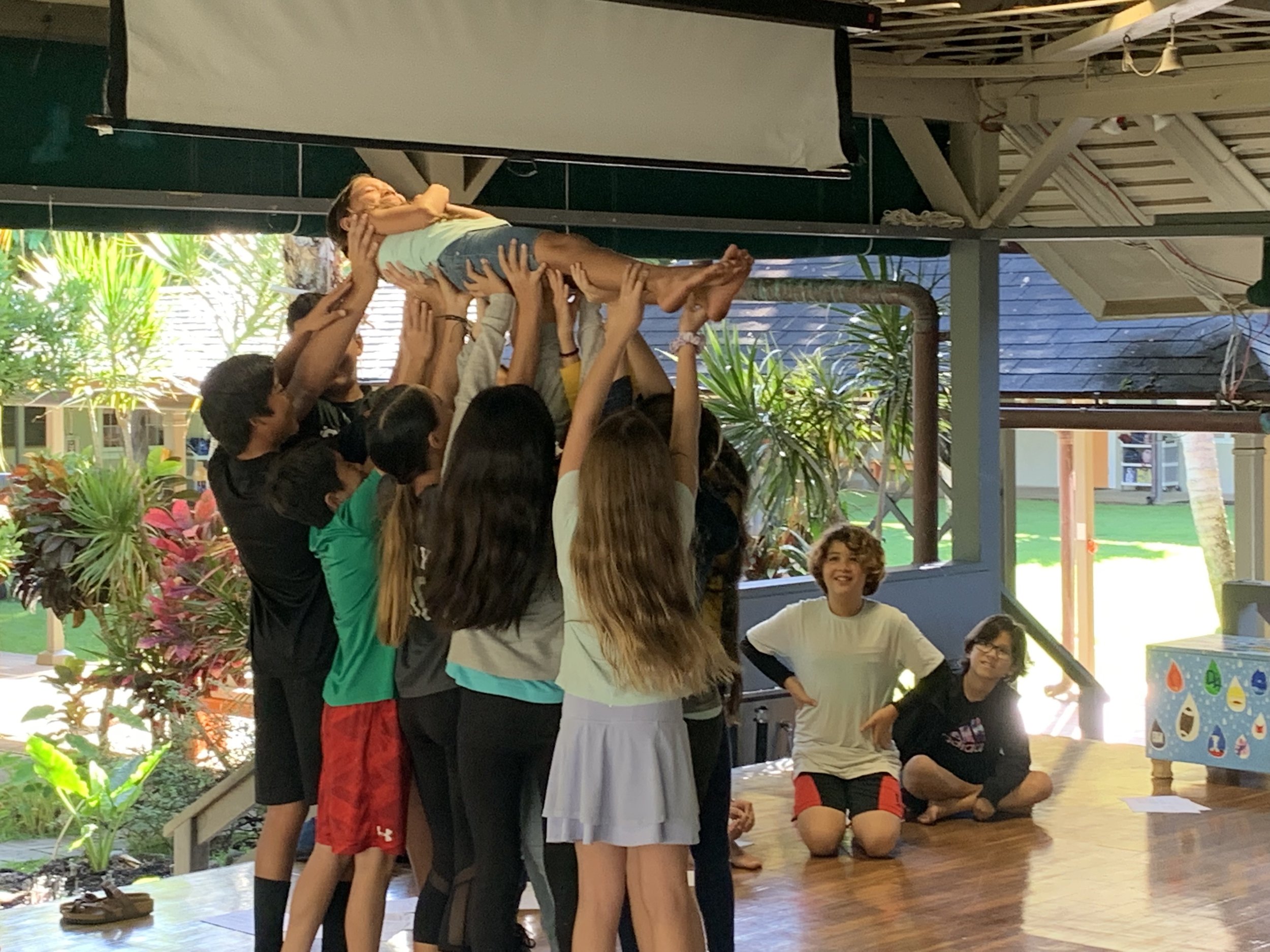
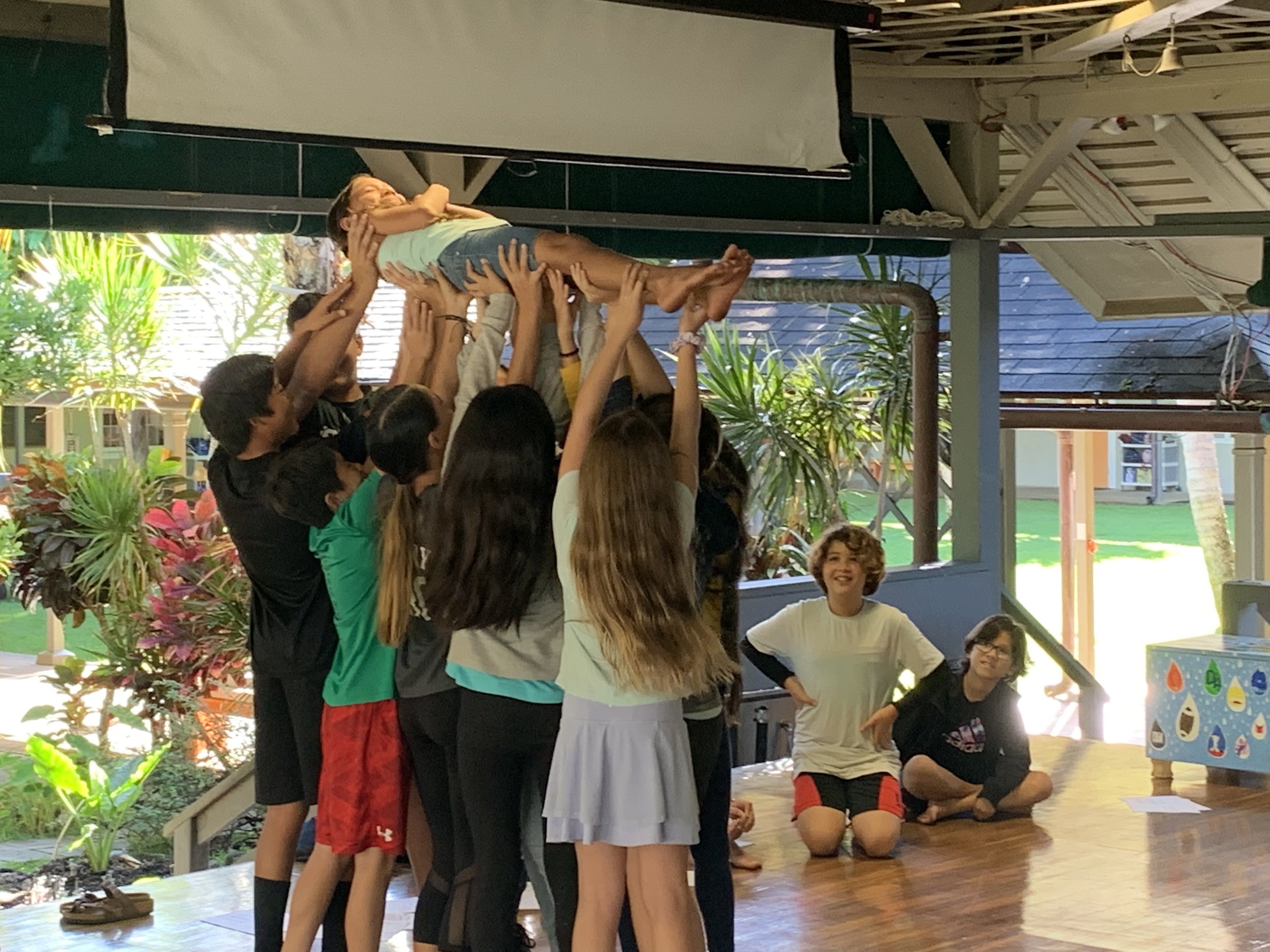
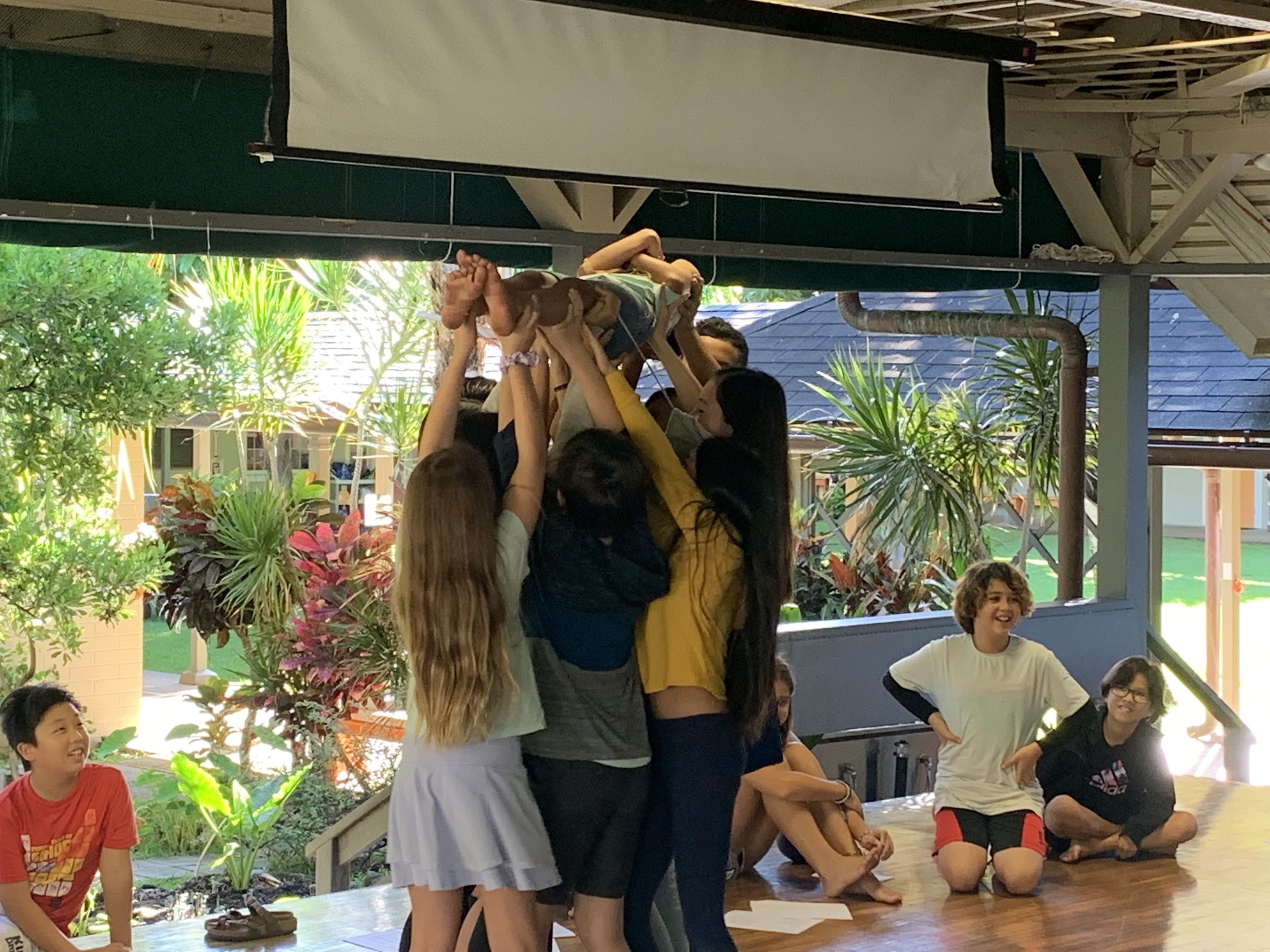
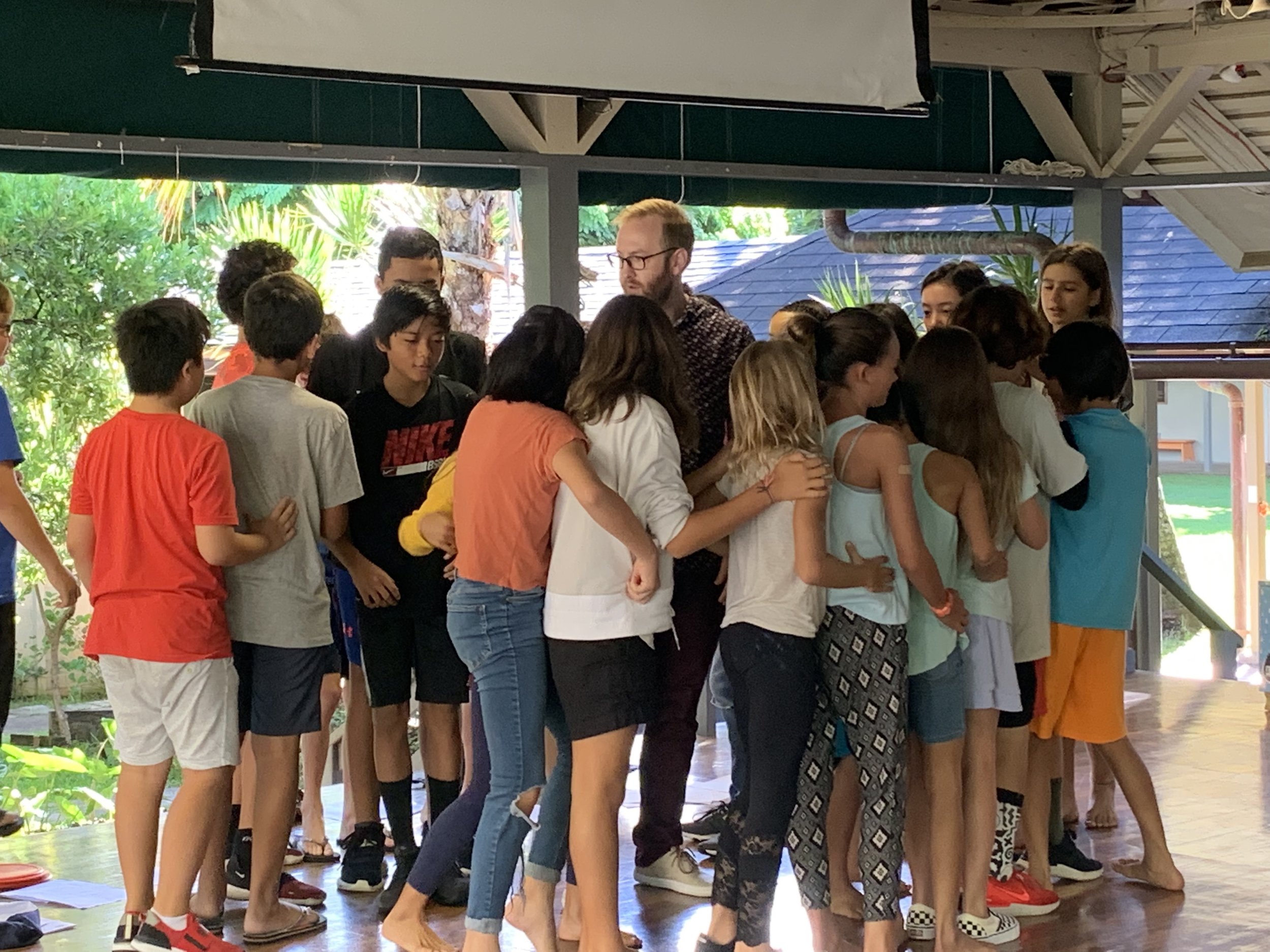
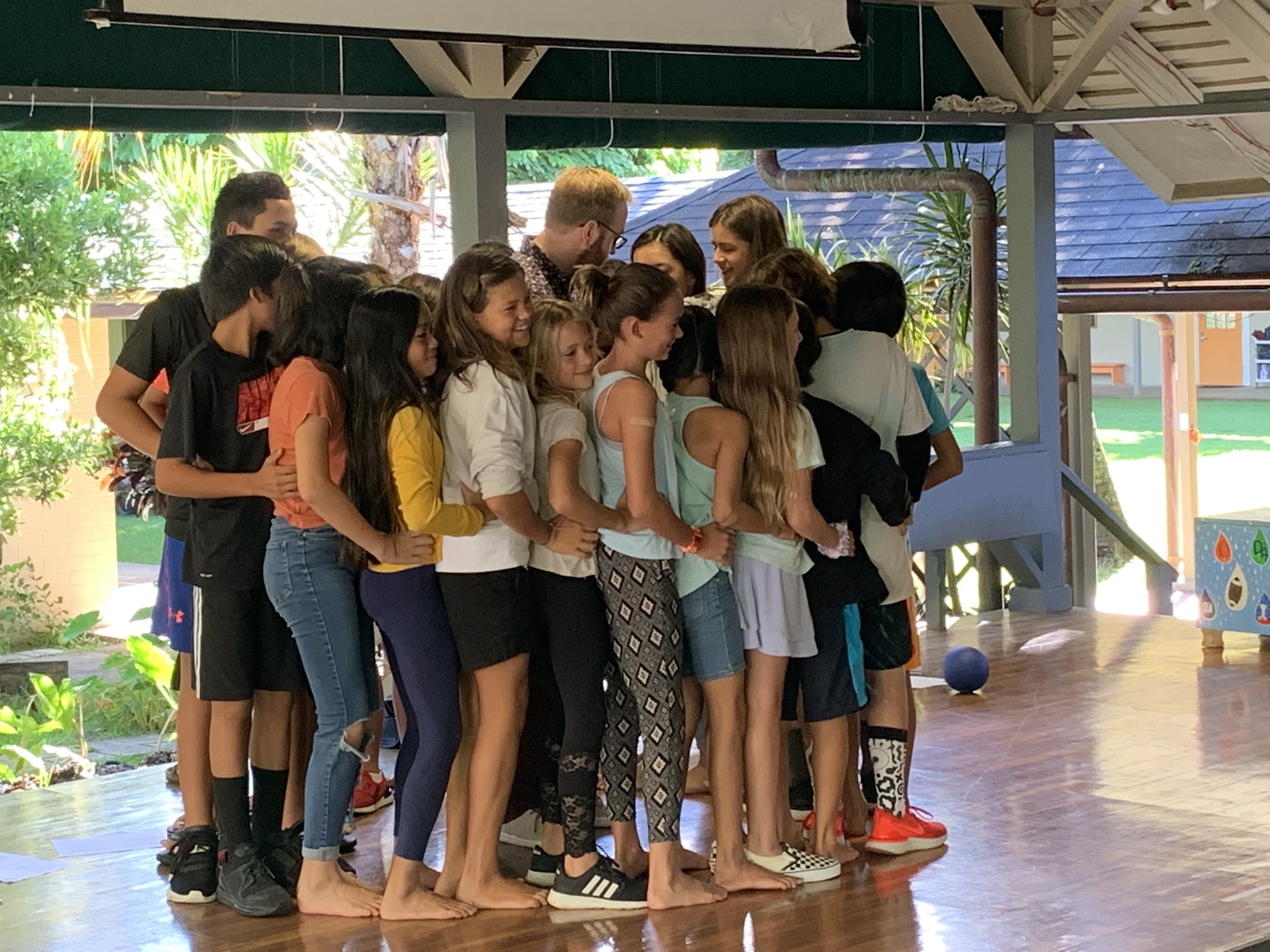
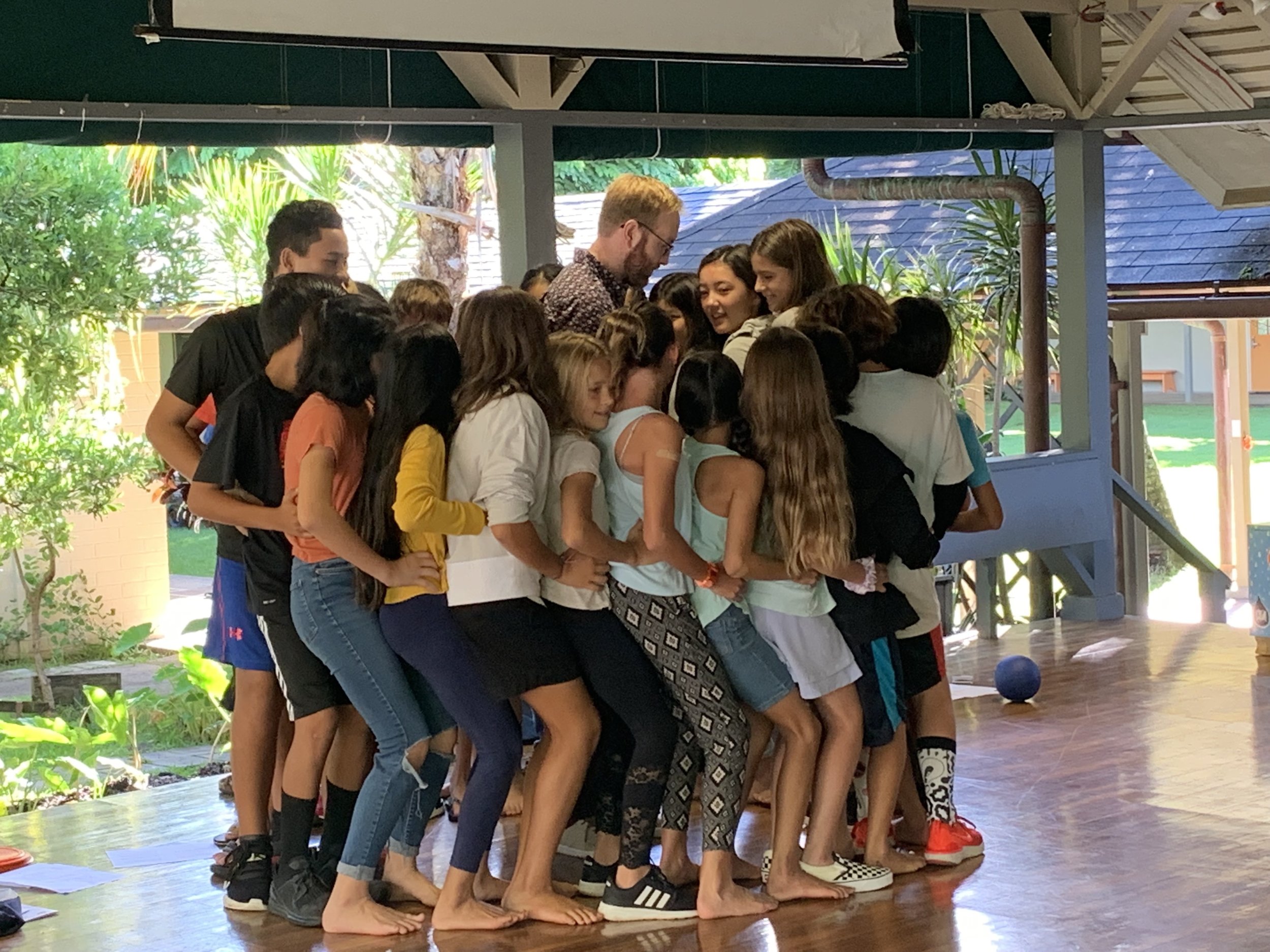
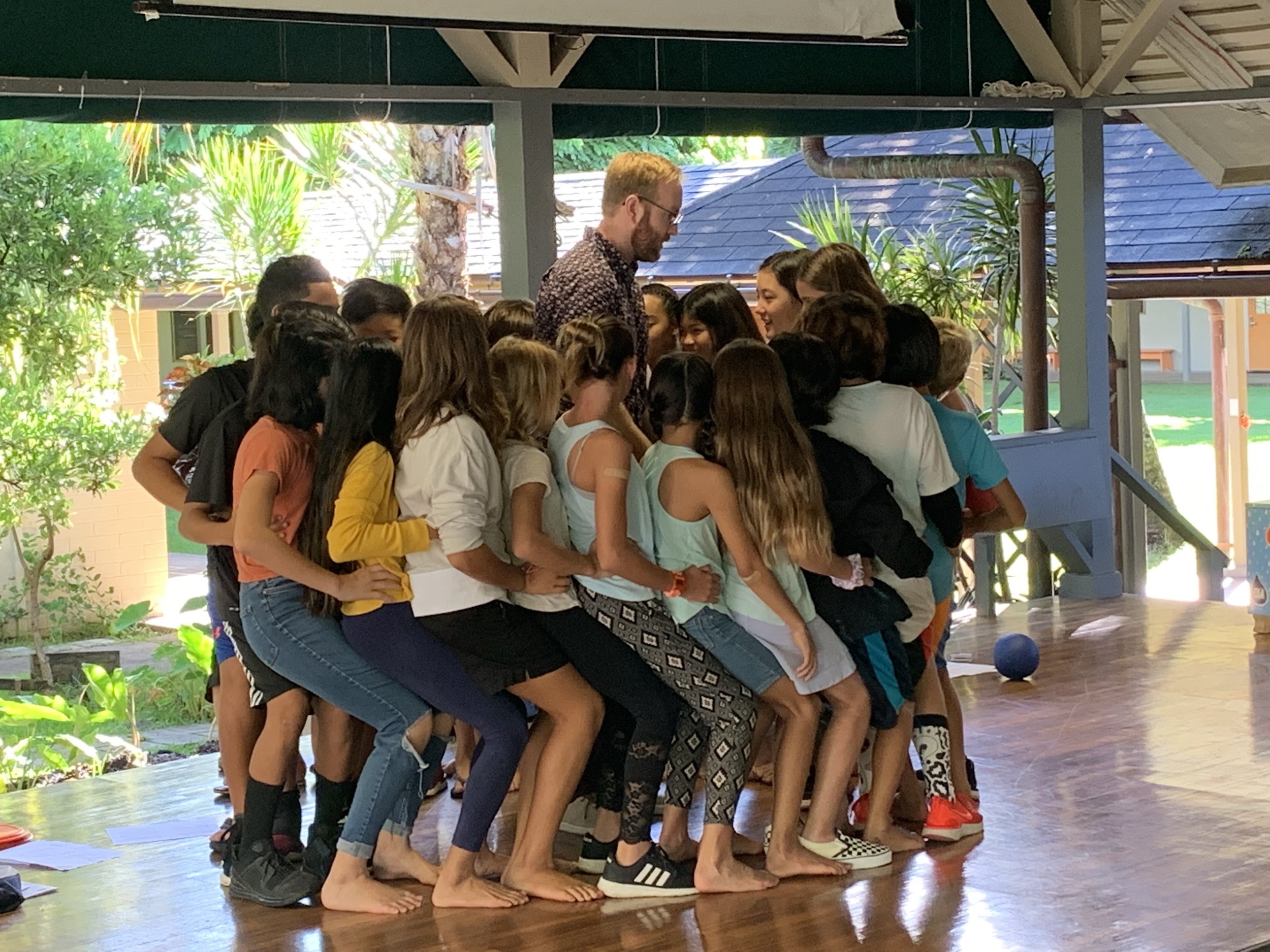
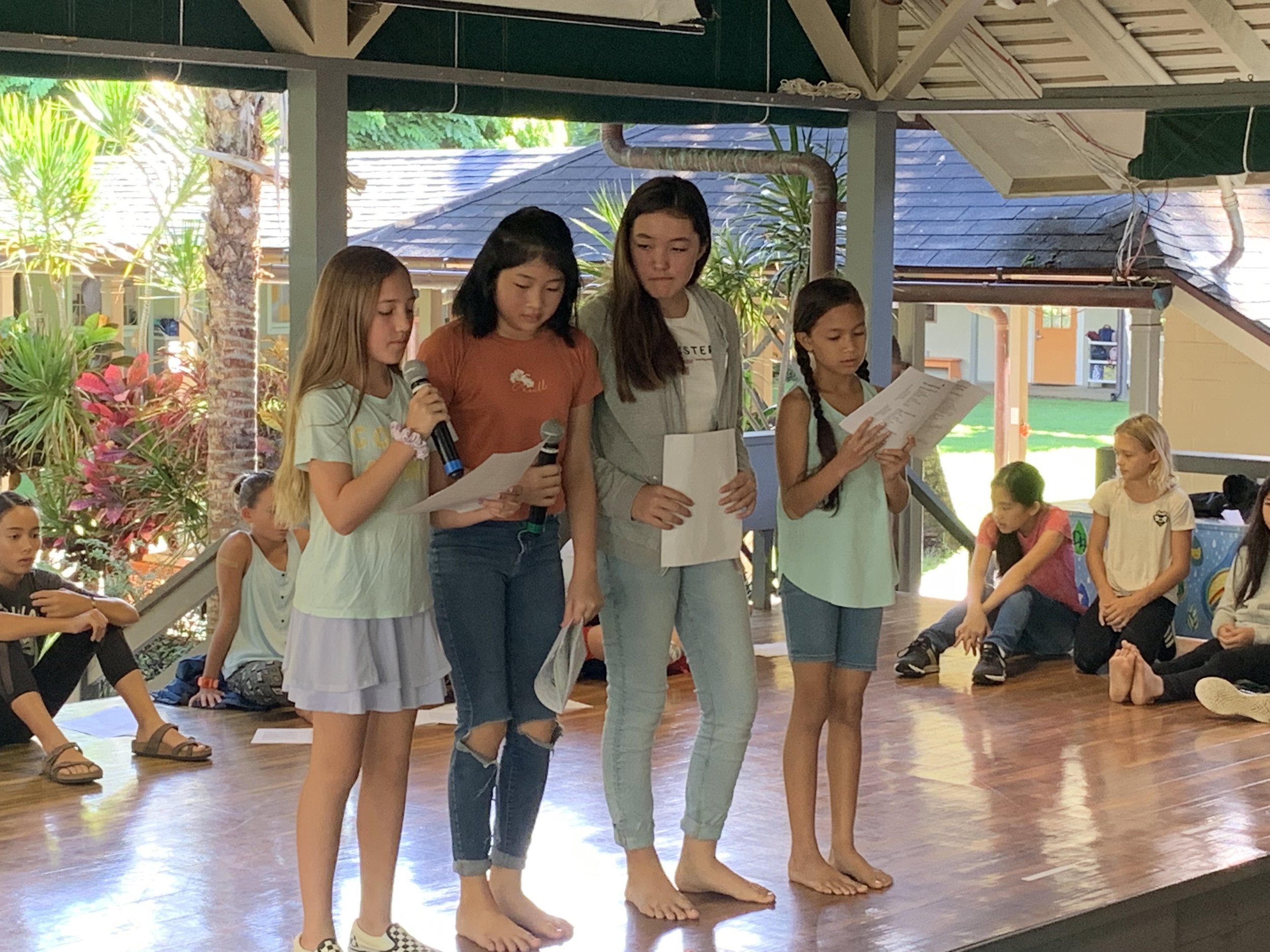
At our Friday Assembly, Ms. Gabby presented 4-5 birthday books. The Civic Club had an announcement about the Fair for the White Elephant and why people should donate their old stuff to the White Elephant. After the announcements, 6th Grade started our presentation about our trip to Mokuleia Camp. The Mokuleia Camp is when 6th graders go to a camp on the North Shore and learn fun activities. The activities help us by knowing we can trust each other and to be more comfortable around each other. By the end of our presentation our goal was to give the younger students a teaser of what camp is like. We mostly shared about the activities, how we did them and why we did them. The activities we presented were Riff Off, Toxic Pond, Pipe Line, Team Juggle, Cookie Machine and Group Sit. Of course there are more activities we did but we chose to show these because they were the safest and we had the props to do them with.


Chinese History and the Au Family Home Assembly

Mahalo to the Au Family for Our School’s New Adjacent Property

Today's assembly was devoted to learning more about the new property that the school recently purchased and the family who owned it -- Lai Fong Au and her husband, Edward S.H. Au. We are lucky that their grandson, Robert Au, was at assembly to share his stories growing up on the property.

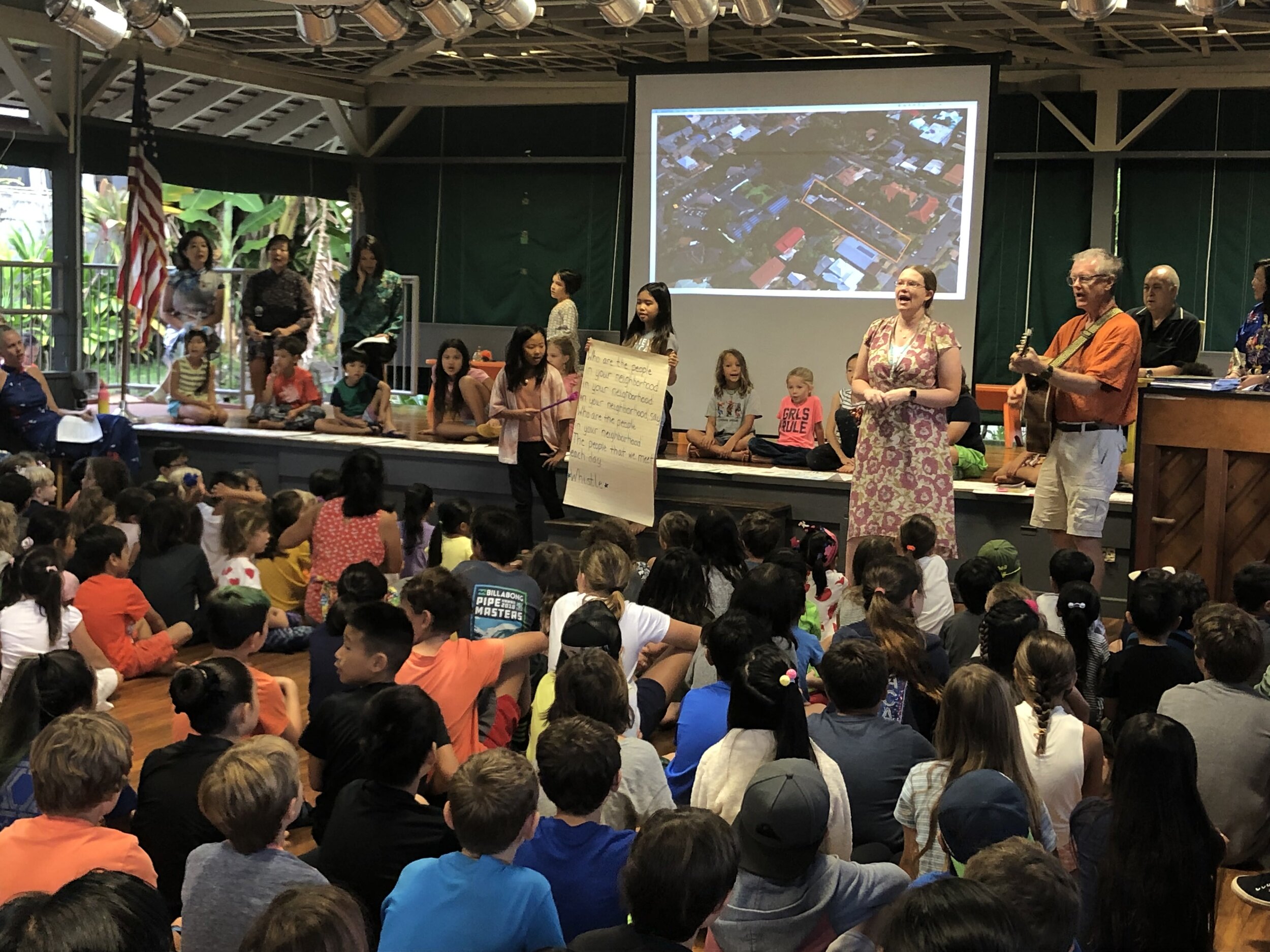
The Assembly started with everyone singing, "Who are the People in your Neighborhood?" which is a Sesame Street song. Ms. Woo started the assembly by sharing that the school started a long time ago thinking about expanding the campus. During Centennial Year, the Au family approached the school and asked if we were interested in buying the property and we said, "Yes!" She mentioned that the Board of Trustees helped to make these big decisions for the school.

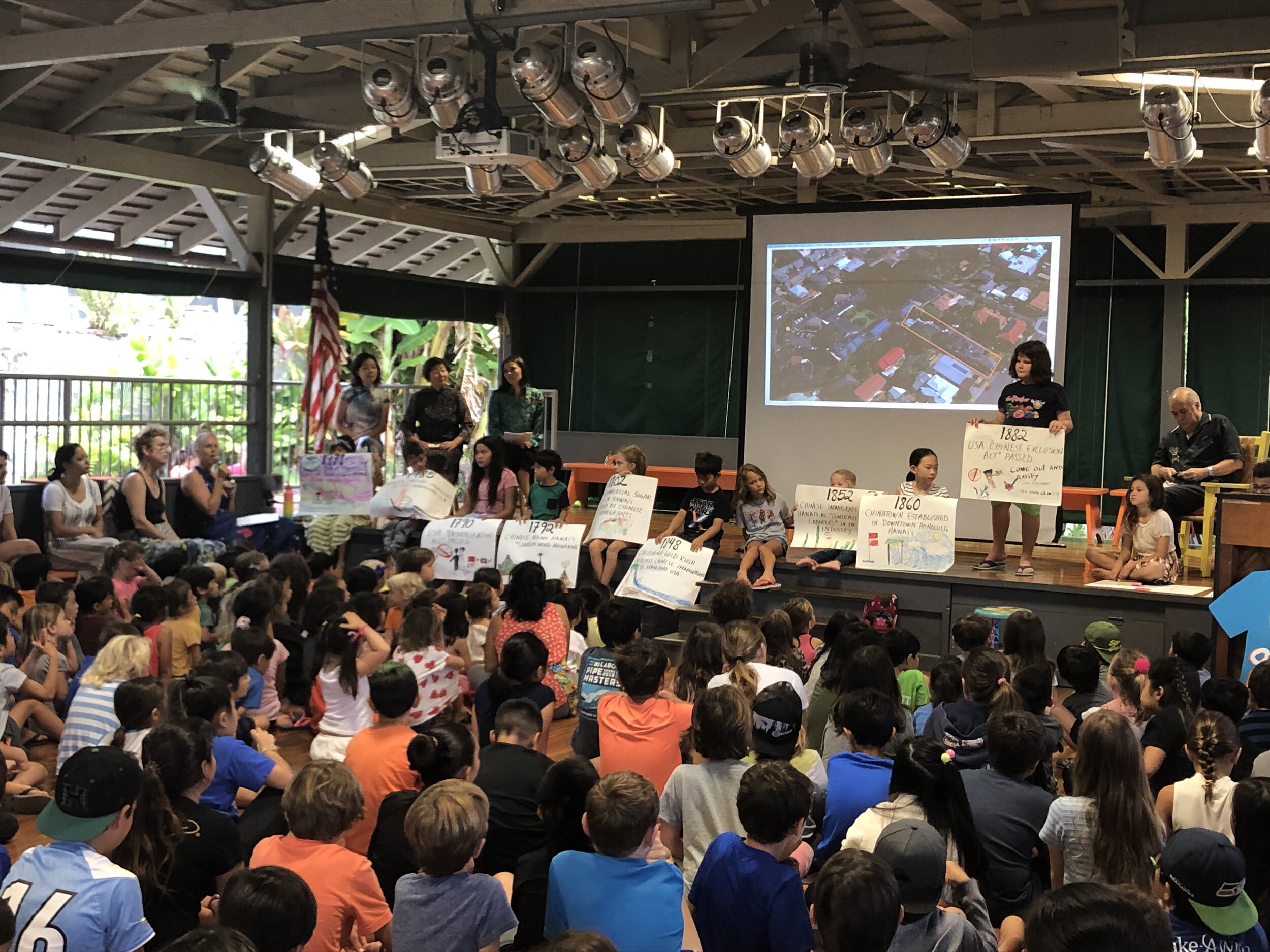
Dr. Makaiau shared the timeline of how the Chinese immigrated to the US and to Hawaii. Students shared signs they made of key dates to show us the order of the events that happened in history and to see how one event may have caused or led to another. The Chinese sailors joined Captain Cook's Voyage to Hawaii in 1778 and went to the mainland in 1785. When they came, the Chinese did not have the same rights as people with white-colored skin. Chinese started the first commercial sugar business in Hawaii in 1802 and became contract laborers in the sugar industry in 1852. Honolulu's Chinatown was started in 1860.

In 1882, the USA Chinese Exclusion Act was passed meaning that the Chinese could no longer immigrate to the US. We saw a video on the Chinese Exclusion Act and Laoshi asked about what we say and how did the video make us feel.

As Hawaii was not part of the US at this time, many Chinese came to work on the plantations in Hawaii.

Mrs. Wong told us the story about Lai Fong Au family. They got married in 1911 and Lai Fong was a picture bride which meant their marriage was arranged and she was picked from a picture to marry Mr. Au by his parents. Edward Au did not return home to Hawaii right away but fought in the Chinese Revolutionary War in 1911 led by Dr. Sun Yat-Sen to free the Chinese people from the tyranny of the Qing Dynasty. They succeeded and Dr. Sun Yat-Sen is now known as the Father of the Nation in China. He is well-known in Hawaii too because he studied at Punahou and Iolani before the revolution began.

Mr. Edward Au brought Lai Fong back to Hawaii and they became entrepreneurs and opened up their own business. The Lai Fong Department store on Nu‘uanu Avenue opened in 1947. One half of the store was a travel agency and the other half was for selling all sorts of things such as porcelain, furniture, jewelry, rugs, cloissoné and antiques. Lai Fong was a dress designer and also sold the Chinese traditional dress, cheongsams. Mrs. Chen wore her cheongsam and modeled it for us.

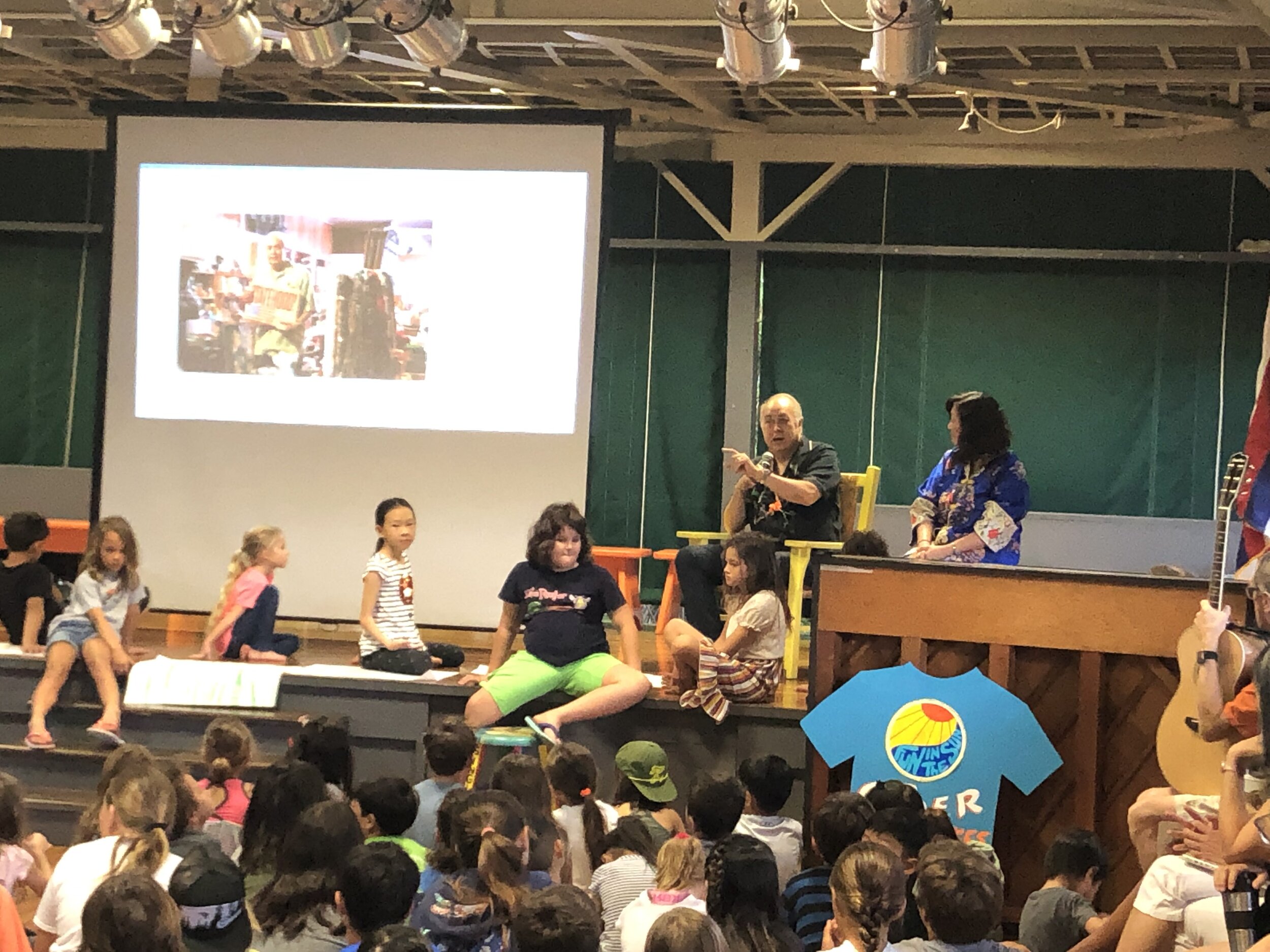
Grandson, Bob Au, fielded questions from children in the audience and shared stories about how he would sneak over to school to play on the playground and in the trees, but no one at school kicked him out! He remembers having wonderful holidays in the home with the big extended family and going over to play at our school founder, Sophie Judd Cooke's house where he’d pick the largest avocados he’s ever seen in his life! He also shared that his grandparents bought the house because the address is 1911 Ke‘eaumoku Street and 1911 was the year of the Chinese Revolution! We hope Mr. Au will return to share more stories with us again soon!

It was nice to learn more about the history of the property and to meet and hear Mr. Au.
Uncle Masa's Assembly with Mr. Miyamoto
A Fun, Local Welcome to Our Newest ‘Ohana!

By Paige ’20

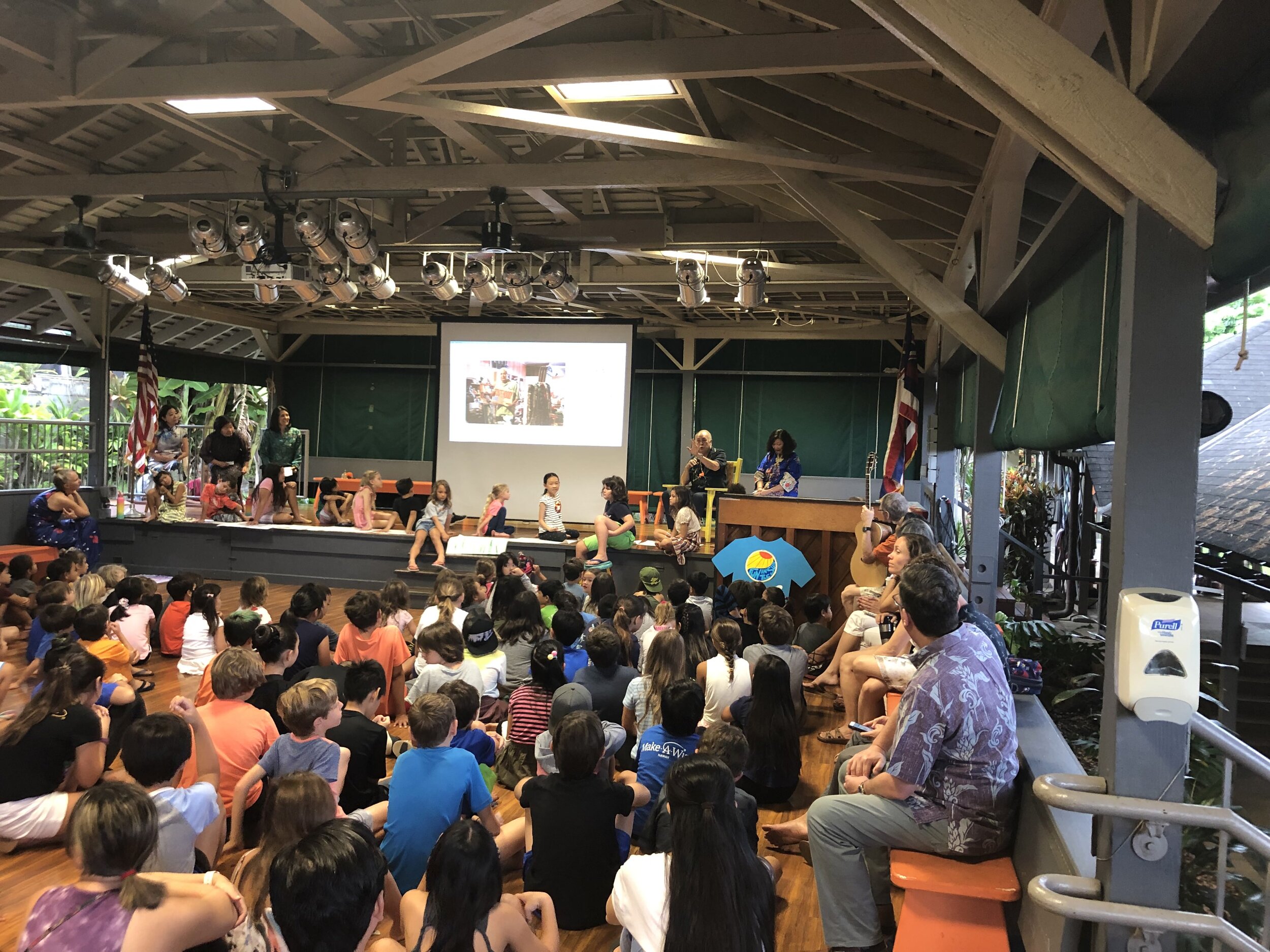
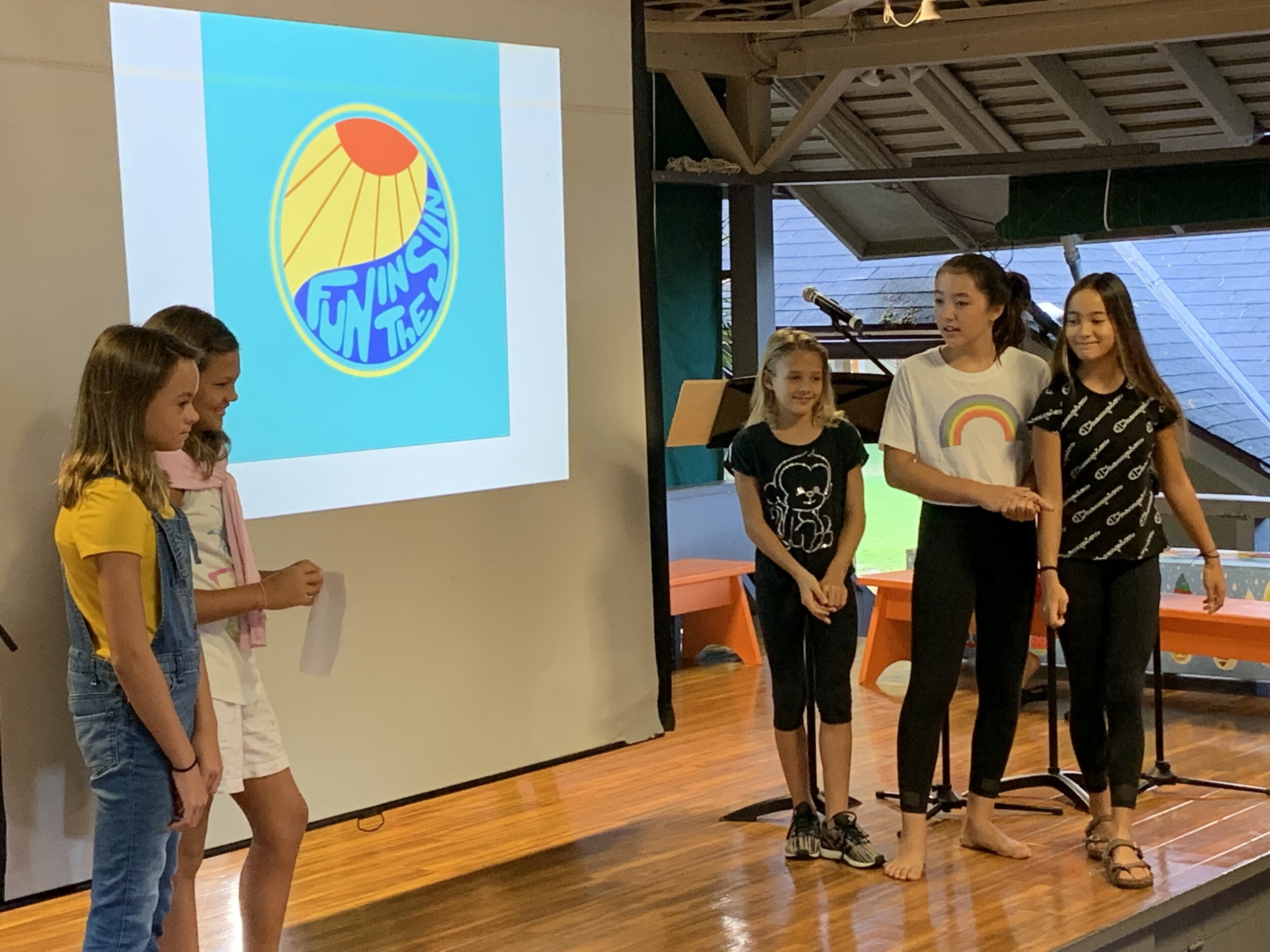
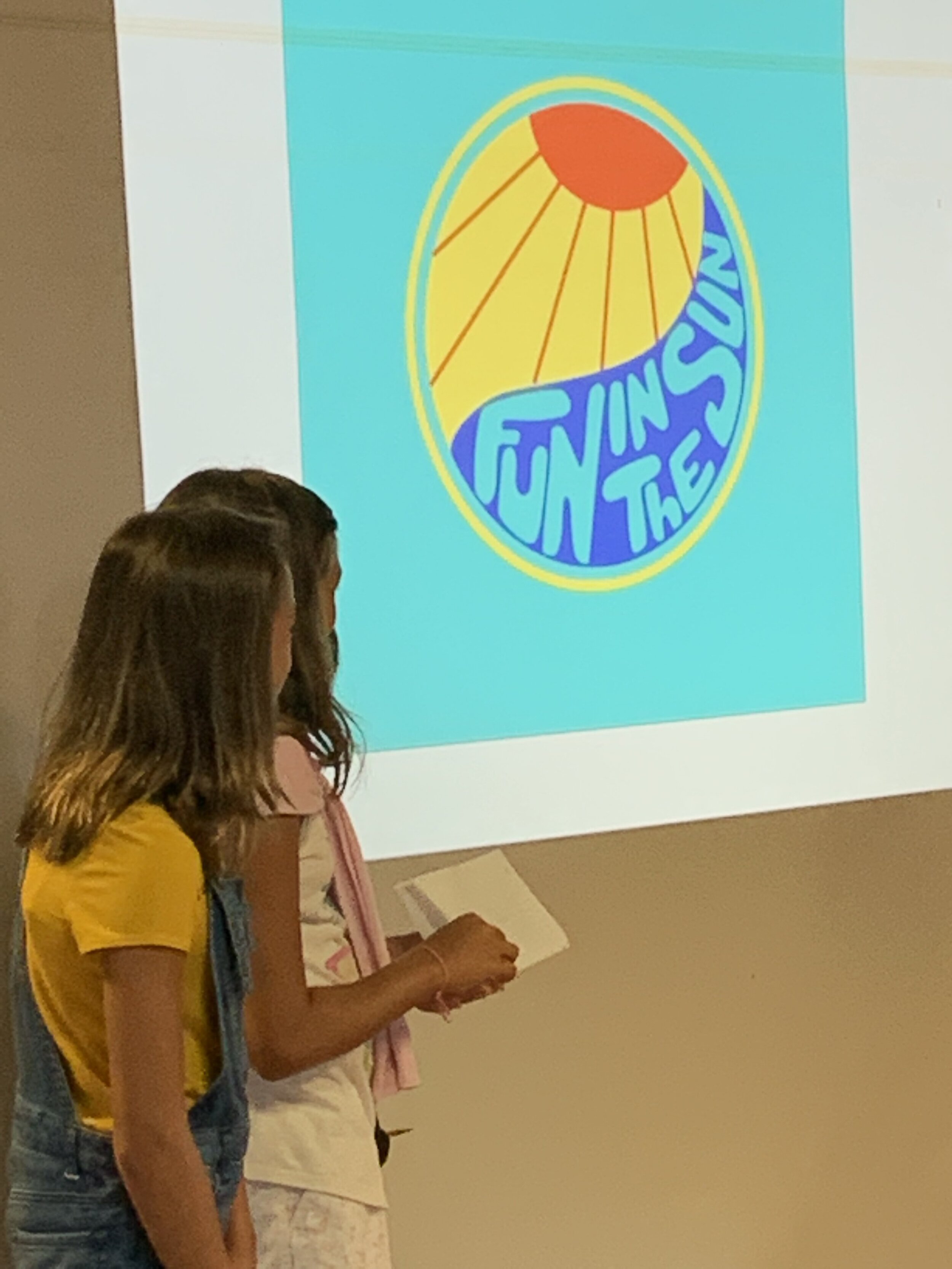
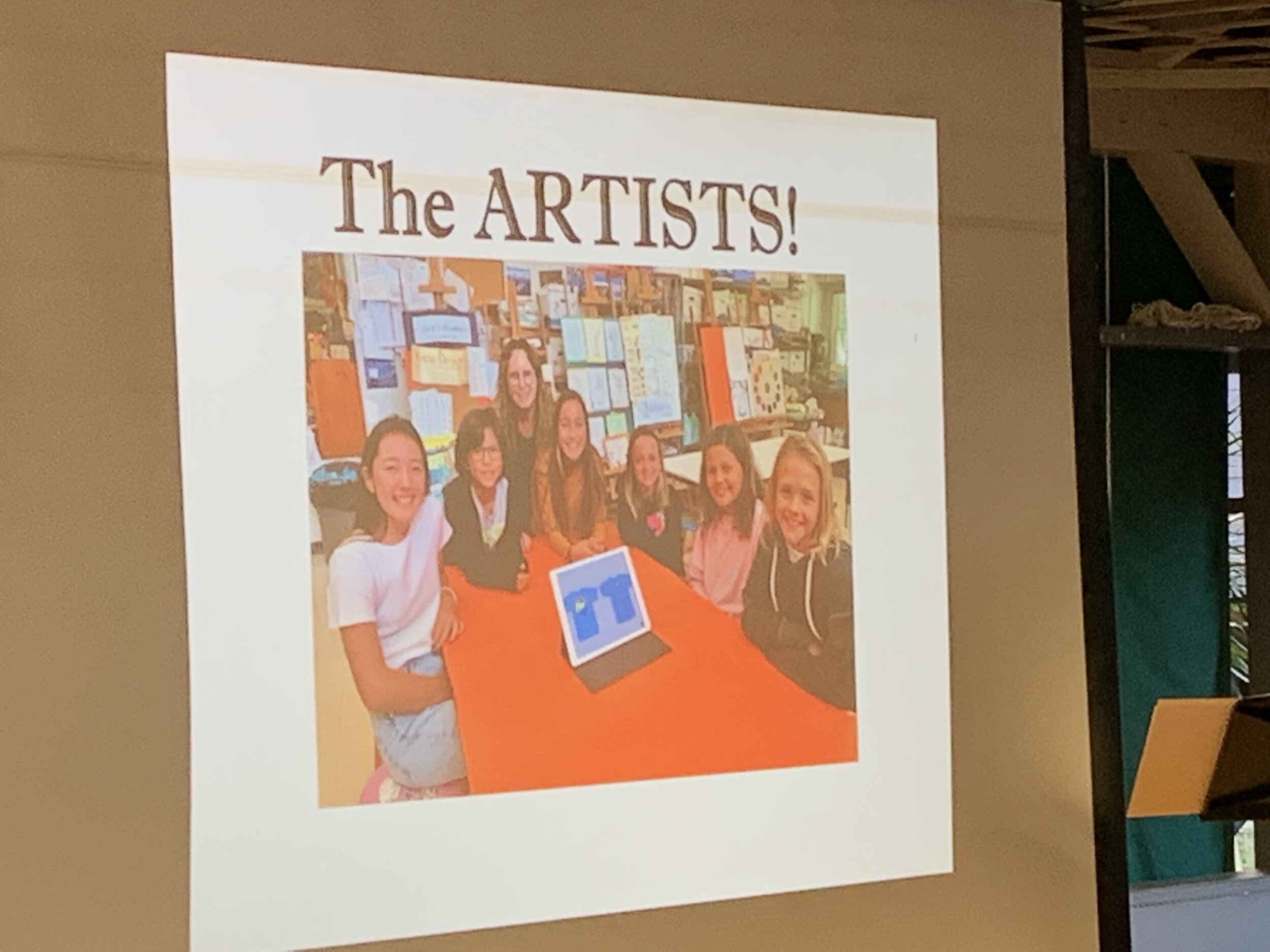
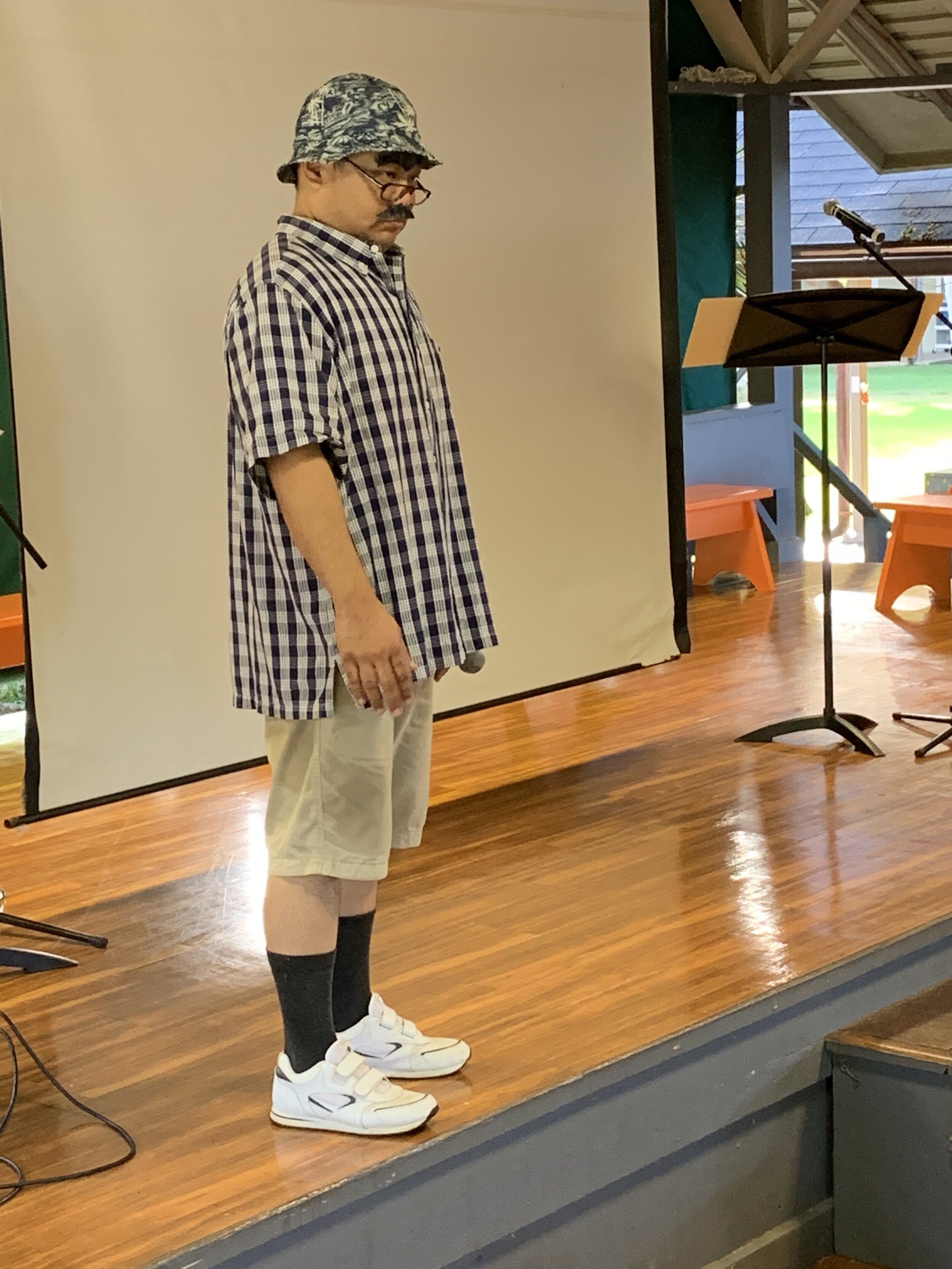
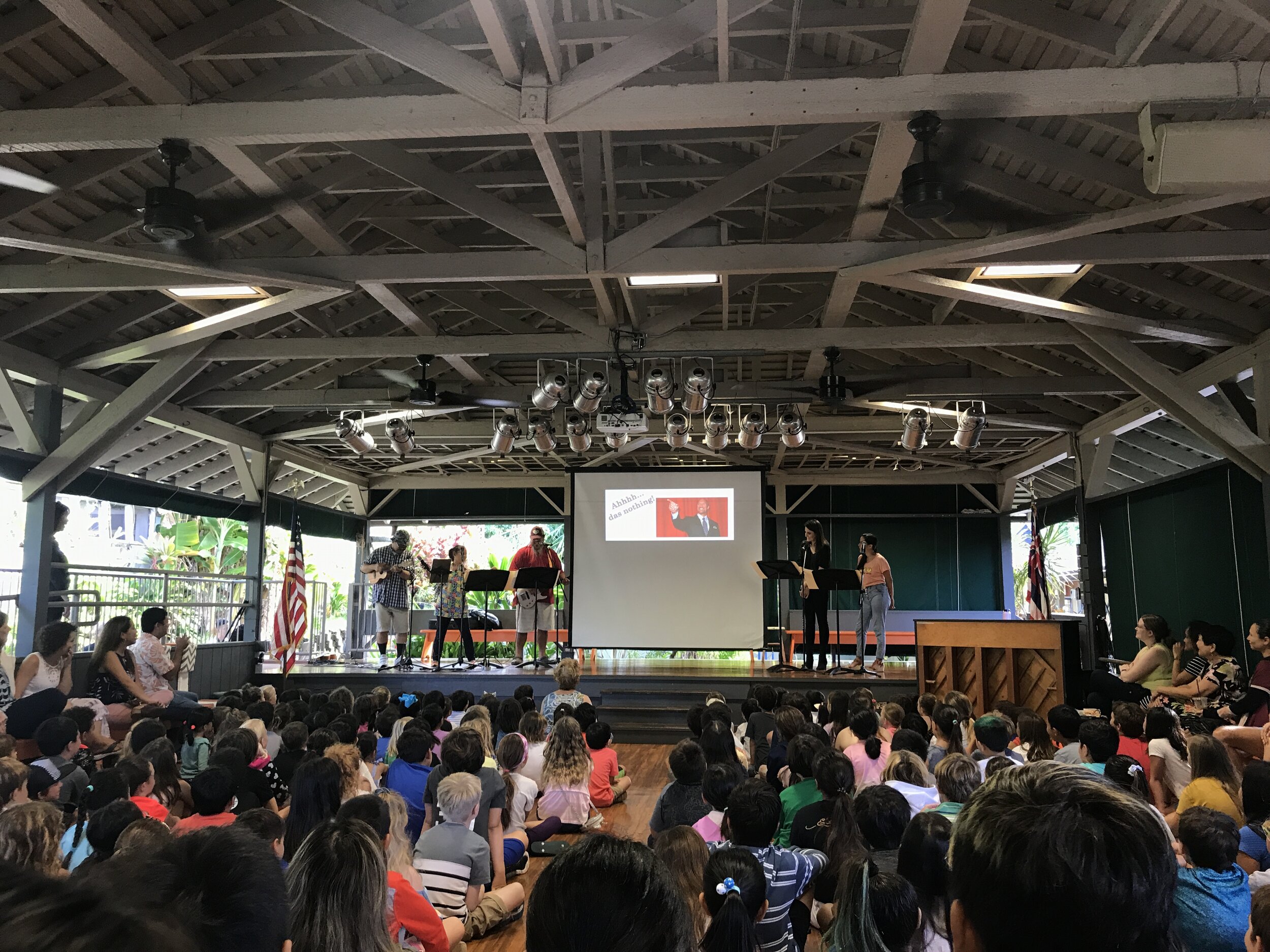
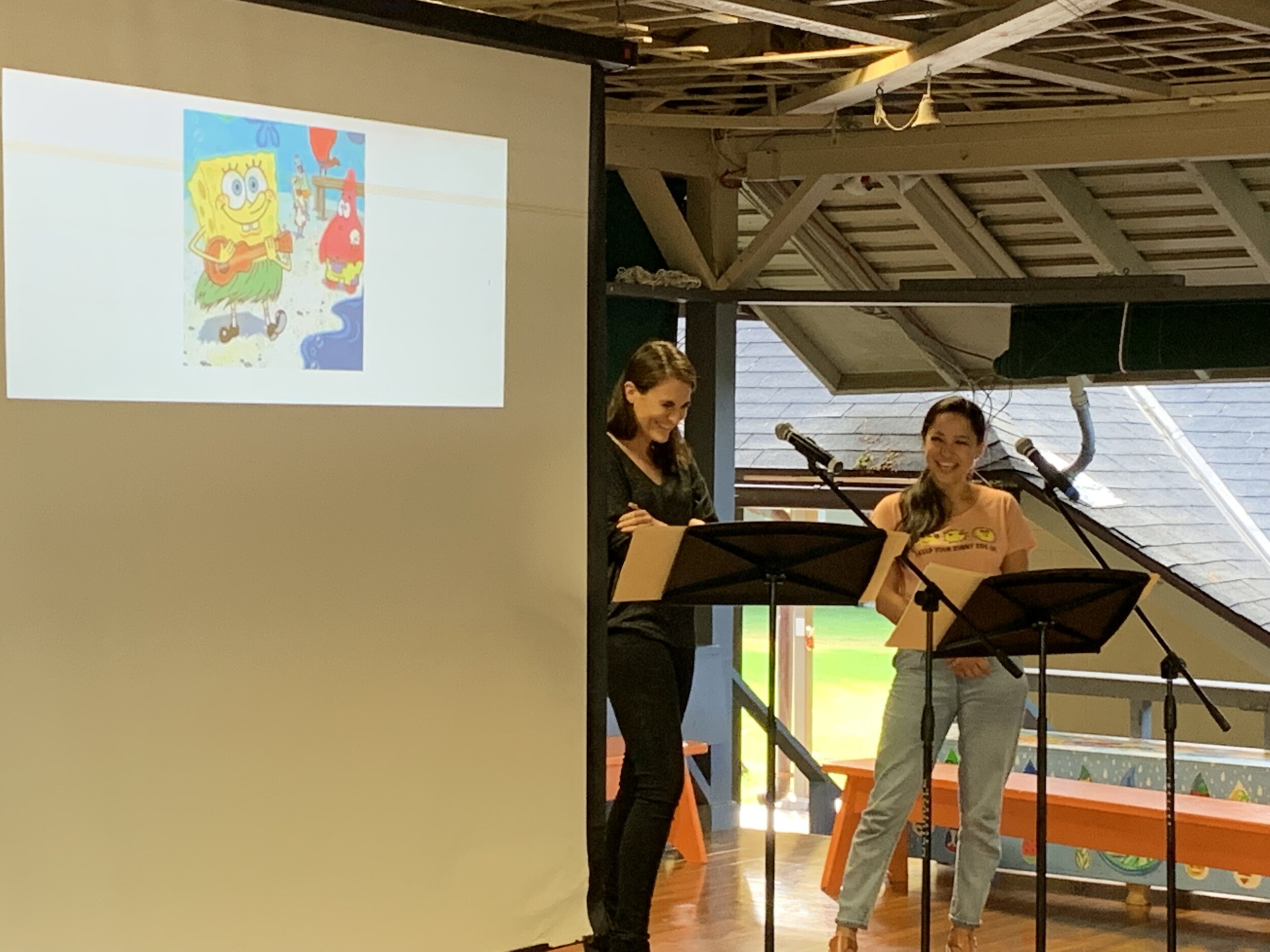
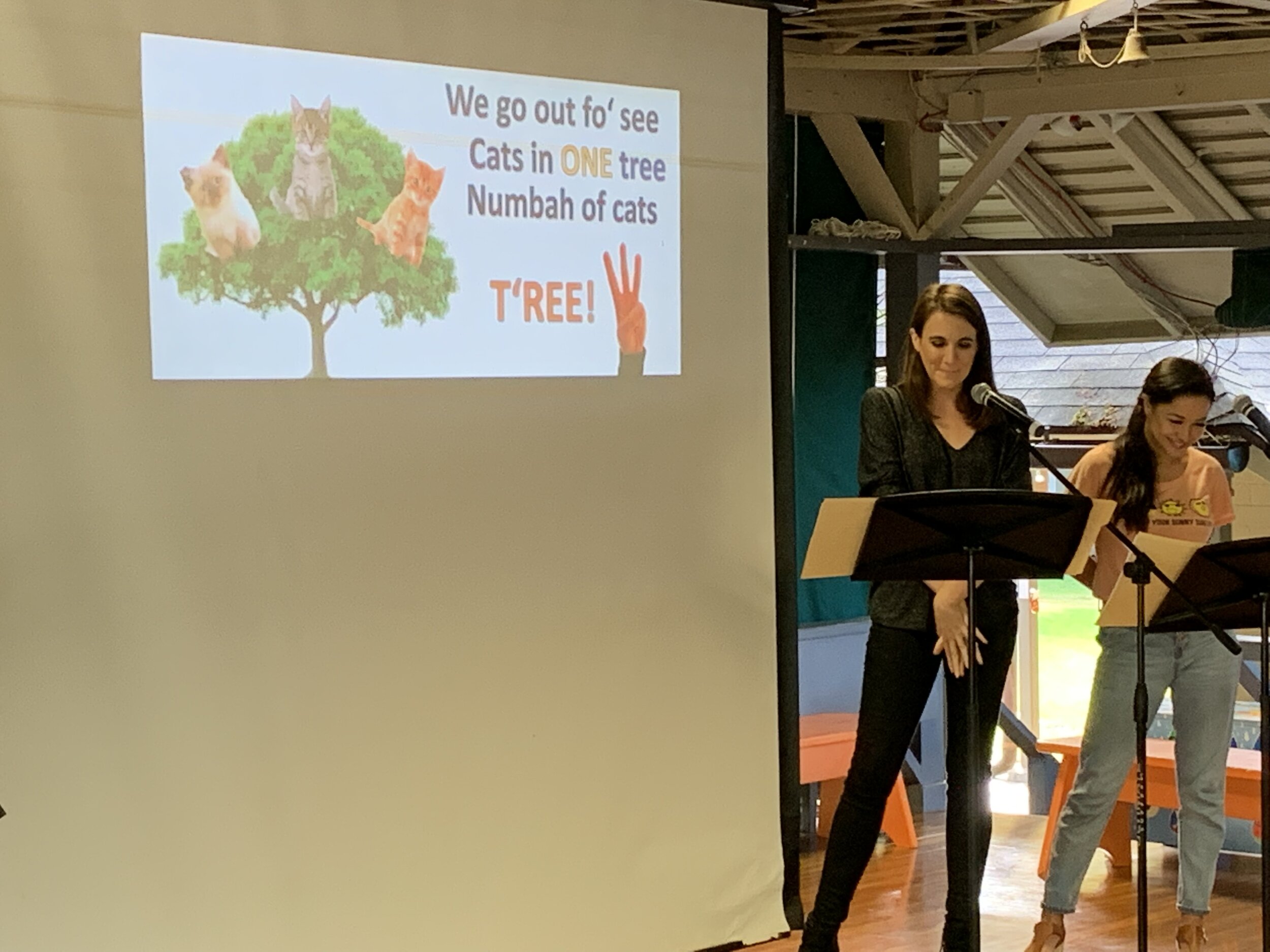
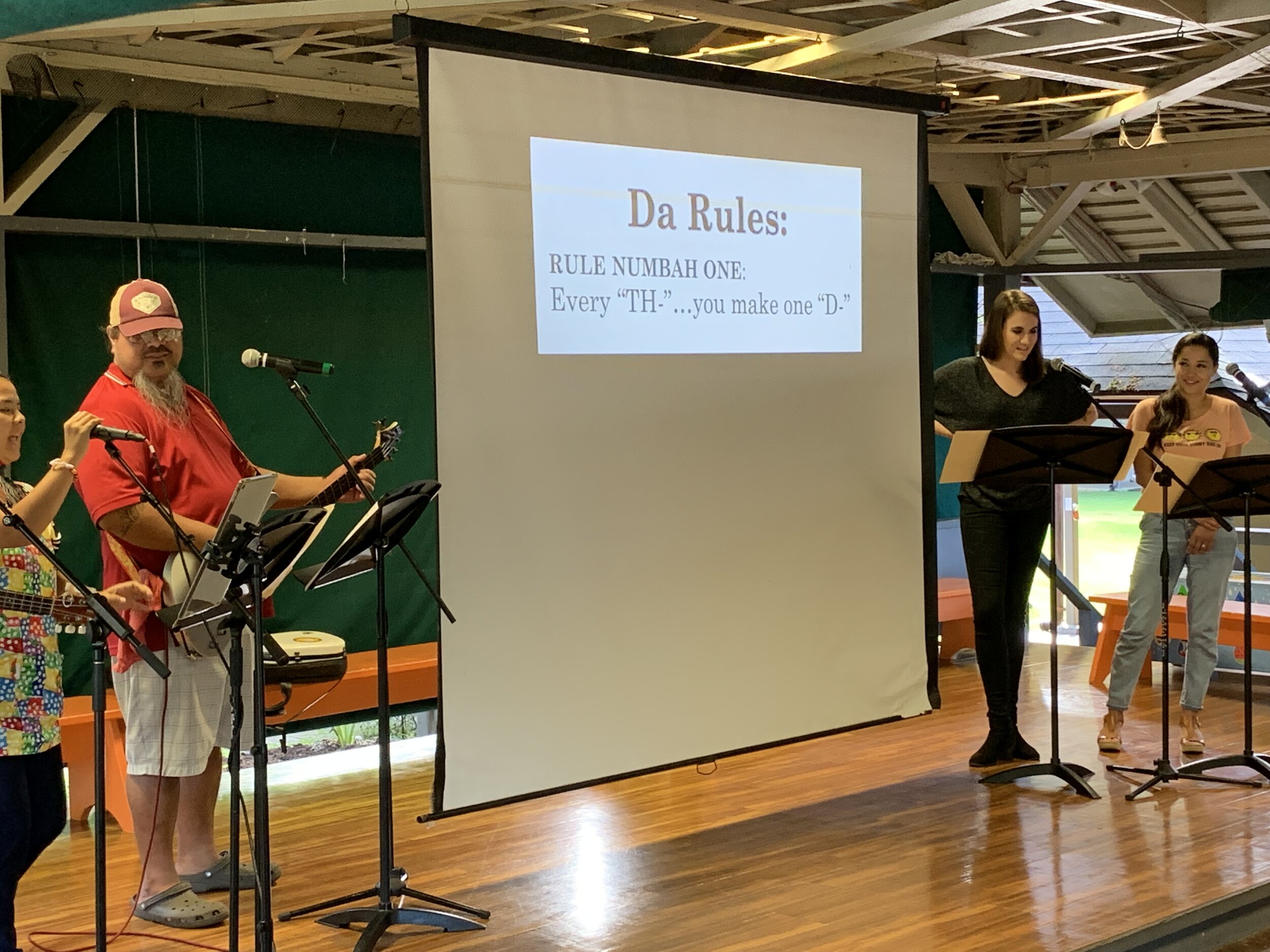
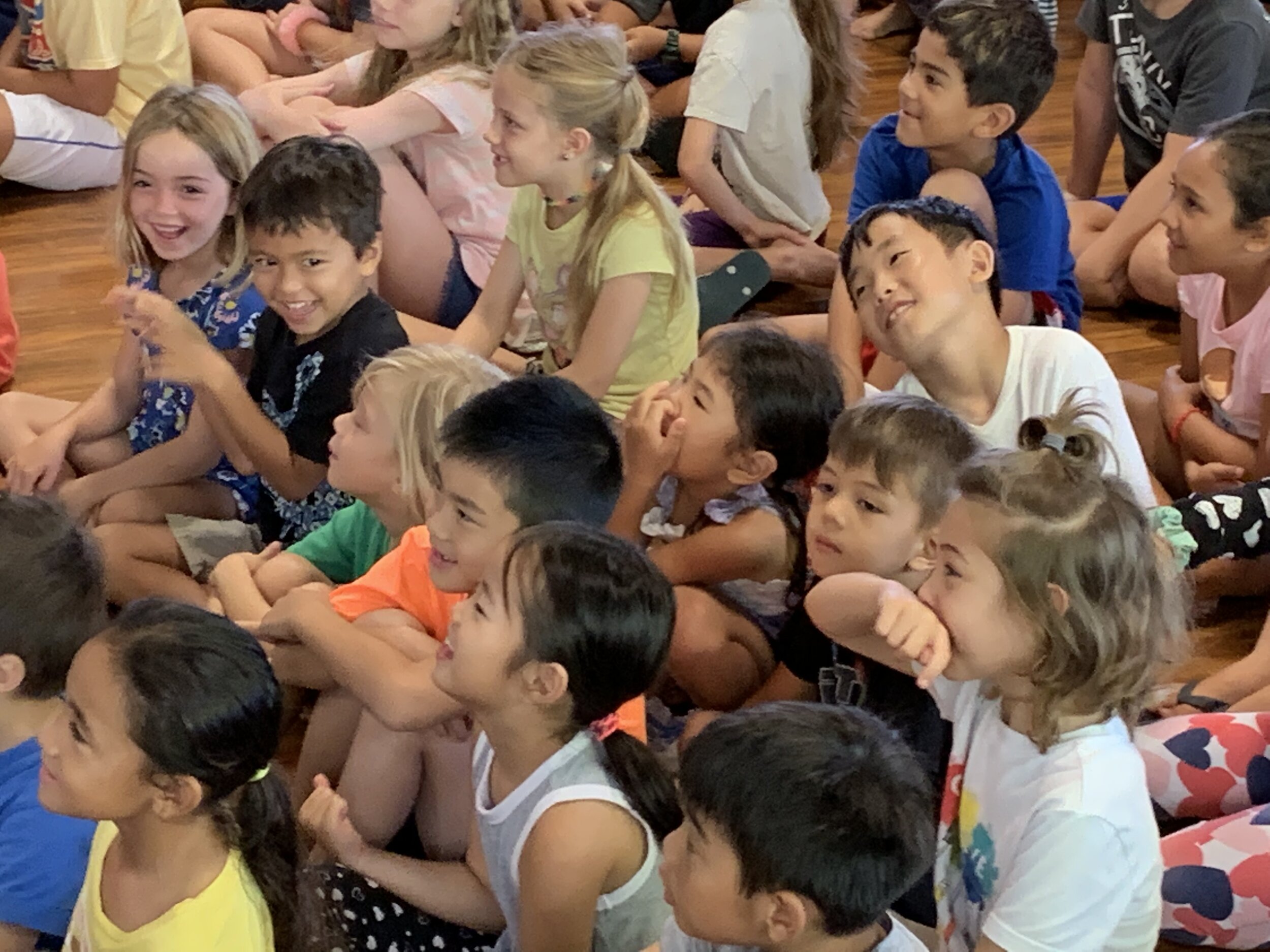
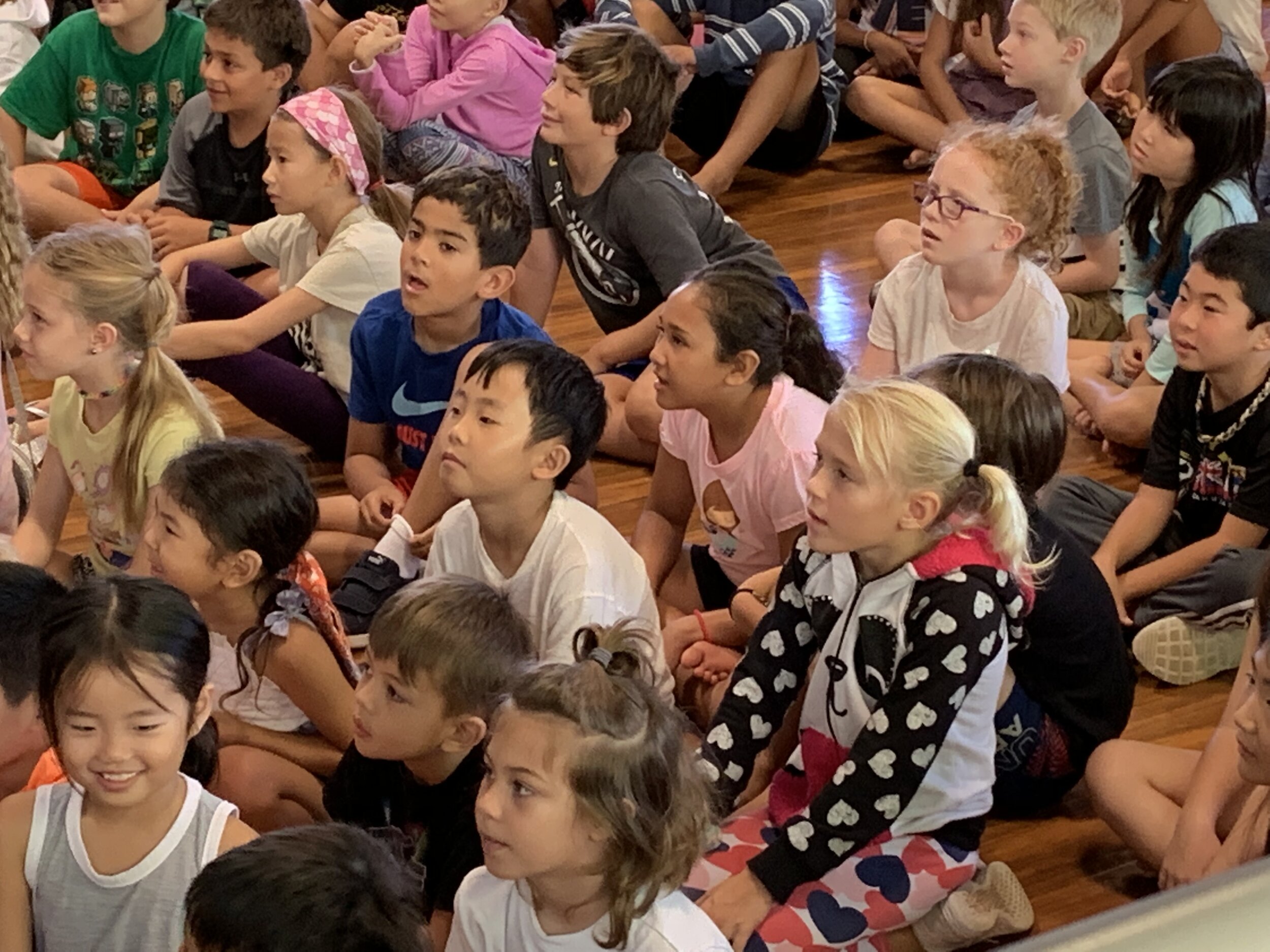
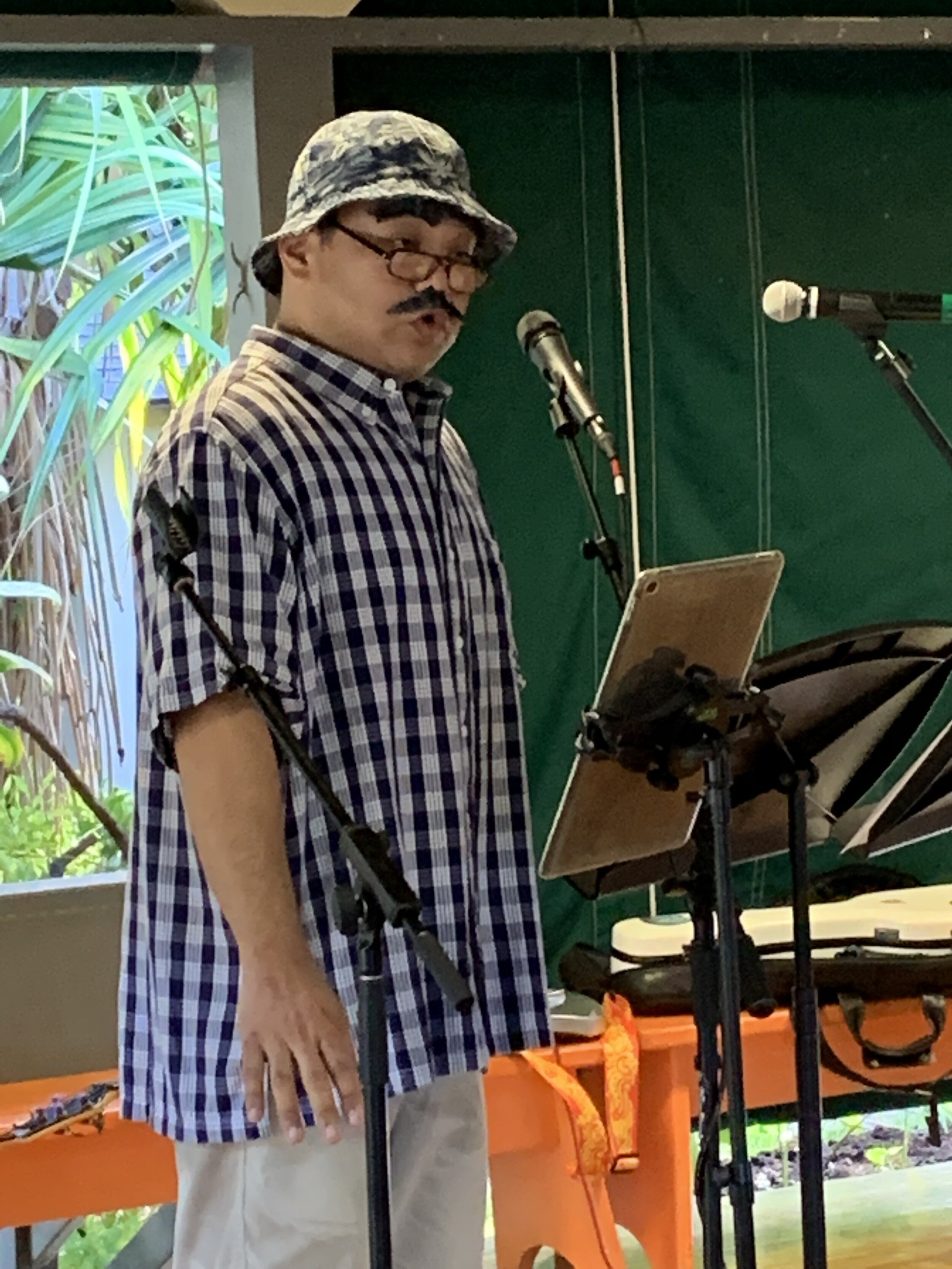
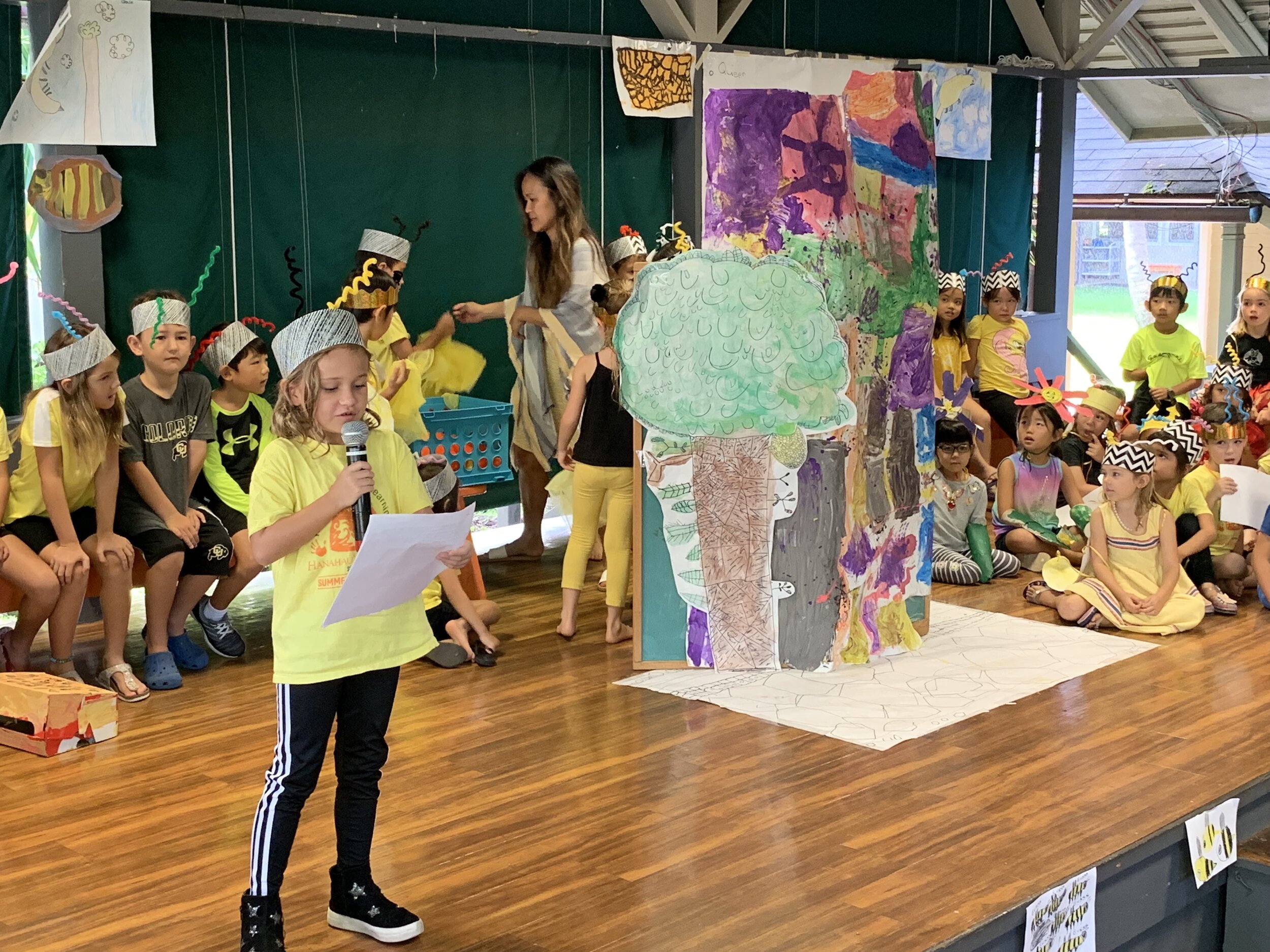
Today, Friday the thirteenth we walked in to the song All I Really Need played by Uncle Blair Sataraka and Uncle Jake Shimabukuro. Our Po‘e Ka‘ahele friends shared that the full moon festival was tonight. We also learned that the new Children’s Fair theme was “Fun in the Sun” and T-shirt logo was designed by: Isabella, Ava, Momoko, Julia, Kaleo and Brielle, in grade 6. Today’s thought of the day was “Happy Aloha Friday, full moon, Friday the thirteenth” by Kulāiwi. This assembly was done by Uncle Masa (Mr. Miyamoto). He had three special guests come up onto stage Ms. Gabby, Mrs. Chris and Ms. Lee Loy, they sang a song that taught us pidgin 101. We also heard a story that told us about Hawaii’s official food, dough. Uncle Masa said that the unofficial, official food of Hawaii is the Spam musubi. Then we ended assembly with our school song.